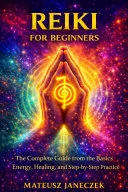
Reiki for Beginners – The Complete Guide from the Basics Energy, Healing, and Step-by-Step Practice
 71
71

Reiki for Beginners – The Complete Guide from the Basics Energy, Healing, and Step-by-Step Practice
Mateusz Janeczek’s Reiki for Beginners offers a structured entry into a practice often shrouded in mystique. The directness with which Janeczek approaches the subject is commendable; the book avoids overly flowery language, focusing instead on actionable steps. A particular strength lies in the chapter detailing chakra harmonization, which provides clear, sequential instructions for balancing one's energetic centers. However, the initial chapters, while foundational, could benefit from more illustrative examples of sensing subtle energy beyond the basic hand warmth. The author’s interpretation of ki as a tangible force that can be consciously directed is a recurring theme, effectively presented for neophytes. Ultimately, the book serves as a competent, if straightforward, primer on Reiki practice.
📝 Description
71
Mateusz Janeczek's 2026 guide introduces Reiki's fundamental principles and practical application.
Reiki for Beginners provides a clear introduction to the practice of universal life energy, known as ki or prana. The book outlines basic principles, how to sense energy, and practical methods for self-healing and assisting others. It details techniques for cleansing energy fields, harmonizing chakras, and addressing physical and emotional blockages through focused intention and energy channeling.
This guide is designed for individuals new to energy healing and Reiki specifically. It aims to help readers understand and apply Reiki for personal well-being, stress reduction, and a deeper connection with subtle energies. The book offers a clear path for those interested in learning foundational techniques, moving from basic concepts to applying them in sessions.
Reiki, originating in early 20th century Japan with Mikao Usui, is a practice focused on channeling universal life energy for healing. Janeczek's work situates this tradition within contemporary wellness movements, connecting it with concepts from mindfulness and yoga. It presents traditional Eastern energy concepts in a way that is accessible to a Western audience, a trend seen in spiritual literature since the late 19th century. The book emphasizes the practitioner's role as a conduit for energy, a core tenet in many energy work traditions.
💡 Why Read This Book?
• Learn to directly perceive and channel ki energy through practical exercises, enabling a tangible connection to the subtle forces described by Janeczek. • Master specific Reiki symbols and their applications, as detailed in the relevant chapter, to enhance your self-healing and energy work capabilities. • Understand the foundational principles of chakra harmonization, a key concept from the book, to begin actively balancing your own energetic system.
⭐ Reader Reviews
Honest opinions from readers who have explored this book.
❓ Frequently Asked Questions
When was Reiki for Beginners by Mateusz Janeczek first published?
Reiki for Beginners, authored by Mateusz Janeczek, was first published on January 15, 2026. This publication date places it within contemporary literature on esoteric and energy healing practices.
What is the primary focus of Reiki for Beginners?
The book's primary focus is to introduce beginners to the practice of Reiki, teaching them to understand, sense, and channel universal life energy (ki) for self-healing and addressing energy blockages.
Does the book cover Reiki symbols?
Yes, Reiki for Beginners includes instruction on learning and utilizing specific Reiki symbols, which are presented as tools to amplify and focus the channeled energy for more advanced applications.
Are there practical exercises in Reiki for Beginners?
Absolutely. Each chapter is designed to include practical tips and exercises, enabling readers to actively engage with the concepts and develop their ability to feel and direct ki energy.
Can this book help with emotional blockages?
Yes, the guide specifically addresses techniques for dealing with physical and emotional blockages by harmonizing the energy field and promoting a balanced flow of ki energy.
What is 'ki' as explained in the book?
In Reiki for Beginners, 'ki' is explained as universal life energy, a vital force that permeates all living things and can be consciously channeled for healing and well-being.
🔮 Key Themes & Symbolism
Channeling Universal Energy
The central theme is the practical application of channeling 'ki' or universal life energy. Janeczek outlines how individuals can become conduits for this energy, distinguishing it from personal energy. The book emphasizes developing this ability through focused exercises, moving from sensing the energy in one's hands to directing it for therapeutic purposes. This concept is fundamental to initiating a Reiki practice and forms the bedrock of the techniques presented.
Self-Healing and Energy Field Balance
A significant portion of the book is dedicated to the principles and practice of self-healing. It details methods for cleansing one's own energy field and harmonizing the chakras, presenting these as essential steps before or alongside practicing on others. The work frames energy blockages, both physical and emotional, as disruptions in the natural flow of ki, and offers Reiki techniques as a means to restore equilibrium and promote holistic well-being.
Foundational Reiki Techniques
This theme covers the step-by-step progression of learning Reiki. It begins with the most basic elements, such as perceiving energy, and gradually introduces more complex practices like full self-healing sessions and the application of specific Reiki symbols. The inclusion of practical tips and exercises throughout aims to translate theoretical knowledge into tangible skills, making the esoteric practice accessible for beginners.
Integration into Daily Life
The book suggests that Reiki is not merely a specialized technique but a tool that can be integrated into everyday life. By learning to utilize ki energy, readers are encouraged to foster a greater sense of balance, reduce stress, and enhance their overall vitality. This aspect highlights the potential for Reiki practice to contribute to a more mindful and energetically aware existence beyond formal healing sessions.
💬 Memorable Quotes
Direct passages from the work, attributed to the author.
“Feeling the energy in your hands is the first step to channeling ki.”
— This statement underscores the sensory and experiential foundation of Reiki practice. It suggests that the ability to direct universal life energy begins with cultivating awareness of subtle energetic sensations within the practitioner's own body.
“Cleansing your own energy field harmonizes your capacity to heal.”
— This highlights the principle of self-care in energy work. It posits that a practitioner's own energetic purity and balance are prerequisites for effective healing, emphasizing that internal harmony facilitates external assistance.
“Reiki symbols amplify the intention and effectiveness of the energy.”
— This interpretation indicates that specific visual or conceptual tools (symbols) are employed in Reiki to enhance the practitioner's focus and the energetic impact of their practice, moving beyond basic energy channeling.
💡 Key Ideas
Editorial paraphrase of the work's core concepts — not direct quotes.
Chakra harmonization restores the balance of your subtle body.
This paraphrased concept points to the importance of the energetic centers within the body. It suggests that aligning and balancing these chakras is crucial for maintaining overall energetic health and facilitating the free flow of life force.
Transform ki energy into a real tool in your life.
This paraphrased concept emphasizes the practical and applied nature of Reiki as taught in the book. It suggests that the knowledge gained is intended to be actively used for tangible benefits in the practitioner's daily existence.
🌙 Esoteric Significance
Tradition
This work aligns with the broader esoteric tradition of vitalism and energy manipulation, drawing parallels to concepts found in Traditional Chinese Medicine (Qi Gong) and Indian yogic philosophy (Prana). While Reiki itself, as formulated by Mikao Usui, is a distinct system, its emphasis on channeling a universal life force connects it to ancient Hermetic principles of 'As Above, So Below' and the understanding of subtle energetic bodies. Janeczek's approach presents these principles in a modern, accessible format, bridging traditional Eastern energy concepts with contemporary Western wellness paradigms.
Symbolism
The book introduces specific Reiki symbols, which function as potent mnemonic devices and energetic keys within the practice. While the text doesn't detail the full esoteric lineage of each symbol's origin, it presents them as focal points for intention and energy amplification. For instance, the 'Cho Ku Rei' symbol is often associated with increasing power and grounding energy, while the 'Sei Hei Ki' relates to emotional and mental balance. These symbols act as conduits, focusing the practitioner's intent and the flow of universal life energy.
Modern Relevance
Janeczek's work speaks to contemporary interest in holistic health, mindfulness, and self-empowerment. It speaks to practitioners of complementary and alternative medicine (CAM) and individuals exploring non-pharmacological approaches to stress reduction and well-being. The accessibility of its step-by-step format makes it relevant for modern wellness influencers, yoga instructors, and therapists seeking to integrate energy work into their practices or personal lives, reflecting a continued engagement with embodied spiritual practices.
👥 Who Should Read This Book
['• Absolute beginners to energy healing: Those with no prior knowledge of Reiki or subtle energy work will find the foundational explanations and practical exercises useful for starting their journey.', '• Individuals seeking self-care tools: Readers looking for practical methods to manage stress, improve emotional balance, and enhance their personal well-being through hands-on energy techniques.', '• Aspiring practitioners of holistic therapies: Those interested in learning the core principles and basic techniques of Reiki for potential future application in personal or professional contexts.']
📜 Historical Context
Mateusz Janeczek's Reiki for Beginners (2026) enters a field significantly shaped by early 20th-century developments, particularly Mikao Usui's systematization of Reiki in Japan. The mid-20th century saw a burgeoning interest in Eastern philosophies and healing arts within Western esoteric circles, influenced by movements like Theosophy and the works of figures like Helena Blavatsky. Janeczek's work arrives in an era where energy healing practices are widely discussed, often alongside mindfulness and alternative therapies, a stark contrast to the initial reception of such concepts which sometimes faced skepticism or were confined to niche spiritual communities. While Usui's original teachings were transmitted through direct lineage, later adaptations, particularly those reaching the West, sometimes involved reinterpretations. Janeczek’s contemporary approach reflects this ongoing evolution, making concepts like 'ki' accessible to a modern audience previously unfamiliar with traditional Japanese healing modalities.
📔 Journal Prompts
The concept of sensing ki energy in your hands.
Your experience with chakra harmonization exercises.
The practical application of learned Reiki symbols.
Initial impressions of cleansing your own energy field.
Integrating self-healing sessions into your routine.
🗂️ Glossary
Ki
Universal life energy that permeates all living things. In Reiki, it is understood as a benevolent force that can be channeled for healing and well-being.
Chakras
Energy centers within the subtle body, typically understood as seven main points along the spine. They are believed to regulate the flow of life energy and influence physical, emotional, and mental states.
Energy Field (Aura)
A subtle energetic layer surrounding the physical body, believed to reflect an individual's physical, emotional, and spiritual state. Cleansing it is part of maintaining energetic health.
Energy Blockages
Disruptions or stagnant areas in the flow of ki energy within the body. These are often associated with physical ailments, emotional distress, or mental unease.
Self-Healing Session
A Reiki practice performed by an individual on themselves, involving specific hand placements and focused intention to channel ki energy for personal restoration and balance.
Reiki Symbols
Specific visual or conceptual representations used in Reiki practice to focus intention and amplify the flow and effectiveness of channeled universal life energy.
Harmonizing
The process of bringing into balance or alignment, particularly referring to the energetic centers (chakras) or the overall energy field.