Chimaera's Copper
 75
75

Chimaera's Copper
Piers Anthony's collaboration with Robert E. Margroff on Chimaera's Copper presents an intriguing premise: the biological and psychological genesis of magical creatures from within the self. The concept of the chimaera, a manifestation tied directly to the creator's life force, offers a compelling departure from standard conjuration tropes. Anthony and Margroff effectively portray the protagonist's struggle for control, particularly in passages detailing the visceral, often painful, emergence of these beings. However, the narrative occasionally falters under the weight of its own mythology, with certain plot threads feeling underdeveloped. The societal implications of chimaera manifestation, while present, could have been explored with greater depth. Despite these limitations, the novel succeeds as an imaginative exploration of inner power and its external consequences. Chimaera's Copper offers a unique, if sometimes uneven, dive into the personal genesis of magic.
📝 Description
75
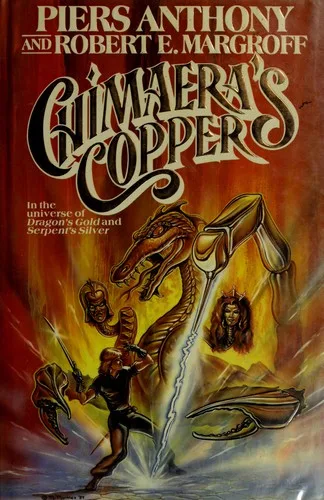
Piers Anthony and Robert E. Margroff's 1990 novel Chimaera's Copper imagines a world where people birth magical creatures from their own bodies.
In Chimaera's Copper, individuals possess the ability to manifest magical beings, known as chimaeras, directly from their physical selves. These creatures are not separate entities but extensions of the creator's psyche and life force. The story follows a young protagonist grappling with this potent, often feared, power within a society that seeks to control or exploit it. The novel examines the complex relationship between creator and creation, touching on themes of identity and the weight of wielding such extraordinary abilities. Anthony and Margroff's work presents a unique approach to magic systems, focusing on internal manifestation rather than external spells or elemental forces.
This 1990 publication arrived during a vibrant period for fantasy fiction. Unlike more common magic systems of the era, the internal genesis of chimaeras offered a distinct conceptual contribution to the genre. The book's focus on the psychological implications of manifesting powerful creatures, and the societal structures that develop around such abilities, sets it apart. Readers interested in early explorations of speculative fiction's engagement with personal power and its consequences will find this novel a notable example.
Chimaera's Copper engages with esoteric concepts through its depiction of internal creation and the manifestation of beings tied directly to an individual's essence. The chimaeras are not simply summoned familiars but integral extensions of the creator's being, mirroring Gnostic ideas of emanation or alchemical principles of internal transformation. The novel explores the inherent dangers and responsibilities associated with such profound self-expression, touching on themes of individuality versus societal conformity, and the potential for both creation and destruction that lies within the self.
💡 Why Read This Book?
• Understand the unique concept of chimaera manifestation, where magical creatures are born from an individual's physical and psychic essence, offering a distinct approach to magical creation not found in typical fantasy lore. • Explore the psychological toll and societal implications of possessing the ability to birth living beings from oneself, as depicted through the protagonist's personal journey and interactions within their world. • Appreciate a collaborative fantasy effort from 1990, examining how Piers Anthony and Robert E. Margroff approached magical system design and character development in an era preceding widespread digital fantasy communities.
⭐ Reader Reviews
Honest opinions from readers who have explored this book.
❓ Frequently Asked Questions
What is a chimaera in the context of Piers Anthony's book?
In Chimaera's Copper, a chimaera is a magical creature literally birthed from an individual's own body and life force. These are not summoned beings but extensions of the creator's essence, requiring control and understanding.
Who are the authors of Chimaera's Copper?
The novel was co-written by Piers Anthony and Robert E. Margroff. It was first published in 1990.
What is the primary theme explored in Chimaera's Copper?
A central theme is the nature of power and responsibility, specifically how individuals cope with extraordinary abilities that are deeply personal and potentially dangerous, examining both the creator's internal struggle and societal reactions.
Does Chimaera's Copper have a unique magic system?
Yes, the magic system revolves around the creation of chimaeras, which are biologically and psychically linked to their creators. This internal genesis distinguishes it from many external spellcasting or summoning systems.
What kind of world does Chimaera's Copper depict?
The book is set in a fantasy world where the ability to manifest chimaeras exists. Society has developed structures to manage, train, and sometimes exploit individuals with this power, creating a unique social dynamic.
Is Chimaera's Copper part of a series?
Chimaera's Copper is a standalone novel and is not part of a larger series by the authors.
🔮 Key Themes & Symbolism
Internal Genesis of Power
The core of Chimaera's Copper lies in its depiction of power originating from within the individual. Unlike external magic systems, the chimaera is a manifestation of the creator's own physical and psychic essence. This concept explores the intimate, often painful, connection between self and creation. The book examines how this internal source of power shapes identity, leading to a profound exploration of self-discovery and the burdens that accompany extraordinary abilities. The struggle to control these manifestations becomes a metaphor for managing one's own inner turmoil and potential.
Responsibility and Control
With the power to birth chimaeras comes immense responsibility. The novel explores the challenges of maintaining control over these beings, which are extensions of the creator's will and vitality. This theme is crucial as uncontrolled chimaeras can be destructive, both to the creator and their surroundings. The narrative highlights the ethical dilemmas faced by those with such abilities, forcing them to confront the consequences of their actions and the delicate balance required to wield their power responsibly within their society.
Societal Structures and Fear
The existence of chimaera-users inevitably shapes the society within Chimaera's Copper. The book illustrates how communities develop systems—ranging from training academies to methods of suppression—to manage and contain this unique power. Often, such abilities are met with fear and suspicion, leading to marginalization or exploitation of those who possess them. The interactions between chimaera-users and the general populace reveal underlying anxieties about the unknown and the potential for the extraordinary to disrupt the status quo.
Identity and Manifestation
The act of creating a chimaera is intrinsically linked to the creator's identity. The form and nature of the manifested creature often reflect aspects of the individual's personality, desires, or fears. This connection raises questions about selfhood: where does the creator end and the chimaera begin? The novel uses this concept to explore the fragmented self and the process of integrating all aspects of one's being, even those that are monstrous or difficult to accept. The protagonist's journey is one of reconciling these internal components.
💬 Memorable Quotes
Direct passages from the work, attributed to the author.
“The chimaera was not a pet, nor a servant, but a part of the self given form.”
— This highlights the core concept of chimaera manifestation as an intimate extension of the creator's being, emphasizing a deep, intrinsic connection rather than a detached relationship.
“Society feared what it could not comprehend, and sought to cage what it feared.”
— This reflects the societal dynamics in the book, where fear of the unknown leads to attempts to control or isolate individuals with unique, powerful abilities like chimaera creation.
“To birth a creature was to share your lifeblood; to lose it was to bleed out.”
— This emphasizes the profound cost and vital connection involved in creating a chimaera, illustrating the life-or-death stakes tied to this form of magic.
💡 Key Ideas
Editorial paraphrase of the work's core concepts — not direct quotes.
Control was not about domination, but about understanding the source.
This paraphrase suggests that true mastery over one's chimaera, and by extension, one's own inner power, comes from self-awareness and empathy, not brute force or suppression.
His chimaera mirrored his darkest thoughts, a tangible echo of his inner turmoil.
This paraphrase points to the psychological aspect of chimaeras, suggesting they can manifest as physical embodiments of the creator's subconscious fears, desires, or internal conflicts.
🌙 Esoteric Significance
Tradition
While not explicitly tied to a single esoteric lineage, Chimaera's Copper speaks to themes found in Hermeticism and certain Gnostic traditions concerning the power of creation and the manifestation of internal realities. The concept of the self birthing external entities can be loosely paralleled with ideas of the divine spark within humanity and the power of the mind to shape reality, albeit in a more biological and visceral fantasy context. It departs from strict esoteric doctrine by grounding these concepts in a more tangible, physical process.
Symbolism
The central symbol is the 'chimaera' itself, representing the creator's inner self—their potential, fears, and desires—given tangible form. The act of 'birthing' these creatures symbolizes creation, birth, and the sometimes-painful emergence of subconscious aspects into conscious awareness. The vitality shared between creator and chimaera symbolizes the interconnectedness of mind, body, and spirit, a common theme in many esoteric philosophies.
Modern Relevance
Contemporary writers and thinkers exploring themes of personal power, the psychology of creation, and unique magical systems continue to find inspiration in works like Chimaera's Copper. Its exploration of the internal source of power and the responsibility that accompanies it aligns with modern discussions in self-help, psychology, and speculative fiction that examine the nature of consciousness and its outward projection. It serves as an example of early genre fiction exploring these concepts.
👥 Who Should Read This Book
• Aspiring fantasy authors looking for innovative magical system concepts, particularly those interested in biological or psychologically-driven magic, can learn from the unique chimaera manifestation. • Readers who enjoy Piers Anthony's earlier works and want to explore his collaborative writing style and thematic explorations beyond the Xanth series will find this novel engaging. • Fans of portal fantasy and character-driven stories that examine the internal struggles of protagonists dealing with immense, unique powers will appreciate the narrative's focus on control and identity.
📜 Historical Context
Published in 1990, Chimaera's Copper emerged during a dynamic period for speculative fiction. Authors like Ursula K. Le Guin and Anne McCaffrey were solidifying their reputations, and the genre was exploring increasingly complex themes. Piers Anthony, already a prolific writer known for his Xanth series, brought a unique voice to this collaboration with Robert E. Margroff. The novel's concept of internal biological magic, where creatures are literally birthed from the user, offered a distinct alternative to the prevalent spell-casting or elemental magic systems of the era. While not directly engaging with a specific intellectual movement like Gnosticism or Hermeticism in its publication, the work taps into a long-standing archetype of creation and self-manifestation found in mythology. Its reception was characteristic of Anthony's popular, yet sometimes critically debated, output in the late 20th century, appealing to a broad fantasy readership interested in inventive magical systems.
📔 Journal Prompts
The chimaera as a reflection of inner self: what form might your own chimaera take?
The responsibility of power: how does the book portray managing a dangerous inner creation?
Societal reaction to the extraordinary: consider the fear and control mechanisms depicted.
The concept of shared vitality: how does the creator's life force fuel the chimaera?
Personal identity: explore the blurred lines between creator and their chimaera.
🗂️ Glossary
Chimaera
A magical creature manifested directly from an individual's physical body and life force. It is an extension of the creator's being, requiring conscious control and understanding.
Manifestation
The act or process by which an individual brings forth a chimaera from their own essence. This is often depicted as a painful or arduous physical and psychic event.
Lifeblood
Refers to the vital energy or life force of an individual, which is directly linked to and consumed by their chimaera. The health of the creator and creature are interdependent.
Control
The ability of a creator to direct and manage their chimaera. This is often presented as a difficult skill that requires mental discipline, understanding, and a strong sense of self.
Societal Structures
The systems, rules, and attitudes developed by the non-chimaera-using population to deal with those who can manifest chimaeras, often involving training, regulation, or fear-based exclusion.
Essence
The fundamental nature or core being of an individual, from which their chimaera is formed. It encompasses both psychic and physical components.
Vitality
The state of being strong, active, and full of energy. In the context of the book, it is directly tied to the life force that sustains both the creator and their chimaera.
🔮 Readers Also Liked
Browse all →









More by Piers Anthony, Robert E. Margroff
All books →
More Free Occult Philosophy Books
View all →