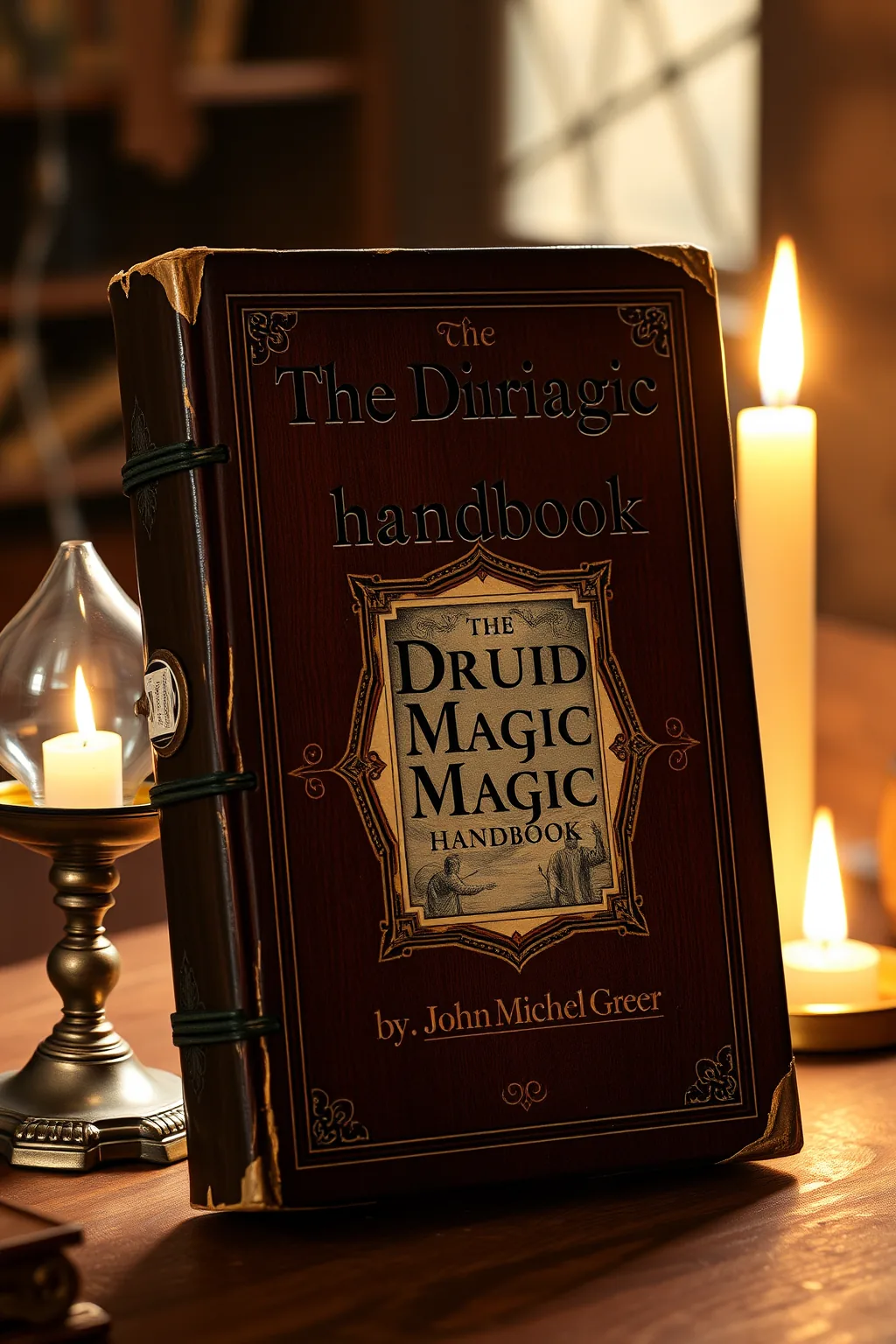
The Druid magic handbook
 78
78

The Druid magic handbook
Greer’s approach in "The Druid Magic Handbook" is commendably pragmatic, moving beyond the often-ethereal portrayals of Druidry. He grounds the practice in tangible interactions with the natural world, a strength that resonates with those seeking concrete spiritual engagement. His explanation of the Awen symbol, for instance, feels less like esoteric dogma and more like a vital energetic principle. However, the book’s focus on structure, while beneficial for beginners, occasionally feels a little too prescriptive, potentially limiting the spontaneous creativity that some practitioners seek. For those needing a clear, methodical introduction to Druidry, this handbook provides a solid foundation, though it might not satisfy those looking for more deeply experiential or historically speculative accounts. It serves as an effective primer for the modern Druid.
📝 Description
78
John Michael Greer's 2008 book presents a functional system for engaging with nature-based spirituality.
Published in 2008, "The Druid Magic Handbook" offers a structured approach to contemporary Druidry, moving beyond romanticized ideas to a practical system for nature-based spirituality. It details core principles and practices, aiming to provide a grounded connection to the earth and its cycles. The book is suited for individuals interested in modern Druidry who seek a clear guide. It assists practitioners looking to deepen their grasp of natural magic, animism, and earth rituals. Newcomers will find it a useful starting point, covering essential knowledge without excessive complexity. Scholars of Western esotericism studying modern pagan movements will also find value here.
Greer places modern Druidry within its historical framework, noting its origins in 18th-century revivalism and subsequent developments. The text touches on figures and ideas that shaped Neo-Druidism, distinguishing it from speculative reconstructions of ancient Celtic practices. This historical context helps readers understand how the tradition is expressed today. The handbook systematically introduces fundamental Druidic concepts, including the significance of sacred groves, the use of natural elements in ritual, and the philosophical basis of animism. It also addresses the part myth, symbol, and personal experience play in spiritual growth.
This work situates modern Druidry within the broader currents of Western esotericism and contemporary paganism. It acknowledges the tradition's roots in 18th-century revivalist movements, which sought to reconnect with perceived ancient wisdom. The book distinguishes this revivalist lineage from earlier or more speculative reconstructions of Celtic practices. By focusing on a practical, nature-based system, Greer connects the contemporary expression of Druidry to themes common in earth-centered spiritualities and animistic philosophies.
💡 Why Read This Book?
• Gain a clear framework for understanding and practicing modern Druidry, moving beyond romanticism to actionable steps, as outlined in Greer's structured approach. • Learn specific techniques for connecting with natural forces and cycles, drawing from the practical rituals and meditations detailed within the handbook. • Understand the historical development of Neo-Druidism since the 18th century, providing context for contemporary practices, as Greer articulates through historical threads.
⭐ Reader Reviews
Honest opinions from readers who have explored this book.
❓ Frequently Asked Questions
What is the primary focus of "The Druid Magic Handbook"?
The book's primary focus is on providing a practical, structured guide to contemporary Druidry, emphasizing a grounded, nature-based spirituality and accessible ritual practices for modern adherents.
When was John Michael Greer's "The Druid Magic Handbook" first published?
The handbook was first published in 2008, making it a relatively modern text within the literature of Neo-Druidism.
Does the book discuss the historical origins of Druidry?
Yes, the work touches upon the historical threads of Druidry, particularly its revival in the 18th century and subsequent evolution, differentiating modern practice from ancient reconstructions.
Is this book suitable for beginners in Druidry?
Absolutely. Greer's handbook is designed to be accessible, offering foundational knowledge and practical exercises for those new to Druidic paths and nature-based spirituality.
What kind of magic or rituals are discussed in the handbook?
The book explores nature-based magic and rituals, focusing on elements, sacred groves, and connecting with natural cycles, presented in a functional and systematic manner.
What is the "Awen" symbol mentioned in relation to Druidry?
Awen, often translated as 'inspiration' or 'poetic muse,' is a central symbol in modern Druidry, representing divine inspiration and the creative flow of the universe, as explored in the handbook.
🔮 Key Themes & Symbolism
Grounded Nature Spirituality
This handbook emphasizes a tangible connection to the natural world, moving beyond abstract theories to practical engagement. It highlights the importance of observing natural cycles, working with elements like earth, air, fire, and water, and finding sacredness in groves and wild spaces. Greer provides methods for attuning oneself to the earth's energies, fostering a deep respect and reciprocal relationship with the environment.
The Role of Ritual and Symbol
Ritual is presented as a vital tool for focusing intention and embodying spiritual principles. The book details how to construct and perform meaningful ceremonies, often drawing on natural phenomena. Symbols, such as the Awen, are explored not just as abstract concepts but as energetic focal points that can aid in spiritual development and connection to the divine or the cosmos.
Druidism as a Path
Greer frames Druidry as a living spiritual path with both historical roots and contemporary relevance. The work addresses the ethical considerations and personal disciplines involved in following this tradition. It offers guidance on building a personal practice that integrates animistic beliefs, reverence for nature, and a commitment to inner growth.
Animism and Interconnectedness
A core tenet explored is animism – the belief that all things possess a spirit or consciousness. The handbook encourages readers to see the world not as a collection of inanimate objects, but as a vibrant, interconnected web of life. This perspective fosters a sense of kinship with all beings and the natural world, informing ethical actions and spiritual understanding.
💬 Memorable Quotes
Direct passages from the work, attributed to the author.
“Sacred groves are places where the veil between worlds is thin.”
— This interpretation emphasizes the energetic significance of natural spaces like groves in Druidic practice. It suggests these locations are conduits for spiritual experience, facilitating connection with unseen forces or dimensions.
“Nature’s rhythms provide a foundational structure for spiritual practice.”
— This concept underscores the book's emphasis on aligning personal spiritual work with the observable cycles of the natural world, such as seasons, lunar phases, and celestial movements.
“Animism sees spirit inherent in all things.”
— This concise statement captures the essence of the animistic worldview, a central to many nature-based spiritual paths including Druidry, asserting the presence of consciousness beyond the human realm.
“Ritual is the art of focused intention made manifest.”
— This interpretation defines ritual as an active, purposeful practice designed to bring about a desired outcome or energetic shift through concentrated will and symbolic action.
💡 Key Ideas
Editorial paraphrase of the work's core concepts — not direct quotes.
The Awen symbol is an emblem of inspiration, the divine spark that illuminates the mind.
This paraphrased concept highlights the central role of the Awen in Druidry, representing not just a decorative motif but a potent symbol for divine illumination and creative energy. It suggests a connection to a universal source of knowledge and intuition.
🌙 Esoteric Significance
Tradition
This work fits within the broader stream of Western Esotericism, specifically the modern revival of Druidry. While not directly Hermetic or Kabbalistic, it shares with these traditions an emphasis on symbolic language, inner transformation, and the pursuit of esoteric knowledge through practical application. It diverges by centering its cosmology and practices firmly on the natural world and its cycles, aligning more closely with animistic and earth-based spiritualities than with celestial or abstract divine hierarchies.
Symbolism
Key symbols in the handbook include the Awen, representing divine inspiration and the flow of creative energy, often visualized as three rays of light. Sacred groves are also central, symbolizing places of power, connection to the earth, and gateways to the spirit world. The natural elements (earth, air, fire, water) serve as fundamental symbolic forces, representing different aspects of existence and utilized in ritual to channel specific energies.
Modern Relevance
Contemporary Druid practitioners, nature-based spiritual groups, and eco-conscious individuals often draw on Greer's systematic approach. His work provides a foundational text for those seeking structured guidance in animism and earth-centered magic. Thinkers focused on bioregionalism and ecological spirituality find resonance in his emphasis on localized, nature-based practice, continuing the lineage of practical Druidry in the 21st century.
👥 Who Should Read This Book
• Aspiring Druids seeking a structured, practical introduction to the path, moving beyond romanticism to understand core principles and practices. • Nature-based spiritual practitioners looking for techniques to deepen their connection with the earth, its cycles, and elemental forces. • Students of Western Esotericism interested in contemporary Pagan movements and their functional approaches to magic and spirituality.
📜 Historical Context
Published in 2008, "The Druid Magic Handbook" emerged during a period of significant growth and diversification within Neo-Druidism. The late 20th and early 21st centuries saw a move away from earlier, often highly speculative interpretations of ancient Celtic traditions towards more personalized, nature-focused, and psychologically grounded practices. Greer's work positioned itself within this contemporary landscape, offering a clear, systematic approach that contrasted with more eclectic or ritualistic forms of paganism gaining traction. While figures like Philip Carr-Gomm had previously popularized Druidry through organizations like The Druid Order (OBOD), Greer's handbook focused on a functional, almost pedagogical, presentation of core principles. This era also saw increased academic interest in Neopaganism, with scholars like Ronald Hutton providing critical historical analyses of Druidic revivals, influencing the discourse around authenticity and practice.
📔 Journal Prompts
Reflect on the concept of the Awen and moments of inspiration in your life.
Consider a local natural space as a potential sacred grove; document its qualities.
Describe a ritual you could perform using the four elements to mark a seasonal change.
How does the principle of animism change your perception of a common natural object?
Outline a personal practice focused on observing and honoring nature's rhythms.
🗂️ Glossary
Awen
A central symbol in modern Druidry, often interpreted as divine inspiration, poetic muse, or the creative force of the universe, typically represented by three rays of light.
Sacred Grove
A natural area, often a wooded space, considered holy or imbued with spiritual significance, serving as a place for ritual, meditation, and connection with nature spirits.
Animism
The belief that spirits inhabit natural objects and phenomena, such as plants, animals, rocks, rivers, and weather patterns, viewing the world as alive and interconnected.
Elemental Magic
A form of ritualistic practice that utilizes the energies and symbolism of the four classical elements—earth, air, fire, and water—to achieve specific spiritual or magical aims.
Neo-Druidism
A modern spiritual or religious movement that draws inspiration from the ancient Druids, adapting their perceived practices and philosophies for contemporary contexts.
Nature-Based Spirituality
A broad category of spiritual paths that emphasize reverence for and connection to the natural world as the primary source of spiritual insight and experience.
Bardic Arts
Traditionally associated with Druidry, these encompass creative expression through poetry, storytelling, music, and other forms of artistic communication believed to channel inspiration.
🔮 Readers Also Liked
Browse all →









More by John Michael Greer
All books →




More Free Occult Philosophy Books
View all →