Good Omens
 82
82

Good Omens
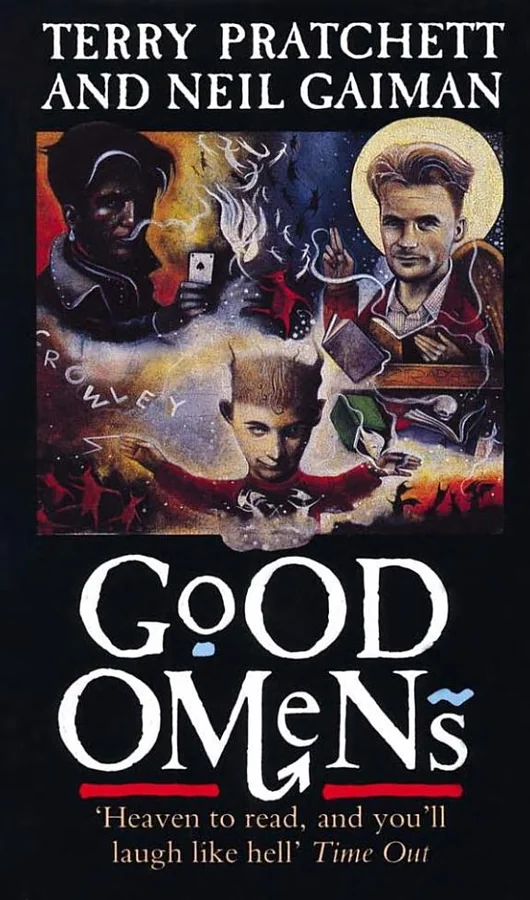
Terry Pratchett and Neil Gaiman’s Good Omens, from its 1991 debut, remains a singular work, a devilishly clever pact between two distinct comedic sensibilities. The book’s greatest triumph lies in its sheer, unadulterated fun; it treats the end of the world not with dread, but with the exasperated sigh of a bureaucrat facing an impossible deadline. Crowley and Aziraphale, the demon and angel duo tasked with overseeing humanity’s final act, are the beating heart of this narrative. Their millennia-long friendship, forged in shared observation of Earth’s peculiarities, provides a grounded, humanistic counterpoint to the cosmic stakes. The narrative occasionally strains under the weight of its numerous plot threads, particularly concerning the Antichrist’s misplaced upbringing, which can feel a touch convoluted. However, even these detours are populated with Pratchett and Gaiman’s signature wit and memorable characters, like the Four Horsemen of the Apocalypse reimagined as modern-day bikers. Ultimately, Good Omens succeeds as a joyous, irreverent celebration of human foibles and the absurdity of fate.
📝 Description
82
Terry Pratchett and Neil Gaiman published Good Omens in 1991, a satirical novel about the end of the world.
This novel presents a humorous take on the biblical concept of Armageddon, imagining the end of the world as an event meticulously, if somewhat haphazardly, planned. The story centers on an angel and a demon, who have become rather fond of Earth over their millennia of existence. They must work together to avert the prophesied apocalypse. Their mission is complicated by a misplaced Antichrist and a series of cosmic miscommunications.
Good Omens appeals to readers who appreciate sophisticated humor, clever wordplay, and a deconstruction of established narratives. Fans of Pratchett's Discworld series or Gaiman's Sandman comics will find familiar threads of wit and imagination. It is also for those interested in philosophical questions disguised as lighthearted fantasy, particularly those who enjoy questioning grand destinies and the nature of good and evil. Readers seeking a narrative that balances existential dread with genuine affection for humanity will find a kindred spirit here.
Published in 1991, Good Omens emerged during a period of broadening horizons in speculative fiction. The novel arrived during a time of increased interest in apocalyptic themes in popular culture, yet it distinguished itself with an irreverent perspective. Pratchett's established reputation from his Discworld series and Gaiman's growing prominence in comics provided a solid foundation for its reception, positioning it as a significant crossover work blending distinct authorial voices into a singular, comedic vision.
💡 Why Read This Book?
• Understand the subversion of apocalyptic narratives by examining the specific plot point of the Antichrist being misplaced from the American Embassy to Tadfield, England. • Appreciate the nuanced portrayal of good and evil through the characters of Crowley and Aziraphale, whose millennia-long friendship challenges binary perceptions. • Gain insight into the comedic deconstruction of divine and infernal plans by analyzing the elaborate, yet flawed, machinations leading up to the prophesied Armageddon.
⭐ Reader Reviews
Honest opinions from readers who have explored this book.
❓ Frequently Asked Questions
When was Good Omens first published and who are the authors?
Good Omens was first published in August 1991. It is a collaborative work by renowned British authors Terry Pratchett and Neil Gaiman, both celebrated for their unique contributions to fantasy and science fiction literature.
What is the central conflict in Good Omens?
The central conflict revolves around the impending Armageddon. An angel, Aziraphale, and a demon, Crowley, who have both grown fond of Earth, conspire to prevent the apocalypse by misplacing the Antichrist.
Are there specific esoteric themes explored in Good Omens?
Yes, the book playfully explores themes of free will versus destiny, the nature of good and evil, and the often-absurd bureaucracy of celestial and infernal realms, offering a unique take on theological concepts.
What is the significance of the character Anathema Device?
Anathema Device is a descendant of the prophetess Agnes Nutter and plays a crucial role in deciphering the 'Nice and Accurate Prophecies of Agnes Nutter' to guide the characters toward (or away from) the end of the world.
Where does the Antichrist live for most of the book?
The Antichrist, Adam Young, grows up in the quiet English village of Lower Tadfield, unaware of his true destiny for the majority of the novel, having been accidentally switched at birth.
What is the tone of Good Omens?
The tone of Good Omens is predominantly satirical, humorous, and irreverent. It uses wit and absurdity to examine serious themes like the apocalypse and the nature of humanity.
🔮 Key Themes & Symbolism
The Absurdity of Prophecy
Good Omens satirizes the very concept of predetermined destiny. The 'Nice and Accurate Prophecies of Agnes Nutter,' a central element, are presented as an infallible guide, yet their interpretation and execution become subject to human (and non-human) error and convenience. This theme questions whether fate is truly fixed or if free will, even in small, seemingly insignificant choices, can reroute the grandest of designs. The novel suggests that the divine plan, if one exists, is often less a majestic blueprint and more a series of bureaucratic mishaps.
Friendship Across Divides
The enduring bond between the angel Aziraphale and the demon Crowley is the emotional core of the novel. Having spent six millennia on Earth, they have developed a comfortable, albeit clandestine, friendship that transcends their opposing celestial roles. Their shared affection for humanity and Earth's cultural offerings—from music to books—blurs the lines between good and evil. This relationship challenges the rigid dichotomies often presented in theological narratives, proposing that connection and understanding can arise from the most unlikely of partnerships.
Humanity's Ambiguous Nature
The book posits that humanity is neither purely good nor wholly evil, but a complex mixture of both. The impending Armageddon is seen by Aziraphale and Crowley not as a righteous cleansing, but as a loss of all the peculiar, wonderful things Earth has to offer. The character of Adam Young, the Antichrist, embodies this ambiguity. Raised in a normal English village, his 'evil' is tempered by his innate sense of fairness and his desire to protect his friends and home, demonstrating that human potential for both creation and destruction is deeply intertwined.
Bureaucracy of the Beyond
Pratchett and Gaiman hilariously depict the celestial and infernal realms as vast, inefficient bureaucracies. Heaven and Hell operate with a rigid, often nonsensical, set of rules and procedures, mirroring earthly organizations. The 'Arrangement' between Heaven and Hell regarding the end times, the constant memos, and the interchangeable nature of some angels and demons highlight a critique of blind adherence to authority and the dehumanizing aspects of large-scale systems. This aspect lends a satirical edge to theological concepts.
💬 Memorable Quotes
Direct passages from the work, attributed to the author.
“It was,' said Aziraphale, 'a thoroughly nice day.'”
— This simple statement, often made by Aziraphale, underscores his appreciation for the mundane beauty of Earth. It represents his perspective, contrasting with the grand, often destructive, cosmic events, and highlights his growing attachment to the human world.
“There was a crispness about the air that had nothing to do with the temperature.”
— This description hints at an underlying tension or unnatural element present in the atmosphere, suggesting that the ordinary world is subtly being affected by the extraordinary events surrounding the Antichrist's arrival.
“It was the sort of place where things happened. Or, more often, where things didn’t happen.”
— This observation about Lower Tadfield captures the deceptive ordinariness of the setting where the Antichrist grows up. It highlights the theme that significant events can unfold in the most unassuming locations, often unnoticed until it's almost too late.
💡 Key Ideas
Editorial paraphrase of the work's core concepts — not direct quotes.
The End was coming, and it was going to be a scorcher.
This quote captures the book's irreverent tone towards Armageddon. Instead of impending doom, it's presented with a touch of mundane anticipation, hinting at the satirical and darkly humorous approach the authors take towards the apocalypse.
The nice thing about being a demon,' Crowley had explained, 'is that one doesn't have to worry about being good.'
This line captures Crowley's pragmatic, albeit self-serving, philosophy. It reflects the book's exploration of morality, suggesting that a defined role, whether good or evil, removes the burden of ethical decision-making.
🌙 Esoteric Significance
Tradition
While not strictly adhering to a single esoteric tradition, Good Omens playfully engages with Gnostic themes of a flawed creator or demiurge and the idea of escaping a predetermined fate. The narrative critiques rigid divine plans, echoing Gnostic dissatisfaction with the material world and its perceived limitations. The characters' desire to preserve Earth, a place of both beauty and suffering, can be seen as a form of attachment to the manifest world, diverging from some ascetic traditions but aligning with a humanistic appreciation of existence.
Symbolism
The primary symbols are the halo and the pitchfork, representing Aziraphale and Crowley respectively. Their co-optation and the blurring of their distinct meanings signify the erosion of clear boundaries between good and evil. Agnes Nutter's prophecies serve as a symbol of fate or divine will, yet their interpretation by human agents underscores the role of free will and perspective in shaping destiny. The misplaced Antichrist symbolizes the subversion of divine plans and the unpredictable nature of existence.
Modern Relevance
Contemporary thinkers and creators in fields like speculative fiction and philosophical comedy continue to draw inspiration from Good Omens' blend of humor and existential questioning. Its nuanced portrayal of morality and its critique of rigid systems remain relevant in discussions about societal structures and individual agency. The book's success paved the way for more collaborative authorial efforts and demonstrated the commercial viability of intellectually playful genre fiction, influencing subsequent works that tackle grand themes with wit and skepticism.
👥 Who Should Read This Book
• Readers interested in theological satire and the subversion of apocalyptic tropes, who will appreciate the novel's humorous take on divine plans and prophecies. • Fans of Terry Pratchett and Neil Gaiman seeking to explore their collaborative work, particularly those who enjoy witty prose and imaginative storytelling. • Individuals drawn to philosophical comedy and narratives that question the nature of good, evil, and free will through engaging characters and absurd situations.
📜 Historical Context
Published in 1991, Good Omens arrived during a period of significant growth in genre fiction's literary acceptance. Terry Pratchett was already a household name for his Discworld series, and Neil Gaiman was making waves in the comic book world with 'The Sandman.' The novel tapped into a cultural fascination with apocalyptic narratives, which had seen a resurgence in the late 20th century, yet it distinguished itself through its distinctly British humor and irreverent take on theological concepts. It offered a stark contrast to more earnest or grim explorations of the end times. While not directly engaging with a specific competing school of thought in the same way a philosophical treatise might, its comedic deconstruction of established religious tropes resonated with a readership increasingly open to questioning traditional narratives. Its reception was largely positive, cementing its status as a beloved classic of satirical fantasy.
📔 Journal Prompts
The Arrangement between Heaven and Hell: Reflect on its bureaucratic inefficiencies.
Aziraphale and Crowley's friendship: Analyze how their millennia-long bond challenges perceived cosmic roles.
Agnes Nutter's prophecies: Consider the reliability of predestination versus individual choice.
Adam Young's perspective: Explore the impact of a normal childhood on the Antichrist.
The nature of humanity: Discuss the book's portrayal of human beings as neither wholly good nor evil.
🗂️ Glossary
Armageddon
In the context of Good Omens, this refers to the prophesied final battle between the forces of good and evil, marking the end of the world, which the protagonists actively seek to prevent.
The Arrangement
A pact between Heaven and Hell detailing the procedures and responsibilities leading up to the final battle, often depicted as a complex and somewhat inefficient bureaucratic system.
Antichrist
The prophesied figure destined to bring about the end times. In the novel, the identity and upbringing of the Antichrist are central to the plot's complications.
Lower Tadfield
A quiet, unassuming English village where the Antichrist, Adam Young, grows up largely unaware of his true destiny, highlighting the theme of ordinary settings for extraordinary events.
Nice and Accurate Prophecies of Agnes Nutter
A book of prophecies written by the witch Agnes Nutter, which serves as a guide for the characters, though its interpretation proves challenging and crucial to the plot.
Four Horsemen
Traditionally figures of apocalyptic destruction, in Good Omens they are reimagined as modern bikers, representing the Horsemen of the Apocalypse (War, Famine, Pollution, and Death).
The Them
Adam Young's group of friends in Lower Tadfield. Their loyalty and influence play a significant role in shaping Adam's actions and his understanding of the world.
This book appears in 1 collection
🔮 Readers Also Liked
Browse all →








From the “Angels” Collection
View all →



More Free Occult Philosophy Books
View all →