Stiletto

 78
78

Stiletto
Daniel O'Malley’s Stiletto is a refreshing departure from much of the brooding, angst-ridden urban fantasy that has become commonplace. The novel's strength lies in its protagonist, Verity, a capable and refreshingly pragmatic operative for a secret government agency tasked with handling supernatural incursions. O'Malley’s writing possesses a sharp, understated wit that elevates the material, particularly in depicting the bureaucratic absurdities that accompany dealing with entities that could, for instance, warp reality. The book’s core concept of a "Special Situation Unit" is particularly well-realized, treating magic as a problem to be managed, cataloged, and contained, much like any other national security threat. A minor limitation, however, is that the focus on procedural elements occasionally overshadows deeper character development, leaving some secondary figures feeling somewhat underdeveloped. The section detailing the "Chamber of Horrors" and its cataloging system, for instance, is a brilliant illustration of the book's unique perspective but could have been balanced with more personal stakes for Verity. Despite this, Stiletto succeeds as an intelligent and entertaining entry into the genre.
📝 Description
78
Daniel O'Malley's 2016 novel, Stiletto, imagines a government agency managing supernatural threats.
Stiletto, published in 2016, places readers within the Special Situation Unit (SSU), a clandestine government branch tasked with handling paranormal phenomena. The protagonist, Verity, navigates a world where magic and supernatural entities coexist with the mundane, focusing on the practical, bureaucratic challenges of containing such threats. O'Malley's narrative is known for its swift pace and dry humor, presenting a logical, if unusual, framework for dealing with the impossible.
The novel appeals to those who enjoy fantasy grounded in recognizable reality, where magic subtly alters the world. It features competent protagonists who rely on intellect, training, and occasional supernatural assistance to solve problems. Readers of police procedurals or spy thrillers seeking a unique genre blend will find the book engaging. It also caters to those interested in how societal structures might adapt to the presence of the supernatural, emphasizing logical internal consistency within its world building.
Stiletto emerges from the urban fantasy tradition, a genre that often places supernatural elements within contemporary urban environments. While many urban fantasy works focus on the personal magical journeys of protagonists, O'Malley distinguishes his approach by detailing the administrative and operational aspects of managing the paranormal. This focus on the 'how' of magical containment, rather than solely the 'who,' aligns with an interest in the systemic implications of occult realities, akin to examining the infrastructure that might support a hidden world.
💡 Why Read This Book?
• You will learn how a clandestine government agency might pragmatically manage supernatural threats, moving beyond typical magical combat tropes, as seen in the "Special Situation Unit's" operational procedures. • You will experience a protagonist, Verity, who approaches the extraordinary with competence and wit, offering a different archetype than the usual reluctant hero, exemplified by her systematic handling of anomalies. • You will gain an appreciation for the "magical infrastructure" concept, exploring how societies might integrate or conceal paranormal elements through established protocols and agencies, as depicted throughout the SSU's operations.
⭐ Reader Reviews
Honest opinions from readers who have explored this book.
❓ Frequently Asked Questions
What is the primary function of the Special Situation Unit (SSU) in Stiletto?
The SSU, as depicted in Daniel O'Malley's Stiletto, is a clandestine government agency responsible for identifying, containing, and managing supernatural phenomena and entities that pose a threat or require specialized handling.
Who is the main character in Stiletto by Daniel O'Malley?
The main character is Verity, an operative for the Special Situation Unit (SSU). She is portrayed as highly competent, pragmatic, and possessing a dry sense of humor as she navigates paranormal threats.
What year was Daniel O'Malley's Stiletto first published?
Stiletto by Daniel O'Malley was first published in 2016, placing it within the contemporary urban fantasy landscape.
Does Stiletto involve a lot of traditional spellcasting or magic systems?
While magic is central, Stiletto focuses more on the practical, procedural, and often bureaucratic aspects of managing the supernatural rather than intricate spellcasting systems. Verity's approach is more about containment and analysis.
Is Stiletto part of a series, and if so, where does it fit?
Yes, Stiletto is the second book in Daniel O'Malley's Cheshyre Investigations series, following 'The Rook' and preceding 'Battle Mage'.
What makes the "Chamber of Horrors" concept in Stiletto unique?
The "Chamber of Horrors" in Stiletto represents the SSU's systematic cataloging and containment of dangerous magical artifacts and entities, treating them as operational assets or threats rather than purely mystical curiosities.
🔮 Key Themes & Symbolism
Occult Bureaucracy
Stiletto elevates the mundane to the mystical by portraying the management of supernatural phenomena through a bureaucratic lens. The "Special Situation Unit" (SSU) operates with protocols, classifications, and administrative procedures, treating magical threats as security risks. This theme explores the idea that even the most extraordinary events require organization and oversight, grounding the esoteric in a surprisingly familiar, if slightly absurd, organizational structure. The narrative highlights how systems of control and documentation are applied to the unexplainable, making the occult feel more procedural and less purely spiritual.
Pragmatic Heroism
The protagonist, Verity, embodies a form of pragmatic heroism. Rather than relying on innate magical power or dramatic pronouncements, she utilizes her training, intellect, and the resources of the SSU to resolve "special situations." Her approach is characterized by efficiency, logical problem-solving, and a dry wit that undercuts the inherent danger. This theme offers an alternative to traditional heroic archetypes, showcasing competence and methodical action as primary tools for dealing with the paranormal, demonstrating that heroism can be a job to be done professionally.
The Hidden Infrastructure
The novel posits the existence of a hidden "magical infrastructure" that parallels our own world, complete with agencies, rules, and containment protocols. This concept of an unseen operational layer allows for the coexistence of the mundane and the magical. Stiletto explores the mechanics of this hidden world, from the "Chamber of Horrors" to the methods of tracking anomalous entities. It suggests that the supernatural is not just a force of chaos but an element that has been, to some extent, integrated and managed by human systems, however secret.
Containment and Classification
A central tenet of Stiletto is the systematic approach to containing and classifying supernatural threats. The SSU's work involves understanding the nature of an anomaly, assessing its risk, and implementing appropriate measures to neutralize or isolate it. This theme is explored through the "Chamber of Horrors," which serves as a repository for captured magical entities and artifacts. The book examines the challenges and ethical considerations of cataloging and controlling beings or objects of immense power, framing the occult as a subject for scientific and administrative management.
💬 Memorable Quotes
Direct passages from the work, attributed to the author.
“The world is a lot more complicated than people think. Especially when you’re the one tasked with keeping the complicated bits from spilling over.”
— This statement captures the essence of Verity's role and the book's central theme: the hidden, often bureaucratic, effort required to maintain the illusion of normalcy by managing supernatural threats.
“We don't fight monsters; we file reports on them. And sometimes, the filing is the fight.”
— This highlights the novel's unique take on urban fantasy, emphasizing the procedural and administrative challenges of dealing with the paranormal over direct, physical confrontation.
“The Chamber of Horrors isn't about keeping things in; it's about understanding what they are.”
— This interpretation of the SSU's 'Chamber of Horrors' underscores the book's focus on classification and knowledge as a form of control, rather than mere imprisonment of magical entities.
“Normal is just a setting on the washing machine.”
— This cynical yet witty observation dismisses the idea of a universally understood or stable 'normal,' suggesting that perceived reality is often a constructed or maintained state, especially when the supernatural is involved.
💡 Key Ideas
Editorial paraphrase of the work's core concepts — not direct quotes.
You can’t stop the impossible from happening, but you can be ready when it does.
This quote reflects the pragmatic and prepared mindset of Verity and the SSU, acknowledging the unpredictable nature of the supernatural while emphasizing the importance of operational readiness.
🌙 Esoteric Significance
Tradition
Stiletto does not align strictly with any single esoteric tradition but rather synthesizes elements of occultism with modern administrative and security concepts. It operates within the broader umbrella of "esoteric fiction" that explores hidden realities and supernatural phenomena. The work departs from traditional occultism by framing magical events as "special situations" to be managed through protocols and containment, much like a government agency would handle a national security threat, rather than through spiritual or ritualistic means.
Symbolism
The "Special Situation Unit" itself functions as a symbol of humanity's attempt to impose order and control over the chaotic and unknown forces of the supernatural. The "Chamber of Horrors" symbolizes the cataloging and containment of dangerous entities and artifacts, representing knowledge and bureaucracy as tools against existential threats. The concept of "anomalies" serves as a symbol for the unpredictable and the inexplicable that constantly challenge established systems of understanding and control.
Modern Relevance
Contemporary thinkers and practitioners in fields like speculative fiction analysis and organizational psychology might find Stiletto relevant. Its portrayal of managing the impossible through structured processes speaks to modern discussions on risk management and crisis response in complex systems. The book's mix of the mundane and the magical continues to influence writers exploring how everyday institutions might adapt to extraordinary circumstances, feeding into discussions about the "hidden infrastructure" of fictional worlds.
👥 Who Should Read This Book
• Speculative fiction readers seeking urban fantasy with a procedural, administrative twist rather than a purely magical combat focus. • Fans of competent protagonists who solve problems with wit and methodology, appreciating a grounded approach to the supernatural. • Writers and thinkers interested in how fictional societies might logically integrate or conceal paranormal elements through bureaucratic structures.
📜 Historical Context
Daniel O'Malley's Stiletto, published in 2016, arrived during a period when urban fantasy had matured considerably, moving beyond its initial boom. Authors like Jim Butcher had already cemented the genre's appeal with series like The Dresden Files, which often focused on a lone magical practitioner navigating a hidden world. Stiletto, however, carved out its niche by shifting the focus from the individual magic-user to the organizational structure designed to manage supernatural threats. The novel's approach to the occult as a subject of bureaucratic control and classification can be seen as a contemporary commentary on institutional responses to the unknown. While not directly engaging with a specific "competing school of thought" in the esoteric sense, its procedural nature offered a contrast to the more mystical or action-oriented urban fantasy prevalent at the time. The book's reception was generally positive, appreciated for its wit and originality within a crowded genre, though it did not spark a major academic debate or receive significant awards that would serve as a specific reception event.
📔 Journal Prompts
The SSU's classification system for anomalies.
Verity's approach to managing "special situations."
The implications of a "magical infrastructure" coexisting with the mundane.
The "Chamber of Horrors" as a repository of the inexplicable.
The balance between secrecy and operational necessity for the SSU.
🗂️ Glossary
Special Situation Unit (SSU)
A clandestine government agency tasked with identifying, containing, and managing supernatural threats and anomalies that fall outside conventional governmental purview.
Special Situation
An event, entity, or phenomenon that is paranormal or defies natural explanation, requiring the intervention of specialized agencies like the SSU.
Anomaly
In the context of Stiletto, an anomaly refers to anything that deviates from expected natural laws or societal norms, particularly entities or events with supernatural origins or capabilities.
Chamber of Horrors
A secure facility maintained by the SSU for the containment and study of dangerous magical artifacts, creatures, and other supernatural phenomena.
Magical Infrastructure
The underlying, often hidden, systems, protocols, and organizations that allow for the coexistence or management of magical elements within or alongside the mundane world.
Verity
The pragmatic and capable protagonist of Stiletto, an operative for the Special Situation Unit who specializes in resolving paranormal incidents.
Mundane
Refers to the ordinary, non-magical world and its inhabitants, as distinct from the supernatural or esoteric elements encountered by characters like Verity.
🔮 Readers Also Liked
Browse all →








More by Daniel O'Malley
All books →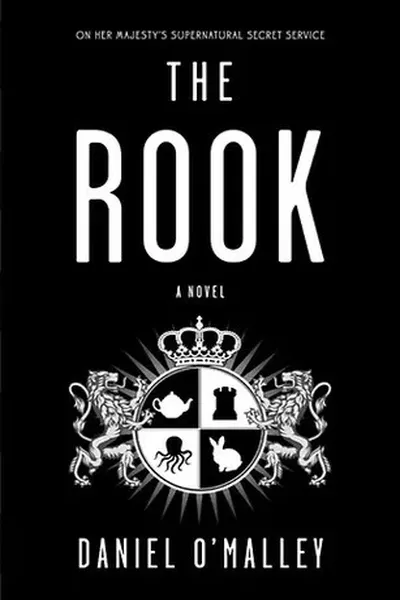
More Free Occult Philosophy Books
View all →