The Devourers
 76
76

The Devourers
Indra Das's "The Devourers" presents a compelling dual narrative, juxtaposing the quiet intensity of scholarly pursuit in contemporary Kolkata with the visceral, blood-soaked accounts of the 17th-century Mughal Empire. The strength lies in its atmospheric prose and the unsettling allure of the ancient journal, which feels both alien and intimately familiar. The novel effectively captures the seductive danger of forbidden knowledge, particularly through the character of the stranger who guides the transcription. However, the pacing occasionally falters in the modern-day segments, feeling somewhat less urgent than the historical revelations. A particularly striking element is the exploration of the journal's descriptions of shapeshifting, blurring the lines between human agency and primal instinct. The work ultimately succeeds as a dark, intricate exploration of power and transformation. It is a potent narrative for those drawn to the shadows of history and myth.
📝 Description
76
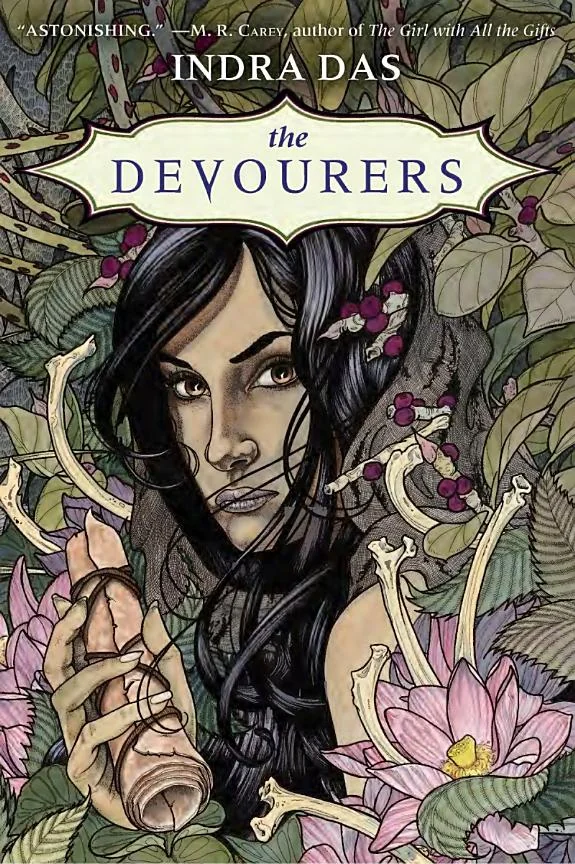
Indra Das's 2016 novel, The Devourers, begins with a historian transcribing a 17th-century journal.
The Devourers, published in 2016, unfolds across two timelines: modern Kolkata and the 17th-century Mughal Empire. A young historian is tasked with translating an old journal, a document filled with accounts of brutal magic, abductions, and shape-shifting beings. The journal itself is a physical artifact, bound in paper, parchment, and animal skins, hinting at the primal forces it describes.
The novel draws heavily on the historical setting of the Mughal Empire. This period saw immense cultural shifts and power struggles. Das uses this backdrop to examine themes of subjugation and survival, offering a fictional perspective on historical events. The narrative structures itself around the journal's own unfolding story, creating layers of reality and myth.
This novel engages with occult traditions through its depiction of potent magic and shape-shifting entities. The journal's contents suggest ancient rites and a primal connection between human and beast. It touches on themes of transformation and the struggle between hunter and prey, echoing motifs found in various occult and folklore traditions that explore the darker aspects of the supernatural and the blurred lines of identity.
💡 Why Read This Book?
• Learn about the potent, often dangerous, allure of ancient texts through the historian's engagement with the transcribed journal, highlighting the risks of confronting forgotten magic. • Experience the visceral depiction of 17th-century Mughal Empire's harsh landscapes and its inhabitants' struggles, offering a unique perspective on historical survival. • Explore the concept of chosen transformation versus being prey, a central philosophical tension presented through the journal's cryptic narratives and the characters' choices.
⭐ Reader Reviews
Honest opinions from readers who have explored this book.
❓ Frequently Asked Questions
What is the primary setting of "The Devourers"?
The novel features two primary settings: modern-day Kolkata, India, where a young historian works, and the 17th-century Mughal Empire, depicted through the contents of an ancient journal.
What kind of content does the ancient journal in "The Devourers" contain?
The journal details bloodshed, kidnapping, magic, and shapeshifting. It narrates stories of hunters and prey, lovers and the beloved, set against the backdrop of the Mughal era.
Who is Indra Das?
Indra Das is the author of "The Devourers," with the book first being published in 2016. The author's work often explores dark, fantastical, and mythological themes.
What are the main themes explored in "The Devourers"?
Key themes include transformation, identity, the nature of predation, the power of ancient knowledge, and the choice between evolving or being consumed.
Is "The Devourers" a historical fiction novel?
While it features historical elements and settings, "The Devourers" is primarily a work of speculative fiction that blends historical narrative with supernatural and occult themes.
What is the significance of the Mughal Empire setting?
The 17th-century Mughal Empire provides a stark, often brutal, historical canvas for the journal's magical and violent narratives, contrasting with the modern-day setting.
🔮 Key Themes & Symbolism
The Seduction of Forbidden Lore
The narrative hinges on the transcription of an ancient journal filled with potent, dangerous knowledge. This theme explores how the allure of arcane secrets, even those steeped in bloodshed and transformation, can draw individuals into perilous situations, blurring the lines between academic pursuit and occult entanglement.
Primal Transformation and Identity
Central to the book is the concept of metamorphosis, both literal and metaphorical. The journal's accounts of shapeshifting and the characters' ultimate choices—to be transformed or to become quarry—look at the fluid nature of identity and the primal forces that can reshape one's existence.
Hunter and Prey Dynamics
The book examines the eternal struggle between predator and victim. This theme is explored through the historical accounts within the journal and the interactions in the modern-day narrative, questioning power structures and the instinct for survival in both human and supernatural contexts.
Juxtaposition of Eras
Das masterfully contrasts the vibrant, often chaotic, atmosphere of modern Kolkata with the harsh, unforgiving landscapes of the 17th-century Mughal Empire. This temporal duality highlights how ancient narratives and primal conflicts continue to echo and influence the present.
💬 Memorable Quotes
Direct passages from the work, attributed to the author.
“It reveals the story of hunters and prey, lovers and the beloved.”
— This highlights the dualistic nature of the narratives within the journal, focusing on primal relationships of power, desire, and survival. It suggests an exploration of fundamental human (and perhaps non-human) drives and their inherent conflicts.
“And, in the end, the choice to be transformed, or be quarry.”
— This is the thematic crux of the novel, presenting a stark dichotomy. It speaks to existential choices regarding agency, evolution, and the potential for annihilation or profound change.
“A dreamlike novel about a young historian and a persuasive and beguiling stranger.”
— This frames the modern-day narrative's atmosphere and introduces key characters. The 'dreamlike' quality suggests a surreal or altered perception, while the stranger's nature hints at hidden motives and esoteric influence.
“Set against the harsh landscapes of the 17th-Century Mughal Empire.”
— This grounds the historical portion of the narrative in a specific, evocative setting. The 'harsh landscapes' imply a world of struggle, danger, and raw nature, providing a potent backdrop for the journal's dark tales.
💡 Key Ideas
Editorial paraphrase of the work's core concepts — not direct quotes.
A collection of paper, parchment, and skins, the journal tells of bloodshed, kidnapping, magic and shapeshifting.
This quote expresses the physical and thematic essence of the ancient journal. It signals the book's exploration of dark magic, violence, and fundamental alterations of being, setting a tone of historical dread and arcane mystery.
🌙 Esoteric Significance
Tradition
The work draws upon a lineage of occult and folkloric traditions that explore primal transformations and the potent, often dangerous, nature of ancient magic. While not strictly adhering to a single tradition like Hermeticism or Kabbalah, it appeals to Gnostic ideas of hidden knowledge and the potential for radical alteration of the self, as well as with darker folkloric motifs of shapeshifting and predatory entities.
Symbolism
The journal itself serves as a potent symbol of hidden, often perilous, knowledge. The act of shapeshifting represents a profound disruption of identity and a connection to primal, instinctual forces. The duality of hunter and prey symbolizes the constant struggle for power and survival, reflecting cosmic or existential dichotomies.
Modern Relevance
Contemporary occult practitioners and speculative fiction writers interested in dark fantasy, folklore, and the intersection of history and magic find resonance in "The Devourers." Its exploration of identity transformation and the seductive nature of forbidden lore speaks to modern anxieties about selfhood and the allure of escaping mundane reality through esoteric means.
👥 Who Should Read This Book
• Students of comparative mythology and folklore: To analyze the novel's incorporation of shapeshifting and hunter/prey archetypes within a historical and supernatural framework. • Readers of dark fantasy and occult fiction: To engage with a narrative that blends historical settings with potent, often unsettling, magical elements and existential choices. • Scholars of postcolonial literature: To examine how the novel uses the historical backdrop of the Mughal Empire to explore themes of power, subjugation, and alternative narratives.
📜 Historical Context
Indra Das's "The Devourers" (2016) emerges from a contemporary literary landscape increasingly interested in blending speculative fiction with historical grounding. While not directly tied to a specific esoteric movement of the past, its exploration of ancient magic and transformation echoes themes found in Gnostic traditions and certain strands of Hermeticism, which often grapple with concepts of inherent power and altered states of being. The novel's setting in the 17th-century Mughal Empire places it within a period of immense cultural and intellectual flux in South Asia, marked by the consolidation of imperial power and diverse religious and philosophical currents. This era saw figures like Dara Shikoh, who was interested in comparative religion, and the continued influence of Sufism and various folk traditions. "The Devourers" does not engage directly with these historical figures but uses the empire's rich, often volatile, historical milieu as a backdrop for its supernatural narratives, offering a counter-narrative to purely secular historical accounts. Its reception has been within circles appreciating dark fantasy and the occult.
📔 Journal Prompts
The ancient journal's accounts of bloodshed and magic.
The choice to be transformed, or be quarry.
The persuasive and beguiling stranger's influence.
The harsh landscapes of the 17th-Century Mughal Empire.
The historian's role in transcribing dangerous lore.
🗂️ Glossary
Mughal Empire
A vast and powerful empire that ruled over much of the Indian subcontinent from the early 16th to the mid-18th century. Known for its rich culture, architecture, and complex political landscape.
Shapeshifting
The ability to change one's physical form into that of another creature or object, often associated with folklore, mythology, and magical traditions.
The Journal
The central artifact within the novel, containing ancient, potent narratives of magic, violence, and transformation, driving the plot and thematic exploration.
The Historian
The protagonist in the modern-day narrative, tasked with the dangerous work of transcribing the ancient journal, acting as a conduit between past and present.
The Stranger
A mysterious and influential character in the modern-day Kolkata setting, who persuades the historian to transcribe the journal, possessing a beguiling and potentially dangerous aura.
Quarry
In the context of the book, refers to prey; an entity or victim being hunted or pursued, representing a state of vulnerability and inevitable capture.
Transformation
A fundamental change in form, nature, or appearance. In the novel, this refers both to magical metamorphosis and existential shifts in being.
This book appears in 1 collection
🔮 Readers Also Liked
Browse all →








From the “Shapeshifting” Collection
View all →






More Free Occult Philosophy Books
View all →