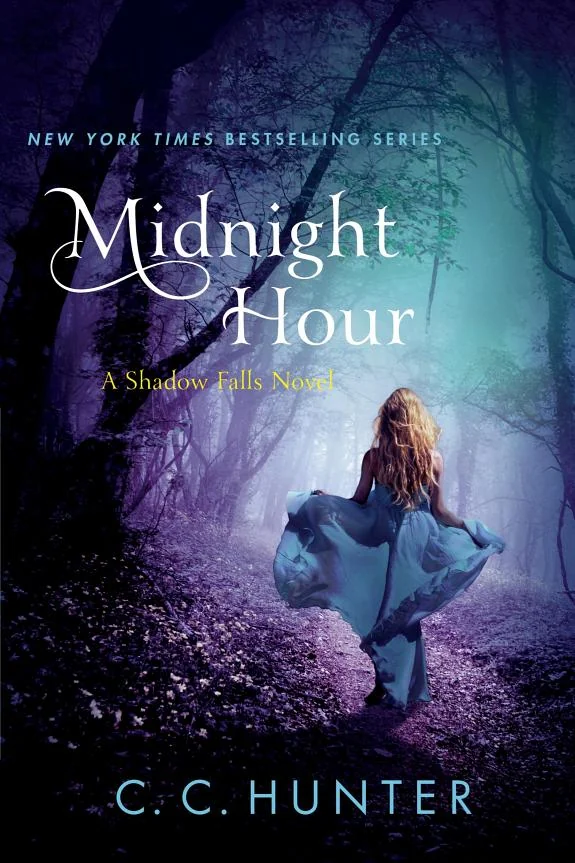
Midnight Hour
 73
73

Midnight Hour
C. C. Hunter’s *Midnight Hour* offers a compelling, if familiar, entry into the YA paranormal landscape. The novel excels in its pacing, particularly as Miranda Kane’s personal quest for answers about her mysterious tattoo intersects with her sister’s vanishing. Hunter skillfully builds suspense, making the reader eager to uncover the secrets alongside Miranda. The depiction of Miranda’s dawning magical abilities feels organic, rooted in her personal struggles rather than sudden, unexplained power surges. However, the narrative occasionally leans into established genre tropes without significantly subverting them, which might leave seasoned readers wanting more originality. A particular strength lies in the depiction of the tattoo itself; its evolving nature and the mystery surrounding its origin are handled with a nuanced touch, hinting at deeper lore without immediate exposition. Ultimately, *Midnight Hour* delivers a solid, engaging supernatural mystery that effectively balances character development with plot momentum.
📝 Description
73
C. C. Hunter's 2016 novel, Midnight Hour, begins with Miranda Kane grappling with new magical abilities.
In C. C. Hunter's 2016 novel, Midnight Hour, protagonist Miranda Kane discovers burgeoning magical powers after a dangerous incident leaves her with a mysterious tattoo. This event propels her into a personal quest to understand her newfound abilities and the meaning behind the mark. Her investigation soon becomes intertwined with the sudden disappearance of her sister, creating a dual mystery that drives the plot. The story follows Miranda as she navigates these challenges, balancing her internal struggle with her powers against the external threat posed by her sister's vanishing.
The novel appeals to young adult readers who enjoy paranormal fiction. It features a protagonist who discovers supernatural abilities and deals with complicated family relationships. Those who appreciate urban fantasy with themes of self-discovery and suspense will find the narrative compelling. The combination of magic, mystery, and coming-of-age elements makes it suitable for younger audiences looking for characters facing extraordinary situations.
Published in 2016, Midnight Hour taps into a popular genre of young adult fiction that often touches on esoteric concepts, even if not explicitly labeled as such. The narrative centers on Miranda's "awakening" to her latent magical potential, a theme common in esoteric traditions where individuals discover hidden abilities or spiritual connections. The mysterious tattoo acts as a symbol, often found in occult lore, signifying destiny, power, or an initiation into a hidden world. Miranda's quest for truth about her powers and her sister's disappearance mirrors the esoteric pursuit of hidden knowledge and the personal transformation that often accompanies such journeys.
💡 Why Read This Book?
• Gain insight into the narrative arc of discovering latent magical abilities, as seen in Miranda Kane's journey, which mirrors common themes in adolescent awakening stories. • Understand the symbolic weight of mysterious markings, such as the tattoo bestowed after Miranda's near-death experience, and their function in driving plot and character motivation. • Experience a blend of familial stakes and supernatural mystery, where the urgency of a sister's disappearance is amplified by the protagonist's emerging powers, offering a unique narrative tension.
⭐ Reader Reviews
Honest opinions from readers who have explored this book.
❓ Frequently Asked Questions
When was C. C. Hunter's novel Midnight Hour first published?
Midnight Hour by C. C. Hunter was first published on October 25, 2016, positioning it within the contemporary young adult paranormal fiction market.
What is the central conflict for the protagonist, Miranda Kane?
Miranda Kane faces a dual conflict: understanding her newly manifesting magical powers and investigating the mysterious tattoo she acquired after a near-death experience, while also searching for her missing sister.
What genre does Midnight Hour fall into?
Midnight Hour is classified as young adult paranormal fiction, incorporating elements of fantasy, mystery, and coming-of-age narratives.
Does Midnight Hour have a connection to other books by C. C. Hunter?
While Midnight Hour can be read as a standalone, it is part of a larger universe that C. C. Hunter has explored in other works, often featuring characters with supernatural abilities.
What kind of magic system is explored in Midnight Hour?
The novel focuses on emergent magical abilities, suggesting a system where powers are innate and develop over time, often triggered by significant life events or external forces.
Is there a significant role for tattoos or markings in the plot?
Yes, a mysterious tattoo acquired by Miranda Kane after a near-death experience is a central plot device, serving as a catalyst for her investigation and a symbol of unknown powers.
🔮 Key Themes & Symbolism
Emergent Magical Abilities
The narrative examines the unpredictable unfolding of supernatural powers within a young protagonist, Miranda Kane. This theme explores the inherent potential that lies dormant, waiting for a catalyst—like a near-death experience—to awaken it. The process is often fraught with uncertainty and personal struggle, as Miranda must learn to control and understand abilities she never knew she possessed. This appeals to archetypal narratives of self-discovery and the acquisition of power, common in esoteric lore where individuals are tested by their own inner forces.
Symbolism of Markings
A central element is the mysterious tattoo that appears on Miranda after a traumatic event. In many esoteric traditions, markings, symbols, or sigils are not mere decoration but conduits of power, protective wards, or indicators of destiny. This tattoo functions as a visual representation of Miranda's connection to the supernatural and the unknown forces at play. Its presence drives her quest for answers, symbolizing the inherent meaning and power embedded in the physical form, which often holds esoteric significance beyond the mundane.
Sisterly Bonds and Protection
The disappearance of Miranda's sister provides a strong emotional anchor and a significant plot driver. This theme highlights the protective instincts and deep connections that can exist between siblings, often amplified in supernatural contexts. The urgency to find her sister fuels Miranda’s bravery and pushes her to confront dangers she might otherwise avoid. This familial bond serves as a grounding element, contrasting with the otherworldly nature of her magical awakening and the mysteries she uncovers.
The Quest for Truth
Miranda's journey is fundamentally a quest for truth—about herself, her powers, and the circumstances surrounding her sister's disappearance and her own brush with death. This pursuit involves uncovering hidden knowledge and confronting veiled realities, a common thread in esoteric literature. The narrative emphasizes that truth is often concealed and requires active investigation, often through unconventional means, to be revealed, mirroring the alchemical process of transmutation and the pursuit of hidden gnosis.
💬 Memorable Quotes
Direct passages from the work, attributed to the author.
“The tattoo pulsed, a silent question etched into her skin.”
— This highlights the tattoo not just as a physical mark but as an active, enigmatic element within the narrative. It suggests an inherent mystery and a potential source of power or knowledge that demands investigation.
“She was beginning to understand that magic wasn't just about power, but about consequence.”
— This reflects Miranda's growing maturity and understanding of her abilities. It underscores the esoteric principle that power, especially supernatural, comes with responsibility and often unforeseen repercussions.
“Every disappearance leaves a hole, but some holes are deeper than others.”
— This emphasizes the wide impact of loss, particularly when coupled with supernatural mystery. It speaks to the lingering questions and the emotional void left by unexplained vanishings.
“The answers she sought were not in books, but in the echo of her own heartbeat.”
— This suggests that the true nature of her magic and the solutions to her problems lie within herself, rather than external sources. It points towards an inner journey of self-discovery and intuition.
“She touched the symbol, a jolt of recognition passing through her.”
— This illustrates a moment of intuitive connection with the mysterious tattoo, hinting at a deeper, perhaps ancestral or fated, link to its power and meaning.
🌙 Esoteric Significance
Tradition
While not strictly adhering to a single esoteric lineage, *Midnight Hour* draws upon archetypal themes found in various traditions, particularly those involving nascent spiritual awakening and the discovery of hidden potentials. It echoes Gnostic ideas of hidden knowledge and the spark of the divine within, as well as general Hermetic principles of correspondence and the idea that "As Above, So Below." The narrative fits within a modern interpretation of esoteric concepts, making them accessible to a young adult audience through a contemporary fantasy lens.
Symbolism
The primary symbol is the mysterious tattoo, which functions as a sigil or a marker of destiny, common in many magical traditions. It represents an unseen connection to power and a catalyst for transformation. Another motif is the concept of latent energy or magic within the protagonist, reflecting the esoteric belief in untapped human potential, akin to the dormant divine spark or kundalini energy. The near-death experience itself can be seen as a ritualistic ordeal, a common element in initiatory traditions designed to unlock deeper consciousness.
Modern Relevance
Contemporary thinkers and practitioners in fields like energy healing and intuitive development might find parallels in Miranda's journey of awakening her innate abilities. The novel's exploration of symbols and hidden meanings appeals to modern interest in Jungian archetypes and the power of the subconscious. Furthermore, its accessible narrative style makes esoteric concepts of personal power and hidden realities approachable for a new generation, potentially inspiring further exploration into more traditional esoteric texts and practices.
👥 Who Should Read This Book
• Young adult readers interested in paranormal mysteries featuring protagonists who discover supernatural abilities. • Fans of urban fantasy who appreciate narratives blending magical elements with contemporary settings and relatable coming-of-age struggles. • Readers seeking stories where personal quests for identity and truth are intertwined with high-stakes external conflicts and familial bonds.
📜 Historical Context
Published in 2016, *Midnight Hour* entered a vibrant young adult paranormal fiction market, a landscape shaped by authors like Stephenie Meyer and Richelle Mead in the preceding decade. The genre, while still popular, was beginning to see a diversification of themes beyond pure romance, with more emphasis on action, mystery, and complex magic systems. C. C. Hunter’s work contributed to this evolution by centering on a protagonist’s internal struggle with nascent powers and a compelling mystery. The year 2016 saw a continued appetite for stories featuring young women grappling with extraordinary circumstances and hidden identities. Unlike some earlier works that focused heavily on romantic entanglements, Hunter's novel foregrounds the protagonist's personal quest for answers and her familial responsibilities, reflecting a maturing audience interest in more plot-driven narratives. The reception of such works was generally positive among its target demographic, though critical discourse often noted the genre's established tropes.
📔 Journal Prompts
Miranda Kane's mysterious tattoo, its origins and meaning.
The nature of emergent magical powers and their integration into daily life.
The sisterly bond as a source of strength and motivation.
Confronting the unknown after a life-altering experience.
The role of hidden symbols in guiding one's path.
🗂️ Glossary
Emergent Magic
Refers to magical abilities that are innate and develop or manifest over time, often triggered by significant life events or emotional turmoil, rather than being learned through formal study.
Near-Death Experience (NDE)
A profound personal experience associated with death or dying, which can lead to altered states of consciousness, spiritual insights, and sometimes, the manifestation of supernatural phenomena or abilities.
Mysterious Tattoo
A significant mark or symbol that appears on the protagonist's body, often after a traumatic event, serving as a plot device that signifies hidden power, destiny, or a connection to supernatural forces.
Paranormal Fiction
A genre of fiction that deals with supernatural, magical, or unexplained phenomena occurring within a realistic or semi-realistic setting.
Latent Potential
Hidden or undeveloped abilities or powers that exist within an individual, which may be revealed or awakened under specific circumstances.
Esoteric Concepts
Ideas or practices related to hidden knowledge, spiritual truths, or mystical experiences that are often understood by a select group or through personal intuition rather than empirical evidence.
Urban Fantasy
A subgenre of fantasy that incorporates elements of magic and the supernatural into an urban or modern setting, often featuring secret magical societies or hidden supernatural worlds within cities.
This book appears in 1 collection
🔮 Readers Also Liked
Browse all →








From the “Shapeshifting” Collection
View all →





More Free Occult Philosophy Books
View all →