The Symbolism of the Tarot
 82
82

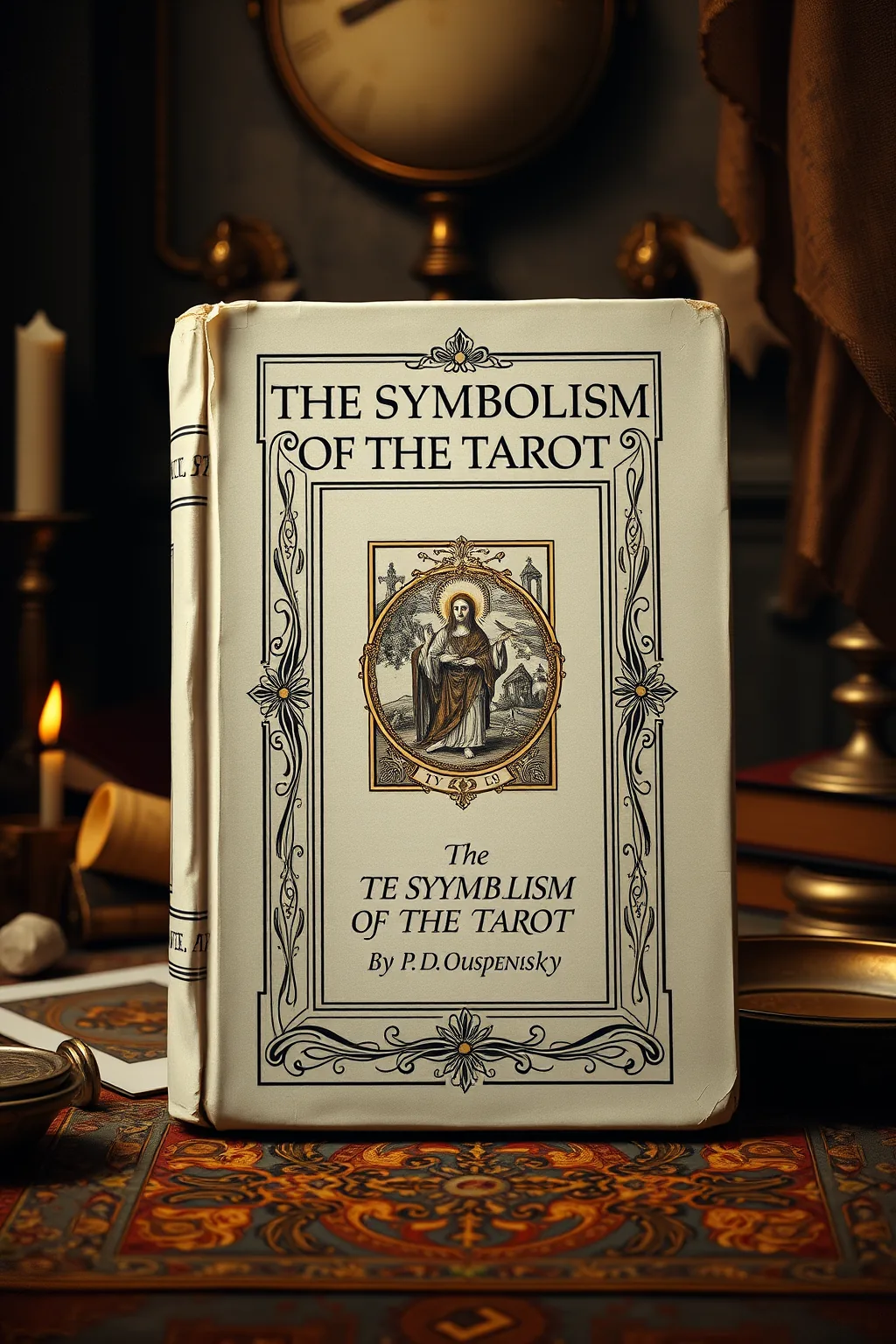
The Symbolism of the Tarot
Ouspensky's "The Symbolism of the Tarot" is a dense, intellectually demanding work that strips away the common mystique of fortune-telling to reveal a structured philosophical system. His argument that the Tarot is a 'book' of universal laws, not a mere card game, is compelling, particularly his critique of its supposed 14th-century origins. A strength lies in the systematic breakdown of the Major and Minor Arcana, revealing a coherent, albeit abstract, cosmology. However, the sheer density can be a barrier; Ouspensky assumes a familiarity with esoteric concepts that may not be present in all readers. The discussion of the 22 numbered cards and their relation to the suit cards, while thorough, sometimes feels overly theoretical, lacking concrete examples for the uninitiated. Despite this, for those willing to grapple with its philosophical depth, the work offers a unique perspective on the Tarot as a symbolic map of consciousness and existence. It is an essential text for understanding the intellectual lineage of esoteric thought.
📝 Description
82
P. D. Ouspensky's 1931 work, 'The Symbolism of the Tarot,' examines the cards as universal laws, not fortune-telling tools.
This book is not a manual for predicting the future. Instead, P. D. Ouspensky approaches the 78 Tarot cards as a structured system that mirrors cosmic principles and universal laws. He argues that the deck's design, including the 22 Major Arcana and 56 Minor Arcana, holds a deep symbolic meaning far beyond simple divination.
Ouspensky scrutinizes the relationships between the numbers and symbols within the cards, proposing a coherent philosophical framework. This work is intended for serious students of esoteric philosophy and comparative religion who are interested in the intellectual foundations of Western esotericism. It offers a systematic interpretation, focusing on the symbolic language of the Tarot rather than its practical application for predicting events.
Published posthumously, 'The Symbolism of the Tarot' originates from Ouspensky's engagement with early 20th-century esoteric thought, a period rich with interest in occultism and spiritual development. Influenced by thinkers like Helena Blavatsky and his own teacher G. I. Gurdjieff, Ouspensky sought to integrate Tarot symbolism into a broader system of spiritual growth. This approach distinguished his work from the more popular occultist interpretations prevalent at the time, positioning it within a lineage of philosophical and metaphysical interpretations of esoteric symbols.
💡 Why Read This Book?
• Gain a philosophical framework for the Tarot's 22 Major Arcana, moving beyond simple divination to understand their role as symbolic representations of cosmic laws, as explored in Ouspensky's analysis of the Trump cards. • Understand the intricate relationship between the Major and Minor Arcana, learning how Ouspensky viewed the 56 suit cards as elaborating on the foundational principles presented in the Trumps. • Challenge conventional notions of Tarot origins by engaging with Ouspensky's argument for a sophisticated, deliberate design, as he refutes the idea of its invention by 'illiterate gypsies'.
⭐ Reader Reviews
Honest opinions from readers who have explored this book.
❓ Frequently Asked Questions
What is P. D. Ouspensky's primary argument about the Tarot in this book?
Ouspensky argues that the Tarot is a profound symbolic representation of universal laws and cosmic processes, functioning as a 'book' of knowledge rather than a tool for simple fortune-telling.
How does Ouspensky divide the Tarot deck?
He divides the 78 cards into three main divisions: the 22 Major Arcana (numbered cards) and the 56 Minor Arcana, with further subdivisions within these groups.
Is this book suitable for beginners in Tarot reading?
It is less suited for absolute beginners seeking practical divination methods. It is aimed at those with an interest in esoteric philosophy and a desire for a systematic, metaphysical interpretation of the cards.
What historical context is relevant to Ouspensky's work on the Tarot?
The book reflects the early 20th-century European interest in occultism and esoteric philosophy, a period influenced by movements like Theosophy and thinkers such as G. I. Gurdjieff, Ouspensky's teacher.
Does Ouspensky discuss the origin of the Tarot?
Yes, he strongly refutes the common notion that the Tarot was invented by 'illiterate gypsies' in the 14th century, suggesting its complex structure points to a more deliberate, philosophical origin.
What distinguishes Ouspensky's approach from common Tarot interpretations?
Ouspensky focuses on a metaphysical and philosophical interpretation of the Tarot's symbolism and structure, prioritizing its function as a system of universal laws over its use in divination.
🔮 Key Themes & Symbolism
Tarot as a Metaphysical Book
Ouspensky redefines the Tarot from a deck of cards to a profound 'book' of universal laws and cosmic processes. He argues that its intricate design and symbolic coherence suggest a deliberate, philosophical origin, challenging the popular myth of its invention by medieval 'gypsies'. The work meticulously breaks down the numerical and symbolic relationships within the 78 cards, particularly the 22 Major Arcana, to reveal a structured system of knowledge applicable to understanding existence.
Structure of the Arcana
The book provides a detailed analysis of the Tarot's divisions, focusing on the 22 numbered Major Arcana and the 56 Minor Arcana. Ouspensky explores the progression and interrelation between these cards, viewing the Major Arcana as foundational principles and the Minor Arcana as elaborations or manifestations of those principles. This systematic approach aims to uncover the underlying logic and order of the entire deck as a symbolic language.
Symbolic Language of the Universe
Ouspensky posits that the Tarot's symbolism serves as a universal language capable of describing fundamental aspects of reality, consciousness, and spiritual development. By dissecting the imagery and numerical sequences, he seeks to unlock a deeper understanding of the principles that govern the cosmos. The work encourages readers to see the Tarot not as a predictive tool, but as a map for apprehending profound truths about existence.
Critique of Popular Tarot Beliefs
A significant aspect of Ouspensky's work is his direct challenge to the common understanding of the Tarot as a device for fortune-telling and its attribution to historical groups like 14th-century gypsies. He argues that the depth and complexity of the Tarot's structure are incompatible with such origins, advocating instead for a more sophisticated, intellectual genesis rooted in ancient wisdom traditions.
💬 Memorable Quotes
Direct passages from the work, attributed to the author.
“The Tarot really is something quite different.”
— This statement captures Ouspensky's core thesis: that the Tarot's true nature lies beyond its superficial appearance as a deck of cards, hinting at a deeper, philosophical significance.
“I shall give a metaphysical interpretation of the general meaning or of the general content of the book of Tarot.”
— This indicates Ouspensky's intention to analyze the Tarot through a lens of fundamental reality and universal principles, rather than practical application or historical speculation.
“The Tarot falls into three divisions: The first part has twenty-one numbered cards; the second part has four suits...”
— This highlights Ouspensky's structured approach to dissecting the Tarot deck, beginning with the division of the Major and Minor Arcana as the foundation of his analysis.
“This work could not have been invented by illiterate gypsies of the fourteenth century.”
— This direct assertion challenges conventional wisdom about the Tarot's origins, emphasizing the intellectual sophistication Ouspensky perceives in its design and symbolism.
“The Tarot is a means of expressing the Great Work.”
— This interpretation suggests Ouspensky views the Tarot not just as a symbolic system, but as a representation of the alchemical or spiritual process of transformation and achievement.
🌙 Esoteric Significance
Tradition
Ouspensky's work aligns with the Western Hermetic and philosophical traditions, seeking to uncover universal laws embedded within symbolic systems. While influenced by Gurdjieff's system, his analysis of the Tarot draws parallels to Kabbalistic concepts of emanation and structure, and the alchemical notion of a 'Great Work'. He departs from purely mystical or divinatory approaches, emphasizing the Tarot as a rational, albeit symbolic, exposition of cosmic principles, fitting within the broader esoteric quest for understanding the mechanics of creation and consciousness.
Symbolism
The book explores the symbolism of the numbered Major Arcana (often termed Trumps), interpreting them as stages or fundamental principles in a cosmic or spiritual unfolding. Ouspensky also examines the 56 Minor Arcana, particularly the court cards, as representations of different forces or types of consciousness interacting within the framework established by the Major Arcana. The numerical relationships between cards are presented as crucial to understanding the Tarot's symbolic language of universal laws.
Modern Relevance
Contemporary thinkers and practitioners in Hermeticism, comparative mythology, and Jungian psychology find resonance in Ouspensky's structured interpretation. His emphasis on the Tarot as a symbolic map of consciousness and universal principles informs modern approaches that move beyond simple divination towards psychological and philosophical exploration. Schools and authors focusing on the Tarot's archetypal significance or its potential as a tool for self-knowledge continue to engage with Ouspensky's systematic, metaphysical framework.
👥 Who Should Read This Book
• Students of esoteric philosophy and comparative religion seeking a systematic, metaphysical interpretation of the Tarot's structure and symbolism. • Serious Tarot practitioners interested in understanding the underlying principles of the cards beyond their divinatory applications, as analyzed by Ouspensky. • Scholars of early 20th-century occultism and intellectual history interested in P. D. Ouspensky's unique contribution to the discourse on symbolic systems.
📜 Historical Context
P. D. Ouspensky's "The Symbolism of the Tarot" emerged from the fertile intellectual soil of the early 20th century, a period marked by intense interest in esoteric doctrines, Eastern philosophies, and the re-examination of ancient symbolism. This era saw the rise of movements like Theosophy, founded by Helena Blavatsky, which sought to synthesize global religious and philosophical traditions. Ouspensky himself was a direct student of G. I. Gurdjieff, whose Fourth Way teachings emphasized practical spiritual development through integrated understanding. While many contemporaries focused on Tarot for divination or occult ritual, Ouspensky's approach, presented posthumously in 2019 but reflecting his earlier thought, aimed for a philosophical and metaphysical exegesis. His work can be seen as an attempt to systematize esoteric knowledge, differentiating his rigorous, structural analysis from the more eclectic or mystical interpretations prevalent among occultists like A. E. Waite, who published his influential "The Pictorial Key to the Tarot" in 1910.
📔 Journal Prompts
The Tarot as a 'book' of universal laws: what cosmic processes might the 22 numbered cards represent?
Ouspensky's challenge to the 'illiterate gypsies' origin: what evidence does the deck's structure provide for a deliberate design?
The relationship between the Major Arcana and the 56 Minor Arcana: how do the suit cards elaborate on the fundamental principles?
Metaphysical interpretation: how can the symbolism of the Tarot be applied to understanding one's own inner development?
The Tarot as a means of expressing the 'Great Work': what does this imply about its potential for transformation?
🗂️ Glossary
Major Arcana
The set of 22 trump cards in a Tarot deck, which Ouspensky interprets as representing fundamental cosmic laws and stages of spiritual development.
Minor Arcana
The 56 cards divided into four suits (typically Wands, Cups, Swords, Pentacles), which Ouspensky views as elaborating upon or manifesting the principles of the Major Arcana.
Metaphysical Interpretation
An approach that analyzes the Tarot not for practical divination, but for its underlying philosophical principles, universal laws, and fundamental nature of reality.
Symbolism
The use of images, figures, and numbers within the Tarot deck to represent abstract concepts, cosmic forces, and psychological states.
Book of Tarot
Ouspensky's concept of the Tarot deck as a coherent system of knowledge, a symbolic text that can be 'read' to understand universal laws.
Great Work
An alchemical and esoteric term often referring to the process of spiritual transformation, enlightenment, or the perfection of the self.
Cartomancy
The practice of fortune-telling or divination using cards, which Ouspensky largely dismisses as the primary function of the Tarot.