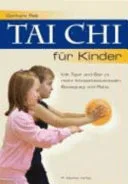
Tai Chi für Kinder
 76
76

Tai Chi für Kinder
Barbara Reik’s Tai Chi für Kinder offers a pragmatic approach to introducing the principles of energy cultivation and mindful movement to a young audience. The book’s strength lies in its direct translation of complex practices into actionable games and crafts suitable for a classroom setting, particularly the integration of fantasy journeys for imaginative engagement. However, its primary limitation is the inherent simplification; while necessary for accessibility, some of the deeper energetic nuances of Tai Chi and QiGong might be lost for advanced practitioners observing its application. A standout element is the section on activation regulation, which provides concrete techniques for teachers to manage classroom energy dynamics. The work provides a solid, albeit introductory, foundation for early childhood educators.
📝 Description
76
Barbara Reik's 2007 book adapts Tai Chi and QiGong for children.
Tai Chi für Kinder translates complex movement and energy cultivation into accessible exercises, games, and crafts for young learners. The book aims to help children regulate their energy levels, enhance focus, and foster concentration through age-appropriate activities. It is designed for educators and facilitators in preschools and elementary schools, offering practical tools for integrating mind-body practices into daily routines. Parents seeking methods to help their children manage energy and attention will also find value, as will therapists working with developmental or behavioral challenges. The work centers on activating and regulating energy (Qi) through simplified Tai Chi and QiGong movements. It emphasizes practices that strengthen attention and concentration, skills important for learning and emotional regulation. Fantasizing journeys and storytelling are employed to make the concepts relatable and memorable for children.
Published in 2007, this book emerged during a time of increasing interest in holistic education and mindfulness for children. The early 21st century saw greater academic and popular acceptance of practices like yoga and meditation for youth development. Tai Chi für Kinder is positioned within a broader trend of incorporating Eastern contemplative traditions into Western educational frameworks. It adapts principles from Taoist internal arts for a younger audience, focusing on the cultivation and flow of vital energy (Qi) as a means for improving well-being and cognitive function in children.
💡 Why Read This Book?
• Gain practical, adaptable games and craft ideas specifically designed by Barbara Reik to teach QiGong principles to children, fostering their attention and concentration from a 2007 publication. • Learn specific activation regulation techniques derived from Tai Chi, helping you guide children in managing their energy levels effectively in educational settings. • Discover how to integrate imaginative elements like fantasy journeys and stories, as detailed in the book, to make the practice of regulated movement engaging and memorable for young minds.
⭐ Reader Reviews
Honest opinions from readers who have explored this book.
❓ Frequently Asked Questions
What age group is Tai Chi für Kinder best suited for?
The book, first published in 2007 by Barbara Reik, is primarily intended for children in preschool and elementary school settings, typically ages 3-10. The exercises, games, and crafts are designed to be adaptable for this developmental range.
Does the book require prior knowledge of Tai Chi or QiGong?
No, Tai Chi für Kinder is designed for beginners. Barbara Reik explains the core concepts and movements in a simplified, accessible manner suitable for educators and children with no prior experience in these practices.
What are the main benefits for children practicing these exercises?
Children can expect improved attention and concentration, better activation regulation (managing energy levels), and enhanced physical coordination. The book uses games and stories to make these benefits engaging.
Can these activities be done at home as well as in school?
Yes, the exercises, games, and crafts are easily adaptable for home use. Parents can utilize Barbara Reik's methods to support their children's focus and energetic well-being outside of the classroom.
What kind of activities are included besides physical movements?
Beyond simplified Tai Chi and QiGong exercises, the book incorporates crafts, imaginative journeys, and storytelling, all designed to reinforce the core principles of energy regulation and concentration for children.
When was Tai Chi für Kinder originally published?
The book was first published in 2007, reflecting a growing interest in holistic child development and the integration of Eastern practices into Western educational contexts during that period.
🔮 Key Themes & Symbolism
Activation Regulation
This theme focuses on teaching children how to manage their internal energy states. Through simplified Tai Chi and QiGong movements, games, and imaginative exercises, the book provides tools for children to learn self-regulation. It addresses common childhood challenges like restlessness or difficulty focusing by offering practical methods to calm or energize as needed, fostering a sense of internal balance and control from an early age.
Attention and Concentration
Central to the book's pedagogy is the strengthening of attention and concentration skills. Barbara Reik employs specific exercises, often linked to mindful movement and guided fantasy journeys, to train a child's ability to focus. These methods are designed to be engaging rather than demanding, helping children develop sustained attention spans crucial for learning and emotional processing, a key aim since its 2007 publication.
Playful Pedagogy
The work champions the idea that learning complex concepts like energy cultivation can be achieved through play. It integrates crafts, stories, and interactive games to make Tai Chi and QiGong principles accessible and enjoyable for young learners. This approach ensures that the practices are not perceived as difficult or tedious, but rather as fun activities that naturally impart valuable life skills.
Mind-Body Connection
Tai Chi für Kinder emphasizes the intrinsic link between physical movement and mental states. By engaging children in gentle, flowing exercises, the book cultivates an awareness of how the body influences the mind and vice versa. This foundational understanding promotes holistic development, encouraging children to recognize and respond to their own physical and emotional needs.
💬 Memorable Quotes
Direct passages from the work, attributed to the author.
“Primarily for use in preschool and elementary schools.”
— This statement clearly defines the target audience and primary application context for the methods presented, indicating the book's practical orientation towards educational settings.
“Adapting Tai Chi and QiGong principles for young learners.”
— This concept underscores the book's unique contribution: making complex ancient practices accessible and relevant to children through age-appropriate modifications and engaging activities.
“Integration of movement, imagination, and creative activities.”
— This highlights the pedagogical strategy employed by Barbara Reik, combining physical practice with imaginative elements like stories and crafts to create a comprehensive learning experience.
💡 Key Ideas
Editorial paraphrase of the work's core concepts — not direct quotes.
Exercises, games, crafts, fantasy journeys, and stories from Tai Chi and QiGong for activation regulation and strengthening attention and concentration.
This quote captures the book's core offerings, highlighting its multi-faceted approach to teaching children energy management and focus through creative and playful means derived from traditional practices.
Focus on regulating energy and enhancing attention.
This paraphrase points to the two main pedagogical goals of the book – helping children manage their physical and emotional energy and improving their capacity for focused attention.
🌙 Esoteric Significance
Tradition
While not explicitly tied to a single lineage like Hermeticism or Kabbalah, *Tai Chi für Kinder* draws from the broad Taoist tradition underpinning Tai Chi and QiGong. These practices are fundamentally concerned with cultivating and balancing vital energy (Qi) within the body and aligning the individual with natural universal forces. Reik's adaptation translates these deep energetic principles into a form accessible to children, focusing on foundational concepts of flow, balance, and internal harmony, thereby introducing a subtle esoteric framework into early childhood education.
Symbolism
The primary symbolic element is the concept of 'Qi' itself – the vital life force that animates all things. Within the book's context, Qi is symbolized through movement, breath, and intention. Simplified Tai Chi forms, often representing natural elements or animals, act as symbolic vehicles for understanding balance and harmony. The practice of 'activation regulation' can be seen as symbolizing the child's journey toward inner balance and self-mastery, akin to the Taoist pursuit of harmony with the Dao.
Modern Relevance
Reik's work remains relevant today as schools and parents increasingly seek evidence-based methods for improving children's focus, emotional regulation, and physical health. Contemporary approaches to social-emotional learning (SEL) and mindfulness in education often incorporate elements similar to those presented in *Tai Chi für Kinder*. Thinkers and educators focused on holistic child development, trauma-informed care, and integrating somatic practices into learning environments find value in its practical, movement-based approach to well-being.
👥 Who Should Read This Book
• Early childhood educators and elementary school teachers seeking practical, engaging methods to foster concentration and manage classroom energy dynamics. • Therapists and counselors working with children who can benefit from somatic practices for emotional regulation and attention development. • Parents interested in introducing their children to foundational principles of mind-body connection and energy cultivation in a playful, accessible format.
📜 Historical Context
Published in 2007, Barbara Reik's *Tai Chi für Kinder* emerged during a burgeoning era of interest in Eastern contemplative practices for Western youth. The early 21st century saw a marked increase in research and popular adoption of mindfulness, yoga, and meditation techniques for children's developmental and educational benefit. This period was characterized by a growing awareness of the potential for these practices to address issues like childhood anxiety, attention deficits, and emotional regulation challenges, moving beyond traditional Western educational models. While contemporary figures like Thich Nhat Hanh were popularizing mindfulness for children through works such as *Mindful Teaching and Teaching Mindfulness* (published around the same time), Reik's work carved a niche by specifically adapting the dynamic principles of Tai Chi and QiGong. Unlike purely stillness-based meditation, Reik's approach leveraged movement and energetic concepts, offering a distinct yet complementary pathway to well-being for young learners in educational settings.
📔 Journal Prompts
The concept of activation regulation in Tai Chi für Kinder: How does this apply to your daily energy management?
Reflecting on the fantasy journeys described: What inner landscapes did they evoke for you?
Consider the integration of crafts and movement: How can this dual approach enhance learning?
The strengthening of attention and concentration through games: Describe a game that effectively boosted your focus.
Barbara Reik's adaptation of QiGong for children: What aspects of this simplification are most impactful?
🗂️ Glossary
Qi (Chi)
The fundamental concept of vital life force or energy in traditional Chinese culture, believed to flow through all living things and influence health, vitality, and well-being.
QiGong
A system of coordinated body posture and movement, breathing, and meditation used for health, spirituality, and martial arts training. It involves cultivating and balancing Qi.
Tai Chi
A traditional Chinese martial art practiced for both defense training and health benefits. It involves slow, flowing, deliberate movements and is often described as 'meditation in motion'.
Activation Regulation
The process of managing one's own level of arousal or energy. In the context of the book, it refers to techniques that help children modulate their physical and mental energy states.
Concentration
The ability to direct and sustain mental focus on a particular task, object, or thought, filtering out distractions. The book uses games and exercises to enhance this skill.
Fantasy Journey
A guided imaginative experience where participants mentally travel to different places or scenarios, often used in the book to enhance engagement and understanding of concepts.
Preschool
An educational setting for young children, typically aged 3-5, prior to their entry into formal primary schooling.