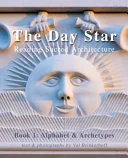
The Day Star - Reading Sacred Architecture
 81
81

The Day Star - Reading Sacred Architecture
The expanded edition of 'The Day Star' offers a compelling argument for viewing architecture as a language of the divine. Its strength lies in its meticulous cataloging of symbolic elements within sacred sites, moving beyond superficial analysis to uncover deeper cosmological connections. The work's exploration of how specific alignments, like those found in megalithic structures dating back millennia, reflect a sophisticated understanding of celestial mechanics is particularly noteworthy. However, the book occasionally falters in its presentation, at times becoming overly dense, requiring significant prior knowledge to fully grasp the intricate symbol systems being discussed. The section detailing the geometric principles of Gothic cathedrals, while informative, could have benefited from clearer diagrams to illustrate the esoteric ratios at play. Despite this limitation, 'The Day Star' provides a valuable lens for reinterpreting the built world, offering a unique perspective on ancient wisdom traditions.
📝 Description
81
Published in 2008, 'The Day Star' reads sacred architecture as a symbolic language.
This book interprets ancient and sacred structures, from temples to megaliths, as encoding esoteric knowledge and cosmological principles. It looks beyond aesthetics to treat buildings as texts, revealing hidden meanings through specific interpretive frameworks. The 'New Expanded Edition' suggests updated material or a deeper examination of existing arguments, adding value for dedicated students. It is intended for those with a serious interest in the junction of architecture, symbolism, and esoteric philosophy. Readers of comparative religion, ancient mysteries, sacred geometry, and Hermeticism will find it relevant. The work is a resource for sustained study, not a casual introduction, appealing to those who sense the spiritual or energetic qualities of ancient sites.
The original 2008 publication places 'The Day Star' within a resurgence of interest in esoteric traditions. This period saw increased accessibility of scholarship on topics once confined to niche groups. The book contributes to a discourse on hidden histories and the symbolic dimensions of human construction. It engages with the idea that built environments are not merely functional but carry deeper, symbolic weight.
💡 Why Read This Book?
• Gain a unique perspective on interpreting ancient sites, learning how architectural elements like celestial alignments in megalithic structures serve as encoded messages, a detail explored extensively within the text. • Understand the esoteric principles behind sacred geometry, as the book likely details specific ratios and forms used in structures from antiquity, offering insights beyond standard architectural studies. • Discover how buildings function as symbolic texts, revealing a deeper cosmological order and spiritual understanding that is central to the book's thesis, as articulated in its exploration of the 'Day Star' metaphor.
⭐ Reader Reviews
Honest opinions from readers who have explored this book.
❓ Frequently Asked Questions
What is the significance of the 'Day Star' in esoteric architecture?
The 'Day Star' likely symbolizes divine illumination, cosmic order, or the ultimate spiritual goal. In sacred architecture, it represents the guiding principle or the ultimate truth that the structure aims to embody or point towards, often through celestial alignments or central symbolic motifs.
When was 'The Day Star - Reading Sacred Architecture' first published?
The original publication of 'The Day Star - Reading Sacred Architecture' is noted as October 2008, with this version being an expanded edition.
What kind of symbolic language is discussed in the book?
The book discusses symbolic language embedded in architectural forms. This includes geometric ratios, celestial alignments of structures, iconography, and the spatial arrangement of sacred sites, all interpreted as encoding cosmological and spiritual knowledge.
Is this book suitable for beginners in esoteric studies?
While accessible to those with curiosity, the book's depth and reliance on specific interpretive frameworks suggest it is best suited for individuals already engaged with esoteric philosophy or comparative religion, offering advanced insights.
What makes this an 'Expanded Edition'?
An expanded edition typically signifies the inclusion of new material, updated research, or a more comprehensive treatment of the original subject matter, enhancing the book's depth and scope for readers interested in detailed analysis.
Does the book focus on a specific historical period or culture?
While the exact scope isn't detailed in the blurb, the mention of 'ancient and sacred structures' implies a broad survey, likely encompassing various cultures and historical periods where symbolic architecture played a significant role, from megalithic eras onward.
🔮 Key Themes & Symbolism
Architecture as Scripture
The central thesis posits that sacred buildings are not merely physical constructs but are imbued with profound symbolic meaning, acting as texts that communicate cosmic principles. This perspective reframes our understanding of historical sites, suggesting they were intentionally designed to convey spiritual and philosophical truths to those initiated in their symbolic language. The book likely details how specific alignments, proportions, and decorative elements serve this communicative purpose, akin to a written or oral tradition.
The 'Day Star' Symbol
The title 'The Day Star' points to a core symbolic motif, likely representing divine light, celestial knowledge, or the ultimate truth sought through esoteric understanding. This concept probably permeates the analysis of various structures, serving as a unifying metaphor for the illumination or cosmic order that architecture is meant to reflect or facilitate. Its interpretation would be crucial to unlocking the book's overarching message about sacred design.
Cosmological Encoding
This theme explores how ancient builders integrated cosmological models into their architectural designs. It suggests a sophisticated awareness of celestial cycles, universal laws, and the interconnectedness of the cosmos. Structures are presented as microcosms, mirroring the macrocosm, with elements meticulously placed to align with astronomical events or represent fundamental principles of creation, revealing a profound worldview.
Sacred Geometry and Proportion
The book likely explores the use of specific geometric forms and mathematical ratios in sacred architecture. These proportions are not seen as arbitrary but as embodying universal harmonies and divine intelligence. Understanding these geometric principles is presented as a key to deciphering the symbolic messages embedded within buildings, connecting the physical form to metaphysical concepts.
💬 Memorable Quotes
Direct passages from the work, attributed to the author.
“Celestial alignments reveal the cosmological blueprints of the ancients.”
— This interpretation emphasizes the book's focus on how astronomical observations and cycles were fundamental to the design and symbolic meaning of sacred sites, revealing a deep connection to universal patterns.
“Proportion is the language through which divine order speaks in architecture.”
— This interpretation underscores the importance of sacred geometry and mathematical relationships in the book, presenting them as the primary means by which the underlying order of the universe is expressed in built form.
💡 Key Ideas
Editorial paraphrase of the work's core concepts — not direct quotes.
Buildings are not inert stone; they are living texts of spiritual understanding.
This paraphrased concept highlights the book's core argument that architectural structures possess active symbolic significance, serving as records of esoteric knowledge rather than mere physical shelters.
The 'Day Star' is the silent witness to the encoded wisdom in stone.
This paraphrased quote suggests that the 'Day Star' metaphor represents a guiding, perhaps divine, principle that oversees and validates the esoteric knowledge embedded within architectural monuments.
To read sacred architecture is to decipher the blueprint of creation.
This paraphrased concept expresses the book's ambition: to equip readers with the tools to interpret buildings not just aesthetically, but as profound expressions of the fundamental principles governing existence.
🌙 Esoteric Significance
Tradition
The work aligns strongly with Hermetic and Gnostic traditions, emphasizing the concept of the universe as a divinely ordered system encoded in symbolic language. It draws upon the Hermetic principle of 'As Above, So Below,' interpreting terrestrial architecture as a reflection of celestial and cosmic realities. This perspective departs from purely devotional or historical interpretations, framing sacred buildings as sophisticated instruments for spiritual understanding and alignment with universal laws.
Symbolism
Key symbols likely include the 'Day Star' itself, representing divine light or cosmic order, and geometric forms like the circle and square, symbolizing unity and manifestation. Celestial alignments, such as solar or stellar orientations of temples, are crucial, representing the connection between the terrestrial realm and the heavens, and serving as markers for sacred time and cosmic cycles.
Modern Relevance
Contemporary practitioners of sacred geometry, architectural historians interested in symbolism, and students of Western Esotericism continue to draw upon the analytical methods presented in 'The Day Star.' Thinkers exploring consciousness and its relationship to physical space, as well as researchers in comparative religion seeking to understand cross-cultural symbolic systems, find its approach valuable for reinterpreting historical sites in light of esoteric principles.
👥 Who Should Read This Book
• Students of Western Esotericism: Individuals seeking to understand how Hermetic, Gnostic, or Kabbalistic principles are physically manifested in historical architecture, gaining a new lens for analysis. • Architectural Historians interested in Symbolism: Researchers who wish to move beyond purely stylistic or functional analyses to explore the deeper, often hidden, meanings embedded within sacred structures. • Spiritual Seekers and Mystics: Those drawn to the energetic and symbolic qualities of ancient sites, looking for frameworks to interpret their personal experiences and deepen their connection to cosmological patterns.
📜 Historical Context
Published originally in 2008, 'The Day Star - Reading Sacred Architecture' emerged during a period of resurgence for esoteric studies and alternative historical interpretations. This era saw a wider audience engaging with topics previously confined to niche academic or occult circles, influenced by figures like Graham Hancock who challenged conventional archaeology. The book entered a landscape where the symbolic and spiritual dimensions of ancient sites were being re-examined, often in contrast to purely archaeological or functionalist explanations. While specific reception details for 'The Day Star' are not widely documented, it likely contributed to a growing discourse alongside authors exploring comparative mythology and ancient wisdom traditions. The work might have engaged with or reacted against the more empirically focused archaeological communities of the time, offering a hermeneutic approach to understanding historical structures.
📔 Journal Prompts
The symbolic representation of the 'Day Star' within sacred sites.
Geometric ratios observed in a specific architectural element and their potential meaning.
How does the alignment of a structure with celestial events inform its purpose?
Reflect on a building you know that might function as a 'living text'.
The connection between cosmic blueprints and the physical form of ancient temples.
🗂️ Glossary
Sacred Architecture
Structures intentionally designed and built to serve religious or spiritual purposes, often incorporating symbolic elements, specific alignments, and proportions believed to reflect divine or cosmic order.
Cosmological Principles
Fundamental concepts and theories regarding the origin, structure, and nature of the universe, often integrated into the symbolic language and design of sacred spaces.
Symbolic Language
A system of signs, images, or forms used to represent abstract ideas, spiritual concepts, or hidden meanings, particularly prevalent in esoteric traditions and ancient cultures.
Celestial Alignment
The precise orientation of a structure or its elements to specific astronomical phenomena, such as the rising or setting of the sun, moon, or stars, often for calendrical or ritualistic purposes.
Hermeticism
A philosophical and religious tradition based on writings attributed to Hermes Trismegistus, emphasizing divine wisdom, the interconnectedness of all things, and the principle of 'As Above, So Below'.
Gnosticism
A diverse set of religious movements characterized by the belief that salvation comes through esoteric knowledge (gnosis) of the divine, often viewing the material world as flawed or created by a lesser deity.
Sacred Geometry
The study of geometric shapes, proportions, and patterns considered sacred or fundamental to the structure of the universe, often applied in the design of religious art and architecture.
This book appears in 1 collection
🔮 Readers Also Liked
Browse all →









From the “Archetypes” Collection
View all →






More Free Occult Philosophy Books
View all →