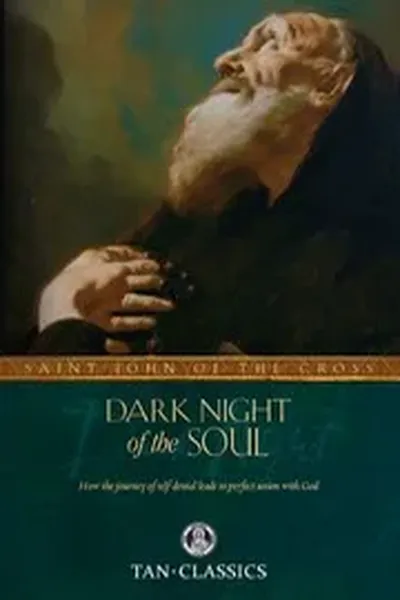
The Dark Night of the Soul
 80
80

The Dark Night of the Soul
Saint John of the Cross's "The Dark Night of the Soul" remains a cornerstone of mystical literature, offering an unvarnished look at the spiritual path. Its strength lies in its unflinching depiction of desolation as a prelude to divine union. The allegorical framework, born from personal suffering during his imprisonment in Toledo, imbues the text with raw authenticity. However, the dense, poetic language and theological intricacies can present a formidable barrier for contemporary readers unfamiliar with 16th-century Spanish mysticism. A particularly striking passage describes the "noche oscura" not as an absence of God, but as a divine presence that purifies the soul by withdrawing sensible consolations. Despite its challenging nature, the book provides unparalleled guidance for those navigating profound spiritual trials.
📝 Description
80
Saint John of the Cross wrote 'The Dark Night of the Soul' around 1578-1579 while imprisoned.
This poem and its commentary by Saint John of the Cross detail the soul's path toward union with God. Written in the late 16th century, it describes a difficult spiritual purification, often marked by periods of intense desolation. The work is not simply a theological text; it is a personal and allegorical account of spiritual cleansing.
Saint John of the Cross composed 'The Dark Night of the Soul' during a time of significant personal hardship. Imprisoned in Toledo, Spain, by opponents of his reformist efforts within the Carmelite order, he penned these verses. This period coincided with the Counter-Reformation, a movement that sometimes viewed mystical experiences with suspicion. Though his writings were later recognized, they initially faced scrutiny and even suppression. He was a contemporary of Teresa of Ávila, and they worked together on reforming the Carmelite order.
As a key text of Spanish mysticism, 'The Dark Night of the Soul' emerged from the Carmelite tradition during a period of intense religious and political change in 16th-century Europe. Saint John of the Cross, alongside Teresa of Ávila, sought to deepen the contemplative life within Catholicism. This work fits within a broader Christian contemplative tradition that emphasizes direct experience of the divine, often through ascetic practices and mystical prayer. It addresses the challenges and transformative potential of spiritual dryness, a theme found in various mystical paths that seek to move beyond ordinary spiritual consolations toward a more direct, unmediated encounter with God.
💡 Why Read This Book?
• Gain a nuanced understanding of the "dark night" concept as presented by Saint John of the Cross, a key figure in 16th-century Carmelite reform, and how it signifies divine purification rather than abandonment. • Explore the allegorical journey described in the poem and commentary, learning how the "night of the senses" and "night of the spirit" function as stages toward divine union. • Appreciate the poetic and theological depth of a text written during Saint John's imprisonment in Toledo, offering unique insights into suffering and spiritual transformation.
⭐ Reader Reviews
Honest opinions from readers who have explored this book.
❓ Frequently Asked Questions
What is the primary meaning of "The Dark Night of the Soul"?
It describes the soul's painful but necessary journey of purification to achieve union with God. This process, often involving spiritual desolation, is seen as a divine work that strips away attachments and imperfections.
When was "The Dark Night of the Soul" written?
Saint John of the Cross wrote the poem and commentary between 1578 and 1579, during his imprisonment in Toledo, Spain.
What are the "night of the senses" and "night of the spirit"?
These are two stages of spiritual purification. The "night of the senses" involves the loss of spiritual consolations, while the "night of the spirit" is a deeper purging of the intellect and will, leading to profound transformation.
Is "The Dark Night of the Soul" a literal account of depression?
While it describes profound suffering and desolation, the text frames these experiences as spiritual trials intended for union with God, rather than clinical depression. It's a theological and mystical interpretation of spiritual dryness.
Who was Saint John of the Cross?
He was a 16th-century Spanish Carmelite friar, priest, and mystic, known for his poetry and theological writings on the soul's journey toward God. He co-founded the Discalced Carmelites with Teresa of Ávila.
What is the "Root Religion" mentioned in the original blurb?
The blurb alludes to an underlying, universal spiritual truth from which all organized religions and rituals ostensibly derive. It suggests a hidden, profound meaning behind external forms.
🔮 Key Themes & Symbolism
The Two Nights
The central metaphor of the "dark night" is explored as a process of purification. The "night of the senses" detaches the soul from worldly pleasures and spiritual consolations, while the "night of the spirit" purges deeper intellectual and volitional attachments. This dual process, experienced during Saint John's imprisonment, is essential for preparing the soul for direct union with the divine, moving beyond reliance on emotional highs in prayer.
Union with God
The ultimate goal described is a profound, transformative union with God. This state is not achieved through human effort alone but through passive surrender and obedience to the divine will, even during periods of intense spiritual dryness or perceived abandonment. The work emphasizes that this union is a gift, preceded by significant purification and detachment from the self.
Suffering and Purification
The text posits that suffering, particularly spiritual suffering, is a vital crucible for the soul. Saint John of the Cross, drawing from his own experiences in Toledo, presents suffering not as punishment but as a divine tool. It refines the soul, burning away imperfections and ego-driven desires, making it receptive to God's presence and love. This purification is a necessary precursor to ecstatic spiritual experiences.
Active vs. Passive Spirituality
A crucial distinction is made between actively seeking spiritual experiences and passively receiving divine grace. The "dark night" necessitates a passive stance, where the soul must endure the process of purification without grasping for consolations or resisting the divine action. This highlights the Carmelite emphasis on surrender and trust in God's timing and method.
💬 Memorable Quotes
Direct passages from the work, attributed to the author.
“What shall I do with this solitude?”
— This question expresses the initial struggle and disorientation experienced during the "dark night." It reflects the soul's feeling of being abandoned and lost, yet it hints at the potential for profound encounter with the divine within that very emptiness.
“Upon a louring night, With great affliction, in affections burning, O happy chance! I went out unseen, My house being now at rest.”
— This opening stanza sets the tone, depicting the soul's clandestine departure from the familiar (the "house" of the self and its attachments) under the cover of spiritual darkness, driven by an intense inner "burning."
“To be transformed into the image of God is the work of God, not of man.”
— This statement emphasizes the passive nature of spiritual union. While the soul must cooperate through detachment and obedience, the ultimate transformation is a divine act, highlighting God's sovereignty in the process of sanctification.
“This is the sense in which the soul is said to be in the dark night, when it is being purged and made ready.”
— This clarifies the purpose of the "dark night." It is not an end in itself but a necessary preparatory phase. The darkness is a sign of active divine intervention, refining the soul for a higher state of awareness and communion.
“When the house is swept and garnished, then the Lord enters.”
— This powerful image suggests that the "dark night" cleanses the soul. Once the "house" (the soul) is purified of its imperfections and attachments, it becomes a suitable dwelling place for God's presence and grace.
🌙 Esoteric Significance
Tradition
The work is a core part of Christian Mysticism, specifically within the Carmelite tradition founded by Teresa of Ávila and Saint John of the Cross. It aligns with Neoplatonic and Pseudo-Dionysian concepts of apophatic theology (the via negativa), emphasizing God's transcendence and the soul's approach through unknowing and detachment rather than intellectual comprehension.
Symbolism
The central symbol is the "dark night" itself, representing the soul's journey through spiritual desolation and purification. Other key symbols include the "louring night," the "flame of love" that "wounds" the soul, and the "dark house" representing the self or the physical body. These motifs collectively illustrate the painful yet transformative process of shedding the old self to embrace divine union.
Modern Relevance
Contemporary spiritual seekers, particularly those in contemplative Christian traditions, draw heavily on Saint John's descriptions of spiritual dryness and the "dark night." His work also finds resonance in secular contexts exploring psychological resilience, the process of transformation through hardship, and the search for meaning beyond superficial experiences. Thinkers in depth psychology and existential philosophy have engaged with its portrayal of the human condition.
👥 Who Should Read This Book
• Seekers of Christian contemplative traditions: Those exploring prayer methods, ascetical theology, and the writings of mystics will find invaluable guidance on spiritual growth and overcoming dryness. • Students of Western esotericism: Individuals interested in the historical development of mystical thought, particularly the Spanish school and its influence, will benefit from this foundational text. • Reflective individuals facing spiritual challenges: Readers experiencing periods of doubt, spiritual desolation, or questioning their faith will find solace and understanding in Saint John's candid depiction of the "dark night."
📜 Historical Context
Written around 1578-1579 during Saint John of the Cross's imprisonment in Toledo, "The Dark Night of the Soul" emerged from the crucible of the Counter-Reformation. This period saw a concerted effort within the Catholic Church to reaffirm doctrine and practice, sometimes leading to suspicion of intense, individual mystical experiences. Saint John, a key figure in the reform movement of the Carmelite Order alongside Teresa of Ávila, faced opposition from within his own order. His writings, though celebrated now, were scrutinized for doctrinal accuracy. While mystical traditions existed, the emphasis on passive purification and the intense, almost existential descriptions of spiritual dryness in "The Dark Night" offered a distinct perspective that sometimes diverged from more scholastic or outwardly devotional approaches, placing it within a lineage of Spanish Mysticism but with unique intensity.
📔 Journal Prompts
The soul's departure from its "house" in the "louring night": What familiar comforts or spiritual "houses" must be left behind?
The "flame of love" that "wounds": How does intense desire for the divine manifest, and what is the nature of this "wound"?
The "night of the senses" as a withdrawal of spiritual consolations: How does one navigate prayer when perceived divine presence fades?
The "dark night" as a state of purification: What aspects of the self require purging to prepare for divine union?
The paradox of seeking God in absence: How can the soul actively trust and surrender during periods of spiritual darkness?
🗂️ Glossary
Dark Night
A metaphor for the process of spiritual purification, involving sensory and spiritual desolation, necessary for the soul to achieve union with God. It is seen as a divine action, not a personal failing.
Night of the Senses
The initial stage of the dark night where the soul loses the ability to find pleasure or consolation in spiritual practices and worldly things, leading to a sense of dryness.
Night of the Spirit
A deeper, more intense stage of purification where the intellect, memory, and will are purged of ingrained imperfections and attachments, leading to a profound transformation.
Union with God
The ultimate goal of the spiritual journey, a state of profound communion and oneness with the divine, achieved through complete detachment and surrender.
Affections
In this context, refers to emotional states, desires, and attachments, particularly those related to spiritual or worldly experiences, which must be purified.
Via Negativa
A path of spiritual understanding that emphasizes what God is not, rather than what God is. It involves negation and detachment from all finite concepts and experiences to approach the divine.
Root Religion
As per the original blurb, an underlying, universal spiritual truth or source from which all specific religions and rituals are believed to have originated.
This book appears in 1 collection
🔮 Readers Also Liked
Browse all →








From the “Dark Night of the Soul” Collection
View all →





More Free Occult Philosophy Books
View all →