The Dark Night of the Soul
 83
83

The Dark Night of the Soul
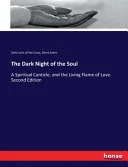
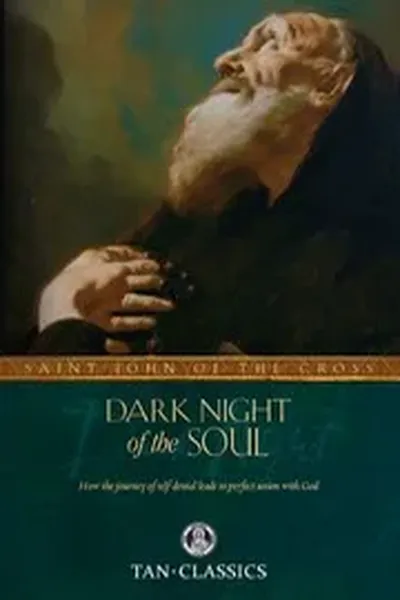
The direct presentation of Saint John of the Cross’s *The Dark Night of the Soul* in this edition offers an unvarnished encounter with one of Christian mysticism's foundational texts. The publisher’s commitment to reprinting the 1891 edition ensures readers engage with the work as it was presented to an earlier generation, free from modern interpretative layers. This fidelity is its greatest strength. However, for the uninitiated, the archaic language and dense theological arguments, particularly in *A Spiritual Canticle*, can present a significant barrier. A particularly poignant passage is the description of the soul's active purification, where sensory pleasures are stripped away, described as a "loss and emptiness" that paradoxically prepares the soul for divine presence. The lack of explanatory notes or modern commentary, while preserving historical integrity, limits accessibility for contemporary readers unfamiliar with 16th-century Carmelite spirituality. It’s a raw, demanding spiritual treatise for the dedicated seeker.
📝 Description
83
This 1891 edition reprints Saint John of the Cross's seminal mystical writings, including *The Dark Night of the Soul*.
This edition presents Saint John of the Cross's key spiritual writings, including *The Dark Night of the Soul*, *A Spiritual Canticle*, and *The Living Flame of Love*. It is a reprint of the 1891 edition, maintained by Hansebooks who focus on preserving historical literature. This version aims to give readers an unadulterated look at these influential mystical texts.
The book is for those seriously studying Christian mysticism, contemplation, and spiritual theology. It will appeal to readers interested in experiencing God directly, especially through periods of spiritual dryness and purification. Those researching religious history and comparative mysticism will also find this historical presentation useful.
Saint John of the Cross, a 16th-century Spanish Carmelite friar, wrote these works during the Counter-Reformation. His writings emerged amidst internal disputes within his order. He worked with Teresa of Ávila on reforms. Though his mystical theology was later canonized, ecclesiastical authorities initially questioned it.
Saint John of the Cross's writings are central to Christian mysticism, particularly the Carmelite tradition. He articulates a path toward divine union that involves a rigorous spiritual purification, often described as a 'dark night.' This process strips away reliance on sensory experience and even spiritual consolations, demanding a pure faith in God. His work details how this detachment, though difficult, leads to a transformative union and direct knowledge of the divine.
💡 Why Read This Book?
• Gain a direct understanding of the "dark night" purification process, as described by Saint John of the Cross in the 16th century, offering a unique perspective on spiritual dryness distinct from modern self-help. • Explore the interconnectedness of *The Dark Night of the Soul*, *A Spiritual Canticle*, and *The Living Flame of Love*, seeing how Saint John of the Cross articulates the progression of the soul toward God. • Engage with the historical linguistic style of a key figure in Christian mysticism, providing an unmediated connection to the spiritual discourse of the Counter-Reformation era.
⭐ Reader Reviews
Honest opinions from readers who have explored this book.
❓ Frequently Asked Questions
What is the significance of the "dark night" in Saint John of the Cross's writings?
The "dark night" refers to a period of spiritual purification where the soul experiences dryness and detachment from consolations, both sensory and spiritual. It's a process of purging imperfections to prepare for direct union with God.
Who was Saint John of the Cross and when did he live?
Saint John of the Cross (Juan de la Cruz) was a 16th-century Spanish Carmelite friar, mystic, and poet. He lived from 1542 to 1591 and was a key figure in the Counter-Reformation.
What is the relationship between *The Dark Night of the Soul* and *A Spiritual Canticle*?
Both works by Saint John of the Cross explore the soul's journey to God. *The Dark Night* focuses on the passive and active purification, while *A Spiritual Canticle* elaborates on the soul's longing for God and the stages of spiritual progress.
Is this edition of *The Dark Night of the Soul* a translation or the original Spanish?
This edition is a reprint of the 1891 English translation. Saint John of the Cross originally wrote his works in Spanish.
What does Hansebooks' focus on historical literature mean for this edition?
Hansebooks aims to preserve historical texts. This means the 2017 edition is an unchanged reprint of the 1891 version, offering an authentic historical presentation without modern annotations or revisions.
Can *The Living Flame of Love* be understood independently of the other works?
While it can be read independently, *The Living Flame of Love* is best understood as a continuation and culmination of the themes explored in *The Dark Night of the Soul* and *A Spiritual Canticle*, describing the soul already in union with God.
🔮 Key Themes & Symbolism
The Active and Passive Nights
This work meticulously details two distinct phases of spiritual purification. The active night involves the soul's conscious effort to detach from worldly pleasures and imperfect spiritual practices. The passive night, however, is God's direct intervention, where He strips away even spiritual consolations, leaving the soul in a profound, often disorienting, emptiness that purifies the intellect, memory, and will.
Divine Union and Transformation
The ultimate aim presented is the soul's union with God. This union is not merely intellectual but an existential transformation, a "spiritual marriage." The dark nights are depicted as necessary precursors, burning away the soul's imperfections like dross from gold, making it receptive to the divine light and love, leading to a profound knowledge and experience of God.
The Role of Faith, Hope, and Charity
Saint John of the Cross emphasizes that during the dark nights, the theological virtues of faith, hope, and charity become the soul's primary guides. These virtues, infused by God, operate in obscurity, demanding complete reliance on divine grace. Faith transcends sensory evidence, hope endures in desolation, and charity remains the driving force towards God, even when the soul feels abandoned.
The Ascent of Mount Carmel
Though not fully detailed in this specific reprint's core text, the concept of the soul's ascent, often symbolized by Mount Carmel, underpins the entire journey. It represents the arduous climb towards spiritual perfection, requiring detachment from all things, including the self, to reach the summit of divine union. This ascent requires diligent effort and divine assistance.
💬 Memorable Quotes
Direct passages from the work, attributed to the author.
“Into the dark nights, / Into the unknown, / With a burning love and yearning— / Oh, what a sweet night!”
— This poetic fragment captures the paradoxical nature of the spiritual journey. The "dark nights" are not inherently negative but become "sweet" through the soul's "burning love and yearning" for God, indicating a desire that transcends worldly understanding.
“In order to enjoy the All, you must not desire to enjoy any thing in the All.”
— This statement captures the principle of detachment. True possession and experience of the divine ('the All') requires relinquishing attachment to any created thing or even spiritual consolations, a core tenet of the purification described.
“The soul that is attached to anything, however much, is not free.”
— This highlights the spiritual bondage that arises from attachment. Freedom, in the context of this work, is achieved through radical detachment, allowing the soul to be wholly directed towards God without impediment.
“A superior can only be made by another superior, and God is the supreme superior.”
— This reflects the hierarchical understanding of spiritual authority and divine sovereignty. The soul's ultimate submission and obedience are to God, who is the source and standard of all true spiritual advancement.
“This night of sense is a habit of sensory privation by which the soul is dried up, emptied, and purified of its natural desires and appetites.”
— This is a foundational description of the "dark night." It clarifies that this stage involves a drying up of natural inclinations and desires, a deliberate emptiness created by God to prepare the soul for higher spiritual experiences.
🌙 Esoteric Significance
Tradition
Saint John of the Cross's work is a central to Christian mysticism, specifically within the Carmelite tradition. While not typically categorized under broader esoteric labels like Hermeticism or Kabbalah, his emphasis on direct experiential knowledge of the divine, the soul's purification, and the ascent towards God shares common ground with perennialist philosophies. His writings provide a profound Christian framework for understanding spiritual transformation and the "inner path" that speaks to seekers across various contemplative disciplines.
Symbolism
The "dark night" itself is a potent symbol, representing not literal darkness but the absence of sensory and spiritual consolations, a state of unknowing that paradoxically leads to deeper divine knowledge. The "living flame of love" symbolizes the soul transformed and united with God, a burning, active, and useful presence. The journey towards union is often depicted as an ascent, akin to climbing a mountain, signifying the effort and spiritual discipline required to reach divine heights.
Modern Relevance
Contemporary spiritual directors, contemplative practitioners, and theologians continue to draw heavily on Saint John of the Cross's articulation of spiritual dryness and purification. His work is studied in comparative mysticism courses and informs approaches to prayer and spiritual growth in various Christian denominations and even secular mindfulness practices seeking depth beyond superficial techniques. Thinkers exploring the "cloud of unknowing" phenomena and the non-dual aspects of religious experience often reference his insights.
👥 Who Should Read This Book
['• Students of Christian Mysticism: Those seeking to understand the historical and theological foundations of direct experience with the divine within the Catholic tradition.', '• Contemplative Practitioners: Individuals engaged in deep prayer or meditation who are experiencing spiritual dryness or seeking to deepen their relationship with God.', '• Scholars of Religious History: Researchers interested in the Counter-Reformation, Spanish Golden Age literature, and the development of mystical theology.']
📜 Historical Context
Saint John of the Cross penned his mystical treatises in the latter half of the 16th century, a period marked by intense religious upheaval across Europe. The Counter-Reformation was in full swing, with the Catholic Church seeking to reaffirm its doctrines and practices against the rise of Protestantism. John's writings, deeply rooted in the contemplative traditions of the Carmelite Order, emerged from his personal spiritual experiences and his collaboration with Teresa of Ávila on reforming the order. His work presented a rigorous path of mystical union that, while drawing on established Christian thought, offered a distinct emphasis on the painful yet necessary process of purification. This approach sometimes brought him into conflict with ecclesiastical authorities, who viewed his intense focus on mystical experience and his critiques of lax religious life with suspicion. His contemporary, Teresa of Ávila, a towering figure of the era, shared his vision for Carmelite reform and mystical prayer, but John's theological depth and poetic expression forged a unique legacy.
📔 Journal Prompts
The soul's detachment from sensory pleasures during the active night.
The paradoxical nature of emptiness leading to divine fullness.
The role of faith as a guide through spiritual obscurity.
Reflecting on the "living flame of love" as divine transformation.
Comparing the "dark night" to personal experiences of spiritual desolation.
🗂️ Glossary
Dark Night of the Soul
A spiritual state of purification characterized by a lack of spiritual consolation, experienced as dryness and emptiness, leading to deeper union with God.
Spiritual Canticle
A poem and commentary by Saint John of the Cross depicting the soul's journey toward union with God, often expressed through the metaphor of a spiritual marriage.
Living Flame of Love
A work by Saint John of the Cross describing the transformed soul already united with God, experiencing divine love as an active, useful flame.
Active Night
The initial stage of purification where the soul consciously purifies its senses and faculties from disordered attachments and imperfect spiritual practices.
Passive Night
A later stage where God directly purifies the soul's higher faculties (intellect, memory, will) through profound dryness and detachment, often against the soul's conscious will.
Spiritual Marriage
The ultimate state of union between the soul and God, described as a profound and permanent indwelling of the divine within the soul.
Theological Virtues
Faith, Hope, and Charity (Love), which are considered direct gifts of God and essential guides for the soul, especially during the dark nights.
This book appears in 1 collection
🔮 Readers Also Liked
Browse all →








From the “Dark Night of the Soul” Collection
View all →



More Free Occult Philosophy Books
View all →