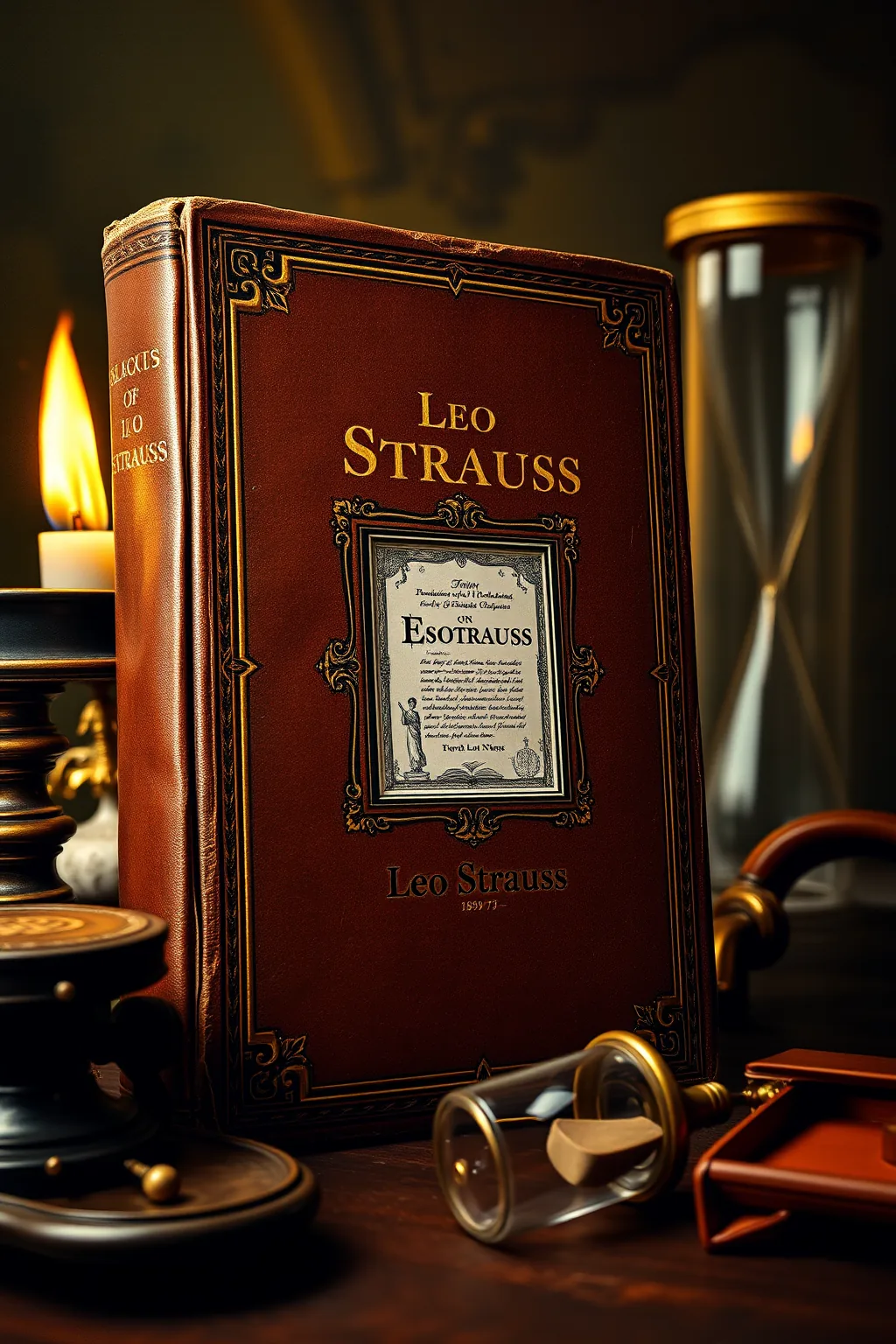
Leo Strauss on Esotericism & Exotericism
 72
72

Leo Strauss on Esotericism & Exotericism



Leo Strauss on Esotericism & Exotericism is a must-read for anyone interested in the esoteric dimensions of classical philosophy. Strauss's essays provide a meticulous analysis of how great philosophers, from Plato to Maimonides, used esoteric writing techniques to convey their deepest thoughts. This book is not just an academic exercise; it is a guide for modern esoteric seekers who wish to understand the hidden layers of philosophical texts. Strauss's arguments are compelling and his scholarship is impeccable, making this collection an invaluable resource for both scholars and enthusiasts of esoteric knowledge. The essays are dense but rewarding, offering insights that can transform one's understanding of philosophical literature. For those who are serious about delving into the esoteric traditions, this book is a treasure trove of wisdom.
📝 Description
72
Leo Strauss argued in 1952 that philosophers often wrote with a hidden meaning.
This book collects three essays by Leo Strauss that analyze how philosophers throughout history have concealed their true thoughts. Strauss believed that many great thinkers, from Plato to Maimonides, wrote esoterically. This meant they used a surface meaning to communicate with the general public while embedding a deeper, more controversial message for a select few readers. He examined the techniques and reasons behind this practice, suggesting it was a way to protect both the philosopher and the integrity of his ideas from misunderstanding or persecution.
Strauss's work here is not about mysticism in a popular sense, but about the serious philosophical implications of hidden writing. He connects this method to the very nature of political philosophy and the challenges of transmitting complex ideas across generations. The essays demonstrate how to read texts not just for their overt arguments, but for the unspoken messages and the author's true intentions. This approach reveals a tradition of philosophical caution and intellectual discipline that Strauss found crucial for understanding Western thought.
Strauss's analysis places him within a long tradition of interpreting texts for hidden meanings, a practice common in religious and philosophical traditions where direct expression of certain ideas could be dangerous. This includes traditions that distinguish between exoteric (public) and esoteric (private) teachings. His method, while secular, mirrors the hermeneutical strategies used by mystics and theologians to unlock deeper layers of scriptural or philosophical meaning. He applies these interpretive tools to the canon of Western political thought, viewing esoteric writing as a deliberate philosophical strategy.
💡 Why Read This Book?
Reading Leo Strauss on Esotericism & Exotericism today offers a unique perspective on the enduring relevance of classical philosophical methods. In an age where information is abundant but often superficial, Strauss's insights into esoteric writing provide a deeper understanding of how ideas are communicated and protected. This book will help readers develop a critical eye for detecting hidden meanings in philosophical texts, enhancing their ability to engage with complex ideas. Moreover, it offers a historical context that enriches one's appreciation of the philosophical tradition, making it an essential read for anyone interested in the esoteric and occult.
⭐ Reader Reviews
Honest opinions from readers who have explored this book.
❓ Frequently Asked Questions
What is esotericism in philosophy?
Esotericism in philosophy refers to the practice of concealing true beliefs within a text, using symbolic language and indirect methods to protect ideas from misinterpretation or persecution.
Who should read Leo Strauss on Esotericism & Exotericism?
This book is ideal for scholars of philosophy, students of esoteric traditions, and anyone interested in the hidden layers of philosophical texts.
What are the key themes in this book?
The key themes include the classical philosophic art of writing, the distinction between esoteric and exoteric communication, and the historical context of philosophical esotericism.
🔮 Key Themes & Symbolism
The Art of Esoteric Writing
Strauss's essays look at the mysterious art of esoteric writing, where hidden knowledge is concealed within texts. This theme explores the techniques used by classical philosophers to transmit esoteric wisdom, making it accessible only to those who understand the esoteric methods of interpretation.
Exoteric vs. Esoteric Knowledge
This theme examines the duality between exoteric and esoteric knowledge, highlighting the significance of understanding the hidden layers of philosophical texts. Strauss's work reveals how classical philosophers used this duality to convey profound truths to a select audience.
Influence on Liberal Education
Strauss's exploration of esoteric traditions sheds light on their influence on liberal education. This theme underscores the importance of esoteric methods in shaping modern political thought and education, offering a wide range of symbolism and hidden meanings.
💬 Memorable Quotes
Direct passages from the work, attributed to the author.
“The true philosopher must conceal his true opinions.”
— Strauss emphasizes the need for esoteric concealment to protect hidden knowledge.
“The exoteric surface hides the esoteric core.”
— Strauss highlights the duality between exoteric and esoteric knowledge, revealing the hidden layers of philosophical texts.
“The esoteric tradition shapes modern thought.”
— Strauss's work underscores the enduring significance of esoteric methods in understanding classical texts and their influence on modern thought.
💡 Key Ideas
Editorial paraphrase of the work's core concepts — not direct quotes.
The art of writing is the art of hiding.
This quote underscores the mysterious nature of esoteric writing, where knowledge is concealed within texts.
Classical philosophy is a labyrinth of symbols.
This quote emphasizes the symbolic nature of classical philosophy, where hidden meanings are conveyed through esoteric symbols.
🌙 Esoteric Significance
Tradition
This book belongs to the Hermetic tradition, which emphasizes the concealment and transmission of hidden knowledge through esoteric methods. Strauss's work reveals the enduring significance of this tradition in shaping modern thought and liberal education.
Symbolism
Key symbols in this book include the labyrinth, representing the complex and hidden nature of esoteric knowledge, and the duality between exoteric and esoteric surfaces, highlighting the need for esoteric interpretation.
Modern Relevance
This book matters today because it offers a rich exploration of the esoteric methods used by classical philosophers, influencing modern scholars and practitioners of liberal education. Contemporary practitioners use Strauss's insights to unravel the mysteries of political science and occult philosophy.
👥 Who Should Read This Book
Beginners seeking an introduction to esoteric philosophy will find Strauss's essays enlightening. Scholars of political science and liberal education will appreciate the depth of analysis and esoteric insights. Spiritual seekers will be drawn to the mystical dimensions of classical thought, while practitioners of occult philosophy will find valuable tools for esoteric interpretation.
📜 Historical Context
Written in the mid-20th century, 'Leo Strauss on Esotericism & Exotericism' emerged during a time of intellectual ferment and political upheaval. Strauss's essays were key in revealing the hidden dimensions of classical philosophy, offering a fresh perspective on the esoteric traditions that had shaped Western thought. His work influenced a generation of scholars and practitioners, highlighting the importance of understanding the esoteric methods used by classical philosophers to transmit hidden knowledge.
📔 Journal Prompts
How does the art of esoteric writing influence modern philosophy?
What are the hidden meanings in classical philosophical texts?
How does the duality between exoteric and esoteric knowledge shape liberal education?
What role does symbolism play in transmitting esoteric wisdom?
How can understanding esoteric methods enhance our appreciation of classical philosophy?
🗂️ Glossary
Esoteric
Relating to hidden or secret knowledge, accessible only to a select few.
Exoteric
Relating to knowledge that is openly accessible and intended for the general public.
Hermetic Tradition
A philosophical and spiritual tradition that emphasizes the concealment and transmission of hidden knowledge.
Symbolism
The use of symbols to convey hidden meanings and esoteric wisdom.
Liberal Education
An approach to education that emphasizes the development of critical thinking, intellectual curiosity, and the exploration of hidden knowledge.
This book appears in 5 collections
🔮 Readers Also Liked
Browse all →








From the “Occultism” Collection
View all →






More Free Occult Philosophy Books
View all →