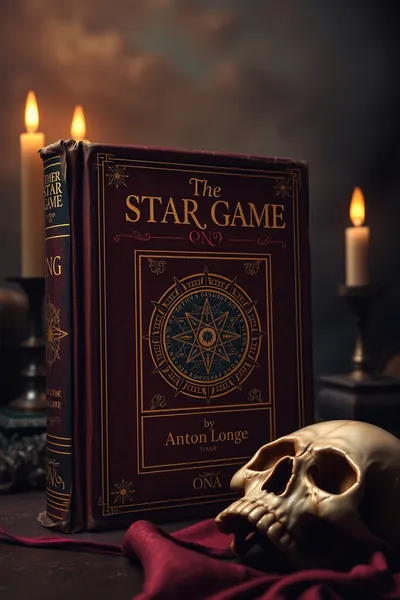
Erzahlungen Von J. Satori

 80
80

Erzahlungen Von J. Satori
J. Satori's 'Erzahlungen' offers a curious literary experience, surfacing from the depths of the Corvey Collection. The strength of this work lies in its atmospheric evocation of a bygone era, skillfully channeling the spirit of 19th-century German prose without succumbing to archaic language. The narratives possess a delicate balance, hinting at deeper currents beneath placid surfaces. One particular passage, describing a solitary scholar's contemplation of a dust mote dancing in a sunbeam, captures this essence perfectly, transforming a trivial observation into a moment of profound self-awareness. However, the collection occasionally suffers from a certain narrative inertia; some stories feel less like fully formed tales and more like vignettes, leaving the reader yearning for greater thematic resolution. Despite this minor reservation, 'Erzahlungen Von J. Satori' provides a valuable glimpse into a preserved literary world. It is a collection that rewards patient engagement.
📝 Description
80
J. Satori's 'Erzahlungen' collects narratives first published in 2017, sourced from the 19th-century Corvey Collection.
Published in 2017, 'Erzahlungen Von J. Satori' presents a selection of short narratives unearthed from the Corvey Collection. This library, amassed by Victor Amadeus and discovered in the late 1970s, holds over 9,500 European titles, with a notable concentration from the Romantic era (1790-1840).
Though published recently, Satori's stories echo the literary sensibilities of the Romantic period. They engage with themes of personal introspection, the subtle boundary between the ordinary and the extraordinary, and the subjective experience of reality. The collection appeals to those interested in literary archaeology, the rediscovery of historical manuscripts, and the specific cultural milieu of 19th-century European aristocracy.
While not overtly occult, these tales align with esoteric traditions that emphasize subjective experience and the hidden dimensions of reality. The Romantic era itself fostered a fascination with the inner life, the sublime, and forces beyond rational comprehension. Satori's narratives, by focusing on internal states and the blurring of ordinary perception, tap into this current of thought, aligning with a broader esoteric interest in consciousness and the unseen aspects of existence.
💡 Why Read This Book?
• Gain insight into the literary landscape of the Romantic era through narratives rediscovered from the Corvey Collection, offering a unique perspective on the period's intellectual currents. • Experience narratives that skillfully blend historical sensibility with accessible prose, providing a distinct stylistic approach not commonly found in contemporary short story collections. • Understand the significance of curated private libraries, like Victor Amadeus's, in preserving and contextualizing literary works from specific historical periods, such as 1790-1840.
⭐ Reader Reviews
Honest opinions from readers who have explored this book.
❓ Frequently Asked Questions
What is the Corvey Collection and why is it important for 'Erzahlungen Von J. Satori'?
The Corvey Collection is a significant library of European literature, particularly strong in Romantic-era works from 1790-1840, discovered at Victor Amadeus’s castle. 'Erzahlungen Von J. Satori' draws its stories from this collection, making it a rediscovery of historical literary content.
When was 'Erzahlungen Von J. Satori' first published?
The book 'Erzahlungen Von J. Satori' was first published on July 20, 2017. This date marks its emergence into contemporary circulation, though its source material originates from an earlier period.
What literary period does the Corvey Collection primarily represent?
The Corvey Collection is especially important for its holdings from the Romantic era, covering the period from 1790 to 1840. This makes it a key resource for understanding the literature of that specific European intellectual and artistic movement.
Who was Victor Amadeus in relation to the Corvey Collection?
Victor Amadeus was the owner of the castle where the remarkable Corvey Collection was discovered. His library forms the basis of this significant archive of European literature.
What languages are represented in the Corvey Collection?
The Corvey Collection, from which 'Erzahlungen Von J. Satori' originates, contains over 9,500 titles primarily in English, French, and German, reflecting the multilingual literary landscape of the Romantic period.
Are the stories in 'Erzahlungen Von J. Satori' original to the 19th century?
While the stories draw from the literary milieu and source material of the 19th century (via the Corvey Collection), 'Erzahlungen Von J. Satori' itself was first published in 2017. It represents a modern presentation of historical literary finds.
🔮 Key Themes & Symbolism
Literary Archaeology
The work functions as a form of literary archaeology, unearthing narratives from the Corvey Collection, assembled by Victor Amadeus. This collection is a significant repository of European literature, particularly from the Romantic era (1790-1840). The act of rediscovering and presenting these stories highlights the ongoing process of engaging with historical texts and understanding their context within broader literary movements. It emphasizes how past intellectual currents continue to inform present-day literary appreciation.
Romantic Sensibility
Drawing from a collection rich in Romantic-era writing, the 'Erzahlungen' embody characteristics of this period. This includes a focus on individual experience, introspection, and a nuanced exploration of the relationship between the inner world and external reality. The narratives often reflect the era's fascination with subjective perception and the subtle shifts in mood and atmosphere that define the Romantic literary style.
The Corvey Collection's Significance
The provenance of these tales is intrinsically linked to the Corvey Collection itself. This assembly of over 9,500 English, French, and German titles offers a unique glimpse into the private libraries of the aristocracy and their engagement with contemporary thought. The collection's discovery in the late 1970s underscores its importance as a resource for understanding the breadth and depth of literary production during an important historical epoch.
Narrative Voice and Tone
The stories within 'Erzahlungen Von J. Satori' often employ a narrative voice that is contemplative and observational. The tone can shift from introspective to subtly evocative, mirroring the stylistic conventions found in early 19th-century prose. This approach allows for an exploration of character psychology and the atmospheric qualities of setting, characteristic of the period's literary output.
💬 Memorable Quotes
Direct passages from the work, attributed to the author.
“The subtle interplay between the mundane and the extraordinary.”
— This phrase captures a recurring thematic element, suggesting that the narratives explore how ordinary experiences can subtly reveal or border on the unusual or profound.
“The subjective nature of perception.”
— This concept points to the book's engagement with how individual consciousness shapes reality, a common concern in philosophical and literary movements of the early 19th century.
“Narratives drawn from the Corvey Collection.”
— This statement highlights the book's unique origin, emphasizing its connection to a specific historical archive and its role in literary rediscovery.
“Tales reflecting the Romantic era's focus on emotion and individualism.”
— This interpretation links the stories to the broader cultural and artistic movement of Romanticism, indicating their thematic and stylistic alignment with its core tenets.
💡 Key Ideas
Editorial paraphrase of the work's core concepts — not direct quotes.
A solitary scholar's contemplation of a dust mote dancing in a sunbeam.
This paraphrased concept illustrates the narrative's ability to elevate commonplace observations into moments of deeper introspection, a hallmark of the introspective style prevalent in Romantic literature.
🌙 Esoteric Significance
Tradition
While not overtly tied to a single esoteric lineage like Hermeticism or Gnosticism, the 'Erzahlungen' resonate with a Romantic-era sensibility that often bordered on the mystical. This period saw a surge in interest in folklore, the subconscious, and the perceived hidden forces of nature, which aligns with a broader esoteric worldview. The work can be seen as reflecting an era where the boundaries between the empirical and the transcendent were frequently blurred in literary expression.
Symbolism
Specific symbols are not heavily emphasized in the provided metadata, but the 'dust mote dancing in a sunbeam' can be interpreted as a symbol of ephemeral existence or the spiritual illumination within the mundane. The overarching theme of subjective perception itself functions symbolically, representing the internal landscape as a primary reality, a concept explored in various mystical traditions.
Modern Relevance
Contemporary practitioners of introspective journaling, comparative literature scholars focusing on Romanticism, and enthusiasts of literary rediscovery can draw from 'Erzahlungen Von J. Satori'. The work's focus on internal states and its historical context make it relevant for those exploring the evolution of consciousness and narrative expression in Western thought.
👥 Who Should Read This Book
• Students of European Romantic literature: You will gain access to narratives that reflect the period's stylistic and thematic preoccupations, sourced from a significant, less-commonly discussed archive. • Literary historians specializing in 19th-century collections: This book offers a concrete example of how private libraries like Victor Amadeus’s preserve and contextualize literary output from specific eras. • Readers interested in narrative rediscovery: You will appreciate the process of unearthing and presenting historical texts, understanding how works from 1790-1840 continue to be relevant today.
📜 Historical Context
The stories within 'Erzahlungen Von J. Satori' emerge from the significant Corvey Collection, a proof of the literary interests of Victor Amadeus and the broader European aristocracy. Discovered in the late 1970s, this archive houses over 9,500 titles, with a notable emphasis on Romantic-era literature from 1790 to 1840. This period was a fertile ground for literary innovation across Europe, marked by movements like German Romanticism (Romantik) and its emphasis on subjectivity, emotion, and the sublime. Contemporaries like E.T.A. Hoffmann and Novalis were exploring similar psychological depths and fantastical elements in their prose. The Corvey Collection's survival provides a crucial counterpoint to more widely circulated works, offering a broader view of literary production often overlooked. Its contents reflect the intellectual currents of the time, including philosophical idealism and nascent national consciousness, shaping the reception and creation of literature.
📔 Journal Prompts
The solitary scholar's contemplation of a dust mote.
The interplay between the mundane and the extraordinary in narrative.
Reflections on the subjective nature of perception presented in the tales.
The significance of literary archives like the Corvey Collection.
Connecting the Romantic era's focus on individualism to the narratives.
🗂️ Glossary
Corvey Collection
A substantial library of European literature, particularly rich in Romantic-era works (1790-1840), discovered at the castle of Victor Amadeus. It comprises over 9,500 English, French, and German titles.
Romantic Era
A period in European history and literature, roughly from the late 18th century to the mid-19th century, characterized by an emphasis on emotion, individualism, nature, and imagination.
Victor Amadeus
The owner of the castle where the significant Corvey Collection of European literature was discovered. His library is a key source for understanding aristocratic literary tastes of the period.
Erzählungen
German for 'narratives' or 'tales'. In the context of 'Erzahlungen Von J. Satori', it refers to the collection of short stories presented in the book.
Literary Archaeology
The practice of discovering, excavating, and studying literary works that have been lost, forgotten, or are otherwise difficult to access, similar to archaeological digs for physical artifacts.
European Literature, 1790-1840
A broad category encompassing literary works produced in Europe during the approximate period of the late Enlightenment and the height of the Romantic movement.
Prose
Written or spoken language in its ordinary form, without metrical structure. In the context of these tales, it refers to the narrative style used, distinct from poetry.
This book appears in 1 collection
🔮 Readers Also Liked
Browse all →








From the “Satori” Collection
View all →





More Free Occult Philosophy Books
View all →