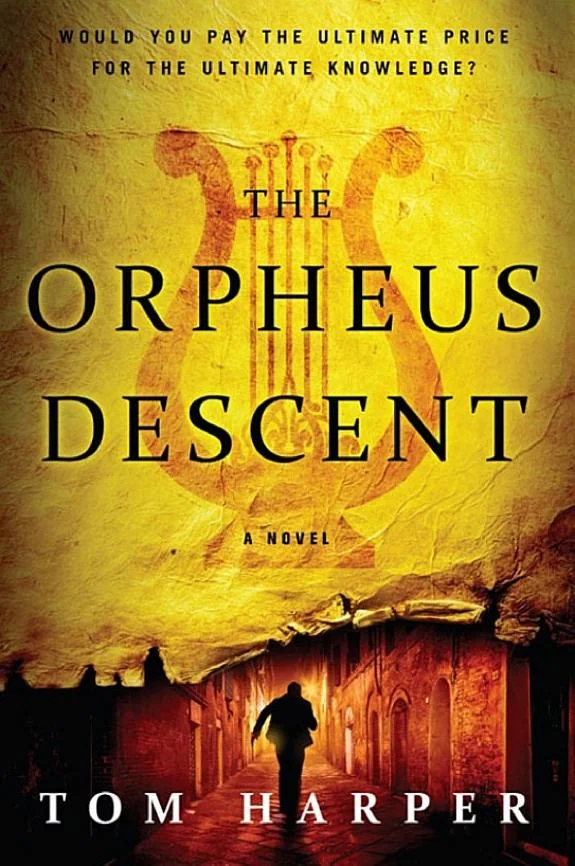
The Orpheus Descent
 78
78

The Orpheus Descent
Tom Harper's The Orpheus Descent presents a compelling premise: Plato's quest for initiation into the Orphic rites in Magna Graecia, leading to the discovery of secrets inscribed on golden tablets. The novel succeeds admirably in its ambition to create a cerebral thriller, grounding its conspiracy in genuine historical and philosophical currents. The depiction of Plato's intellectual journey, seeking the "secret to the Underworld," is particularly well-handled, offering a fresh perspective on the philosopher. However, the contemporary conspiracy plot, while energetic, occasionally strains credulity, becoming somewhat convoluted in its later stages. A standout element is the exploration of how ancient esoteric knowledge might manifest and be guarded across centuries. The pacing is generally brisk, though the resolution feels slightly rushed compared to the intricate setup. Ultimately, The Orpheus Descent offers an intellectually stimulating adventure, even if its modern-day machinations don't always match the gravitas of its ancient origins.
📝 Description
78
Tom Harper's 2004 novel, The Orpheus Descent, imagines Plato seeking initiation into the Orphic mysteries.
The Orpheus Descent follows a fictionalized Plato on a journey to Southern Italy around 380 BCE. His supposed goal is to gain entry into the Orphic mysteries, a secretive religious tradition of ancient Greece. The novel posits that Plato discovered profound knowledge about the underworld and divine matters during this initiation, knowledge allegedly recorded on twelve lost golden tablets.
These artifacts become the focus of a secret society whose activities stretch across centuries. The book blends historical fiction with a contemporary conspiracy, appealing to readers interested in classical philosophy and ancient mystery cults. It combines intellectual puzzles with a fast-paced thriller narrative, exploring themes of hidden knowledge and secret societies.
The novel engages with the Orphic tradition, a set of ancient Greek religious beliefs and practices centered on the myths of Orpheus. These mysteries promised initiates a superior afterlife and involved rituals and teachings about the soul's journey. The book suggests Plato sought the core tenets of this tradition, implying it held esoteric secrets concerning mortality and the divine that were not widely known, linking it to Pythagorean thought and the broader search for hidden wisdom in antiquity.
💡 Why Read This Book?
• Gain insight into the Orphic mysteries, a secretive ancient Greek religious tradition, by following Plato's fictionalized pursuit of their knowledge, as depicted in the novel's 380 BCE setting. • Understand how ancient philosophical quests, like Plato's supposed journey for esoteric wisdom, can be reimagined as catalysts for modern-day conspiracies. • Experience a thriller that connects classical antiquity with contemporary intrigue, specifically exploring the concept of twelve ancient golden tablets and their hidden legacy.
⭐ Reader Reviews
Honest opinions from readers who have explored this book.
❓ Frequently Asked Questions
What is the historical basis for Plato seeking the Orphic mysteries?
While Plato frequently references Orphic ideas in his dialogues, particularly concerning the soul and the afterlife, there's no direct historical record of him traveling to Southern Italy specifically for initiation into Orphic rites around 380 BCE.
What were the Orphic mysteries?
The Orphic mysteries were a set of religious beliefs and practices in ancient Greece, associated with the mythical poet Orpheus. They offered initiates a path to salvation and a better afterlife through rituals and a specific cosmology.
Does The Orpheus Descent accurately portray Plato's philosophy?
The novel uses Plato as a character and draws upon his philosophical interests, especially his engagement with ideas of the soul, immortality, and the divine, but it fictionalizes his personal quest for esoteric knowledge.
What are the 'twelve ancient golden tablets' mentioned in the book?
These tablets are a fictional element of the novel, posited as the vessels containing the profound secrets Plato supposedly discovered through the Orphic mysteries, forming the basis of a millennia-old conspiracy.
What is the connection between Plato and Magna Graecia?
Magna Graecia (Greater Greece) refers to the coastal areas of Southern Italy and Sicily where Greek colonies flourished. Plato did travel to Sicily, notably Syracuse, and may have had encounters with Pythagorean thinkers who were influential in the region and connected to Orphic traditions.
Is this book similar to Dan Brown's novels?
Yes, the book is often compared to Dan Brown's work for its blend of historical settings, secret societies, ancient mysteries, and contemporary thrillers, but it focuses more specifically on classical Greek philosophy.
🔮 Key Themes & Symbolism
Orphic Initiation Secrets
The novel posits Plato's journey to Southern Italy around 380 BCE as a quest for initiation into the Orphic mysteries. This esoteric tradition, shrouded in secrecy, supposedly held profound knowledge regarding the soul's journey, the nature of the underworld, and divine truths. The book explores the idea that this knowledge was not widely disseminated, but rather guarded and passed down through select lineages, hinting at a hidden spiritual current within ancient Greece that transcended conventional philosophy.
Ancient Tablets and Hidden Knowledge
Central to the plot are twelve ancient golden tablets, reputedly inscribed with the terrifying knowledge Plato uncovered. This motif represents the enduring power of written records to preserve and transmit esoteric wisdom across vast stretches of time. The narrative suggests these tablets are not mere historical artifacts but possess an active, almost living quality, driving a conspiracy that spans two millennia and influences present-day events through their hidden contents.
Philosophical Quests and Modern Conspiracy
The Orpheus Descent bridges the gap between ancient philosophical inquiry and contemporary thriller elements. It frames Plato's historical intellectual pursuits—his travels, his dialogues, his engagement with mystery cults—as the genesis of a secret that continues to shape the world. The book explores how profound philosophical discoveries, particularly those touching on existential questions, can become the foundation for clandestine organizations and enduring power struggles.
The Underworld and Divine Secrets
The 'secret to the Underworld' sought by Plato within the Orphic tradition forms a core thematic element. This refers not just to a literal descent into Hades, but to a deeper understanding of death, rebirth, and the hidden order of the cosmos. The book suggests that the Orphics possessed a unique cosmology and soteriology that offered a radical alternative to mainstream Greek religious beliefs, promising a different destiny for the soul.
💬 Memorable Quotes
Direct passages from the work, attributed to the author.
“Two millennia later, twelve ancient golden tablets secrete...”
— This snippet hints at the enduring legacy of Plato's discoveries and the mechanism through which they are preserved and potentially exploited, setting the stage for the modern-day conspiracy that drives the thriller aspect of the narrative.
“But the knowledge he discovers is terrifying.”
— This suggests that the insights Plato gains are not benign philosophical abstractions but rather truths with profound, potentially dangerous implications for humanity's understanding of existence and the divine order.
“A cerebral literary thriller in the vein of Dan Brown, Matthew Pearl, and Sam Bourne”
— This comparison helps position the book within a recognizable genre, indicating a blend of historical elements, intellectual puzzles, and fast-paced plot typical of these authors, while hinting at a more classical focus.
“Plato on a mysterious journey to Italy that will ignite a conspiracy that burns into the present.”
— This highlights the dual nature of the narrative: one part historical investigation into Plato's potential engagement with Orphism, and the other a contemporary thriller driven by the consequences of that ancient journey.
💡 Key Ideas
Editorial paraphrase of the work's core concepts — not direct quotes.
The greatest thinker in human history, Plato, travels to Italy seeking initiation into the Orphic mysteries: the secret to the Underworld known only to the gods.
This line captures the novel's central premise, establishing Plato's quest not merely as philosophical exploration but as a dangerous pursuit of divine secrets within a specific, highly esoteric ancient Greek tradition.
🌙 Esoteric Significance
Tradition
The Orpheus Descent draws heavily from the Greco-Roman esoteric tradition, specifically the Orphic mysteries. This lineage is distinct from, though often intertwined with, Hermeticism and Pythagoreanism. Orphism focused on a dualistic cosmology, the divine nature of the soul trapped in a mortal body, and a path of purification and initiation to achieve liberation and a favorable afterlife. The book positions these mysteries as containing profound, potentially dangerous, secrets about existence that were deliberately obscured.
Symbolism
The primary symbols are the 'twelve ancient golden tablets,' representing preserved, hidden wisdom, and the 'Underworld,' symbolizing not just death but a hidden field of knowledge and cosmic order accessible through esoteric rites. Orpheus himself, the mythical poet and prophet who journeyed to Hades and back, serves as a potent symbol of the seeker who bridges the mortal and divine realms through sacred knowledge and art.
Modern Relevance
Contemporary interest in ancient mystery traditions, consciousness studies, and the philosophical underpinnings of Western esotericism finds echoes in The Orpheus Descent. Thinkers and practitioners exploring Gnostic ideas, Pythagorean numerology, or the perennial philosophy might find resonance in the novel's depiction of hidden knowledge passed down through select lineages. The book's premise also speaks to modern fascination with historical conspiracies and the enduring power of ancient wisdom in a secular age.
👥 Who Should Read This Book
• Students of Ancient Philosophy: Those interested in Plato's dialogues and his engagement with non-mainstream religious and philosophical currents like Orphism and Pythagoreanism. • Fans of Historical Thrillers: Readers who enjoy intricate plots blending historical settings, secret societies, and archaeological or philosophical mysteries, similar to authors like Dan Brown or Kate Mosse. • Seekers of Esoteric Knowledge: Individuals curious about the nature of ancient mystery cults, their purported secrets, and how such traditions might influence contemporary thought or clandestine movements.
📜 Historical Context
Published in 2014, Tom Harper's The Orpheus Descent emerged in a literary landscape already familiar with historical thrillers that unearthed ancient secrets, exemplified by authors like Dan Brown. The novel taps into the historical interest in Plato's life and philosophical development, particularly his known engagement with Pythagoreanism and Orphic ideas, which were influential mystery cults in ancient Greece. These cults offered adherents a path to salvation and a distinct cosmology, promising a better fate in the afterlife. The book specifically places Plato in Southern Italy around 380 BCE, a period when Greek philosophical and religious thought was vibrant in Magna Graecia. While Plato's dialogues frequently allude to Orphic themes, particularly regarding the soul's immortality, there is no direct evidence of him undergoing a formal Orphic initiation. The novel's premise, therefore, builds upon historical whispers and scholarly speculation, combining them into a fictional conspiracy. Contemporary reception of such works often noted their ability to blend academic concepts with commercial appeal, though critics sometimes debated the liberties taken with historical fact.
📔 Journal Prompts
Plato's pursuit of the Orphic mysteries and the knowledge of the Underworld.
The concept of twelve ancient golden tablets as repositories of forbidden wisdom.
The enduring influence of ancient esoteric secrets on modern conspiracies.
The terrifying nature of the knowledge Plato allegedly uncovered.
The symbolic journey into the Underworld as a path to divine secrets.
🗂️ Glossary
Orphic Mysteries
A set of ancient Greek religious beliefs and practices associated with the mythical poet Orpheus. They emphasized purification, initiation, and a specific cosmology concerning the soul's origin and destiny after death, promising initiates a better afterlife.
Magna Graecia
The coastal areas of Southern Italy and Sicily where Greek colonies flourished from the 8th century BCE onwards. It was a center of significant cultural and philosophical exchange, including Pythagorean and potentially Orphic influences.
Golden Tablets
In the context of the novel, these are fictional artifacts purported to contain the profound, secret knowledge discovered by Plato during his initiation into the Orphic mysteries, serving as a key element in a long-standing conspiracy.
Underworld
In ancient Greek belief, the field of the dead (Hades). In the context of the Orphic mysteries and this novel, it also symbolizes a hidden dimension of reality or a profound body of secret knowledge accessible only through specific rites.
Plato
A seminal ancient Greek philosopher (c. 428/427 – c. 348/347 BCE), student of Socrates, and founder of the Academy in Athens. His writings frequently touch upon themes relevant to Orphism, such as the soul's immortality and the nature of the divine.
Literary Thriller
A genre of fiction that combines elements of literary fiction, such as complex characters and sophisticated prose, with the suspense, pacing, and plot-driven nature of a thriller.
Conspiracy
A secret plan by a group to do something unlawful or harmful. In the novel, it refers to a clandestine effort by a society to control or exploit the ancient knowledge discovered by Plato.
This book appears in 1 collection
🔮 Readers Also Liked
Browse all →








From the “Orphic Mysteries” Collection
View all →







More Free Occult Philosophy Books
View all →