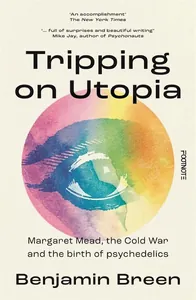
Puss in Magical Motocross Boots
 80
80

Puss in Magical Motocross Boots
Terrell's examination of "Puss in Boots" avoids the common pitfalls of superficial fairy tale interpretations. The strength of this work lies in its meticulous dissection of the narrative's archetypal underpinnings, particularly the role of the feline protagonist as a psychopomp figure guiding the human element towards self-realization. The comparative section, detailing shifts from Perrault's 1697 original to graphic interpretations, is particularly illuminating. However, the book occasionally falters in its accessibility, at times becoming overly dense with esoteric terminology without sufficient grounding for the uninitiated reader. The discussion questions, while present, could benefit from more direct linkage to the specific analytical points made earlier. Overall, "Puss in Magical Motocross Boots" offers a valuable, if sometimes challenging, re-evaluation of a familiar story for those conversant in esoteric thought.
📝 Description
80
Brandon Terrell's 2021 book, Puss in Magical Motocross Boots, applies esoteric frameworks to the classic fairy tale.
Published in 2021, Puss in Magical Motocross Boots offers a literary analysis of the "Puss in Boots" fairy tale through an esoteric perspective. The work moves beyond a simple retelling to examine the archetypal patterns and meanings embedded within the narrative. It serves as both a scholarly inquiry and a guide for readers interested in the story's underlying symbolism.
This book is for readers drawn to comparative mythology, literary criticism with a mystical focus, and the application of esoteric frameworks to familiar narratives. It will appeal to those seeking to understand the deeper psychological and spiritual currents in folklore. Students of Jungian psychology, comparative religion, and folkloristics will find its analytical approach useful.
The original "Puss in Boots" tale, first published in 1697, emerged during a time of interest in courtly literature and oral tradition. Its continued popularity shows a fascination with trickster figures and social mobility. Terrell's 2021 analysis situates this classic within modern esoteric studies, re-examining its elements through frameworks not contemporary to its original publication.
This book engages with esoteric philosophy by reinterpreting a well-known folk tale through symbolic and archetypal lenses. It draws connections between the narrative's elements and concepts such as the anima/animus, the trickster as a transformative force, and the protagonist's symbolic journey. The analysis treats the cat not just as a character but as a symbol of cunning and liminality, viewing the story's progression as a map for initiation and self-discovery. It situates these interpretations within a tradition of applying esoteric frameworks to understand hidden meanings in cultural narratives.
💡 Why Read This Book?
• Gain a new perspective on the "Puss in Boots" narrative by understanding its archetypal symbolism, as explored through the cat's role as a guide, a concept detailed in the "Key Concepts" section. • Explore the evolution of fairy tale interpretation by comparing Perrault's 1697 original with modern adaptations, providing concrete examples of how narratives change over time. • Develop your analytical skills for folklore by applying esoteric frameworks, learning how to identify symbolic journeys and character archetypes within familiar stories.
⭐ Reader Reviews
Honest opinions from readers who have explored this book.
❓ Frequently Asked Questions
What is the primary esoteric tradition explored in "Puss in Magical Motocross Boots"?
The book primarily engages with Jungian psychology and archetypal symbolism, applying these frameworks to analyze the fairy tale's hidden meanings and character dynamics.
When was the original "Puss in Boots" tale first published?
The original tale, "Le Maître chat ou le Chat botté," by Charles Perrault, was first published in 1697 as part of his collection of fairy tales.
Does the book offer practical magical applications?
While it analyzes symbolic and archetypal elements, the book focuses on literary and psychological interpretation rather than providing direct magical rituals or spellcraft.
Who is Brandon Terrell, the author?
Brandon Terrell is the author of "Puss in Magical Motocross Boots," with a first publication date of August 2021, specializing in esoteric literary analysis.
What is the significance of the 'motocross boots' in the title?
The 'motocross boots' serve as a modern, symbolic update to the traditional boots, suggesting a faster, more dynamic, and perhaps unconventional journey for the protagonist, as interpreted within the book.
Is this book suitable for beginners in esoteric studies?
It is best suited for readers with some familiarity with literary analysis and esoteric concepts, as it uses specialized terminology and assumes a foundational understanding.
🔮 Key Themes & Symbolism
Archetypal Trickster
The feline protagonist is examined as a potent manifestation of the trickster archetype. This figure, often operating outside conventional morality, serves as a catalyst for change and societal disruption, forcing the human character to confront limitations and adapt. Terrell analyzes how Puss’s cunning and adaptability represent a force that challenges the established order, propelling the narrative and the protagonist's development forward in unexpected ways, aligning with archetypal patterns found across global mythologies.
The Symbolic Journey
The narrative is interpreted as a symbolic initiation rite. The journey undertaken by Puss and his master is not merely a physical progression but a metaphorical descent and ascent, representing stages of psychological growth and spiritual awakening. The book scrutinizes the obstacles encountered and the solutions devised as markers along this path, highlighting how the protagonist’s transformation is intrinsically linked to his experiences and the guidance provided by his astute feline companion.
Agency and Transformation
A central theme is the concept of agency, particularly the unexpected source from which it arises – an animal. The analysis focuses on how Puss in Boots, through his strategic actions and manipulation of social perceptions, empowers his human master. This highlights a core esoteric principle: transformation often begins from unexpected quarters and requires embracing seemingly unconventional means to achieve desired ends and overcome limitations.
Narrative Reinterpretation
The work engages in a critical reinterpretation of Charles Perrault's 1697 tale, situating it within contemporary esoteric discourse. It contrasts the original narrative's elements with modern graphic adaptations, exploring how the core story's symbolic resonance persists and evolves across different media and interpretive frameworks, demonstrating the enduring power of foundational myths.
💬 Memorable Quotes
Direct passages from the work, attributed to the author.
“Perrault's 1697 tale utilizes the trickster to expose societal artifice.”
— This highlights the original story's function beyond simple entertainment, indicating its use as a tool to critique the superficiality and deception present within the social structures of its time.
“Archetypal patterns provide a framework for understanding the cat's cunning.”
— This interpretation posits that the cat's cleverness is not random but can be understood through recurring symbolic figures and narrative structures found in universal mythology and psychology.
“The graphic adaptation shifts the emphasis on the Marquis's downfall.”
— This observation points to a specific comparative analysis within the book, noting how modern visual interpretations alter the narrative focus, potentially changing the symbolic weight of certain characters or events.
“Fairy tales can serve as maps for psychological development.”
— This concept frames fairy tales not just as stories, but as allegorical guides that reflect the stages and challenges inherent in personal growth and self-discovery.
💡 Key Ideas
Editorial paraphrase of the work's core concepts — not direct quotes.
The cat acts as a psychopomp, guiding the human through symbolic trials.
This paraphrased concept suggests Puss functions not just as a pet but as a spiritual guide, leading his master through challenges that represent inner growth and transformation, akin to figures who escort souls in mythology.
🌙 Esoteric Significance
Tradition
The work primarily draws from Jungian analytical psychology, viewing the fairy tale through the lens of archetypes and the collective unconscious. It aligns with modern esoteric traditions that seek symbolic meaning in folklore, interpreting characters and plot points as representations of internal psychological processes and universal human experiences, rather than literal events or purely historical artifacts.
Symbolism
Key symbols include the cat itself, representing cunning, liminality, and the trickster archetype; the boots, signifying enhanced mobility and perhaps a disguise or acquired status; and the Marquis, representing the flawed human protagonist needing guidance. The narrative's progression from poverty to apparent wealth is interpreted as a symbolic journey of transformation and self-realization, mirroring initiatory rites.
Modern Relevance
Contemporary thinkers and practitioners in fields like depth psychology, comparative mythology, and even certain branches of narrative therapy can utilize Terrell's analysis. The approach of finding archetypal significance in familiar stories informs modern storytelling, personal development coaching, and academic studies focusing on the enduring power of myth in shaping human consciousness and understanding.
👥 Who Should Read This Book
• Students of comparative mythology: Readers interested in how archetypal figures like the trickster appear across different cultures and narratives will find value in the analysis of Puss's role. • Jungian psychology enthusiasts: Individuals seeking to understand Jung's concepts of archetypes and the collective unconscious, applied to a well-known folk tale, will appreciate this scholarly approach. • Literary critics focused on folklore: Those analyzing fairy tales for deeper symbolic meanings, beyond simple plot summaries, will benefit from the detailed examination of narrative structure and character symbolism.
📜 Historical Context
Brandon Terrell's 2021 analysis of "Puss in Boots" arrives in an era saturated with deconstructive literary criticism and a resurgence of interest in Jungian archetypes. The original tale, first published by Charles Perrault in 1697, emerged during the French *Grand Siècle*, a period marked by literary salons and an interest in refining popular tales for aristocratic audiences. Perrault's collection, *Histoires ou contes du temps passé*, competed with the more fantastical *contes de fées* popularized by Madame d'Aulnoy, presenting a slightly more grounded, albeit still magical, approach. While Perrault's work was widely embraced, it faced ongoing reinterpretation. Terrell's work engages with this legacy, re-examining the 1697 text through contemporary esoteric lenses, particularly comparative mythology and psychological symbolism, offering a contrast to purely historical or folkloric analyses.
📔 Journal Prompts
The cat's role as a psychopomp guiding the master.
The symbolic meaning of the Marquis's acquisition of status.
Analyzing Puss's cunning as a transformative force.
The contrast between Perrault's 1697 tale and modern interpretations.
The narrative as a map for psychological development.
🗂️ Glossary
Archetype
A universal, inherited pattern of thought or image derived from the experience of the human species, central to Carl Jung's theory of the collective unconscious.
Anima/Animus
The unconscious feminine aspect in a man (anima) or the unconscious masculine aspect in a woman (animus), influencing relationships and self-perception.
Psychopomp
A guide of souls to the place of the dead; in a symbolic sense, a figure that facilitates transition or transformation.
Trickster
A character in mythology or folklore who exhibits cunning, mischief, and often amoral behavior, acting as a catalyst for change or a subverter of norms.
Collective Unconscious
A concept developed by Carl Jung, referring to a layer of the unconscious mind shared by all humanity, containing archetypes and primal images.
Initiation Rite
A ceremonial process by which an individual is formally admitted into a new status, role, or society, often involving symbolic trials or teachings.
Liminality
A state of being in between, on the threshold; a transitional phase or space where established norms may be suspended or challenged.
This book appears in 1 collection
🔮 Readers Also Liked
Browse all →








From the “Shapeshifting” Collection
View all →






More Free Occult Philosophy Books
View all →