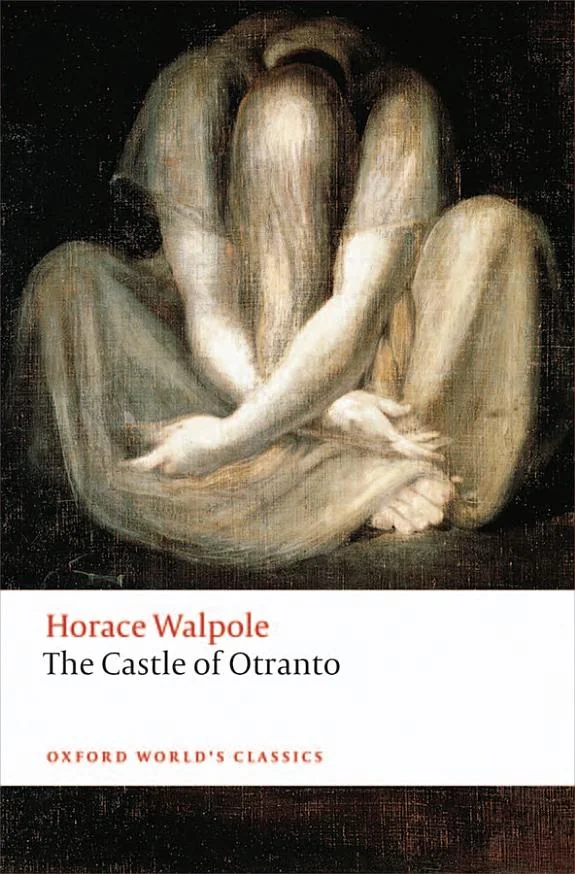
The Castle of Otranto
 76
76

The Castle of Otranto
Horace Walpole's *The Castle of Otranto* remains a foundational text for Gothic literature, offering a concentrated dose of dread and ambition. Its primary strength lies in its pioneering creation of the Gothic atmosphere – the decaying castle, the tyrannical lord, and the encroaching supernatural feel remarkably fresh even today. The pacing is relentless, pushing Manfred from one desperate act to another with a sense of inevitable doom. However, the characterizations can feel somewhat archetypal, serving the plot's machinery more than offering deep psychological portraits. The spectral appearances, while effective, sometimes verge on the theatrical. A particularly striking moment is the appearance of the giant's ghost from the helmet, a visceral manifestation of the castle's curse. Ultimately, *The Castle of Otranto* is a potent, albeit brief, exploration of how unchecked ambition and a defiance of fate can unleash ancient horrors.
📝 Description
76
Horace Walpole published The Castle of Otranto in 1764, creating the first Gothic novel.
This novella tells the story of Manfred, the prince of Otranto, whose ruthless ambition to secure his family's power leads to supernatural events. After his son Conrad dies in a freak accident, Manfred decides to marry Conrad's betrothed, Isabella, himself. This decision defies a prophecy and sets in motion a chain of dark omens and terrifying occurrences within the castle walls.
The castle itself becomes a central element, filled with ancient curses and haunted by spectral figures. Manfred's increasingly desperate actions, driven by fear and a desire for control, result in familial ruin and his own downfall. The narrative uses these elements to examine the destructive nature of unchecked ambition and the inescapable consequences of defying fate.
Published in 1764, The Castle of Otranto emerged as Gothic literature began to engage with medieval romances and the sublime. Horace Walpole, a collector of antiquities, deliberately blended historical settings with contemporary psychological dread. The novel taps into a fascination with the past, the uncanny, and the darker aspects of the human psyche, elements that would shape later occult and supernatural fiction. Its embrace of terror and the psychological impact of fear predates theoretical discussions of the sublime, positioning it as an early exploration of these themes within a literary context.
💡 Why Read This Book?
• Understand the birth of the Gothic genre by engaging with its inaugural text, *The Castle of Otranto*, and observe the foundational elements like the haunted castle and supernatural curses that would define the genre for centuries. • Explore the concept of "inherited guilt" as depicted through Manfred's desperate attempts to secure his lineage, revealing how ancestral actions can manifest as inescapable psychic and supernatural burdens. • Witness the early literary exploration of the "sublime" through terror, observing how Walpole uses elements of fear, mystery, and the overwhelming power of the supernatural to evoke strong emotional responses in the reader.
⭐ Reader Reviews
Honest opinions from readers who have explored this book.
❓ Frequently Asked Questions
When was Horace Walpole's *The Castle of Otranto* first published?
Horace Walpole's *The Castle of Otranto* was first published on December 20, 1764, marking the beginning of the Gothic literary tradition.
What is the main plot of *The Castle of Otranto*?
The main plot involves Manfred, the Prince of Otranto, who attempts to marry his son's betrothed, Isabella, to secure his inheritance after his son's death, inadvertently unleashing ancient curses and supernatural forces tied to the castle.
Who are the main characters in *The Castle of Otranto*?
The central characters include Manfred, the tyrannical Prince; Isabella, his son's intended bride; Conrad, Manfred's deceased son; Hippolita, Manfred's wife; and Theodore, a humble peasant who becomes entangled in the castle's fate.
What are the key symbols in *The Castle of Otranto*?
Key symbols include the giant helmet, which signifies the ancient lineage and curse; the spectral apparition of Alfonso; and the castle itself, representing confinement, history, and hidden terrors.
Is *The Castle of Otranto* considered a classic?
Yes, *The Castle of Otranto* is considered a classic for its status as the first Gothic novel, significantly influencing subsequent literature in the genre.
Where is the story of *The Castle of Otranto* set?
The story is set in and around the fictional "Castle of Otranto" in Italy, a location steeped in historical mystery and supernatural phenomena.
🔮 Key Themes & Symbolism
The Tyranny of Lineage
Manfred's desperate adherence to his princely lineage drives the narrative's tragic arc. His fear of losing his ancestral power, amplified by the curse of Alfonso the Just, leads him to commit increasingly immoral acts. The novel suggests that a fixation on bloodlines and inherited rights, especially when tied to past transgressions, can become a self-destructive force, inviting supernatural retribution and the collapse of established order.
Supernatural Retribution
The spectral manifestations in *The Castle of Otranto* are not mere embellishments but direct consequences of past sins and broken oaths. The giant ghost of Alfonso, the disembodied hand, and the portrait's descent serve as tangible evidence of divine or ancestral judgment. This theme aligns with older narrative traditions where the supernatural enforces a moral order, punishing those who transgress against sacred laws or usurp rightful claims.
The Castle as a Labyrinth of Fear
The castle itself functions as a character, a physical embodiment of Manfred's psychological state and the ancestral curse. Its hidden passages, subterranean vaults, and spectral inhabitants create an atmosphere of perpetual dread and confinement. The architecture reflects the protagonist's entrapment within his own ambition and the inescapable history of his family, making escape both physically and spiritually impossible.
Destiny and Free Will
While characters like Manfred believe they can alter their fate through sheer will and cunning, the novel strongly implies that destiny is predetermined, particularly for those bound by ancient prophecies. The appearance of Theodore, a figure seemingly destined to reclaim his birthright, highlights the tension between human agency and the overarching power of fate, suggesting that attempts to defy the cosmic order are ultimately futile.
💬 Memorable Quotes
Direct passages from the work, attributed to the author.
“I find myself, though born a Prince, destined to an ignominious death. I therefore conjure you, by the blood of thebes, to execute my last commands.”
— This statement, attributed to Manfred, expresses his realization of impending doom and his desperate attempt to control events even in his final moments. It reflects the theme of inescapable destiny and the burden of a cursed lineage.
“O! that the fiend had never been conjured, that the prophecies had never been fulfilled!”
— This reflects the characters' despair as supernatural events unfold, confirming ancient prophecies. It highlights the futility of their struggles against a predetermined, malevolent fate that seems intrinsically linked to the castle's history.
“I am the son of Alfonso, and the rightful lord of Otranto.”
— This declaration, spoken by Theodore, signifies the disruption of Manfred's illegitimate hold on power and the reassertion of an ancient, possibly fated, claim. It represents the overturning of usurpation by rightful, albeit supernatural-endorsed, succession.
“I have taken all these pains to prevent the blood of Manfred from being mingled with that of a peasant.”
— Manfred utters this, ironically revealing his obsession with noble bloodlines. His efforts to prevent such a union ironically lead to the very outcome he sought to avoid, underscoring the theme of fate's cruel inversions.
💡 Key Ideas
Editorial paraphrase of the work's core concepts — not direct quotes.
The helmet of Otranto was at length discovered, and the moment it was fixed on his head, the storm, which had been gathering, burst.
This passage marks a key moment where a symbolic artifact directly correlates with and seemingly triggers a cataclysmic event. It illustrates the potent connection between ancient objects, lineage, and supernatural forces.
🌙 Esoteric Significance
Tradition
While not explicitly aligning with a single esoteric tradition, *The Castle of Otranto* draws heavily on archetypal narratives found in folklore and mythology, which are foundational to many esoteric systems. Its exploration of curses, destiny, and the manifestation of ancestral spirits speaks to Gnostic ideas of a fallen world and the presence of malevolent or guiding forces beyond human control. The focus on inherited sin and the cyclical nature of fate also echoes themes found in Hermeticism and certain interpretations of Kabbalah concerning cosmic justice and karmic repercussions.
Symbolism
The most prominent symbol is the giant, spectral helmet of Alfonso the Just, representing the weight of the past, the burden of inherited sin, and the ultimate authority of an ancient lineage. The castle itself serves as a potent symbol of the psyche—a place of hidden chambers, dark secrets, and entrapment by one's own history or subconscious fears. The disembodied hand, a manifestation of spectral justice, symbolizes an otherworldly power intervening to correct perceived wrongs and enforce ancient laws.
Modern Relevance
Contemporary writers and practitioners of Western esotericism continue to engage with *The Castle of Otranto*. Its foundational role in establishing the Gothic genre makes it a touchstone for discussions on horror, the uncanny, and psychological darkness in literature. Modern occult fiction often borrows its atmospheric dread and exploration of cursed bloodlines. Furthermore, the novel's depiction of how past actions can manifest physically and supernaturally informs contemporary understandings of generational trauma and the persistent influence of history on the present, concepts explored in various forms of modern spiritual and psychological inquiry.
👥 Who Should Read This Book
['• Students of literary history interested in the origins of the Gothic novel and its foundational tropes.', '• Readers fascinated by symbolism and archetypal narratives exploring themes of fate, curses, and ancestral influence.', '• Enthusiasts of early modern literature seeking a concise yet impactful exploration of ambition, fear, and the supernatural.']
📜 Historical Context
Published in 1764, *The Castle of Otranto* by Horace Walpole is credited as the progenitor of the Gothic novel. It emerged during a period of intense interest in medievalism and the sublime, reacting against the rationalism of the Enlightenment. Walpole, a connoisseur of Gothic architecture and antiquities, consciously sought to revive the spirit of medieval romance. The novel appeared shortly before Edmund Burke's treatise on the sublime, yet it masterfully employed elements of terror, mystery, and the supernatural that would become hallmarks of the genre. Its reception was initially mixed; some critics found its melodramatic elements excessive, while others recognized its innovative power. Contemporary authors like Oliver Goldsmith expressed admiration for its originality. The novel's success paved the way for subsequent Gothic works by authors such as Ann Radcliffe and Matthew Lewis, establishing a literary tradition that explored the darker recesses of the human psyche and the haunting presence of the past.
📔 Journal Prompts
Manfred's ambition and its consequences on the Otranto lineage.
The spectral manifestations and their role in enforcing fate.
The castle as a symbol of psychological entrapment.
Theodore's emergence as a fated heir.
Isabella's struggle between fear and moral obligation.
🗂️ Glossary
Gothic Novel
A literary genre characterized by elements of horror, mystery, and romance, often set in ancient castles or decaying mansions, featuring supernatural events, and exploring themes of terror and the sublime.
Sublime
In aesthetics, a quality of greatness, whether physical, moral, intellectual, metaphysical, aesthetic, spiritual, or artistic, that is so powerful that it overwhelms human understanding. It is often associated with feelings of awe mixed with terror.
Usurpation
The act of unlawfully seizing and holding power or property, especially the throne. In *The Castle of Otranto*, Manfred's actions represent both political and marital usurpation.
Prophecy
A prediction of future events, often attributed to divine inspiration or supernatural knowledge. The novel heavily features prophecies that dictate the characters' fates.
Archetype
A recurring symbol, character type, or narrative pattern that appears in literature across cultures and time periods, believed to represent fundamental human experiences or motivations.
Medieval Romance
A genre of prose or verse narrative popular in the Middle Ages, typically involving chivalric adventures, courtly love, and often fantastical elements. Walpole sought to blend this with contemporary sensibilities.
The Supernatural
That which is attributed to a force or being beyond the ordinary course of nature. In the novel, this includes ghosts, spectral apparitions, and omens.
This book appears in 1 collection
🔮 Readers Also Liked
Browse all →









From the “Prophecy” Collection
View all →




More Free Occult Philosophy Books
View all →