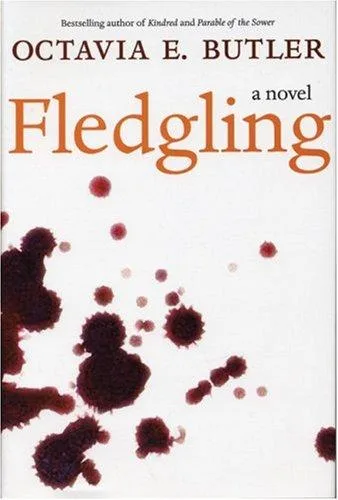
Fledgling
 83
83

Fledgling
Octavia E. Butler's *Fledgling* offers a stark and unflinching look at what it means to be other. The novel's strength lies in its unvarnished portrayal of Shori's existence; Butler does not shy away from the visceral realities of her protagonist's altered biology and her predatory instincts. The depiction of Shori’s gradual understanding of her own needs and her desperate search for connection, particularly through her relationships with the humans she designates as her ‘kin,’ is profoundly moving. However, the narrative occasionally feels constrained by its own premise, with certain plot developments serving the biological requirements of the ana-gen species perhaps too rigidly, at times overshadowing organic character progression. A particularly striking aspect is the exploration of Shori’s need for human DNA, a visceral dependency that Butler renders with unsettling detail, forcing readers to confront uncomfortable questions about symbiosis and exploitation. Ultimately, *Fledgling* is a powerful, if sometimes difficult, exploration of survival and the construction of identity in extremis.
📝 Description
83
Octavia E. Butler's 2017 novel *Fledgling* examines survival through an immortal, engineered being.
Shori, a genetically engineered immortal, awakens with amnesia and a drive to survive in Octavia E. Butler's 2017 novel, *Fledgling*. Her altered physiology and predatory instincts place her at odds with a world she barely recognizes. Shori must learn to control her unique biology and form relationships with humans who are both potential allies and threats. The narrative follows her struggle for acceptance and understanding in a society not built for her kind.
The book delves into themes of identity, evolution, and what it means to be human when one's existence defies biological and societal norms. Shori's journey forces a confrontation with the ethics of genetic manipulation and the challenges faced by those who exist outside conventional structures. Butler uses Shori's perspective to question the boundaries of species and the nature of connection.
Published in 2017, *Fledgling* engages with contemporary anxieties surrounding bioethics and the post-human condition, a topic Butler consistently addressed. Her work, including this novel, often explored the biological imperatives driving individuals and species, alongside societal structures. This places *Fledgling* within a tradition of speculative fiction that uses altered beings to question human exceptionalism and explore the potential futures of human evolution, reflecting concerns present in discussions of transhumanism and genetic modification.
💡 Why Read This Book?
• Learn about the biological and social imperatives of the 'ana-gen' species, understanding how their need for human DNA shapes their interactions and societal structures, as depicted in Butler's detailed exploration. • Experience the unique perspective of Shori, an immortal, genetically engineered being, and witness her struggle to form 'kin' bonds and navigate a world that views her as a dangerous anomaly. • Grasp Butler's commentary on evolution and identity, examining how extreme biological alteration forces a redefinition of self and community, a theme central to the narrative's core conflict.
⭐ Reader Reviews
Honest opinions from readers who have explored this book.
❓ Frequently Asked Questions
What is the core concept behind the 'ana-gen' species in Octavia E. Butler's Fledgling?
The 'ana-gen' are genetically engineered, immortal humans with enhanced physical abilities. A crucial aspect of their biology is their dependence on human DNA for sustenance and reproduction, a symbiotic relationship that drives much of the narrative.
Who is the protagonist of Fledgling and what are her primary challenges?
The protagonist is Shori, a young ana-gen who awakens with amnesia. Her main challenges include understanding her unique physiology, controlling her predatory instincts, surviving in a hostile world, and forming essential 'kin' relationships for her survival.
When was Octavia E. Butler's Fledgling first published?
Octavia E. Butler's novel Fledgling was first published in 2017.
What are some of the key themes explored in Fledgling?
Fledgling explores themes of identity, survival, evolution, genetic engineering, symbiosis, and the nature of family and community, particularly as experienced by a non-human protagonist.
Does Fledgling connect to any other works by Octavia E. Butler?
While Fledgling is a standalone novel, it shares Butler's recurring interest in speculative biology, societal structures, and the complexities of identity, themes present in her earlier works like the 'Xenogenesis' trilogy or 'Parable of the Sower'.
What is the significance of 'kin' in the context of Fledgling?
'Kin' in Fledgling refers to the chosen human companions with whom the ana-gen form deep, symbiotic, and reproductive bonds. These relationships are essential for the ana-gen's survival and emotional well-being, redefining traditional notions of family.
🔮 Key Themes & Symbolism
Symbiotic Survival
The core of Fledgling lies in the symbiotic relationship between the ana-gen, like Shori, and humans. This isn't a gentle partnership but a biological necessity, with the ana-gen requiring human DNA to survive and reproduce. Butler meticulously details this dependency, exploring the ethical quandaries and power dynamics that emerge. Shori’s quest for suitable human partners highlights the inherent vulnerability within her seemingly superior biology, forcing her to build trust and connection in a world that fears her existence.
Constructed Identity
Shori awakens with no memory, a blank slate forced to construct her identity from fragmented instincts and immediate needs. Her genetically engineered nature further complicates this, as she embodies traits and desires that are not learned but inherent. The novel examines how identity is shaped by biology, memory, and external perception. Shori's journey is one of self-discovery, where she must reconcile her alien physiology with her developing emotional connections and her role within her newly formed 'kin' group.
Evolution and Otherness
Butler uses the ana-gen to explore the concept of evolutionary divergence and the experience of radical otherness. Shori is fundamentally different from humans, possessing enhanced abilities, a different reproductive cycle, and a predatory nature. The narrative probes societal reactions to the 'other,' showcasing fear, exploitation, and fascination. Shori’s struggle for acceptance and her attempts to integrate, despite her inherent biological differences, serve as a powerful allegory for marginalized groups and the challenges of coexistence.
Kinship and Belonging
Beyond biological ties, Fledgling emphasizes the creation of 'kin' – chosen family essential for survival and emotional sustenance. Shori’s development hinges on her ability to form these bonds, moving from a solitary, instinct-driven being to one who values connection and loyalty. The novel challenges conventional definitions of family, suggesting that true belonging is forged through shared experience, mutual need, and a willingness to protect one another, regardless of species or origin.
💬 Memorable Quotes
Direct passages from the work, attributed to the author.
“I have to eat. I have to survive. I have to do whatever it takes.”
— This reflects Shori’s primal drive and the harsh realities of her existence as an ana-gen. It underscores the biological imperatives that govern her actions and the difficult choices she must make to ensure her survival, often at the expense of conventional morality.
“My people are the ones I choose to be with.”
— This statement signifies Shori's evolving understanding of 'kin' and belonging. It moves beyond biological or species-based definitions to embrace chosen relationships as the true foundation of community and family, a central theme in her development.
“She was a predator, but she wanted to be loved.”
— This paradox lies at the heart of Shori’s character. Her inherent nature as a predator clashes with her developing desire for connection and affection, creating internal conflict and driving her search for acceptance among humans.
“Survival is the only law.”
— An interpretation of Shori's early worldview. This belief system reflects her initial amnesiac state and her focus on immediate needs. As she forms kin, this perspective begins to soften, though the imperative to survive remains paramount.
💡 Key Ideas
Editorial paraphrase of the work's core concepts — not direct quotes.
She woke up knowing she was a human being, but she wasn't sure she was a person.
This quote captures Shori's existential crisis. Despite her physical form, her amnesia and engineered nature leave her questioning her sentience and her place within the human world, highlighting the conflict between biological form and personal identity.
🌙 Esoteric Significance
Tradition
While not overtly tied to a single esoteric lineage, *Fledgling* draws upon Gnostic themes of the manufactured human and the quest for true self-knowledge amidst a flawed creation. The ana-gen can be seen as a modern iteration of the Golem or homunculus, beings created by artificial means. The narrative's focus on an altered biology and unique spiritual/existential needs also echoes certain alchemical concepts of transformation and the pursuit of perfection through manipulation of the physical form.
Symbolism
The primary symbol is Shori herself, representing the 'other' or the emergent being struggling for recognition and integration. Her need for human DNA symbolizes a profound, albeit predatory, interdependence, a dark echo of universal interconnectedness. The concept of 'kin' symbolizes the creation of chosen families and communities as a means of survival and belonging, transcending traditional biological or societal structures.
Modern Relevance
Contemporary thinkers in transhumanism and bioethics often engage with Butler's work, as *Fledgling* directly addresses the implications of genetic engineering and the creation of augmented or entirely new forms of human life. The novel’s exploration of what constitutes 'humanity' and 'personhood' remains a critical point of discussion in fields examining artificial intelligence, synthetic biology, and the ethical boundaries of scientific advancement.
👥 Who Should Read This Book
• Students of speculative fiction and bioethics: Gain a nuanced perspective on the ethical implications of genetic engineering and the definition of humanity through a compelling narrative. • Readers interested in themes of identity and otherness: Explore the profound psychological and social challenges faced by a protagonist who is biologically distinct and struggles for acceptance. • Fans of Octavia E. Butler's oeuvre: Deepen your understanding of her recurring concerns with societal structures, evolution, and power dynamics, presented here through a unique, immortal protagonist.
📜 Historical Context
Octavia E. Butler's *Fledgling*, published in 2017, emerged in an era where concerns about genetic engineering, bioethics, and the future of humanity were increasingly prominent in public discourse and speculative fiction. Butler, a recipient of the MacArthur Fellowship in 1995, was already a respected figure known for her prescient explorations of race, gender, and societal collapse. *Fledgling* continued her tradition of examining biological and social structures through the lens of science fiction. This period saw a surge in narratives grappling with post-humanism and biotechnological advancements, with authors like Paolo Bacigalupi exploring similar themes of engineered life and resource scarcity. The novel’s themes of identity, survival, and the creation of 'kin' resonated with contemporary anxieties about evolution and belonging in a rapidly changing world. While not facing overt censorship, Butler's work consistently challenged societal norms, prompting critical engagement with issues of power and difference.
📔 Journal Prompts
Shori's awakening without memory.
The biological imperative for ana-gen survival.
Defining 'kin' beyond biological ties.
The societal fear of the 'other'.
Reconciling predatory instinct with the desire for love.
🗂️ Glossary
Ana-gen
A species of genetically engineered, immortal humanoids created by the pharmaceutical company, known for their enhanced physical abilities and specific biological needs.
Shori
The protagonist of Fledgling, a young ana-gen who awakens with amnesia and must learn to survive and understand her unique nature.
Kin
The term used by the ana-gen for their chosen human companions, with whom they form symbiotic, reproductive, and familial bonds essential for survival.
Symbiosis
In Fledgling, this refers to the essential biological relationship where ana-gen require human DNA for sustenance and reproduction, and humans are bonded to them, offering protection and companionship.
The Corporation
The unnamed pharmaceutical company responsible for creating the ana-gen, holding significant power and control over their existence and the human partners.
The Nest
A term used to describe the communal living arrangements established by Shori and her chosen kin, representing a safe haven and a functioning society for the ana-gen.
Pheromones
Chemical signals used by the ana-gen to communicate and influence humans, playing a role in establishing bonds and ensuring cooperation.
🔮 Readers Also Liked
Browse all →









More by Octavia E. Butler
All books →





More Free Occult Philosophy Books
View all →



![Roald Dahl's Tales of the Unexpected [24 stories]](/img/thumb/roald-dahls-tales-of-the-unexpected-24-stories-roald-dahl-509219.webp)