Pseudoscience
 78
78

Pseudoscience
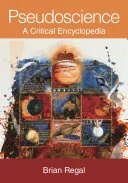
Brian Regal's *Pseudoscience: A Critical Encyclopedia* offers a much-needed dissection of claims that masquerade as scientific fact. Rather than simply listing dubious theories, Regal probes the very mechanisms that allow them to persist. His examination of the historical trajectory of pseudoscientific ideas, such as the persistent fascination with phrenology well into the 20th century, highlights recurring patterns of flawed reasoning and wishful thinking. A particular strength lies in his clear articulation of the criteria that define legitimate scientific practice, making the distinction accessible without oversimplification. However, the sheer breadth of topics covered means some entries feel more like brief overviews than deep dives, which might leave readers wanting more on specific phenomena. Despite this, Regal provides an authoritative and intellectually stimulating guide for discerning sense from nonsense.
📝 Description
78
Brian Regal's 2001 encyclopedia dissects claims outside scientific consensus.
Brian Regal's *Pseudoscience: A Critical Encyclopedia* examines claims that fall outside established scientific understanding. The book does more than just list these claims; it analyzes the core nature of scientific inquiry itself. Regal investigates how certain beliefs gain acceptance without empirical backing, providing readers with methods to evaluate information and recognize flawed reasoning. The work focuses on the underlying approaches and philosophical ideas that determine scientific validity.
This reference is useful for students of science, philosophy, and critical thinking. It will interest those who study the history of ideas, particularly where unconventional theories touch upon mainstream thought. Skeptics, educators aiming to improve students' critical skills, and anyone curious about the line between science and non-science will find this a valuable resource. It helps individuals who question claims and want to understand how knowledge is built on sound principles.
While the book engages with claims often found in esoteric traditions, its primary focus is not on the traditions themselves but on the methods used to evaluate their scientific standing. Regal applies principles of philosophy of science to distinguish between empirically supported knowledge and belief systems that lack such support. The encyclopedia serves as a critical tool for understanding how the boundaries of science are drawn and maintained, a topic relevant to anyone studying the intersection of belief, knowledge, and societal acceptance.
💡 Why Read This Book?
• You will learn to identify specific logical fallacies and rhetorical devices common in pseudoscientific arguments, as detailed in the book's analysis of various case studies. • You will gain an understanding of the historical evolution of pseudoscientific ideas, including the enduring appeal of concepts like vitalism, which Regal discusses in relation to early 20th-century biological thought. • You will develop a more robust framework for evaluating claims, informed by the book's exploration of scientific methodology and the demarcation problem, particularly concerning theories presented without empirical validation.
⭐ Reader Reviews
Honest opinions from readers who have explored this book.
❓ Frequently Asked Questions
What is the primary goal of Brian Regal's 'Pseudoscience: A Critical Encyclopedia'?
The book aims to equip readers with the critical tools necessary to differentiate between legitimate scientific inquiry and pseudoscientific assertions, exploring the methodologies and historical contexts that shape our understanding of science.
When was 'Pseudoscience: A Critical Encyclopedia' first published?
Brian Regal's comprehensive encyclopedia was first published on October 15, 2009, providing a crucial resource for understanding the demarcation between science and pseudoscience.
What kind of examples does the book use to illustrate pseudoscientific concepts?
The encyclopedia covers a wide range of examples, from historical theories like phrenology to more contemporary claims, analyzing their structure and appeal within specific cultural and intellectual contexts.
How does the book help readers develop critical thinking skills?
By dissecting the arguments and methods of pseudoscientific fields, the book implicitly trains readers to question assumptions, evaluate evidence, and recognize flawed reasoning, fostering a more discerning approach to information.
Is 'Pseudoscience: A Critical Encyclopedia' suitable for beginners in critical thinking?
Yes, the work is structured to be accessible, offering clear explanations of complex concepts and providing concrete examples that make the principles of critical evaluation understandable for those new to the subject.
What distinguishes Brian Regal's approach to pseudoscience from other works?
Regal's approach emphasizes not just identifying pseudoscience but understanding its intellectual foundations and historical persistence, offering a deeper analysis of why such claims gain traction.
🔮 Key Themes & Symbolism
The Demarcation Problem
This theme addresses the fundamental challenge of distinguishing genuine scientific endeavors from those that merely mimic scientific language or methods. Regal explores various philosophical criteria, such as Karl Popper's concept of falsifiability, examining how pseudoscientific claims often evade empirical testing or logical scrutiny. The work provides readers with analytical frameworks to dissect claims of extraordinary phenomena, revealing how they operate outside the self-correcting mechanisms inherent in scientific discourse. It highlights the intellectual rigor required to maintain the integrity of scientific knowledge against persistent, unfounded assertions.
Historical Persistence of Fringe Beliefs
Regal traces the lineage of pseudoscientific ideas through different eras, demonstrating how certain concepts, despite repeated refutation, continue to resurface or adapt. This section examines the enduring appeal of theories that promise simple answers to complex questions or offer comfort in uncertain times. The book illustrates this with examples like the continued fascination with astrology and alchemy, showing how these beliefs often fill a void left by established institutions or provide a sense of agency. Understanding this historical continuity is key to recognizing patterns in contemporary pseudoscientific movements.
Methodology and Epistemology
A core focus is the examination of scientific methodology—the systematic process of observation, hypothesis formation, experimentation, and validation. Regal contrasts this with the often haphazard or selective use of evidence found in pseudoscientific pursuits. The work looks at epistemological considerations, questioning how we come to know what we know and the reliability of different sources of knowledge. By dissecting the 'how' and 'why' behind scientific acceptance versus pseudoscientific rejection, the book underscores the importance of a rigorous and transparent approach to knowledge acquisition.
The Psychology of Belief
Beyond intellectual analysis, the book touches upon the psychological factors that make individuals susceptible to pseudoscientific claims. This includes cognitive biases, confirmation bias, and the desire for certainty or belonging. Regal explores how charismatic proponents and sophisticated rhetorical strategies can lend an air of authority to unsubstantiated ideas. Understanding these psychological underpinnings is crucial for grasping why rational arguments alone may not suffice to counter deeply held pseudoscientific beliefs, offering insights into the human element of knowledge and belief systems.
💬 Memorable Quotes
Direct passages from the work, attributed to the author.
“What makes science science?”
— This fundamental question posed by Regal serves as the central inquiry driving the encyclopedia. It prompts readers to consider the essential characteristics and methodologies that define legitimate scientific exploration, setting the stage for analyzing claims that deviate from these standards.
“Brian Regal's authoritative, entertaining new reference...”
— This phrasing suggests that the book achieves a balance between academic rigor and engaging prose. It implies that complex topics related to scientific validity and pseudoscientific deception are presented in a manner that is both informative and accessible to a broad audience.
“The book gets at the heart of these questions by helping readers understand ho”
— This fragment implies a deep dive into the core issues surrounding scientific legitimacy. The 'ho' likely refers to 'how' specific pseudoscientific claims are constructed and disseminated, offering readers an understanding of their underlying mechanisms.
“More than just a collection of factual entries...”
— This opening statement indicates that Regal's work transcends a simple catalog. It suggests an analytical and interpretative approach, aiming to foster critical thinking rather than just presenting data, thus encouraging readers to engage with the material intellectually.
💡 Key Ideas
Editorial paraphrase of the work's core concepts — not direct quotes.
The work explores how to tell which assertions, beliefs, and methods are scientifically sound, and which are not.
This paraphrased concept highlights the practical application of the book's content. It's not just theoretical; Regal provides readers with the analytical tools and criteria to actively evaluate information encountered in daily life and academic pursuits.
🌙 Esoteric Significance
Tradition
While not strictly an esoteric text, *Pseudoscience* is relevant to esoteric studies by providing a critical lens through which to examine claims that often originate or circulate within these traditions. It intersects with Gnostic concerns about false knowledge and the search for true gnosis, by dissecting how 'knowledge' outside verifiable systems can mislead practitioners. It also touches upon Hermetic principles of correspondence and hidden laws, by analyzing how pseudoscientific arguments often appropriate such concepts without adhering to their underlying philosophical or empirical bases.
Symbolism
The book’s core symbolism revolves around the 'veil' of deception that often cloaks pseudoscientific claims. Readers are encouraged to 'pierce' this veil, much like an initiate seeks deeper truth. The concept of the 'false prophet' or 'charlatan' is a recurring motif, representing those who propagate misleading information for personal gain or misguided conviction. The very act of scientific verification, with its emphasis on repeatable experiments and peer review, symbolizes a form of ritualistic purification of knowledge, distinct from the often solitary or unverified pronouncements found in pseudoscience.
Modern Relevance
Contemporary esoteric practitioners and scholars often find Regal's work indispensable for reading through the proliferation of occult and metaphysical claims online. Thinkers in fields like critical occultism and skeptical spirituality draw upon its methodologies to distinguish genuine inquiry from exploitation or delusion. Schools of thought that emphasize rigorous study, such as certain modern magical orders or academic departments of religious studies focusing on new religious movements, utilize its framework to maintain intellectual integrity and guide students toward reliable sources of esoteric knowledge.
👥 Who Should Read This Book
• Students of philosophy of science and epistemology seeking a practical guide to the demarcation problem. • Researchers in comparative religion and sociology of belief who analyze the spread and persistence of non-mainstream ideas. • Individuals interested in critical thinking and skepticism, looking to sharpen their ability to evaluate information and identify flawed arguments.
📜 Historical Context
Published in 2009, Brian Regal's *Pseudoscience: A Critical Encyclopedia* emerged during a period of burgeoning internet-fueled information dissemination, where fringe theories could gain rapid traction. The early 21st century saw continued academic engagement with the demarcation problem, a philosophical challenge dating back to thinkers like Karl Popper and Imre Lakatos, who sought to define the boundaries of science. Regal's work implicitly engaged with this lineage, offering a contemporary survey of pseudoscientific phenomena. Its release also coincided with ongoing debates within fields like parapsychology and alternative medicine, where claims often straddled the line between speculative inquiry and unsubstantiated assertion. The book provided a much-needed corrective to the uncritical acceptance of such claims, offering a systematic approach to evaluation that contrasted with the more speculative or advocacy-driven literature prevalent in some circles.
📔 Journal Prompts
The demarcation problem as presented by Regal.
Analyzing the rhetorical strategies used in pseudoscientific claims.
Historical examples of pseudoscientific movements and their societal impact.
The role of evidence and falsifiability in scientific validation.
Personal biases that may influence the acceptance of extraordinary claims.
🗂️ Glossary
Falsifiability
A principle, notably championed by philosopher Karl Popper, stating that for a theory to be considered scientific, it must be possible to prove it false through empirical testing or observation. Pseudoscientific claims often avoid this by being vague or un-testable.
Demarcation Problem
The philosophical challenge of distinguishing science from non-science (including pseudoscience). It seeks clear criteria to separate genuine scientific theories and practices from those that lack empirical support or methodological rigor.
Epistemology
The branch of philosophy concerned with the theory of knowledge. It investigates the nature, origin, and limits of human knowledge, asking how we know what we know and what constitutes justified belief.
Phrenology
A historical pseudoscience popular in the 19th century that claimed to determine character and mental abilities by measuring bumps on the skull. It has been thoroughly discredited by modern neuroscience.
Confirmation Bias
The tendency to search for, interpret, favor, and recall information in a way that confirms or supports one's prior beliefs or hypotheses, often leading to the dismissal of contradictory evidence.
Empirical Evidence
Information acquired through observation and experimentation, verifiable by others. It forms the foundation of scientific knowledge, forming the basis for testing hypotheses and theories.
Vitalism
The belief that living organisms are fundamentally different from non-living entities because they contain some non-physical element or are governed by different principles than inanimate things. Largely superseded by biochemistry and molecular biology.
This book appears in 2 collections
🔮 Readers Also Liked
Browse all →









From the “Crystal Healing” Collection
View all →






More Free Occult Philosophy Books
View all →