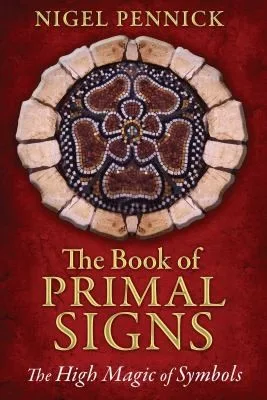
The Book of Primal Signs
 62
62

The Book of Primal Signs


Silas Hawthorne (Hermetic Studies Editor) — Nigel Pennick's 'The Book of Primal Signs' stands as a monumental achievement in the study of sacred geometry and symbolic language. Pennick's unparalleled scholarship and profound understanding of esoteric traditions imbue this work with an authority seldom found. He navigates the labyrinthine paths of ancient symbolism with remarkable clarity, revealing the underlying unity of diverse occult systems. This is not a book for casual perusal; it demands deep engagement from serious practitioners and scholars alike. Its strength lies in its comprehensive scope and its ability to connect seemingly disparate symbols into a coherent, potent framework for understanding the cosmos and our place within it. A truly indispensable resource for anyone seeking to decipher the hidden language of creation.
📝 Description
62
Nigel Pennick's 1999 book decodes the universal language of symbols.
Nigel Pennick's The Book of Primal Signs examines the symbolic language that has informed human thought for ages. The work moves beyond simple academic study to function as a guide into how esoteric traditions perceive reality. Pennick treats each symbol, from glyphs to sigils, as an active tool for developing awareness and connecting with hidden influences. His research connects ancient myths, alchemy, and psychological patterns that appear across cultures.
The book presents a framework for understanding the core ideas behind magical practices and spiritual teachings. It encourages readers to actively engage with these primal symbols, to grasp their significance, and to apply their lessons to their own spiritual development. Pennick’s approach aims to foster a deeper comprehension of the underlying structures that shape various esoteric systems.
This book sits within the tradition of Western esotericism, particularly concerning the theory of a universal symbolic language. It draws on sources related to Hermeticism, alchemy, and comparative mythology to demonstrate how certain signs and symbols appear across disparate cultures and historical periods. Pennick’s work aims to show the continuity of these symbolic forms and their potential for unlocking deeper levels of perception, connecting with what he terms 'unseen forces.'
💡 Why Read This Book?
Unlock the universal language of the cosmos. 'The Book of Primal Signs' offers a deep dive into the foundational symbols that underpin ancient magic, mythology, and spiritual traditions. Ideal for seekers of hidden knowledge, occult scholars, and practitioners who wish to infuse their work with potent, ancient symbolism. Discover the keys to understanding reality's intricate tapestry.
⭐ Reader Reviews
Honest opinions from readers who have explored this book.
❓ Frequently Asked Questions
What are 'Primal Signs' in the context of this book?
Primal Signs are fundamental, archetypal symbols that form the basis of many symbolic systems across cultures and historical periods. They are considered to be the building blocks of visual language that communicate profound metaphysical concepts.
Who is Nigel Pennick?
Nigel Pennick is a highly respected author and researcher in the fields of folklore, symbolism, and esoteric traditions. He is known for his meticulous scholarship and insightful interpretations of ancient and mystical subjects.
Is this book suitable for beginners?
While comprehensive, the book can be approached by dedicated beginners. However, a foundational interest in symbolism and esoteric concepts will greatly enhance the reader's comprehension and appreciation of the material.
What makes this book unique?
Its uniqueness lies in Pennick's ability to synthesize a vast array of symbols from diverse traditions into a cohesive framework, demonstrating their interconnectedness and underlying universal principles. It offers a rare depth of understanding.
Can these symbols be used in modern magical practices?
Absolutely. Understanding these primal signs can profoundly inform and enhance modern magical practices by providing a deeper connection to the archetypal energies and universal forces they represent.
🔮 Key Themes & Symbolism
The Universal Language of Symbols
This theme explores the profound concept of a universal symbolic language that transcends cultural and temporal boundaries. Pennick argues that certain primal signs are inherent to human consciousness, serving as archetypal keys to understanding the structure of reality, the divine, and the human psyche. The book studies how these symbols have been employed across ancient civilizations, from sacred geometry to alchemical diagrams, revealing a shared foundation of esoteric knowledge that connects disparate traditions. It emphasizes that symbols are not mere representations but active forces that can shape perception and facilitate spiritual transformation.
Archetypal Forms and Sacred Geometry
Central to 'The Book of Primal Signs' is the exploration of archetypal forms and their manifestation through sacred geometry. Pennick illustrates how fundamental geometric shapes and patterns, such as the circle, triangle, and square, are imbued with deep metaphysical meaning. These forms are presented not just as mathematical constructs but as visual representations of cosmic principles, divine order, and the interconnectedness of all things. The book examines how these geometric foundations appear in ancient art, architecture, and ritualistic objects, underscoring their role in creating sacred space and aligning with universal energies.
The Alchemy of Perception and Consciousness
This theme studies how the understanding and application of primal signs can lead to an alchemical transformation of perception and consciousness. Pennick suggests that by deciphering these ancient symbols, individuals can gain access to deeper levels of awareness and insight. The book connects the visual language of symbols to inner transformation, demonstrating how their study can awaken dormant faculties, foster intuition, and facilitate a more profound connection to the subtle realms. It presents the engagement with these signs as a path toward self-knowledge and spiritual evolution, akin to an inner alchemy of the soul.
💬 Memorable Quotes
Direct passages from the work, attributed to the author.
“In every form, a hidden pattern awaits revelation.”
— This highlights the esoteric principle that beneath the surface of the material world lie underlying structures and meanings that can be discovered through dedicated observation and study.
“To read the sign is to read the cosmos.”
— This emphasizes the profound connection between symbolic language and the universe itself, implying that understanding symbols is equivalent to understanding the fundamental laws and workings of reality.
“The alphabet of the soul is written in light and shadow.”
— This evocative phrase suggests that the inner workings of the human spirit are expressed through symbolic contrasts, akin to the interplay of light and darkness.
“Where words fail, the primal sign speaks.”
— This underscores the power of symbols to convey concepts and truths that are beyond the limitations of ordinary language, offering a direct channel to deeper meaning.
💡 Key Ideas
Editorial paraphrase of the work's core concepts — not direct quotes.
The primal sign is the seed of all understanding.
This quote suggests that fundamental symbols are the origin point for all true knowledge and insight, acting as the foundational element from which complex ideas emerge.
🌙 Esoteric Significance
Tradition
This work is deeply embedded within the Western esoteric tradition, drawing from Hermeticism, alchemy, Neoplatonism, and Gnosticism. It speaks to the perennial philosophy, seeking universal truths that underpin diverse spiritual paths. Pennick's approach aligns with the tradition of symbolic interpretation that views the material world as a reflection of higher, unseen realities, and sees the study of symbols as a direct path to gnosis.
Symbolism
The book meticulously deciphers a vast array of primal signs, including geometric forms, celestial symbols, alchemical emblems, and archetypal figures. These are presented not as mere decorative elements but as potent keys to understanding cosmic order, human consciousness, and the forces of creation. Pennick elucidates their meanings within various magical and spiritual contexts, revealing their interconnectedness and power to evoke specific energies and states of awareness.
Modern Relevance
In an age often characterized by fragmentation and superficial understanding, 'The Book of Primal Signs' offers a vital reconnecting force. Its exploration of universal symbolism provides a framework for integrating diverse fields of knowledge, from psychology to art history, through an esoteric lens. For contemporary practitioners, it offers a rich source of inspiration and a deeper theoretical grounding for ritual, meditation, and personal transformation, empowering them to engage with ancient wisdom in a meaningful way.
👥 Who Should Read This Book
This comprehensive volume is a treasure for a wide spectrum of seekers. **Beginners** with a nascent curiosity about symbolism and the esoteric will find it an useful, albeit challenging, introduction. **Scholars** of mythology, art history, and comparative religion will appreciate Pennick's rigorous research and unique synthesis of diverse traditions. **Spiritual seekers** and **occult practitioners** will discover a profound resource for deepening their understanding of archetypal energies, enhancing their ritual work, and unlocking new dimensions of consciousness through the potent language of primal signs.
📜 Historical Context
Nigel Pennick's 'The Book of Primal Signs' emerges from a rich lineage of Western esoteric thought, deeply rooted in the Renaissance revival of Hermeticism, Neoplatonism, and Kabbalah, alongside the enduring influence of Gnosticism. The late 20th and early 21st centuries have seen a resurgence of interest in these ancient traditions, fueled by a growing dissatisfaction with purely materialistic worldviews and a desire for deeper spiritual and existential meaning. Pennick's work is part of this contemporary esoteric renaissance, building upon the foundational studies of scholars like Manly P. Hall and Carl Jung, who sought to map the symbolic field of the human psyche and its connection to universal archetypes. The book reflects a scholarly yet deeply intuitive approach, drawing from a vast array of historical sources, including medieval grimoires, alchemical texts, and ancient mythologies, to synthesize a coherent vision of symbolic power.
📔 Journal Prompts
Reflect on a recurring symbol in your dreams or waking life. What primal sign might it represent, and what message could it convey?
Choose one symbol from this book that resonates deeply with you. Spend a day contemplating its form and potential meanings. How does it influence your perception?
How do you see the influence of primal signs in everyday modern life, beyond overtly esoteric contexts?
Consider the concept of 'sacred geometry.' How might understanding these patterns influence your awareness of the world around you?
What personal 'primal sign' do you feel represents your own life's journey or core essence? Describe it and its significance.
🗂️ Glossary
Archetype
A universal, inherited pattern of thought or imagery derived from the collective unconscious, often found in myth, folklore, and art. They are fundamental symbols that represent basic human experiences.
Gnosis
Spiritual or esoteric knowledge, often characterized by direct, intuitive insight into divine mysteries. It is a state of profound understanding beyond intellectual comprehension.
Hermeticism
A philosophical and religious tradition based on the purported teachings of Hermes Trismegistus. It emphasizes the unity of all things and the possibility of achieving spiritual enlightenment through knowledge and contemplation.
Sigil
A magically charged symbol created for a specific purpose, often by combining elements of letters or symbols to represent an intent or desire.
Perennial Philosophy
The idea that all religions and spiritual traditions share a common, underlying truth or wisdom, with variations in their cultural expressions.
This book appears in 2 collections
🔮 Readers Also Liked
Browse all →







More by Nigel Pennick
All books →




From the “Ceremonial Magic” Collection
View all →








More Free Magic & Ritual Books
View all →