The High Magic of India
 61
61

The High Magic of India


Celeste Moreau (Divination & Symbolism Reviewer) — Cody Horton’s 'The High Magic of India' is a monumental achievement, a luminous exploration of India's profound occult depths. Horton masterfully deciphers the labyrinthine pathways of Vedic lore, Tantric practices, and yogic disciplines, presenting them with a clarity that belies their inherent complexity. The book excels in its meticulous dissection of esoteric symbolism, revealing layers of meaning that unlock deeper understanding of the universe and our place within it. Its strength lies in its ability to bridge ancient wisdom with contemporary relevance, making these potent practices accessible to serious students of the metaphysical. This is an indispensable resource for anyone seeking to engage with the authentic, transformative power of Indian magic and spirituality.
📝 Description
61
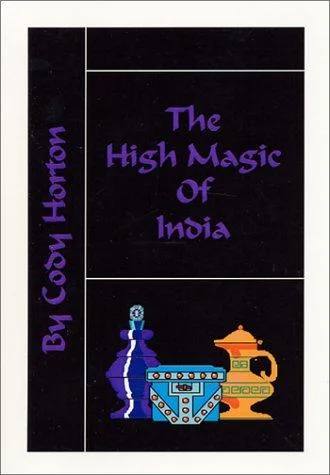
Cody Horton's 'The High Magic of India' was published in 2022, detailing yogic and tantric traditions.
Cody Horton's 'The High Magic of India' examines the esoteric practices within Indian traditions, focusing on the knowledge of yogis, tantrics, and mystics. The book discusses sacred geometries, mantras, and other practices that have influenced spiritual thought for centuries. Horton aims to show how these traditions perceive the connection between the ordinary and the divine, and the underlying principles of reality. It goes beyond simple ritual, presenting a view of Indian esoteric thought as a way to understand existence. The work is intended for those seriously interested in spiritual knowledge, whether as practitioners or scholars. It reveals a vibrant magical heritage and suggests that these principles can be seen in daily life, connecting to the core of being.
This work situates itself within the broad field of Indian esoteric traditions, which have developed over millennia. It draws from lineages associated with yoga and tantra, systems that explore the body, mind, and spirit for transformative ends. These traditions often involve complex symbolic systems, specific vocalizations (mantras), and meditative techniques to alter perception and achieve spiritual insight. Horton's research connects these practices to a worldview where the material and spiritual are not separate, but interwoven aspects of a single reality. The book examines how these concepts have been historically understood and applied by practitioners seeking deeper knowledge.
💡 Why Read This Book?
Uncover the profound esoteric wisdom of India, from ancient yogic practices to potent Tantric rituals. 'The High Magic of India' offers a unique bridge between complex philosophical concepts and practical magical application. Ideal for serious seekers of hidden knowledge, scholars of comparative mysticism, and practitioners looking to deepen their understanding of Eastern magical traditions. Discover a richer, more vibrant understanding of reality.
⭐ Reader Reviews
Honest opinions from readers who have explored this book.
❓ Frequently Asked Questions
What are the primary magical traditions covered in this book?
The book primarily delves into Vedic magic, Tantric practices, and Yogic disciplines, exploring their unique methodologies and philosophical underpinnings for accessing higher states of consciousness and manipulating subtle energies.
Is prior knowledge of Indian philosophy required to read this book?
While some familiarity with Indian philosophical concepts can enhance understanding, Cody Horton provides comprehensive explanations, making the book accessible to dedicated beginners eager to learn.
Does the book offer practical exercises or just theoretical knowledge?
Yes, 'The High Magic of India' offers a blend of theoretical grounding and practical applications, including guidance on mantras, mudras, and meditation techniques that can be integrated into a personal practice.
What is the main philosophical significance of the magic described?
The magic described is deeply rooted in the Indian philosophical concept of "Brahman" (the ultimate reality) and the understanding that consciousness is the fundamental force, with practices aimed at realizing this unity.
How does this book differ from other books on Indian magic?
Horton's work distinguishes itself through its depth of research, its sensitive interpretation of complex symbolism, and its emphasis on the authentic, transformative potential of these ancient practices, avoiding superficial or sensationalist portrayals.
🔮 Key Themes & Symbolism
The Alchemy of Consciousness
This theme explores the core Indian esoteric principle that reality is fundamentally consciousness, and that magic is the art of consciously shaping this universal awareness. It studies how practices like mantra recitation, visualization, and yogic breathwork are not mere rituals but potent tools for transforming one's inner state, thereby influencing the external world. The book illuminates the idea that by mastering the mind, one can unlock profound creative and transformative powers, aligning with the cosmic energies that govern existence and leading to spiritual liberation and manifestational abilities.
Symbolism of the Sacred
The book meticulously unpacks the collection of symbols inherent in Indian magical traditions. From the intricate Yantras and Mandalas that serve as cosmic blueprints to the profound significance of deities and their archetypal forms, each symbol is presented as a key to unlocking deeper spiritual truths. Horton explains how these visual and conceptual languages are not arbitrary but are sophisticated systems designed to facilitate direct experience of the divine and the underlying order of the universe. Understanding this symbolism is crucial for practitioners to connect with the energetic frequencies and wisdom encoded within these sacred forms.
The Tantric Path of Embodiment
Central to 'The High Magic of India' is the exploration of Tantra, often misunderstood as solely focused on the sensuous. Horton clarifies its esoteric purpose: the sacred integration of all aspects of life, including the physical and the spiritual. It details practices that harness the body's inherent energies (Shakti) and channel them towards spiritual awakening and empowerment. This involves understanding the subtle body, the chakras, and the nadis, and using them as conduits for divine energy, demonstrating that true magic lies in embracing and sanctifying the entirety of human experience as a divine expression.
💬 Memorable Quotes
Direct passages from the work, attributed to the author.
“Mantra is the breath of the divine made manifest.”
— This highlights the sacred power of sound and vibration in Indian magic, positing that mantras are not mere words but potent energetic frequencies that connect the practitioner to cosmic forces.
“True power lies not in control, but in alignment.”
— This speaks to the philosophical underpinnings of Indian magic, advocating for a harmonious integration with universal laws rather than forceful manipulation, leading to sustainable and profound results.
“Within the microcosm, the macrocosm resides.”
— This classic esoteric principle, central to Indian thought, suggests that understanding and mastering oneself (the microcosm) provides insight and influence over the greater universe (the macrocosm).
💡 Key Ideas
Editorial paraphrase of the work's core concepts — not direct quotes.
The universe whispers its secrets to the attentive soul.
This quote emphasizes the inherent spiritual intelligence of existence and suggests that profound truths are accessible through a practice of mindful awareness and inner receptivity, common in Indian mystical traditions.
The body is a temple, the mind a gateway.
This quote captures the holistic approach of Indian esoteric traditions, where physical discipline and mental cultivation are intertwined paths to spiritual realization and magical efficacy.
🌙 Esoteric Significance
Tradition
The esoteric significance of 'The High Magic of India' is deeply rooted in the ancient and diverse traditions of Hinduism, encompassing Vedic rituals, Tantric philosophy, and Yogic practices. It represents a sophisticated system of consciousness manipulation and spiritual evolution aimed at realizing the divine within and without. This tradition views the universe as a manifestation of divine consciousness, and magic as the art of consciously interacting with and shaping this reality through specific techniques, symbols, and energetic alignments.
Symbolism
The book highlights the profound symbolism inherent in Indian magic. Key symbols include the Om (Aum) mantra, representing the primordial sound and the totality of existence; the Yantras and Mandalas, which are sacred geometric diagrams acting as visual aids for meditation and energetic focus; and the archetypal deities (e.g., Shiva, Shakti, Vishnu), who embody cosmic forces and principles. These symbols are not mere decorations but are potent keys that unlock specific energetic frequencies and spiritual insights, serving as bridges between the practitioner and the divine.
Modern Relevance
In an era often characterized by disconnection and material focus, the esoteric wisdom of 'The High Magic of India' offers a powerful antidote. It provides practical frameworks for cultivating inner peace, enhancing intuition, and fostering a deeper connection with the natural world and the universe. The emphasis on consciousness as the primary reality and the body as a sacred vessel for spiritual work resonates strongly with contemporary desires for holistic well-being and personal empowerment, making these ancient practices remarkably relevant for modern seekers.
👥 Who Should Read This Book
This comprehensive work is essential for the dedicated seeker of profound esoteric knowledge, offering an exceptional exploration of India's mystical traditions. Scholars of comparative religion and mysticism will find its depth of research and nuanced interpretations invaluable. For practitioners of magic and spirituality, both neophytes and seasoned individuals, 'The High Magic of India' provides authentic techniques and philosophical insights to enrich their practice. It is particularly recommended for those drawn to Eastern philosophies, seeking to understand the intricate relationship between consciousness, ritual, and the manifestation of reality.
📜 Historical Context
The magic explored in 'The High Magic of India' is deeply embedded in a rich historical and philosophical continuum spanning millennia. Its roots lie in the ancient Vedic civilization, where rituals and hymns were believed to influence cosmic order and human destiny. The subsequent development of Tantra, particularly from the Gupta Empire onwards (roughly 3rd to 6th centuries CE), introduced more complex cosmologies, deity worship, and practices focused on harnessing the body's energies for spiritual and magical ends. Yogic traditions, codified by figures like Patanjali, provided systematic methods for mind-body control and consciousness expansion. This period also saw the flourishing of diverse philosophical schools like Vedanta and Samkhya, which provided the theoretical frameworks for understanding reality, karma, and liberation. The influence of these traditions has been continuous, adapting and evolving through various empires and cultural exchanges, making the magic of India a living, breathing heritage that continues to inspire and inform esoteric seekers worldwide.
📔 Journal Prompts
Reflect on a symbol from Indian mythology that speaks to your current life situation. What energies does it represent?
Explore the concept of 'mantra' in your own words. How can the power of focused sound be applied to your personal growth?
Consider the Tantric principle of embracing the 'whole self.' What aspects of yourself do you find challenging to integrate, and how might this concept guide you?
If consciousness is the fundamental reality, how does this shift your perception of everyday challenges and opportunities?
Meditate on the idea of 'alignment' with cosmic forces. What does this look like in practice for you?
🗂️ Glossary
Mantra
A sacred utterance, sound, syllable, or word used in meditation and ritual for spiritual transformation and connection with divine energies. Often chanted or silently repeated.
Yantra
A mystical diagram, often geometric, used as a tool for meditation, concentration, and invoking specific divine energies or deities in Indian esoteric traditions.
Chakra
Energy centers within the subtle body, typically seven in number, believed to govern various physical, emotional, and spiritual functions. They are vital in Yogic and Tantric practices.
Shakti
The divine feminine creative energy, often personified as a goddess, that is seen as the active, dynamic force of the universe in Hindu cosmology, particularly prominent in Tantra.
Tantra
A complex spiritual path originating in India that emphasizes the sacredness of all aspects of life, including the physical body and sensory experiences, as pathways to enlightenment and spiritual power.
This book appears in 2 collections
🔮 Readers Also Liked
Browse all →









From the “Ceremonial Magic” Collection
View all →







More Free Magic & Ritual Books
View all →