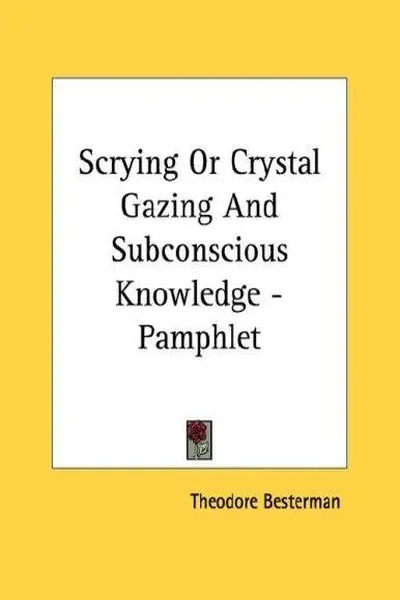
The geomancy of Glastonbury Abbey
 62
62

The geomancy of Glastonbury Abbey



Lorelei Sage (Contemplative Literature Editor) — Nigel Pennick's "The Geomancy of Glastonbury Abbey" is a luminous exposition on the earth-wisdom intrinsic to this hallowed site. Pennick, with his characteristic scholarly rigor and intuitive grace, excavates the geomantic blueprint of Glastonbury, revealing layers of esoteric knowledge often overlooked. He masterfully connects the Abbey's historical footprint to the powerful ley lines and telluric currents that converge there, offering profound insights into sacred geography and its influence on consciousness. This is not merely a historical account but a profound exploration of earth magic, essential for anyone seeking to understand the deep spiritual resonance of ancient places. Its clarity and depth make it an invaluable resource for students of geomancy and seekers of ancient wisdom.
📝 Description
62
Nigel Pennick's 1997 book examines the geomantic energies of Glastonbury Abbey.
This book looks at Glastonbury Abbey through the lens of geomancy. Pennick details how the Abbey's design and its location are connected to earth energies and mystical forces. He argues that the site's sacred geography is both shaped by and influences these energies. The text breaks down the principles of geomancy, connecting them to divination and the alignment of sacred spaces. It also discusses how geomancy relates human consciousness to the earth's energies.
The book aims to show a complex system of knowledge. It illuminates the connection between people, the planet, and unseen energetic currents. Pennick invites readers to see the world as more than just physical matter, but as an energetic and spiritual network. The writing style aims to capture the atmosphere of ancient practices and ongoing mystery associated with Glastonbury.
This work fits within the tradition of Western esoteric geomancy, a practice that interprets the earth's energies and patterns for divination and understanding sacred sites. It draws on historical and possibly pre-Christian beliefs about the land's spiritual significance, particularly as applied to sites like Glastonbury, which has long been associated with myth and spiritual power. Pennick's approach connects earth divination to the specific architecture and topography of the Abbey, situating it within a broader context of ley lines and terrestrial magnetism often discussed in esoteric geography.
💡 Why Read This Book?
Uncover the hidden spiritual map of Glastonbury Abbey, a legendary site steeped in geomantic power. This book offers profound insights into earth energies, ancient divination techniques, and the sacred geometry of sacred sites. Ideal for spiritual seekers, historians of esotericism, and practitioners of geomancy yearning to connect with the Earth's energetic grid.
⭐ Reader Reviews
Honest opinions from readers who have explored this book.
❓ Frequently Asked Questions
What is geomancy and how does it relate to Glastonbury Abbey?
Geomancy is an ancient divinatory art and earth-divination practice that interprets patterns in the earth and its energies. In Glastonbury, it reveals how the Abbey's sacred architecture and landscape are aligned with potent ley lines and telluric currents, forming a focal point of spiritual power.
Is this book suitable for beginners in geomancy?
Yes, Nigel Pennick's accessible yet profound writing makes it suitable for those new to geomancy, while offering rich depth for experienced practitioners. It provides a foundational understanding through a specific, powerful example.
What kind of knowledge can one expect to gain from this book?
Readers will gain knowledge of earth energies, sacred geography, the symbolism embedded in ancient sites, and practical applications of geomantic principles for understanding and interacting with landscape consciousness.
Does the book discuss the historical significance of Glastonbury Abbey alongside its geomancy?
Absolutely. The book intricately weaves the historical narrative and spiritual lore of Glastonbury Abbey with its geomantic underpinnings, demonstrating how the two are inseparable aspects of its enduring mystique.
What makes Nigel Pennick a reputable author in this field?
Nigel Pennick is a highly respected author and researcher in the fields of geomancy, sacred geography, and esoteric traditions, known for his meticulous scholarship, clear exposition, and deep understanding of ancient European mysteries.
🔮 Key Themes & Symbolism
Sacred Geography and Ley Lines
This theme looks at the concept of sacred geography, exploring how certain locations, like Glastonbury Abbey, are imbued with unique energetic properties. It details the ancient understanding of ley lines – invisible currents of terrestrial power – and how these lines converge and radiate from significant sites. Pennick illustrates how these energetic pathways were recognized and utilized by ancient cultures for spiritual purposes, ritual, and the construction of sacred architecture, positioning Glastonbury as a paramount nexus of these forces.
Geomantic Principles and Divination
The book elucidates the fundamental principles of geomancy as a divinatory art and a method of understanding the Earth's subtle energies. It explores the systematic interpretation of patterns derived from the earth, often through casting figures or observing natural phenomena. Pennick explains how these geomantic insights can reveal hidden influences, predict future potentials, and provide guidance, connecting this ancient practice to the very fabric of Glastonbury's mystical reputation and its role as a focal point for spiritual inquiry.
Symbolism and Spiritual Resonance of Glastonbury
This theme focuses on the wide range of symbolism associated with Glastonbury Abbey and its surrounding landscape. It examines how the site's history, myths, and legends are interwoven with geomantic principles, creating a profound spiritual resonance. Pennick explores the symbolic meanings embedded in the Abbey's layout, the natural features of the Tor and the surrounding Levels, and how these elements contribute to Glastonbury's status as a place of pilgrimage, healing, and profound spiritual awakening, attracting seekers across millennia.
💬 Memorable Quotes
Direct passages from the work, attributed to the author.
“Glastonbury is a knot in the sacred web of Britain.”
— This evocative phrase positions Glastonbury as a crucial intersection of spiritual and energetic lines, highlighting its significance as a central hub within a larger, interconnected mystical landscape.
“To walk the lines is to walk with the earth's own breath.”
— This emphasizes the active, embodied experience of geomancy – that by understanding and following the ley lines, one enters into a profound, almost symbiotic relationship with the living energy of the planet.
“The geometry of the sacred reveals the divinity within the mundane.”
— This highlights how the study of sacred geometry, as seen in sites like Glastonbury Abbey, can elevate everyday perception, revealing the underlying divine order and spiritual significance present in all things.
💡 Key Ideas
Editorial paraphrase of the work's core concepts — not direct quotes.
The earth speaks in patterns, if only we learn to listen.
This quote emphasizes the core of geomancy: the belief that the Earth communicates through discernible patterns, urging the reader to develop a sensitive awareness to these subtle messages.
Ancient stones whisper secrets of the land's soul.
This quote speaks to the enduring power of ancient structures and natural formations to hold and transmit spiritual knowledge, suggesting that the very fabric of Glastonbury Abbey contains profound, hidden wisdom.
🌙 Esoteric Significance
Tradition
This work is firmly rooted in the Western esoteric tradition, specifically drawing from the ancient practice of geomancy, which has roots in classical Arabic and European earth divination. It connects this practice to broader concepts of sacred geography, ley lines, and terrestrial magnetism, aligning with traditions that view the Earth itself as a living, conscious entity. The book also touches upon Celtic earth wisdom and the Christian mystical interpretations of Glastonbury, tying together disparate threads of spiritual understanding into a cohesive esoteric framework.
Symbolism
The primary symbolism explored revolves around the geomantic figures themselves, which are seen as representations of elemental forces and universal principles. Glastonbury Abbey, as a focal point, becomes a symbol of earthly power, spiritual aspiration, and the convergence of the mundane and the divine. The Tor symbolizes ascension and spiritual attainment, while the surrounding levels represent the fertile, nurturing aspects of the Earth. The Abbey's architecture, though partly ruined, symbolizes the enduring spiritual blueprint that transcends physical decay, mirroring the timeless nature of geomantic knowledge.
Modern Relevance
In an era increasingly disconnected from nature, the geomancy of Glastonbury Abbey offers a profound reminder of our intrinsic connection to the Earth's energetic systems. It provides tools for modern seekers to perceive and interact with the subtle energies of their environment, fostering a deeper ecological awareness and spiritual grounding. Understanding these ancient principles can inform contemporary approaches to sustainable living, landscape design, and personal well-being, encouraging a more harmonious relationship with the planet and revealing the spiritual dimensions of the world around us.
👥 Who Should Read This Book
This book is a treasure for several distinct groups. For the **aspiring geomancer**, it offers a deep study on a legendary site, providing practical insights into reading earth energies. **Scholars of esotericism and ancient history** will find Pennick's meticulous research and unique perspective important for understanding the intersection of belief, landscape, and power. **Spiritual seekers and pilgrims** drawn to Glastonbury's mystique will gain a deeper, more informed appreciation of its profound energetic significance. Finally, **practitioners of earth-based spirituality** will find renewed inspiration and a powerful example of how sacred sites function as conduits for potent terrestrial forces.
📜 Historical Context
Nigel Pennick's exploration of Glastonbury Abbey's geomancy is situated within a rich historical range stretching from pre-Roman times through to the medieval zenith of the Abbey and its subsequent decline. The book engages with the layers of history that have shaped this iconic landscape: from Celtic sacred sites and early Christian hermitages to the Benedictine monastery that became a major pilgrimage destination. It acknowledges the influence of Arthurian legends and the persistent myths of Avalon that have cemented Glastonbury's reputation as a place of otherworldly power. Pennick contextualizes geomancy not as a fringe practice, but as a sophisticated system of understanding the Earth's energies that was integral to the placement and design of sacred sites throughout the ancient and medieval world, linking it to broader European esoteric traditions and the deep-rooted human impulse to connect with the divine through the land.
📔 Journal Prompts
Reflect on a place in your local environment that feels energetically significant. What might be its geomantic story?
How does the concept of 'ley lines' resonate with your personal understanding of spiritual connection to the Earth?
Consider the symbolism of Glastonbury's Tor. What does 'ascent' or 'reaching higher' mean in your spiritual journey?
If the Earth 'speaks in patterns,' what patterns have you noticed in your life recently, and what might they be revealing?
How can understanding the geomancy of a place change your perception and interaction with it?
🗂️ Glossary
Geomancy
An ancient divinatory art and earth-divination system that interprets patterns formed by the earth's energies, often represented by figures derived from casting dice or pebbles.
Ley Lines
Hypothetical invisible lines of energy said to connect ancient sites and natural features, believed to carry terrestrial power and influence the landscape spiritually.
Telluric Currents
Natural electrical currents flowing through the Earth's crust, often associated with geomantic energies and the energetic field of sacred sites.
Sacred Geography
The study and understanding of how landscapes are imbued with spiritual significance, power, and meaning, often through the alignment of natural features and human constructions.
Earth Wisdom
An intuitive understanding and deep connection with the natural world, recognizing its inherent intelligence, interconnectedness, and spiritual essence.
This book appears in 3 collections
🔮 Readers Also Liked
Browse all →





More by Nigel Pennick
All books →




From the “Geomancy” Collection
View all →







More Free Divination & Tarot Books
View all →