The book of dreams
 71
71

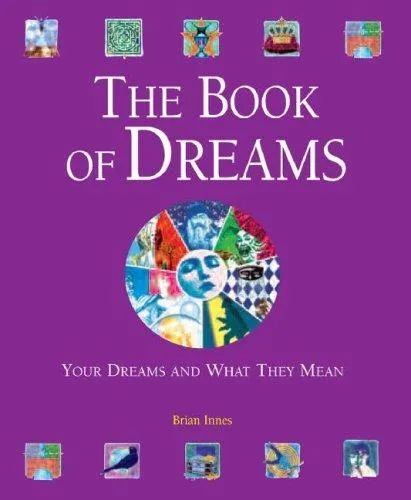
The book of dreams
Brian Innes's "The Book of Dreams" provides a systematic approach to understanding the often-elusive landscape of our nocturnal narratives. Its strength lies in its organization, breaking down the vast subject into digestible sections on recall, interpretation, and common dream archetypes. The section detailing various dream categories, from precognitive to nightmare, offers a useful taxonomy. However, the work occasionally leans towards a prescriptive tone in interpretation, sometimes overlooking the deeply personal and context-dependent nature of symbols. For instance, the explanation of the 'falling' dream, while common, might benefit from more emphasis on individual emotional states rather than generalized meanings. Despite this, the book remains a solid primer for anyone looking to engage more consciously with their dream life.
📝 Description
71
Brian Innes's The Book of Dreams, published in 2000, moves beyond simple interpretation to examine the psychological and symbolic aspects of dreams.
This volume addresses the dream world as a practical guide, aiming to help readers understand the messages their subconscious communicates. It covers the nature of dreams, potential origins, and methods for remembering and interpreting them. The book is suited for anyone interested in their dream life, whether for personal development, creative pursuits, or spiritual exploration.
Innes introduces a system for categorizing dream phenomena and common symbols. He discusses the subconscious mind, archetypes, and recurring motifs. The author also details techniques for improving dream recall, such as keeping a dream journal, and offers ways to analyze the personal meaning of dream content, stressing that dream interpretation is subjective.
Brian Innes's work draws from a long history of dream study, connecting ancient traditions with modern psychology. While building on the foundational theories of figures like Freud and Jung, Innes incorporates broader esoteric and mythological viewpoints. The late 20th century saw renewed interest in Jungian psychology and alternative approaches to the mind, creating a favorable environment for this book's focus on dreams as a source of insight.
💡 Why Read This Book?
• Gain practical techniques for enhancing dream recall, directly addressing methods like dream journaling as detailed in the book's early chapters, which you can implement immediately. • Understand common dream symbols and archetypes, such as the recurring 'water' motif discussed by Innes, to decode potential subconscious messages more effectively. • Develop a personal framework for dream interpretation beyond simplistic dictionaries, by learning to analyze dream narratives within your own life experiences, as advocated in the book's analytical sections.
⭐ Reader Reviews
Honest opinions from readers who have explored this book.
❓ Frequently Asked Questions
When was Brian Innes's "The Book of Dreams" first published?
Brian Innes's "The Book of Dreams" was first published in the year 2000, marking its entry into the contemporary discourse on dream analysis and esoteric studies.
Does "The Book of Dreams" offer a dream dictionary?
While "The Book of Dreams" discusses common dream symbols and their potential meanings, it emphasizes a personalized approach to interpretation rather than providing a rigid, universal dream dictionary.
What techniques does the book suggest for remembering dreams?
The book details several methods for improving dream recall, including the practice of keeping a dream journal and establishing a pre-sleep routine conducive to remembering nocturnal experiences.
Is "The Book of Dreams" suitable for beginners?
Yes, the book is structured to guide beginners through the fundamentals of dream study, offering clear explanations and practical exercises for understanding one's own dreams.
What is the primary focus of "The Book of Dreams"?
The primary focus is on understanding the nature of dreams, their potential psychological and symbolic significance, and providing readers with tools to interpret their own dream experiences.
Does Brian Innes discuss different types of dreams?
Yes, Brian Innes categorizes various types of dreams, exploring their unique characteristics and potential implications, offering readers a framework to identify and analyze their own dream experiences.
🔮 Key Themes & Symbolism
The Nature of Dreams
Innes posits dreams as more than random neurological firings; they are presented as a vital channel for subconscious communication and self-understanding. The work explores the origins of dreams, questioning whether they arise purely from internal psychological states or if they can be influenced by external or even subtle energies. This perspective invites readers to consider their dreams as meaningful events, not mere byproducts of sleep, encouraging an active engagement with their dream narratives.
Symbolic Language
A core tenet of the book is that dreams speak in a symbolic language, unique to the dreamer but often drawing on universal archetypes. Innes guides readers through common symbolic motifs – water, flight, falling, specific animals – suggesting ways to unpack their personal resonance. The emphasis is on the subjective interpretation, urging readers to connect dream imagery to their waking life experiences, emotions, and personal history rather than relying on fixed, external meanings.
Dream Recall and Journaling
The practical application of dream study is central, with significant attention given to techniques for enhancing dream recall. Innes advocates for diligent dream journaling as a primary tool, detailing methods for recording dreams immediately upon waking to capture fleeting details. This practice, he suggests, not only improves memory of dreams but also helps in identifying patterns and recurring themes that might otherwise go unnoticed.
Archetypes and the Collective Unconscious
Drawing implicitly from Jungian psychology, the book touches upon the concept of archetypes as universal patterns of imagery and behavior that manifest in dreams. Figures like the wise old man, the shadow, or the trickster are presented as potential inhabitants of the dreamscape, representing fundamental aspects of the human psyche. Understanding these archetypes, Innes suggests, can provide useful insights into one's own psychological makeup and life path.
💬 Memorable Quotes
Direct passages from the work, attributed to the author.
“Dreams are a unique personal language.”
— This statement underscores the book's central thesis that dream imagery and narratives are not arbitrary but possess a distinct grammar and vocabulary specific to the individual dreamer's psyche and life experiences.
“The act of recording a dream solidifies its meaning.”
— This highlights the importance of dream journaling as presented in the text. The physical or digital act of writing down dream content is framed as a crucial step in making the dream's message accessible and comprehensible.
“Common symbols often point to universal human experiences.”
— This suggests that while dream interpretation is personal, certain recurring symbols in dreams tap into a collective human consciousness, offering shared insights into fundamental aspects of life and the psyche.
“Nightmares can be significant messages from the subconscious.”
— This interpretation reframes frightening dreams not as mere disturbances, but as potent communications from the deeper self, often signaling unresolved issues or important warnings that require attention.
“Your waking life influences your dream landscape.”
— This concept emphasizes the interconnectedness between the conscious and subconscious. It posits that the events, emotions, and stresses of daily life directly shape the content and themes of one's dreams.
🌙 Esoteric Significance
Tradition
The work draws heavily on psychological and esoteric traditions, particularly the Jungian exploration of archetypes and the collective unconscious. It aligns with a broader Western esoteric interest in understanding the psyche as a gateway to deeper realities. While not strictly Kabbalistic or Hermetic, it shares their concern with symbolic language and the hidden meanings within human experience, framing dreams as a potent, albeit often overlooked, source of gnosis.
Symbolism
Key symbols explored include water, often representing emotions and the unconscious; flight, signifying freedom, aspiration, or escape; and falling, which can indicate loss of control, anxiety, or a descent into deeper self-awareness. The book treats these not as fixed signs but as fluid symbols whose meaning is deeply personalized, yet often rooted in universal human fears and desires.
Modern Relevance
Contemporary practitioners of Jungian analysis, transpersonal psychology, and various forms of modern witchcraft and neo-paganism often engage with dream work as a fundamental spiritual practice. The book's emphasis on personal symbolism and archetypal patterns continues to inform how individuals approach their inner landscapes for self-discovery and spiritual development in an era increasingly focused on subjective experience and personal meaning-making.
👥 Who Should Read This Book
• Individuals new to dream analysis seeking a structured introduction to understanding their dreams, benefiting from clear explanations of symbolism and recall techniques. • Those interested in Jungian psychology and archetypes, looking to apply these concepts to their personal dream experiences and gain deeper self-awareness. • Spiritual seekers and practitioners of esoteric arts who view dreams as a crucial avenue for personal growth, intuition development, and communion with deeper aspects of the self.
📜 Historical Context
Brian Innes's "The Book of Dreams" (2000) arrived at a time when interest in the esoteric and the subconscious was experiencing a significant revival, moving beyond the strictures of academic psychology. The late 20th century saw a broader public engagement with Jungian concepts, archetypal psychology, and various forms of self-help and spiritual exploration. While figures like Sigmund Freud had pioneered psychoanalytic dream theory decades earlier, and Carl Jung expanded this with his work on archetypes and the collective unconscious, Innes's approach integrated these with a more accessible, encyclopedic format. This period also witnessed a flourishing of New Age thought and a growing market for practical guides to spirituality and personal development. Innes's work benefited from this climate, offering a structured yet expansive view of dream interpretation that resonated with a public seeking meaning beyond purely materialistic explanations, contrasting with the more reductionist approaches prevalent in some scientific circles.
📔 Journal Prompts
The recurring symbol of 'water' in your dreams and its potential emotional significance.
Your most vivid dream imagery from the past week and its connection to waking concerns.
An archetypal figure encountered in a recent dream and its perceived role.
A dream involving 'flight' or 'falling' and the feelings it evoked.
The narrative arc of a memorable dream and its possible message.
🗂️ Glossary
Archetype
Universal, archaic patterns and images that derive from the collective unconscious and are the psychic counterpart of a biological or instinctual pattern.
Subconscious
The part of the mind of which we are not aware but which influences our actions and feelings; often used interchangeably with 'unconscious'.
Dream Journal
A record of dreams, typically kept by an individual, used to aid recall and facilitate the analysis of dream content and patterns over time.
Symbolism
The use of symbols to represent ideas and qualities, particularly in dreams, where images often carry meanings beyond their literal representation.
Precognitive Dream
A dream that is believed to foretell future events, suggesting a connection between the dream state and temporal progression.
Lucid Dreaming
A state of consciousness in which the dreamer is aware that they are dreaming and may be able to exert some control over the dream's narrative or environment.
Nightmare
A frightening or disturbing dream, often characterized by intense fear, anxiety, or distress, typically occurring during REM sleep.
🔮 Readers Also Liked
Browse all →









More by Brian Innes
All books →





More Free Occult Philosophy Books
View all →