The Tarot
 80
80

The Tarot
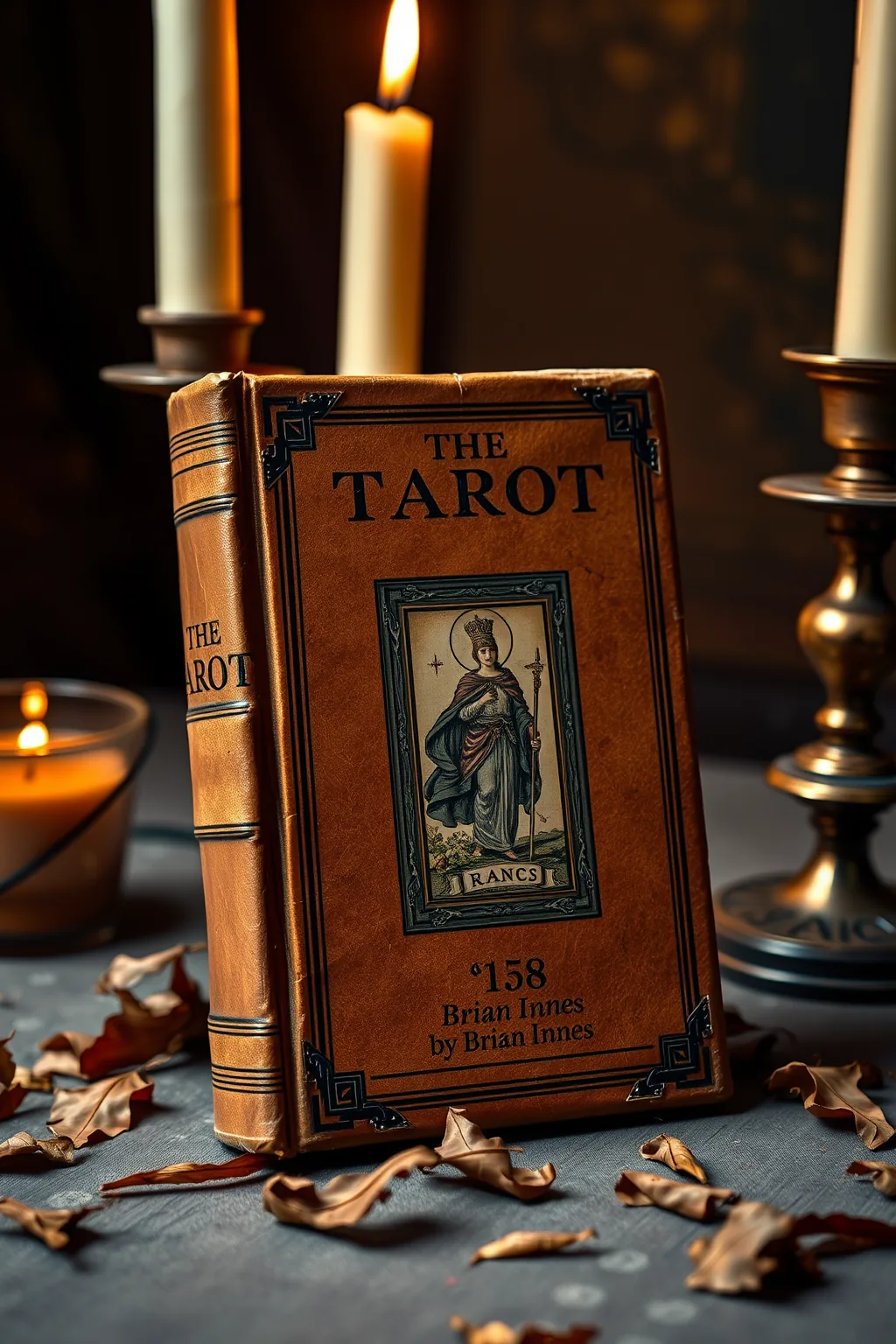
Brian Innes's "The Tarot" presents a meticulously researched overview of a complex subject, avoiding the sensationalism that often clouds occult literature. Its strength lies in its systematic approach, breaking down the vast symbolism of the 78-card deck into digestible sections. The historical tracing, from early Italian decks to 19th-century occult revival interpretations, is particularly solid. However, the book can sometimes feel overly academic, with its descriptions of card meanings occasionally lacking the intuitive spark that many practitioners seek. For instance, while the explanation of The Fool's journey is factually sound, it doesn't fully capture the wild, liminal energy often associated with the card's spiritual significance.
Despite this, Innes provides a valuable anchor for understanding the structure and historical layers of tarot. It is a dependable reference, though perhaps less inspiring for those solely focused on intuitive divination. It serves as an excellent primer for the serious student.
📝 Description
80
Brian Innes's The Tarot, published in 1977, details the history, symbolism, and divinatory use of tarot.
First released in 1977, Brian Innes's book on the tarot offers a thorough look at its history, symbolism, and how it is used for divination. The work traces the tarot deck's development from its likely beginnings in 15th-century Italy, through its later adoption by occultists in the 19th and 20th centuries. It provides a clear structure for understanding the Major and Minor Arcana, explaining the meaning of each card and its possible applications in readings.
This guide is suitable for anyone wanting a solid grasp of tarot. Beginners seeking to learn card interpretation will find it helpful, as will those curious about the historical and esoteric roots of the practice. Students of occultism, comparative religion, and Western esotericism will appreciate its historical background and symbolic analysis. The book is especially useful for readers who prefer a systematic and straightforward presentation of complex subjects.
Published in 1977, Innes's book arrived during a renewed interest in esoteric subjects. It followed earlier works by figures like Eliphas Lévi and A.E. Waite. The book situates itself within a tradition of tarot scholarship that aimed to clarify the symbolism and divinatory systems developed by groups such as the Hermetic Order of the Golden Dawn. Innes engaged with existing interpretations, making them more accessible to a broad readership.
💡 Why Read This Book?
• Learn the historical evolution of tarot decks, tracing their lineage from 15th-century Italy to the occult revival movements of the late 19th century, providing a concrete understanding of their origins. • Grasp the systematic symbolism of both the Major and Minor Arcana, understanding how each suit and card relates to esoteric principles like the four elements and astrological correspondences. • Acquire practical skills in cartomancy by studying the divinatory meanings and common spreads detailed within the text, offering a structured method for interpreting card layouts.
⭐ Reader Reviews
Honest opinions from readers who have explored this book.
❓ Frequently Asked Questions
When was Brian Innes's "The Tarot" first published?
Brian Innes's "The Tarot" was first published in 1977, placing it within a significant period of renewed interest in esoteric studies and occult traditions.
What is the historical origin of the tarot deck discussed in the book?
The book discusses the historical origins of the tarot deck, generally tracing its emergence to 15th-century Italy, where early forms of the cards were used for games before developing divinatory applications.
Does "The Tarot" by Brian Innes cover the Major and Minor Arcana?
Yes, the book provides detailed explorations of both the Major Arcana, representing archetypal journeys, and the Minor Arcana, with its four suits and their associated symbolism.
What esoteric traditions are linked to tarot in this book?
Innes links tarot symbolism to various esoteric traditions, notably Kabbalah and astrology, as interpreted and integrated by occultists during the 19th and 20th centuries.
Is this book suitable for beginners in tarot reading?
Absolutely. "The Tarot" by Brian Innes is structured to offer a foundational understanding, making it suitable for beginners seeking a systematic introduction to card meanings and interpretation.
Who were some key figures influencing tarot interpretations discussed by Innes?
The book references interpretations from occultists like Eliphas Lévi and A.E. Waite, whose works were pivotal in shaping the esoteric understanding of tarot in the late 19th and early 20th centuries.
🔮 Key Themes & Symbolism
Arcane Symbolism
The work meticulously deciphers the symbolic language embedded within the 78-card tarot deck. It details how the Major Arcana, such as The Fool and The World, represent archetypal stages of a spiritual journey, while the Minor Arcana's suits—Wands, Cups, Swords, and Pentacles—correlate with elemental forces and aspects of human experience. This systematic breakdown allows readers to understand the layered meanings that have been attributed to these cards since their popularization in occult circles.
Historical Development
Innes charts the historical trajectory of the tarot, beginning with its origins in 15th-century Italy, likely as a card game. The book then explores its transformation into a tool for divination and esoteric study, particularly during the 19th-century occult revival. It highlights how figures associated with esoteric societies, like the Hermetic Order of the Golden Dawn, contributed to the symbolic and divinatory interpretations that are prevalent today.
Divinatory Practices
A significant portion of the book is dedicated to the practical application of tarot for divination. It explains various methods of card interpretation, including the significance of card positions within different spreads. Readers are guided on how to approach readings, considering the interplay between cards and how they might reflect past, present, or future influences, drawing on established cartomantic traditions.
Esoteric Connections
The book explores the intricate connections between tarot symbolism and other esoteric systems, most notably Kabbalah and astrology. It illustrates how concepts from these traditions were integrated into tarot imagery and interpretation by occultists. This interdisciplinary approach reveals tarot not just as a deck of cards, but as a complex symbolic map reflecting a broader Western esoteric cosmology.
💬 Memorable Quotes
Direct passages from the work, attributed to the author.
“The Major Arcana represent archetypal forces and stages of development.”
— This captures the book's view of the 22 Major Arcana cards as more than just images; they are seen as symbolic representations of universal experiences and spiritual growth pathways.
“The Minor Arcana reflect the events and experiences of daily life.”
— This highlights the practical application of the 56 Minor Arcana cards, suggesting they provide insight into the more mundane, yet significant, aspects of human existence and fortune.
“Tarot's roots can be traced to 15th-century Italian playing cards.”
— This points to the book's grounding in historical research, emphasizing that the tarot deck evolved from earlier forms of playing cards before its divinatory and esoteric meanings were developed.
“Kabbalistic and astrological correspondences inform tarot interpretation.”
— This emphasizes the esoteric framework used in the book, showing how occultists integrated complex systems like the Tree of Life and planetary influences to enrich the meaning of tarot cards.
“Different spreads offer varied perspectives on a question.”
— This refers to the practical aspect of tarot reading discussed, indicating that the arrangement of cards, or 'spread,' is crucial for obtaining a nuanced and comprehensive answer.
🌙 Esoteric Significance
Tradition
This work fits within the Western Esoteric tradition, specifically drawing heavily from the occult interpretations that flourished in the late 19th and early 20th centuries. It aligns with the symbolic and divinatory systems developed by groups like the Hermetic Order of the Golden Dawn, which synthesized Kabbalah, astrology, and Hermetic philosophy into a cohesive esoteric framework. Innes's approach emphasizes the tarot as a key component of this magical system.
Symbolism
Central symbols explored include the archetypal journey of The Fool, representing the initiation into the unknown, and the interconnectedness of the four suits (Wands, Cups, Swords, Pentacles) with the classical elements and the Qabalistic Tree of Life. The book details how the pip cards and court cards in the Minor Arcana are imbued with astrological and elemental significance, providing a rich symbolic language for divination.
Modern Relevance
Contemporary tarot practitioners and scholars often reference foundational texts like Innes's work for historical context and systematic understanding. While modern approaches might emphasize psychological or intuitive aspects more, the historical framework and symbolic keys provided by Innes remain a reference for many who wish to understand the deeper esoteric currents influencing tarot's evolution and practice today.
👥 Who Should Read This Book
• Aspiring tarot readers seeking a structured introduction to the historical development and symbolic meanings of the cards, moving beyond superficial interpretations. • Students of Western Esotericism interested in how occult traditions like Kabbalah and astrology have been integrated into symbolic systems like the tarot. • Researchers of comparative religion and cultural history looking to understand the evolution of divination practices and their societal impact from the 15th century onwards.
📜 Historical Context
Brian Innes's "The Tarot" appeared in 1977, a period marked by a broad resurgence of interest in the occult and esoteric traditions following the counter-culture movements of the 1960s. This era saw a demand for accessible texts that could explain complex metaphysical systems. Innes's work situated itself within a lineage established by 19th-century figures like Eliphas Lévi and, crucially, Arthur Edward Waite, whose Rider-Waite deck (illustrated by Pamela Colman Smith) became a standard. While Waite himself published his influential "The Pictorial Key to the Tarot" in 1910, Innes's 1977 publication aimed to synthesize and present these established interpretations, including those developed by the Hermetic Order of the Golden Dawn, to a new generation of seekers. The book engaged with the established symbolic language of Western esotericism, offering a structured alternative to more mystical or purely psychological approaches to the cards that also gained traction around that time.
📔 Journal Prompts
The Fool's leap: Reflect on the concept of beginning an unknown journey.
The elemental balance: How do the four suits of the Minor Arcana manifest in your daily life?
Archetypal forces: Consider the representation of The Magician and its active manifestation of will.
The Hermetic principle: Analyze the connection between tarot and the maxim 'As above, so below'.
Divinatory patterns: Explore the significance of a specific card spread for a personal query.
🗂️ Glossary
Major Arcana
The 22 trump cards in a tarot deck, numbered 0 to 21, representing significant life lessons, archetypal figures, and spiritual journeys.
Minor Arcana
The 56 cards divided into four suits (Wands, Cups, Swords, Pentacles), which typically represent everyday events, challenges, and circumstances.
Cartomancy
The practice of divination using a deck of cards, most commonly the tarot, to gain insight into questions or situations.
Kabbalah
A system of Jewish mysticism and esoteric interpretation, often influencing Western occultism through concepts like the Tree of Life and its correspondence with tarot.
Hermeticism
A philosophical and religious tradition based on the purported teachings of Hermes Trismegistus, emphasizing divine wisdom and the interconnectedness of all things.
Rider-Waite Deck
A widely influential tarot deck first published in 1909, known for its symbolic imagery and full-scene illustrations for the Minor Arcana, designed by Pamela Colman Smith under the direction of A.E. Waite.
Spread
A specific arrangement of tarot cards used in a reading, designed to address particular aspects of a question or situation.
🔮 Readers Also Liked
Browse all →






More by Brian Innes
All books →





More Free Divination & Tarot Books
View all →