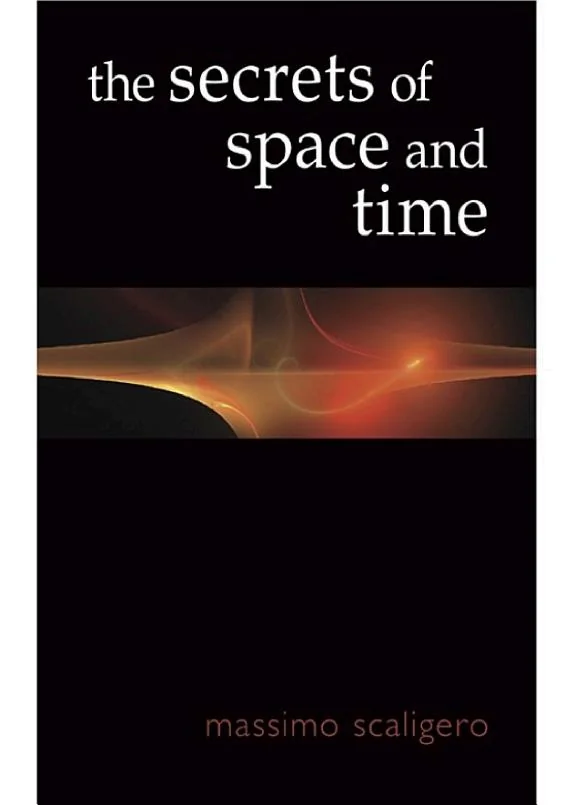
The Secrets of Space and Time
 80
80

The Secrets of Space and Time
Scaligero's "The Secrets of Space and Time" offers a potent critique of our measurement-bound perception of reality. The assertion that time and space are immeasurable, and that overcoming measurement itself is the path to freedom, is a challenging but compelling proposition. The strength lies in its direct confrontation of the scientific paradigm's assumptions, urging a radical re-evaluation of consciousness. However, the dense philosophical language and abstract nature of concepts like 'the spirit wants' may present a significant barrier to entry for readers unfamiliar with spiritual science traditions. A particularly striking passage discusses how the act of measurement, rather than revealing objective truth, actively constructs our experienced reality. Ultimately, this book demands significant intellectual effort but rewards the dedicated reader with a profoundly altered perspective on existence.
📝 Description
80
Massimo Scaligero's 2013 book, The Secrets of Space and Time, challenges the idea that space and time are mere measurable quantities.
This work argues that our common perception of space and time as objective, quantifiable entities is an illusion. Scaligero suggests that true freedom from sensory limitations comes not from transcending perceived space-time, but from understanding and overcoming the act of measurement itself. He posits that the reality of space and time is fundamentally immeasurable, and our reliance on measurement creates a false, sensory-bound perception.
The book is written for those engaged with esoteric philosophy, phenomenology, and spiritual science. It will resonate with readers who question materialist views of existence and seek a deeper understanding of consciousness. Those interested in anthroposophy, Rudolf Steiner's work, or philosophical explorations of reality will find much to consider within its pages. Scaligero's thought aligns with the spiritual science movement, offering an alternative to purely materialistic interpretations of the cosmos.
Published in 2013, 'The Secrets of Space and Time' continues the tradition of spiritual science that emerged in the early 20th century. Scaligero's work offers a counterpoint to materialistic interpretations of reality, drawing parallels with phenomenological inquiries into perception. It addresses perennial questions about the nature of existence and consciousness, seeking a metaphysical understanding beyond empirical observation. This book stands within a lineage that explores spiritual realities through direct inner experience and disciplined contemplation.
💡 Why Read This Book?
• You will learn how the impulse to measure, central to empirical science, constructs our perceived reality, not merely observes it, as detailed in Scaligero's critique of conventional space and time. • You will gain a practical understanding of how to approach the concept of overcoming measurement itself, moving beyond sensory limitations by engaging with the spiritual impulse behind our cognition, a core idea explored in the book. • You will discover the esoteric argument that true freedom from material conditions arises not from transcending perceived space-time, but from understanding and releasing the very act of measurement, a concept central to the work's thesis.
⭐ Reader Reviews
Honest opinions from readers who have explored this book.
❓ Frequently Asked Questions
What is Massimo Scaligero's central argument in 'The Secrets of Space and Time'?
Scaligero's core argument is that space and time are immeasurable realities. He contends that our reliance on measurement creates a false, sensory perception and that true freedom involves overcoming the impulse to measure, rather than trying to transcend perceived space-time.
When was 'The Secrets of Space and Time' first published?
The book was first published in 2013, making it a contemporary work engaging with perennial philosophical questions.
Who is the intended audience for this book?
This book is aimed at serious students of esoteric philosophy, spiritual science, and phenomenology who question materialist worldviews and seek a deeper understanding of consciousness and reality beyond empirical observation.
What does Scaligero mean by 'overcoming measurement itself'?
It means recognizing that the act of measuring is not a neutral act of discovery but a creative process that shapes our experience. Overcoming it involves understanding the spiritual impulses behind our cognitive functions, leading to a different mode of apprehending reality.
How does this book relate to Rudolf Steiner's work?
Scaligero's work is deeply influenced by Rudolf Steiner's spiritual science. It continues and expands upon Steiner's ideas concerning the nature of consciousness, the human spirit, and the limitations of purely materialistic approaches to understanding the cosmos.
What is the primary focus of the book's critique?
The book critiques the assumption that space and time are objective, measurable entities accessible through sensory perception and scientific instruments. It argues this perspective limits our understanding of true reality.
🔮 Key Themes & Symbolism
The Immeasurability of Reality
The work posits that the fundamental nature of space and time transcends our capacity for measurement. Conventional scientific understanding, built upon quantification, is presented not as a revelation of objective truth, but as a construction of perceived reality. Scaligero argues that true knowledge arises from recognizing this immeasurability and understanding the spiritual impulses that guide our attempts to measure. This theme challenges readers to question the very foundations of empirical knowledge and explore a reality apprehended through spiritual perception rather than sensory data.
Overcoming the Impulse to Measure
A central concept is the idea that liberation from sensory constraints is achieved not by transcending spatial and temporal boundaries, but by overcoming the inherent human impulse to measure. This involves a deep introspection into how and why we measure, understanding that this act is a product of the spirit's engagement with the material world. The book suggests that by becoming aware of and ultimately releasing this measurement impulse, one can access a more profound and unadulterated experience of existence.
The Role of the Spirit
Scaligero emphasizes the active role of the spirit in shaping our perception of space and time. The spirit is not merely a passive observer but an active force that directs our cognitive processes, including the inclination to measure. Understanding what the spirit 'wants' is presented as a prerequisite for grasping the true nature of reality. This perspective places consciousness and spiritual will at the forefront of metaphysical inquiry, offering a counterpoint to materialist philosophies.
True Freedom from Sensory Conditions
The book redefines freedom not as an escape from physical limitations, but as a state of being achieved through a radical shift in consciousness. By deconstructing our reliance on measurable space and time, Scaligero offers a path to genuine liberation. This freedom is not about going somewhere else or waiting for a future state, but about transforming one's perception and relationship to reality in the present moment, guided by an understanding of spiritual dynamics.
💬 Memorable Quotes
Direct passages from the work, attributed to the author.
“Freedom from sensory conditions is not attained by overcoming a space and a time considered real because of their measurability.”
— This challenges the common notion that true liberation involves escaping the physical world. Scaligero suggests that the very definition of reality based on measurement is the constraint, and freedom lies in a different mode of perception.
“The reality of time and space is immeasurable.”
— This is the foundational assertion of the book, directly contradicting scientific and everyday assumptions. It points towards a spiritual or consciousness-based understanding of existence that lies beyond empirical quantification.
“We must know how and why measurement arises; we must know what the spirit wants.”
— This highlights the book's methodological approach: understanding the origin and motivation behind our cognitive acts, particularly measurement, is key to unlocking deeper truths about reality and the nature of the spirit.
“Only those who are not fooled into believing that freedom from sensory conditions is attainable by moving beyond a space and a time considered real because of their measurability.”
— This provocative statement identifies a common misconception about spiritual freedom. Scaligero implies that many spiritual paths inadvertently uphold the illusion of measurable reality, thus failing to achieve true liberation.
“It cannot be attained by overcoming the given forms of measurement, but rather by overcoming measurement itself.”
— This clarifies the distinction between superficial change and radical transformation. It's not about finding new ways to measure or bypass existing methods, but about transcending the fundamental impulse and framework of measurement.
🌙 Esoteric Significance
Tradition
Scaligero's work is firmly situated within the lineage of spiritual science, drawing heavily on the esoteric cosmology and epistemology established by Rudolf Steiner. It represents a modern articulation of Anthroposophy's core tenets, particularly concerning the nature of consciousness, the limitations of materialistic science, and the active role of the human spirit in perceiving and shaping reality. It departs from more traditional Hermetic or Kabbalistic systems by focusing on a specific phenomenological analysis of perception and the genesis of measurement, rather than on symbolic correspondences or divine emanations.
Symbolism
While the book is primarily conceptual, the implicit symbolism revolves around the act of 'measurement' itself. Measurement symbolizes the binding of consciousness to the material, sensory world, representing the illusion of objective, quantifiable reality. Conversely, 'immeasurability' symbolizes the potential for spiritual freedom and direct apprehension of true being, unconditioned by sensory data. The 'spirit' functions as the active, divine principle within the human being, the source of true knowing and the agent of liberation from the 'measured' world.
Modern Relevance
Scaligero's critique of measurement and his emphasis on spiritual perception resonate with contemporary movements questioning the adequacy of purely materialist science. Thinkers and practitioners in fields like consciousness studies, integral philosophy, and certain branches of transpersonal psychology, who seek to integrate subjective experience with objective inquiry, find value in his work. His ideas offer a framework for understanding subjective reality and the limitations of empirical methods, providing a spiritual-scientific counterpoint to reductionist scientific paradigms.
👥 Who Should Read This Book
• Students of Rudolf Steiner and Anthroposophy seeking to deepen their understanding of consciousness and perception beyond Steiner's foundational texts. • Philosophers and researchers of consciousness interested in non-materialist approaches to reality and the critique of empirical paradigms. • Esoteric practitioners and spiritual seekers who grapple with reconciling inner spiritual experience with the demands of the external, measurable world.
📜 Historical Context
Massimo Scaligero's "The Secrets of Space and Time" (2013) emerged in an era where the philosophical implications of quantum mechanics continued to challenge classical notions of space, time, and causality. Scaligero's work aligns with the broader spiritual science movement, significantly influenced by Rudolf Steiner, which sought to bridge the gap between empirical observation and spiritual insight. This tradition, active since the early 20th century, offered a counter-narrative to purely materialistic worldviews that dominated much of Western thought. Unlike contemporary analytic philosophers of science, who might engage with concepts like spacetime through mathematical formalism (e.g., discussions around Einstein's relativity), Scaligero's approach is rooted in phenomenological introspection and a belief in the active, formative power of the human spirit. While Steiner himself passed in 1925, his extensive body of work continued to inspire thinkers like Scaligero, who sought to articulate a spiritual cosmology accessible through direct inner experience rather than solely through external observation or abstract logic.
📔 Journal Prompts
The impulse to measure: What assumptions underpin my daily acts of quantification?
Understanding 'what the spirit wants': How does my inner will shape my perception of space and time?
Immeasurable reality: Reflect on a moment where my experience felt beyond objective description.
Freedom from sensory conditions: How might overcoming measurement transform my relationship with the physical world?
The genesis of measurement: Explore the origin of a specific measurement I rely on daily.
🗂️ Glossary
Measurement
In Scaligero's context, not merely a tool for quantification, but a fundamental act of consciousness that structures our perception of reality by imposing limits and creating the illusion of objective, sensory-based existence.
Immeasurable
Refers to the true nature of reality, particularly space and time, which exists beyond the confines of sensory perception and quantitative analysis. It represents a state of being accessible through spiritual apprehension.
Spirit
The active, conscious principle within the human being that is the source of true knowledge and perception. It is presented as the driving force behind our interaction with the world, including the impulse to measure.
Sensory Conditions
The limitations and perceptions imposed by the physical senses and the material world. The book argues that true freedom is not achieved by escaping these conditions but by transforming the consciousness that engages with them.
Genesis of Measurement
The process of understanding how and why the human being develops the capacity and tendency to measure. This involves examining the spiritual and psychological roots of this cognitive impulse.
Spiritual Science
An approach to knowledge that seeks to understand reality through both empirical observation and direct spiritual perception, often associated with the work of Rudolf Steiner.
Anthroposophy
A spiritual philosophy founded by Rudolf Steiner, aiming to provide a path of knowledge that leads the spirit in the human being to the spirit in the universe. Scaligero's work is a significant contribution to this field.
This book appears in 1 collection
🔮 Readers Also Liked
Browse all →









From the “Western Esotericism” Collection
View all →







More Free Occult Philosophy Books
View all →