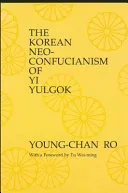
The Korean Neo-Confucianism of Yi Yulgok
 79
79

The Korean Neo-Confucianism of Yi Yulgok
Young-chan Ro's analysis of Yi Yulgok's Neo-Confucianism offers a rigorous dive into a critical, yet often under-examined, corner of East Asian thought. The author’s assertion of a foundational 'non-dualistic' and 'anthropocosmic' principle within Yulgok's system provides a compelling interpretive thread. Ro successfully highlights how Yulgok creatively reformulated established Confucian debates, particularly concerning 'li' and 'qi,' moving beyond simple adherence to Zhu Xi. A particular strength lies in the detailed exposition of Yulgok's metaphysical assumptions, presenting them not as abstract doctrines but as the vital core of his philosophy. However, the dense academic prose, while precise, may present a barrier for readers less familiar with the intricacies of Neo-Confucian terminology. The limited engagement with Yulgok's direct impact on later Korean philosophical developments, beyond his immediate contemporaries, represents a missed opportunity for broader contextualization. Ro’s work is an essential, if demanding, resource for understanding a key figure in Korean intellectual history.
📝 Description
79
Published in 1989, this book details Yi Yulgok's reorientation of Korean Neo-Confucian tenets.
Young-chan Ro's 1989 study examines the philosophical and religious ideas of Yi Yulgok (1536-1584), a key figure in Korean Neo-Confucianism. Ro argues that Yulgok built his system on a fundamental non-dualistic and anthropocosmic assumption. This work clarifies Yulgok's original contributions and how he reshaped core Confucian ideas. The book is suited for academics in East Asian philosophy, comparative religion, and intellectual history. Students interested in Neo-Confucianism beyond its Chinese origins will also find it useful, as will those who study the connection between philosophy and spiritual practice, especially in traditions that see unity between humans and the cosmos.
Yulgok worked during the Joseon Dynasty, a time of active debate and development in Neo-Confucianism. He engaged with ideas from figures like Zhu Xi but also developed unique Korean perspectives. His thought was important for how Confucianism adapted and changed in Korea during the 16th century, a period of intellectual growth across East Asia. The book focuses on Yulgok's specific interpretations of concepts like 'li' (principle) and 'qi' (vital force), stressing their dynamic interaction and Yulgok's view of an interconnected reality where human nature and the universe are linked.
Yi Yulgok's thought represents a significant development within the broader Neo-Confucian tradition, which itself draws on earlier Chinese philosophical and religious streams. This study places Yulgok's work within the context of Korean intellectual history, showing how he adapted and synthesized existing doctrines to create a distinct Korean expression of Neo-Confucianism. His emphasis on the unity of human nature and the cosmos, and the dynamic interplay of principle and vital force, touches upon themes of holistic understanding and integrated practice that resonate with contemplative traditions seeking to understand the fundamental nature of reality and one's place within it.
💡 Why Read This Book?
• Gain a precise understanding of Yi Yulgok's unique philosophical formulation, particularly his 'non-dualistic' and 'anthropocosmic' assumptions, which offer a distinct perspective on the relationship between humanity and the cosmos. • Explore the creative reinterpretations of core Neo-Confucian concepts like 'li' and 'qi' as presented by Yulgok, moving beyond standard interpretations prevalent in Chinese Neo-Confucianism. • Understand the intellectual climate of 16th-century Korea through the lens of Yulgok's contributions, appreciating how he engaged with and adapted existing philosophical traditions during the Joseon Dynasty.
⭐ Reader Reviews
Honest opinions from readers who have explored this book.
❓ Frequently Asked Questions
Who was Yi Yulgok and why is he significant in Korean Neo-Confucianism?
Yi Yulgok (1536-1584) was a preeminent Korean Neo-Confucian scholar of the Joseon Dynasty. He is significant for his original interpretations of Neo-Confucian philosophy, particularly his formulation of a 'non-dualistic' and 'anthropocosmic' metaphysical assumption that shaped his entire system.
What does 'anthropocosmic' mean in the context of Yi Yulgok's philosophy?
The term 'anthropocosmic' suggests a view where humanity and the cosmos are intrinsically unified and mutually constitutive. In Yulgok's thought, this implies that understanding human nature is inseparable from understanding the universe, and vice versa.
How did Yi Yulgok's ideas differ from Chinese Neo-Confucianism, especially Zhu Xi?
While rooted in Zhu Xi's Neo-Confucianism, Yulgok offered creative reformulations. His emphasis on a 'non-dualistic' underpinning and a more integrated view of 'li' (principle) and 'qi' (vital force) presented a distinctive Korean philosophical perspective.
What are the core metaphysical assumptions discussed in the book?
The book identifies Yulgok's foundational assumption as 'non-dualistic' and 'anthropocosmic.' This core idea posits an inseparable connection between the human realm and the wider cosmos, forming the basis for his ethical and metaphysical theories.
Is this book suitable for beginners in philosophy?
This is a scholarly work intended for those with some background in philosophy or East Asian studies. While comprehensive, its academic rigor requires dedicated attention to Neo-Confucian concepts and terminology.
When was the first edition of 'The Korean Neo-Confucianism of Yi Yulgok' published?
The first edition of 'The Korean Neo-Confucianism of Yi Yulgok' by Young-chan Ro was published in 1989.
🔮 Key Themes & Symbolism
The Anthropocosmic Unity
This theme centers on Yulgok's fundamental metaphysical assumption, characterized as 'anthropocosmic.' It signifies a worldview where the human being and the cosmos are not separate entities but are intrinsically interconnected and mutually constitutive. Young-chan Ro's analysis elaborates on how this concept informs Yulgok's understanding of self-cultivation, ethical action, and the nature of reality itself, presenting a holistic vision that departs from dualistic frameworks and emphasizes the integrated nature of existence.
Reinterpretation of Li and Qi
A crucial aspect of Yulgok's philosophy, as detailed in the book, is his creative reinterpretation of the Neo-Confucian concepts of 'li' (principle) and 'qi' (vital force). Yulgok sought to move beyond rigid distinctions, positing a more dynamic and unified relationship between these fundamental elements. The work explores how his approach to 'li' and 'qi' underpins his entire philosophical edifice, offering a Korean perspective that emphasizes the immanence of principle within the vital forces of the universe.
Foundations of Korean Neo-Confucianism
This theme contextualizes Yulgok's thought within the broader development of Neo-Confucianism in Korea, specifically during the Joseon Dynasty. The book examines how Yulgok engaged with Chinese Neo-Confucian masters like Zhu Xi, but ultimately formulated distinct interpretations that became foundational for subsequent Korean intellectual history. It highlights his intellectual independence and the originality of his philosophical system, positioning him as a key figure in shaping Korea's unique philosophical lineage.
Non-Dualistic Metaphysics
The book identifies Yulgok's philosophical system as grounded in a 'non-dualistic' assumption. This concept challenges traditional separations and dichotomies, proposing an underlying unity in reality. Ro's analysis demonstrates how this non-dualistic perspective permeates Yulgok's discussions on ethics, cosmology, and epistemology, offering a unified vision where distinctions are ultimately reconciled. This approach provides a distinctive metaphysical foundation for understanding the interconnectedness of all things.
💬 Memorable Quotes
Direct passages from the work, attributed to the author.
“The fundamental assumption underlying Yulgok's entire system is characterized as 'non-dualistic' and 'anthropocosmic'.”
— This core assertion by the author frames Yulgok's unique philosophical contribution. It signifies a departure from dualistic thinking, proposing a unified vision where human existence is intrinsically tied to the fabric of the cosmos.
“Yulgok’s creative interpretations reformulate some fundamental issues of Confucian philosophy.”
— This highlights Yulgok's intellectual dynamism. Instead of merely repeating established doctrines, he actively engaged with and reshaped core Confucian concepts, demonstrating an original and adaptive philosophical approach.
“The significance of the fundamental assumption which underlies the entire system of Yulgok's Confucian thought.”
— This points to the central analytical focus of the book: uncovering the bedrock principle that gives coherence to Yulgok's complex philosophical structure and understanding its wide implications.
“Explores the philosophical and religious dimensions of Korean Neo-Confucianism.”
— This indicates the dual focus of the work, examining not only the abstract philosophical arguments but also the spiritual and ethical implications embedded within Yulgok's thought and its practice.
“Yi Yulgok (1536-1584) expounded his ideas as one of the foremost Korean Neo-Confucian thinkers.”
— This establishes Yulgok's stature and historical importance, positioning him as a central figure whose contributions are essential for understanding the evolution of Neo-Confucianism in Korea.
🌙 Esoteric Significance
Tradition
While Neo-Confucianism is primarily a philosophical and ethical system, its emphasis on self-cultivation, the nature of reality, and the interconnectedness of the human and cosmic realms aligns with broader esoteric traditions that seek understanding through inner realization and holistic worldviews. Yulgok's 'anthropocosmic' and 'non-dualistic' framework can be seen as resonating with esoteric philosophies that posit a fundamental unity underlying apparent dualities.
Symbolism
The concepts of 'li' (principle) and 'qi' (vital force) are central. In an esoteric context, 'li' can represent the underlying archetypal order or divine blueprint of existence, while 'qi' embodies the dynamic, animating energy flowing through all things. Yulgok's integrated view suggests that understanding the cosmic 'li' is achieved through engagement with the 'qi' of the manifested world, including human experience.
Modern Relevance
Contemporary scholars and practitioners interested in holistic philosophies, the integration of mind and body, and non-dualistic worldviews find Yulgok's thought relevant. His emphasis on the inherent unity of humanity and the cosmos offers a philosophical counterpoint to modern fragmentation and materialism, finding echoes in transpersonal psychology and certain contemplative practices.
👥 Who Should Read This Book
• Scholars of East Asian philosophy and intellectual history seeking a deep dive into a key figure of Korean Neo-Confucianism, particularly Yulgok's unique metaphysical assumptions. • Students of comparative religion interested in how philosophical systems address the relationship between humanity, nature, and the divine, moving beyond Western frameworks. • Individuals exploring non-dualistic philosophies and holistic worldviews, who can find in Yulgok's work a sophisticated articulation of the interconnectedness of existence.
📜 Historical Context
Published in 1989, Young-chan Ro's work engages with the intellectual range of 16th-century Korea, a period dominated by the Joseon Dynasty and the pervasive influence of Neo-Confucianism. Yi Yulgok (1536-1584) was a central figure who refined and innovated upon the philosophical systems established by Chinese thinkers, most notably Zhu Xi. The era was characterized by intense scholastic debate, with Neo-Confucianism serving as the state ideology and the primary framework for understanding ethics, governance, and cosmology. Yulgok's contributions were significant in shaping a distinct Korean Neo-Confucian tradition, often emphasizing a more integrated view of metaphysical principles and human nature. His work emerged in dialogue with contemporaries and predecessors, such as Yi Hwang (Toegye), and his interpretations offered a sophisticated alternative within the broader East Asian intellectual sphere, demonstrating the vibrant philosophical life of the Joseon period.
📔 Journal Prompts
Yi Yulgok's 'anthropocosmic' assumption: How does viewing humanity and the cosmos as unified alter one's perception of personal responsibility?
The reinterpretation of 'li' and 'qi': Reflect on the dynamic interplay between underlying order and vital energy in your own life experiences.
Yulgok's 'non-dualistic' framework: Consider a situation where perceived dualities might be reconciled into a more unified understanding.
The philosophical context of the Joseon Dynasty: How do historical societal structures influence the development of philosophical thought?
Creative reformulations of Confucian philosophy: Identify a modern concept that has been significantly reinterpreted from its original meaning.
🗂️ Glossary
Neo-Confucianism
A philosophy and cosmology that emerged in China during the Tang dynasty, synthesized with Taoist and Buddhist metaphysics, and later flourished in Korea and Japan. It emphasizes ethics, self-cultivation, and the moral and metaphysical aspects of the universe.
Yi Yulgok
A highly influential Korean Neo-Confucian scholar (1536-1584) of the Joseon Dynasty, known for his original interpretations of core Neo-Confucian principles and his comprehensive philosophical system.
Li (Principle)
In Neo-Confucianism, 'li' refers to the inherent principle, pattern, or order within all things and phenomena. It is often contrasted with 'qi' (vital force) but is seen as inseparable from it.
Qi (Vital Force)
In Neo-Confucianism, 'qi' denotes the vital force, energy, or material aspect of existence. It is the fundamental substance or breath from which all things arise and by which they are animated.
Non-dualistic
Philosophical or spiritual perspective that asserts the fundamental unity of reality, rejecting or transcending perceived dichotomies such as mind/body, subject/object, or humanity/cosmos.
Anthropocosmic
A worldview that sees humanity and the cosmos as intrinsically integrated and mutually constitutive, emphasizing their inseparable connection and shared essence.
Joseon Dynasty
The longest-ruling Korean dynasty, which lasted from 1392 to 1897. It was characterized by the promotion of Confucianism as the state ideology and significant intellectual and cultural developments.