Reading Plotinus
 71
71

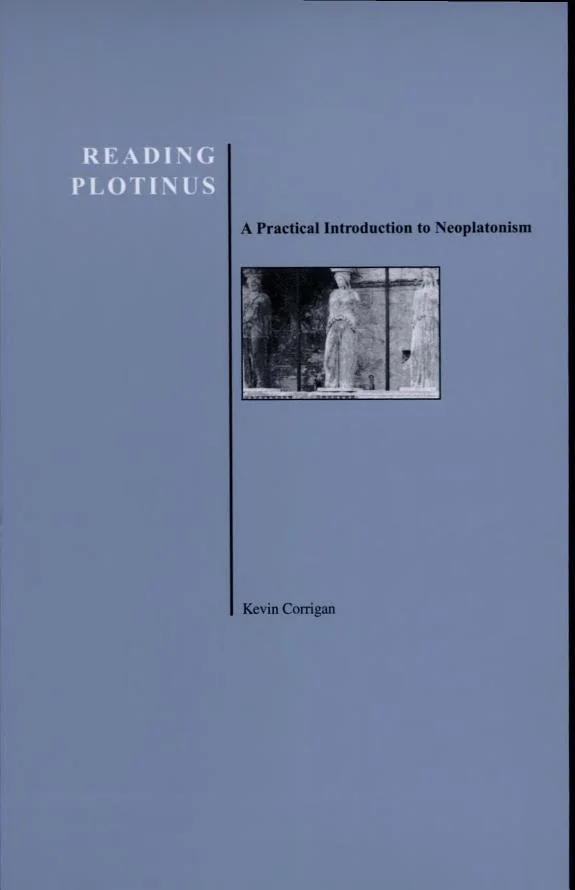
Reading Plotinus
Corrigan’s approach to Plotinus is commendably direct. He avoids the hagiography that often surrounds figures of such antiquity, instead presenting Plotinus’s thought as a rigorous philosophical system. The section on the procession of hypostases, detailing the emanation from the ineffable One through Intellect and Soul, is particularly well-articulated, clarifying a notoriously abstract topic. A limitation, however, is the book's dense prose, which, while accurate, can occasionally obscure the very accessibility it aims for. For instance, the explanation of Plotinus's critique of matter, while thorough, might leave those unfamiliar with the *Enneads* grasping for concrete analogies. Nevertheless, Corrigan successfully illuminates the architecture of Plotinus’s metaphysics, offering a solid entry point for serious engagement. This is a serious academic study for dedicated readers.
📝 Description
71
Kevin Corrigan's 2004 book introduces the philosophical system of Plotinus.
Published in 2004, Reading Plotinus by Kevin Corrigan provides an introduction to the philosophy of Plotinus, a 3rd-century Neoplatonist. The book examines Plotinus's main ideas, which are important in Western metaphysics. Corrigan guides readers through Plotinus's arguments and their lasting impact.
The work is aimed at students and scholars of philosophy, especially those interested in ancient Greek thought, Neoplatonism, and the history of metaphysics. It is also useful for people investigating esoteric traditions, as Plotinus's philosophy influenced Hermeticism, Gnosticism, and later mystical thought. No extensive prior knowledge of Plotinus is needed, making it accessible for serious newcomers.
Corrigan places Plotinus's philosophy within the intellectual climate of late 3rd-century Rome. This was a time when Platonic ideas were combined with Pythagorean, Aristotelian, and Stoic elements, and also engaged with Gnostic thought. The book notes Plotinus's originality and his influence on thinkers like Porphyry, Iamblichus, and Augustine of Hippo.
Plotinus's system, developed in the 3rd century CE, is a significant current within esoteric thought. His ideas on emanation from a supreme, ineffable One, and the soul's journey back to that source, have resonated deeply in mystical and occult traditions. These concepts informed later movements like Hermeticism and Gnosticism, and his influence continued through figures who mediated his thought to subsequent mystical philosophies, including some branches of Christian mysticism and Islamic philosophy.
⭐ Reader Reviews
Honest opinions from readers who have explored this book.
❓ Frequently Asked Questions
When was Plotinus active as a philosopher?
Plotinus was active as a philosopher in Rome during the latter half of the 3rd century CE, approximately from the 240s to his death in 270 CE. His teachings formed the basis of Neoplatonism.
What are the main works of Plotinus?
The primary works of Plotinus are collected in the *Enneads*, compiled and edited by his student Porphyry. These writings cover a vast range of metaphysical, ethical, and epistemological topics.
How did Plotinus influence later philosophy?
Plotinus's Neoplatonism profoundly influenced subsequent philosophical and religious thought, including that of Porphyry, Iamblichus, Proclus, and Christian thinkers like Augustine of Hippo and Pseudo-Dionysius the Areopagite.
What is the concept of 'the One' in Plotinus's philosophy?
In Plotinus's philosophy, 'the One' is the ultimate, transcendent principle from which all reality emanates. It is beyond being, thought, and description, yet it is the source of all existence.
What is the role of 'emanation' in Plotinus's system?
Emanation describes the process by which reality flows or proceeds from 'the One' without diminishing it. This concept explains the derivation of lower levels of reality (Intellect, Soul, matter) from the ultimate source.
Is Reading Plotinus suitable for beginners?
Yes, Kevin Corrigan's 'Reading Plotinus' is designed as an accessible introduction. While Plotinus's ideas are complex, Corrigan's methodical approach and clear explanations make it suitable for serious students new to his philosophy.
🔮 Key Themes & Symbolism
The Ineffable One
Corrigan unpacks Plotinus's concept of 'the One' as the ultimate, ineffable source of all existence. This principle transcends being, thought, and any form of multiplicity. It is not a god in the traditional sense but the absolute ground of reality, from which all else emanates. Understanding the One is central to grasping Plotinus's entire metaphysical edifice and its implications for mystical theology and esoteric philosophy, positioning it as a foundational element for understanding later Neoplatonic and Hermetic thought.
Emanation and Hypostases
A core theme is the doctrine of emanation, where reality 'flows' from the One without depletion. Corrigan details the first two emanations: Intellect (Nous), the area of Forms and perfect being, and Soul (Psyche), the animating principle that bridges the spiritual and material worlds. This hierarchical structure, with each subsequent level arising from the one above it, provides a systematic explanation for the diversity of the cosmos and the interconnectedness of all things within the Neoplatonic framework.
The Soul's Ascent
The book addresses Plotinus's views on the human soul's journey. Corrigan explains the soul's descent into the material world and its subsequent potential for ascent back to its divine source. This involves purification, intellectual contemplation, and ultimately, a mystical union or 'ecstasy' with the One. This concept of spiritual ascent is a significant element in many esoteric traditions, including Hermeticism and Gnosticism, highlighting Plotinus's enduring relevance.
Matter and Evil
Corrigan examines Plotinus's controversial views on matter, which he associates with non-being and the source of evil. Unlike earlier Greek philosophers, Plotinus presents matter not as a positive principle but as an absence, a limit that obstructs the divine light. This perspective on the negative character of the material world has had a lasting impact on dualistic philosophies and certain esoteric interpretations of the material existence.
💬 Memorable Quotes
Direct passages from the work, attributed to the author.
“The One is not anything; it is beyond being.”
— This statement captures the absolute transcendence of Plotinus's ultimate principle. It signifies that the One cannot be categorized or defined by any attribute or predicate, as these belong to the area of multiplicity and differentiated existence.
“Intellect contemplates the Forms, which are the content of the One.”
— This highlights the relationship between the first two hypostases. Intellect (Nous) contains the perfect archetypes or Forms, which are the intelligible structure derived from, but distinct from, the utterly simple One.
“Evil is the absence of good, a privation, not a positive entity.”
— This reflects Plotinus's view on the nature of evil. It is understood as a falling away from being and goodness, a shadow cast by the presence of the One, rather than an independent force.
“The goal of the soul is to return to its source, the One.”
— This captures the ethical and spiritual aim of Plotinian philosophy: the soul's journey of purification and recollection to achieve union with the divine ground of its existence.
💡 Key Ideas
Editorial paraphrase of the work's core concepts — not direct quotes.
The Soul has a dual nature: it looks upwards to Intellect and downwards to the sensible world.
This paraphrase explains the mediating role of the Soul. It acts as a bridge, receiving divine principles from above and projecting them into the physical realm, thereby animating and structuring it.
🌙 Esoteric Significance
Tradition
Plotinus is a central figure in the lineage of Western esoteric thought, particularly within Neoplatonism, which itself heavily influenced Hermeticism and Gnosticism. His philosophy provides a systematic metaphysical framework for understanding divine transcendence, emanation, and the soul's journey towards union with the ultimate principle. While distinct from the more ritualistic or magical practices sometimes associated with other esoteric traditions, Plotinus offers a profound intellectual and contemplative path that underpins many later esoteric systems.
Symbolism
Key symbolic motifs include 'the One' itself, representing absolute unity and transcendence; 'light' and 'darkness', symbolizing presence and absence of being or divine reality; and the 'emanation' process, often visualized as a river flowing from a source, representing the generation of multiplicity from unity without diminution. The ascent of the soul can be seen as a symbolic journey from the material realm towards the spiritual 'hypostases'.
Modern Relevance
Contemporary thinkers and practitioners in fields ranging from depth psychology (e.g., Jungian analysis exploring archetypes and the collective unconscious) to various forms of Western esotericism and process philosophy draw heavily on Plotinus's concepts. His ideas on consciousness, transcendence, and the nature of reality continue to inform discussions on spirituality, metaphysics, and the human condition, particularly within circles seeking non-dualistic philosophical underpinnings.
👥 Who Should Read This Book
["• Students of ancient philosophy and classical metaphysics seeking a clear introduction to Plotinus's foundational Neoplatonic system.", '• Scholars of comparative religion and intellectual history interested in the development of Western metaphysical thought and its influence on later traditions.', '• Individuals exploring esoteric or mystical philosophies who want to understand the intellectual roots of concepts like emanation, transcendence, and spiritual ascent.']
📜 Historical Context
Plotinus, active in Rome in the mid-3rd century CE, emerged during a period of intense philosophical and religious syncretism. His Neoplatonism synthesized Platonic dialogues, Pythagorean mathematics, and Aristotelian logic, while engaging with Stoicism and contemporary Gnostic thought. Unlike the more mystical and ritualistic Gnostics, Plotinus insisted on a rigorously philosophical approach, emphasizing logical deduction and intellectual contemplation. His student Porphyry, who compiled the *Enneads* posthumously, played an important role in disseminating Plotinus's ideas. Porphyry's own work, and that of later figures like Iamblichus and Proclus, built upon Plotinus's foundation, solidifying Neoplatonism as a dominant intellectual force in the late antique world, influencing both pagan philosophy and early Christian theology, notably Augustine of Hippo.
📔 Journal Prompts
The nature of the One as absolute transcendence.
Procession of Intellect (Nous) from the One.
The Soul's dual orientation: upward and downward.
Plotinus's critique of matter and its association with evil.
The path of the soul's ascent towards union.
🗂️ Glossary
The One
Plotinus's term for the ultimate, ineffable, transcendent principle of all reality. It is beyond being and predication, the source from which all existence emanates.
Nous (Intellect)
The first hypostasis emanating from the One. It is the area of eternal Forms or Ideas, the intelligible world where being and thought are identical.
Psyche (Soul)
The second hypostasis, originating from Nous. It animates the cosmos and individual beings, possessing a dual nature looking towards both the intelligible realm and the sensible world.
Emanation
The process by which reality flows from the One and subsequent hypostases in a hierarchical manner, without depleting the source. It explains the derivation of multiplicity from unity.
Hypostasis
A level or principle of reality in Plotinus's system, such as the One, Nous, and Soul. These are distinct but interconnected stages in the unfolding of existence.
Matter
In Plotinus's philosophy, matter is often seen as the lowest principle, associated with non-being, privation, and the source of evil or deficiency in the sensible world.
Ecstasy
A state of spiritual rapture or union with the One, achieved through contemplation and purification. It represents the soul's highest mystical experience.
🔮 Readers Also Liked
Browse all →






![Secret Societies of the Middle Ages [by T. Keightley]](/img/thumb/secret-societies-of-the-middle-ages-by-t-keightley-thomas-keightley-272139.webp)

More by Kevin Corrigan
All books →





More Free Occult Philosophy Books
View all →