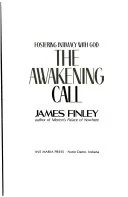
The Awakening Call
 79
79

The Awakening Call
Finley's "The Awakening Call" offers a candid portrayal of the often turbulent onset of spiritual awakening. His strength lies in articulating the disquiet and confusion that frequently accompany profound inner shifts, avoiding the saccharine overtones that plague lesser works in this genre. The section discussing the ego's resistance to dissolution, particularly as it manifests in fear and self-doubt, is rendered with a stark honesty. However, the text occasionally drifts into a somewhat abstract philosophical discourse, which might leave readers seeking practical guidance wanting more concrete steps. The initial chapters, while setting a necessary foundation, could benefit from a more direct engagement with the reader's immediate experience. Despite this, Finley provides a valuable map for navigating the initial, disorienting phases of spiritual emergence.
📝 Description
79
James Finley's 1984 book, The Awakening Call, addresses spiritual emergence and inner transformation.
First published in 1984, The Awakening Call examines the often disorienting yet clarifying process of spiritual emergence and the inner life. The book details the internal shifts that occur when an individual's worldview is fundamentally altered by spiritual or psychological revelation. It is written for those undergoing significant spiritual or existential questioning, who feel an inner disturbance or a call to deeper understanding. Finley speaks to seekers grappling with the initial stages of profound inner change, regardless of whether they follow established religious paths or forge their own way.
Finley's work emerged in the mid-1980s, a time of renewed interest in spirituality outside traditional religious institutions. While other authors offered more self-help oriented narratives, Finley provided a philosophical examination of awakening, grounded in contemplative traditions rather than solely therapeutic models. This approach situated his work within a lineage of introspective inquiry.
The Awakening Call situates spiritual transformation within a contemplative lineage, moving beyond purely psychological or therapeutic frameworks. It acknowledges a period of spiritual searching in the 1980s that extended beyond established religious structures, influenced by humanistic psychology and New Age thought. Finley's text offers a more introspective perspective on the awakening process, drawing parallels to historical contemplative practices.
💡 Why Read This Book?
• Gain a realistic understanding of the initial disorientation and fear that often accompany spiritual awakening, as detailed in Finley's 1984 exploration of ego dissolution. • Learn to identify the "inner teacher" and discern authentic spiritual guidance from psychological projections, a concept elaborated upon in the text's examination of spiritual discernment. • Discover the concept of the "dark night of the soul" not as an ending, but as a crucial, albeit difficult, stage preceding deeper spiritual illumination, as Finley posits.
⭐ Reader Reviews
Honest opinions from readers who have explored this book.
❓ Frequently Asked Questions
What is the primary focus of James Finley's "The Awakening Call"?
The book primarily focuses on the process of spiritual emergence and the profound, often disorienting, inner transformation that individuals experience when their perception of reality shifts significantly.
When was "The Awakening Call" first published?
James Finley's "The Awakening Call" was first published in 1984, placing it within the spiritual and psychological discourse of the mid-1980s.
Who is James Finley, the author of "The Awakening Call"?
James Finley is an author known for his works on spirituality and contemplative practice. His first published work, "The Awakening Call," addresses the challenges and insights of spiritual awakening.
Does "The Awakening Call" offer practical advice for spiritual growth?
While it provides a philosophical and psychological framework for understanding awakening, its primary aim is to articulate the experience itself, rather than offering a step-by-step guide. It illuminates the inner landscape of transformation.
What historical or intellectual movements influenced "The Awakening Call"?
Published in 1984, the work emerged during a time of increased interest in New Age spirituality and humanistic psychology, offering a more introspective perspective compared to some contemporary self-help narratives.
Can "The Awakening Call" be considered a self-help book?
While beneficial for those undergoing spiritual crises, it leans more towards philosophical inquiry and introspective exploration than prescriptive self-help. It aims to validate and explain the experience of awakening.
🔮 Key Themes & Symbolism
The Disorienting Nature of Awakening
Finley details the profound upheaval that accompanies genuine spiritual awakening. This isn't a gentle unfolding but often a shattering of old paradigms, leading to feelings of alienation and confusion. The work addresses how the familiar world can suddenly seem foreign, and how the individual may feel disconnected from previous certainties. It highlights the psychological strain of holding contradictory realities before integration occurs, a common thread in contemplative literature since the Middle Ages.
Ego Dissolution and Rebirth
A central theme is the necessary dismantling of the egoic structure – the false self built on societal conditioning and personal history. Finley describes this process not as annihilation but as a shedding of limiting identification, paving the way for a more authentic, expansive consciousness. This concept echoes Gnostic ideas of liberating the divine spark from material encasement and aligns with mystical traditions speaking of dying to the self to find true being.
Discernment of Inner Guidance
The book emphasizes the critical importance of discerning authentic spiritual impulses from psychological noise or external suggestion. Finley explores the "inner teacher" as a guiding principle but cautions against naive acceptance. This requires cultivating inner stillness and critical self-awareness, a practice found in various contemplative traditions, from Buddhist mindfulness to Christian hesychasm, to distinguish genuine insight from illusion.
Integration into Daily Life
Finley addresses the challenge of integrating profound spiritual insights and experiences into the mundane fabric of everyday existence. Awakening is not solely an otherworldly event but a call to embody a transformed consciousness in relationships, work, and personal conduct. This involves translating transcendent understanding into practical wisdom and ethical action, a core concern in applied esoteric philosophy.
💬 Memorable Quotes
Direct passages from the work, attributed to the author.
“The initial shock of awakening often leaves one feeling utterly adrift.”
— This highlights the disorienting phase where established beliefs crumble, and the individual lacks a stable framework for understanding their new perceptions, emphasizing the psychological challenge of spiritual emergence.
“The ego fights dissolution with every fiber of its conditioned being.”
— This points to the inherent resistance of the personality structure to fundamental change, illustrating how deeply ingrained patterns of self-identity actively oppose the process of spiritual unfolding.
“True spiritual guidance speaks with quiet authority, not with loud demands.”
— This emphasizes the subtle nature of authentic inner wisdom, contrasting it with the often forceful or manipulative voices of egoic desire or external pressure, stressing the need for inner stillness.
“The transformed self must find its footing in the ordinary world.”
— This underscores the essential task of embodying spiritual insights within everyday life, moving beyond ecstatic experiences to a grounded, integrated way of being and acting.
“Distinguishing the whisper of truth from the clamor of the mind is the seeker's primary task.”
— This captures the essence of spiritual discernment, framing the core challenge as the ability to perceive subtle, authentic guidance amidst the constant activity and potential confusion of one's own thoughts.
🌙 Esoteric Significance
Tradition
The work aligns with the contemplative and mystical traditions within Western esotericism, particularly those focusing on inner transformation and the direct experience of the divine. It draws parallels with Gnostic themes of awakening the soul from material slumber and echoing the psychological stages described in Christian mysticism, such as the "dark night" articulated by St. John of the Cross. Finley's approach emphasizes subjective experience and the unfolding of consciousness.
Symbolism
The "call" itself serves as a primary symbol, representing an irresistible inner summons towards a deeper reality that disrupts the status quo. The "dissolution" of the ego can be seen symbolically as the breaking down of an old, constricting vessel to allow for the emergence of a new, more expansive awareness. The "inner teacher" symbolizes the immanent divine presence or higher consciousness guiding the individual.
Modern Relevance
Finley's exploration of the psychological and spiritual turmoil of awakening remains pertinent. Contemporary mindfulness movements, depth psychology practitioners exploring archetypal experiences, and individuals engaging with non-dual philosophies often grapple with similar challenges of ego dissolution and integrating profound shifts in consciousness. His work provides a historical anchor for understanding these modern experiences within a lineage of spiritual inquiry.
👥 Who Should Read This Book
• Individuals experiencing significant existential or spiritual questioning who feel a sense of inner disturbance, providing a framework for understanding these often unsettling feelings. • Seekers of deeper meaning who are exploring paths beyond conventional religious or secular frameworks, offering insights into the process of profound personal transformation. • Students of mysticism and contemplative traditions who wish to understand the psychological and philosophical dimensions of spiritual emergence, drawing parallels with historical accounts.
📜 Historical Context
Published in 1984, James Finley's "The Awakening Call" emerged during a period of significant spiritual exploration outside mainstream religious structures. The era saw a rise in New Age literature, humanistic psychology, and Eastern spiritual influences permeating Western thought. While authors like M. Scott Peck were exploring stages of spiritual growth in "The Road Less Traveled," Finley offered a more direct confrontation with the often destabilizing initial phases of awakening. His work positioned itself against the purely therapeutic models then prevalent, emphasizing a philosophical and contemplative dimension. The book tapped into a growing audience seeking meaning beyond secular materialism or traditional dogma, reflecting a broader cultural shift towards introspection and alternative spiritual paths.
📔 Journal Prompts
The initial disorientation following an "awakening call": what forms does it take in your experience?
Reflect on the "ego's resistance to dissolution" and how it manifests in your daily life.
Analyze the characteristics of the "inner teacher" as described by Finley and your own experiences.
Consider the "dark night of the soul" not as a failure, but as a necessary precursor to illumination.
How can the insights gained from a "transformed self" be practically integrated into ordinary existence?
🗂️ Glossary
Spiritual Emergence
A process of profound inner transformation and expanded consciousness, often accompanied by significant psychological and existential shifts, leading to a reorientation of one's worldview and sense of self.
Ego Dissolution
The deconstruction of the limited, conditioned sense of self (the ego) that hinders the realization of a deeper, more authentic identity or consciousness. It involves shedding identification with limiting beliefs and personality structures.
Inner Teacher
The intuitive, authoritative voice or presence of higher consciousness within an individual, providing guidance, wisdom, and clarity distinct from the ego's psychological narratives or external influences.
Dark Night of the Soul
A term, often associated with St. John of the Cross, describing a period of spiritual desolation, dryness, and purification that precedes a deeper union with the divine or a more profound spiritual realization.
Discernment
The faculty or practice of distinguishing between different spiritual impulses, insights, or influences, enabling the individual to identify authentic guidance and reject illusion or egoic projection.
Conditioned Being
Refers to the aspect of personality shaped by external factors such as upbringing, societal norms, and cultural influences, often contrasted with a more authentic or essential self.
Transcendence
The state or experience of going beyond the limits of ordinary consciousness, the physical world, or the egoic self, often associated with spiritual or mystical experiences.
This book appears in 1 collection
🔮 Readers Also Liked
Browse all →








From the “Spiritual Awakening” Collection
View all →








More Free Magic & Ritual Books
View all →