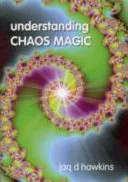
Understanding Chaos Magic
 80
80

Understanding Chaos Magic
Jaq Hawkins's *Understanding Chaos Magic* presents a refreshingly direct approach to a practice often shrouded in jargon. The 1996 publication date is crucial; it predates much of the online proliferation of misinformation that now plagues the subject. Hawkins’s strength lies in her clear, no-frills explanation of core concepts like belief as a tool and the practical construction of sigils. She cuts through the mystical posturing, offering a methodology that feels grounded in psychological manipulation rather than arcane pronouncements. One particularly effective passage details the process of creating a sigil by boiling down a desire into a single, abstract symbol, then charging it through a state of gnosis. However, the book's primary limitation is its occasional dryness; it prioritizes instruction over evocative prose, which may leave some readers wanting more experiential depth. Despite this, Hawkins delivers a solid, foundational text that remains a valuable starting point for serious inquiry into Chaos Magic. It’s a pragmatic manual for the skeptical magician.
📝 Description
80
Jaq Hawkins's *Understanding Chaos Magic* was published in July 1996, detailing a modern magical system.
First released in 1996, Jaq Hawkins's *Understanding Chaos Magic* acts as a guide to the principles and techniques of Chaos Magic. This contemporary magical paradigm, which took shape in the late 20th century, is presented through accessible explanations of its core ideas. Hawkins focuses on belief as a functional tool and the subjective construction of magical reality. The book encourages personal exploration and direct experience of gnosis rather than adherence to strict doctrines.
This work is suited for individuals investigating alternative spiritual paths, especially those drawn to magical practices outside of mainstream Western esotericism. It serves as a straightforward introduction for newcomers to Chaos Magic and offers value to those with some experience seeking to clarify its fundamental concepts. Skeptics of established magical traditions and practitioners preferring a results-driven, independent method will find Hawkins's approach particularly useful. Students of comparative religion or occult history interested in late 20th-century magical developments may also benefit.
Published in 1996, *Understanding Chaos Magic* emerged during a period of growing interest in postmodern occultism. Building on ideas from figures like Peter J. Carroll and Ray Sherwin, who viewed magic as a science of subjective manipulation, Chaos Magic coalesced in the 1970s. It often positioned itself against more structured traditions such as Thelema or Wicca. Hawkins's book provided a clear, systematic presentation of these concepts, making them more accessible than earlier manifestos.
💡 Why Read This Book?
• Gain a practical, demystified understanding of sigil creation, a core technique in Chaos Magic, as detailed in Hawkins's structured exercises from 1996. • Learn the principle of belief shifting, understanding how to consciously adopt and discard belief systems as a tool for achieving specific magical outcomes. • Develop a results-oriented approach to magic, moving beyond dogma by exploring experimental methods outlined in the book's pragmatic framework.
⭐ Reader Reviews
Honest opinions from readers who have explored this book.
❓ Frequently Asked Questions
When was Jaq Hawkins's *Understanding Chaos Magic* first published?
Jaq Hawkins's *Understanding Chaos Magic* was first published in July 1996, positioning it as an early and influential text in the popularization of Chaos Magic.
What is the central tenet of Chaos Magic as presented by Hawkins?
The central tenet presented by Hawkins is that belief itself is a tool, and practitioners should consciously adopt and discard belief systems to achieve desired magical results.
Does the book teach specific rituals or require adherence to a particular deity?
No, the book emphasizes personal experimentation and self-created techniques. It focuses on methods like sigil magic and altered states of consciousness rather than prescribed rituals or specific deities.
Is *Understanding Chaos Magic* suitable for absolute beginners?
Yes, the book is structured to be accessible to beginners, breaking down complex concepts into practical, actionable steps. It avoids overly arcane language common in older esoteric texts.
What is a sigil according to Jaq Hawkins's book?
According to Hawkins, a sigil is a symbolic representation of a magical intent, created by reducing a statement of desire into an abstract design and then charging it through a state of gnosis.
How does this book relate to traditional magical systems?
It offers a departure from traditional systems by prioritizing subjective experience, psychological manipulation, and adaptability over rigid dogma and historical lineage, reflecting late 20th-century occult thought.
🔮 Key Themes & Symbolism
Belief as a Tool
Hawkins emphasizes that belief is not a static conviction but a malleable instrument. The work explores how practitioners can consciously 'shift' their belief systems—adopting the mindset necessary for a specific magical operation, then discarding it afterward. This pragmatic approach liberates the practitioner from the constraints of a single, fixed worldview, allowing for greater flexibility and effectiveness in magical workings. The book posits that the power of magic lies not in the inherent truth of a belief, but in the practitioner's ability to wield it.
Sigil Magic Methodology
A core part of Chaos Magic, sigil creation is meticulously detailed. The book breaks down the process into understandable stages: formulating intent, condensing it into a unique symbol (the sigil), and charging this symbol through an altered state of consciousness, known as gnosis. Hawkins guides the reader through various methods for achieving gnosis, such as sensory overload or deprivation, ensuring the sigil's energy is effectively imprinted. This section clarifies a potent technique, making it accessible for practical application.
The Role of Gnosis
Gnosis, or the state of heightened magical awareness and focused consciousness, is presented as the engine for magical change. Hawkins explains that achieving gnosis is crucial for activating sigils and driving magical intent. The book explores different pathways to attain this state, differentiating between inhibitory gnosis (striving to empty the mind) and excitatory gnosis (inducing a state of intense focus or emotion). Understanding and cultivating gnosis is framed as essential for any effective Chaos Magic practice.
Magic as Art and Science
This work frames magic not as a mystical art divorced from reality, but as a creative discipline akin to art, and a subject for empirical investigation like science. Hawkins encourages practitioners to view their operations as experiments, meticulously recording results and adapting techniques based on personal experience. The 'art' lies in the creative formulation of intent and the crafting of magical tools, while the 'science' is the systematic testing and refinement of methods. This dual perspective fosters innovation and personal gnosis.
💬 Memorable Quotes
Direct passages from the work, attributed to the author.
“Belief is a tool, not a prison.”
— This concise statement captures a core principle of Chaos Magic as presented by Hawkins: that belief systems should be employed pragmatically for magical effect rather than adhered to rigidly.
“The universe is a mirror; what you project, you receive.”
— This reflects the idea that magical results are a consequence of the practitioner's focused intent and projected will, emphasizing personal responsibility and the power of the magician's inner landscape.
“Experimentation is the crucible of magical knowledge.”
— Hawkins stresses the importance of practical application and personal testing. This idea suggests that true understanding in magic comes not from theory alone, but from actively engaging with techniques and observing the outcomes.
“Doubt is the anchor that holds magic to the mundane.”
— This highlights the necessity of suspending disbelief and embracing the magical paradigm during operation. Overcoming skepticism is framed as essential for allowing magical effects to manifest.
💡 Key Ideas
Editorial paraphrase of the work's core concepts — not direct quotes.
Intent condensed into symbol, charged by gnosis, unleashed.
This paraphrased sequence summarizes the fundamental process of sigil magic: defining a goal, creating a sigil, activating it through an altered state, and releasing its energy.
🌙 Esoteric Significance
Tradition
Chaos Magic, as articulated by Hawkins, represents a radical departure from traditional esoteric lineages like Hermeticism or Kabbalah. It functions more as a meta-magical system, a set of tools and attitudes applicable across various belief systems. Instead of inheriting a fixed cosmology, Chaos Magic practitioners are encouraged to adopt or invent their own frameworks, emphasizing personal gnosis and experimentation. Hawkins’s work fits within the broader postmodern occult revival, focusing on psychological mechanics and subjective experience over established dogma.
Symbolism
While Chaos Magic often eschews fixed symbolism in favor of personal creation, key motifs emerge. The 'sigil,' a condensed representation of intent, is paramount. Hawkins details its construction as a potent symbol charged with psychic energy. Another recurring idea is the 'chaos star' (often a 7-pointed star), representing the practitioner's dominion over different realities or states of consciousness. The concept of 'gnosis' itself acts as a symbolic state of being, a gateway to altered perception and magical efficacy.
Modern Relevance
Hawkins's practical, results-oriented approach continues to influence contemporary magical practitioners and online communities. Modern Chaos Magicians, often engaging through platforms like Reddit or Discord, still rely on the foundational principles outlined in works like *Understanding Chaos Magic*. Thinkers and practitioners exploring concepts like belief-hacking, algorithmic magic, and memetic warfare often draw implicitly or explicitly from the pragmatic framework Hawkins helped establish in the mid-1990s.
👥 Who Should Read This Book
• Skeptical inquirers into magic: Those who approach occultism with a critical, scientific mindset will appreciate Hawkins's emphasis on experimentation and observable results over faith. • Aspiring practitioners of modern esotericism: Individuals interested in contemporary magical currents, distinct from older traditions, will find a clear introduction to Chaos Magic's core tenets. • Students of comparative occultism: Researchers and practitioners interested in the evolution of magical thought in the late 20th century will gain insight into a significant rethinking.
📜 Historical Context
Jaq Hawkins's *Understanding Chaos Magic*, released in July 1996, emerged during a key moment for Western esotericism. The late 20th century saw a departure from the more structured, lineage-bound magical orders towards individualistic, experimental approaches. Chaos Magic, as pioneered by figures like Peter J. Carroll in the 1970s, represented a significant shift, proposing magic as a practical science based on subjective psychological states rather than adherence to ancient cosmologies. Hawkins’s book provided a clear, systematic exposition of these principles, making them accessible beyond the circles that had previously engaged with Carroll's more dense manifestos. It arrived at a time when the burgeoning internet was starting to facilitate rapid dissemination of occult ideas, contrasting sharply with the more secretive transmission methods of earlier eras. While contemporary figures like Phil Hine were also exploring similar themes, Hawkins’s work offered a particularly coherent introduction to core concepts like sigil magic and belief shifting, solidifying its place as a foundational text for a new generation of practitioners.
📔 Journal Prompts
The process of condensing intent into a sigil: map your desire's journey.
Reflect on a belief system you've held: how could it have been used as a tool?
Document an instance of achieving gnosis: what state were you in, and what triggered it?
Consider the 'magic as art' analogy: what creative principles apply to your practice?
Analyze a ritual from another tradition: how might its intent be achieved through Chaos Magic methods?
🗂️ Glossary
Chaos Magic
A contemporary magical paradigm that emphasizes practical results, experimentation, and the use of belief as a malleable tool, often rejecting rigid dogma and traditional cosmologies.
Sigil
A symbol created to represent a specific magical intent, designed to be charged with psychic energy and activated subconsciously.
Gnosis
An altered state of consciousness characterized by intense focus or trance, used in Chaos Magic to charge sigils and drive magical operations.
Belief Shifting
The practice of consciously adopting and discarding belief systems as needed for specific magical workings, treating belief as a functional tool.
Intent
The clearly defined goal or desire that a magical operation is designed to achieve.
Paradigm
A fundamental framework or set of assumptions within which a particular field of study or practice operates; in Chaos Magic, practitioners often create or adopt their own.
Magical Operation
Any act performed with the intent to produce a specific, often supernatural or psychologically profound, effect.