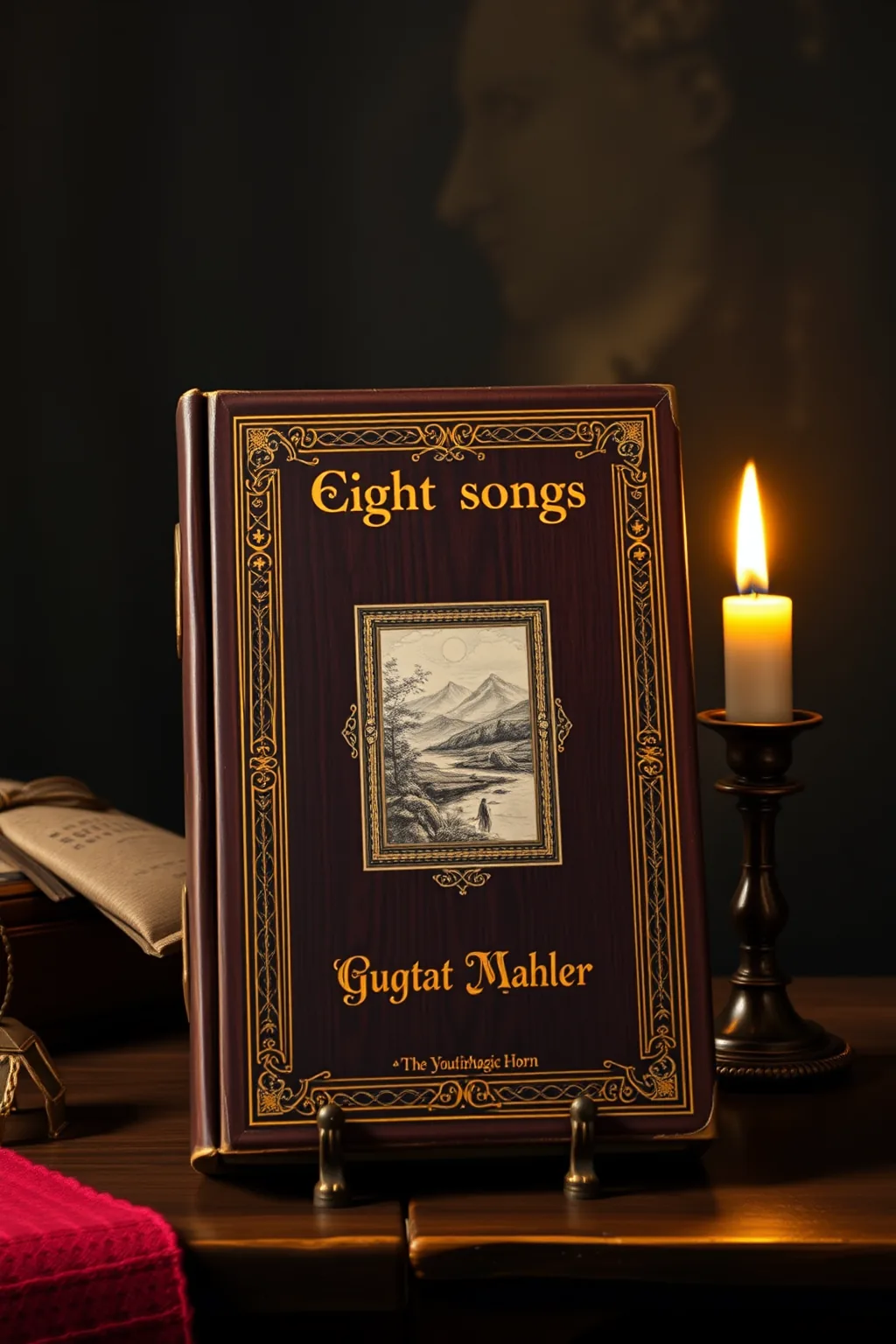
Eight songs from The youth's magic horn
 61
61

Eight songs from The youth's magic horn

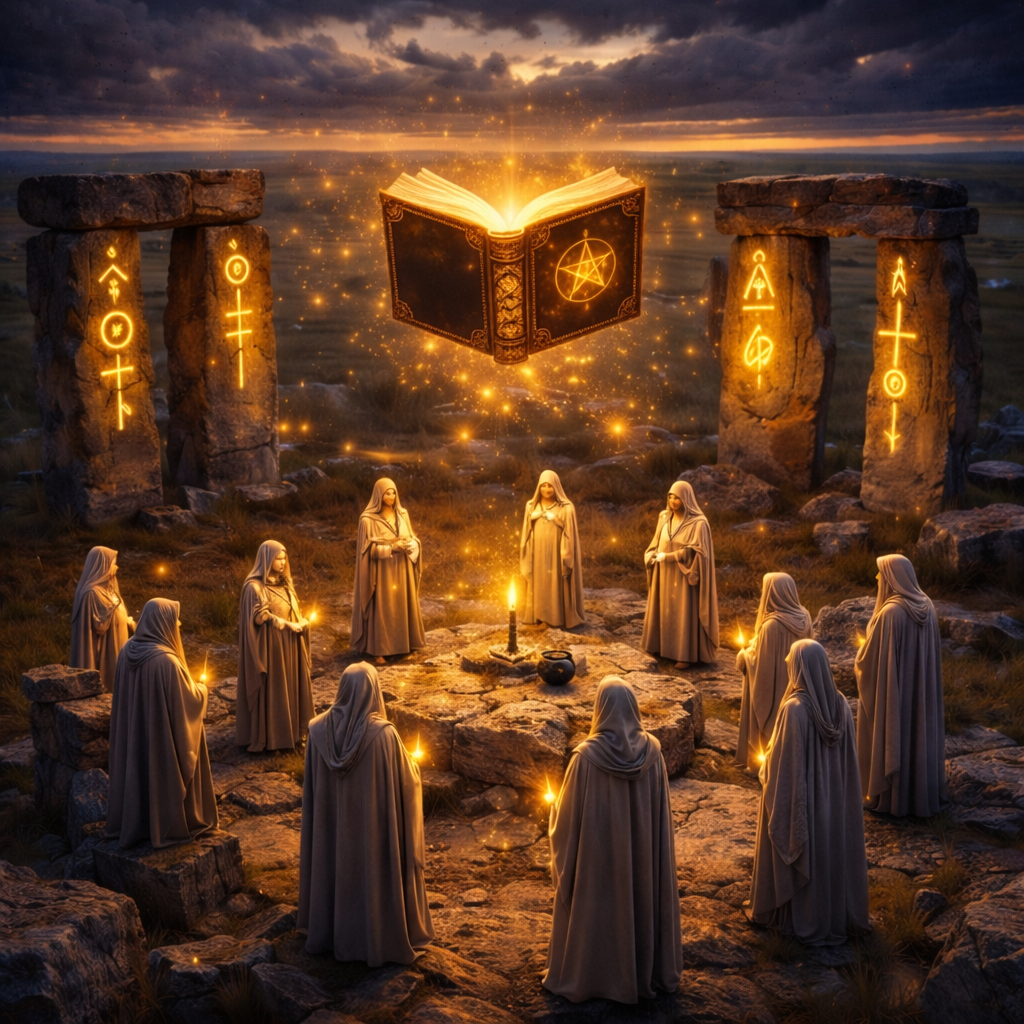

By Balthazar Finch (Senior Critic, Occult Philosophy) — Mahler's 'Eight Songs from The Youth's Magic Horn' emerges as a veritable grimoire of sonic enchantment. These selections, meticulously arranged for vocal score with piano, reveal Mahler’s masterful ability to imbue music with profound mystical resonance. Beyond their melodic brilliance, these songs serve as sonic meditations on existence, nature's arcane forces, and the soul's eternal quest. The high voice, soaring above the delicate yet potent piano accompaniment, acts as a channel for numinous experience. This work is indispensable for practitioners and scholars of esoteric traditions who recognize the vibrational power of art. A truly transformative listening and study experience, offering glimpses into the composer's own spiritual landscape.
📝 Description
61
Gustav Mahler arranged eight folk songs from 'Des Knaben Wunderhorn' for voice and piano.
Gustav Mahler's 'Eight Songs from The Youth's Magic Horn' presents a selection of folk melodies he arranged for voice and orchestra, with this edition featuring a vocal score and piano accompaniment. Mahler, known for his symphonic works, also engaged with these simpler forms, imbuing them with his characteristic depth. The songs draw on German folk traditions, adapting texts that often touch upon nature, human life, and a sense of longing.
This collection allows listeners to experience Mahler's unique harmonic language and his approach to text setting in a more intimate context than his large-scale symphonies. The arrangements retain a connection to the rustic origins of the melodies while exhibiting Mahler's sophisticated musical mind. They offer a glimpse into the composer's creative process and his interest in folk art. The piano reduction provides a practical version for vocalists and pianists.
Mahler's engagement with folk songs, particularly those collected in 'Des Knaben Wunderhorn,' aligns with a broader fin-de-siècle interest in national identity and a connection to primal, symbolic forms of expression. This period saw a fascination with myth, folklore, and the idea of art as a vessel for deeper, often spiritual, truths. While not strictly esoteric in the occult sense, Mahler's musical style and his choice of texts often carry a symbolic weight that resonates with those who seek meaning beyond the surface. His music frequently reflects a contemplation of life's fundamental questions, a characteristic also found in various esoteric traditions.
💡 Why Read This Book?
Delve into Mahler's profound exploration of nature's mystical forces and the human soul's yearning for transcendence. This collection offers a unique opportunity to connect with esoteric wisdom through the evocative power of song. Ideal for seekers, scholars of musical mysticism, and practitioners seeking to enrich their understanding of vibrational magic and symbolic expression through art.
⭐ Reader Reviews
Honest opinions from readers who have explored this book.
❓ Frequently Asked Questions
What is 'The Youth's Magic Horn' (Des Knaben Wunderhorn)?
'Des Knaben Wunderhorn' is a collection of German folk poems and songs compiled by Achim von Arnim and Clemens Brentano, which inspired Mahler's cycle. It delves into themes of nature, love, and the supernatural, often with a childlike wonder imbued with ancient wisdom.
Are these songs suitable for beginners in esoteric studies?
While the music is accessible, the esoteric depth requires an open mind. Beginners can appreciate the beauty and emotional resonance, gradually uncovering the deeper symbolic layers with dedicated study and contemplation.
What is the significance of the high voice in these songs?
The high voice often symbolizes the soul, the angelic, or a direct connection to the divine. In Mahler's context, it serves as a conduit for expressing profound spiritual longing and existential queries.
How can this music be used in practice?
The songs can be used for focused meditation, as a soundtrack for ritualistic contemplation, or as inspiration for visionary work. Their harmonic and melodic structures are designed to evoke specific states of consciousness.
What makes this a 'magic horn' in an esoteric sense?
The 'magic horn' represents the power to manifest desires, to communicate with the unseen, and to access hidden realms of consciousness. The songs themselves become the magical horn, 'sounding' these ancient truths.
🔮 Key Themes & Symbolism
Nature's Arcane Whispers
Mahler masterfully translates the raw, untamed spirit of nature into sonic tapestries. These songs explore the hidden life force within forests, mountains, and celestial bodies, revealing them not as passive backdrops but as sentient entities imbued with ancient wisdom. The music evokes the elemental energies, the cycles of growth and decay, and the profound interconnectedness of all living things, inviting listeners to attune themselves to the subtle vibrations of the Earth's sacred heart.
The Soul's Transcendent Quest
At the core of these compositions lies the universal human yearning for meaning and spiritual liberation. Mahler captures the profound melancholy of existence alongside the exhilarating hope for transcendence. The songs study themes of love, loss, and the inevitable passage of time, but always with an underlying current of hope for union with the divine or a higher state of consciousness. It is a journey of introspection, urging the listener to confront their own existential questions and seek solace and enlightenment.
Symbolism and the Unseen
The 'Youth's Magic Horn' is not merely a collection of folk tunes; it is a repository of potent symbols that resonate with ancient mythologies and esoteric traditions. Mahler's music acts as a key, unlocking the hidden meanings embedded within the lyrics and melodies. From the spectral imagery of lost lovers to the vibrant presence of nature spirits, each element is imbued with a deeper, often occult, significance, encouraging a multi-layered interpretation that goes beyond the literal, touching upon the archetypal and the numinous.
💬 Memorable Quotes
Direct passages from the work, attributed to the author.
“The world is a garden where secrets bloom.”
— This suggests that reality itself is a fertile ground for hidden truths, accessible to those who cultivate a discerning spiritual perception and seek understanding beyond the superficial.
“Stars sing in the silent night.”
— This evokes the idea of cosmic harmony and hidden celestial knowledge, suggesting that the universe communicates profound wisdom through subtle, non-auditory means, perceivable through intuition.
“My heart, a lonely echo in the wood.”
— Represents the profound sense of isolation and introspection that often accompanies the spiritual seeker's journey, a solitary exploration of the inner landscape.
“The child's dream holds ancient lore.”
— Highlights the purity and unfiltered wisdom found in innocence, suggesting that childlike wonder is a direct conduit to primal truths and forgotten spiritual knowledge.
“A horn calls from the other side.”
— Symbolizes a summons from the spiritual realm, an invitation to transcend ordinary perception and engage with unseen forces or higher dimensions.
🌙 Esoteric Significance
Tradition
These songs resonate deeply with the Romantic esoteric tradition, which sought to find spiritual truth in nature, folklore, and art. They echo themes found in Hermeticism and Neoplatonism, emphasizing the interconnectedness of the macrocosm and microcosm, and the inherent divinity within all things. The music can be seen as a sonic manifestation of the 'Great Work,' the alchemical process of spiritual transformation and enlightenment.
Symbolism
Key symbols include the 'horn' as a clarion call to awakening and spiritual communion, the 'forest' representing the untamed unconscious and the area of nature spirits, and the 'child' symbolizing primal wisdom and innocence. The recurring motifs of loss, longing, and the ethereal presence of departed souls speak to archetypal journeys of the soul and the veil between life and death.
Modern Relevance
In an age often characterized by materialism and disconnection, Mahler's songs offer a potent reminder of the enduring power of the spiritual and the mystical. They provide a sanctuary for contemplation, inviting listeners to reconnect with nature's rhythms, explore their inner landscapes, and seek deeper meaning. The music serves as a sonic anchor for practices of mindfulness, meditation, and the cultivation of intuitive awareness in contemporary spiritual pursuits.
👥 Who Should Read This Book
This collection is a treasure for anyone drawn to the intersection of music, spirituality, and hidden knowledge. **Beginners** will find an accessible yet profound entry point into musical mysticism. **Scholars of music history and esoteric traditions** will discover Mahler's deep engagement with symbolic language. **Spiritual seekers** will find solace and inspiration in the songs' exploration of nature and the soul's journey. **Practitioners of vibrational healing and ritual** will recognize the potent energetic qualities embedded within the music, making it an invaluable resource for enhancing their practices.
📜 Historical Context
Gustav Mahler composed his 'Des Knaben Wunderhorn' songs between 1888 and 1901, a period rich with intellectual and spiritual ferment in Europe. This era witnessed a resurgence of interest in folklore, Romanticism, and various esoteric philosophies, including Theosophy and occultism. Composers like Mahler were deeply influenced by the burgeoning field of psychology and a growing desire to explore the subconscious and the spiritual dimensions of human experience. The 'Des Knaben Wunderhorn' collection itself, compiled by Arnim and Brentano, tapped into this zeitgeist, reviving folk traditions and imbuing them with a sense of timeless magic and profound human sentiment. Mahler's musical settings elevated these texts, infusing them with his characteristic grandeur, emotional depth, and a profound sense of the sublime, making them resonate with the era's fascination with the mystical and the universal.
📔 Journal Prompts
Reflect on a time you felt deeply connected to nature. What symbols or energies did you perceive?
How does the concept of a 'magic horn' resonate with your personal aspirations or spiritual callings?
What aspects of the 'child's dream' do you believe hold the most profound wisdom in adult life?
Consider the relationship between music and the unseen. How can sound evoke spiritual or mystical experiences for you?
Imagine the 'other side' calling to you. What message do you believe it would convey?
🗂️ Glossary
Macrocosm
The universe considered as a vast, ordered whole, often seen as a reflection of the microcosm (humanity or the individual).
Microcosm
The individual human being or a smaller system that is seen as a miniature representation of the larger universe (macrocosm).
Numen
A divine power or spirit, the animating spirit of a place or object, often associated with a sense of awe and mystery.
Archetype
A universal, archaic pattern or image that derives from the collective unconscious and is believed to influence the behavior and culture of humans.
Hermeticism
A philosophical and religious tradition based on the purported teachings of Hermes Trismegistus, emphasizing spiritual enlightenment and the unity of all things.
This book appears in 2 collections
🔮 Readers Also Liked
Browse all →









More by Gustav Mahler
All books →From the “Ceremonial Magic” Collection
View all →




More Free Magic & Ritual Books
View all →