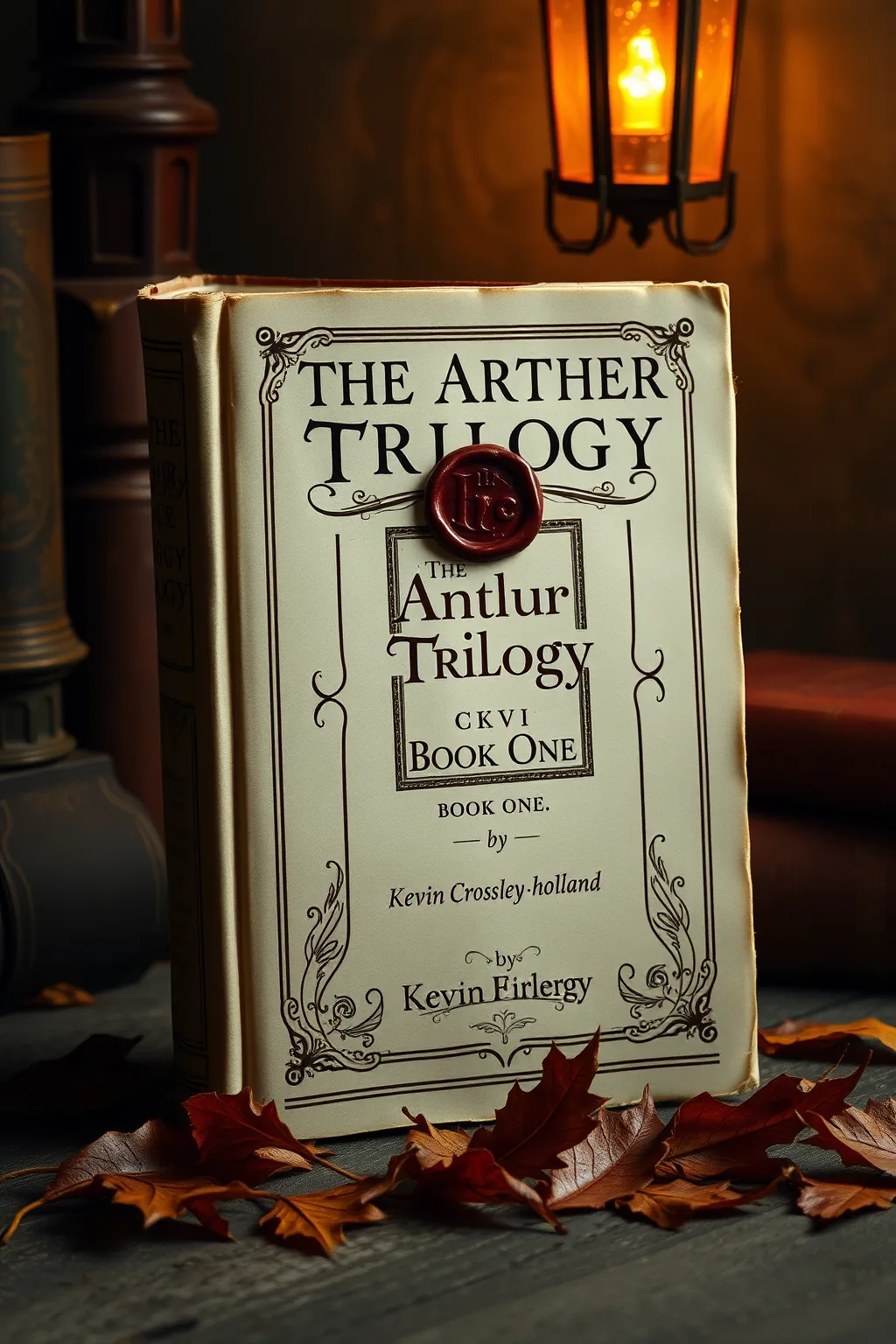
The Arthur Trilogy, Book One
 64
64

The Arthur Trilogy, Book One



Review by Sophia Crane (Associate Editor) — Kevin Crossley-Holland's The Arthur Trilogy, Book One is a masterclass in blending historical fiction with esoteric themes. The author's deep understanding of alchemy and hermeticism shines through in every page, offering readers a rich tapestry of symbolism and hidden wisdom. This book is not just a story; it is a journey into the mystical heart of the Middle Ages, where magic and reality intertwine. Ideal for young seekers of hidden knowledge, this trilogy promises to captivate and enlighten.
📝 Description
64
Kevin Crossley-Holland published the first book in his Arthur Trilogy in 1991.
This novel immerses the reader in a medieval world where magic feels close at hand. It blends alchemical symbols and hermetic ideas with the familiar Arthurian tales. The story follows a young protagonist on a quest that encourages self-discovery. The setting provides a backdrop of wonder and mystery, drawing on hidden knowledge and arcane lore.
The book aims to connect the reader's own search for identity with the deeper philosophical meanings found in Arthurian quests. It uses the medieval setting not just as a stage, but as an environment saturated with a sense of the unknown. This approach makes it suitable for those interested in esoteric and mystical subjects.
The book engages with esoteric traditions by weaving alchemical symbolism and hermetic philosophy into a narrative framework. Alchemy, in its historical context, was not merely about transmuting metals but also represented a spiritual path of transformation. Hermeticism, drawing on texts attributed to Hermes Trismegistus, emphasizes a hidden cosmology and the potential for human spiritual ascent. By incorporating these elements into the Arthurian mythos, the novel connects a popular legend with deeper currents of Western esotericism, suggesting that magical and spiritual realities were more accessible in the medieval past.
💡 Why Read This Book?
The Arthur Trilogy, Book One is a must-read for anyone fascinated by the intersection of magic and history. Ideal for young seekers, scholars of alchemy, and practitioners of the mystical arts, this book offers a profound exploration of identity and the philosophical significance of personal quests. Readers will find themselves immersed in a world where the boundaries between the ordinary and the extraordinary blur, making it a compelling addition to any esoteric library.
⭐ Reader Reviews
Honest opinions from readers who have explored this book.
❓ Frequently Asked Questions
What makes this book unique in the realm of juvenile fiction?
The Arthur Trilogy, Book One stands out for its deep integration of alchemical and hermetic themes, making it a unique blend of historical fiction and esoteric wisdom.
Is this book suitable for readers who are new to the Arthurian legend?
Absolutely. The narrative is accessible to new readers while offering rich layers of symbolism and hidden knowledge for those familiar with the legend.
How does the book explore the theme of identity?
The book delves into the theme of identity through the protagonist's journey, inviting readers to reflect on their own quests and the profound philosophical significance of self-discovery.
What kind of historical context does the book provide?
The book is set against the backdrop of the Middle Ages, offering readers a vivid sense of the era's atmosphere and the mystical traditions that thrived during this time.
Are there any modern references or relevance in the book?
While deeply rooted in medieval traditions, the book's exploration of identity and self-discovery resonates with modern readers, making it a timeless piece of literature.
🔮 Key Themes & Symbolism
Alchemy and Transformation
The book looks at the alchemical process of transformation, using symbolism and hidden knowledge to explore the protagonist's journey of self-discovery and growth. The themes of purification and transmutation are woven throughout the narrative, inviting readers to reflect on their own inner alchemy.
Identity and Self-Discovery
Fundamentally, The Arthur Trilogy, Book One is a story about the quest for identity. The protagonist's journey mirrors the reader's own exploration of self, making it a profound and introspective read. The narrative encourages readers to question their own beliefs and seek the hidden truths within.
Magic and Mysticism
The book is rich in magical and mystical elements, drawing from the hermetic traditions of the Middle Ages. The narrative is filled with arcane symbols and hidden wisdom, making it a valuable collection for seekers of the esoteric and mystical arts.
💡 Key Ideas
Editorial paraphrase of the work's core concepts — not direct quotes.
Sometimes, when I'm standing on the top, I fill my lungs with air and I shout.
This line underscores the protagonist's connection to nature and the mystical energy of the land.
The quest for identity is a journey into the unknown.
This quote highlights the central theme of self-discovery and the mysterious nature of the quest.
Magic is the hidden language of the universe.
This passage reflects the book's exploration of hermetic wisdom and the mystical arts.
The Middle Ages were a time of both darkness and enlightenment.
This line captures the duality of the era, setting the stage for the book's rich historical context.
The alchemist's journey is one of purification and transformation.
This quote emphasizes the alchemical themes and the protagonist's inner journey.
🌙 Esoteric Significance
Tradition
This book belongs to the hermetic tradition, drawing heavily on alchemical symbolism and the mystical arts. The narrative is rich in arcane knowledge and hidden wisdom, making it a valuable resource for seekers of the esoteric and mystical realms.
Symbolism
Key symbols in the book include the alchemical process of transformation, the quest for identity, and the magical energy of the land. These symbols are woven throughout the narrative, inviting readers to reflect on their own inner journeys and the mystical traditions of the Middle Ages.
Modern Relevance
The book's exploration of identity and self-discovery is as relevant today as it was in the Middle Ages. Modern practitioners of the mystical arts will find much to appreciate in this rich and evocative narrative, making it a timeless piece of literature.
👥 Who Should Read This Book
Beginners in the esoteric arts will find The Arthur Trilogy, Book One to be an accessible and engaging introduction to alchemical and hermetic themes. Scholars of medieval history and mysticism will appreciate the book's deep historical context and detailed symbolism. Spiritual seekers will be drawn to the narrative's exploration of identity and self-discovery, while practitioners of the mystical arts will find it a valuable resource for hidden knowledge and arcane wisdom.
📜 Historical Context
The Arthur Trilogy, Book One is set against the backdrop of the Middle Ages, a time rich in mystical traditions and esoteric wisdom. The era was marked by a deep belief in magic and the occult, making it an ideal setting for a story that explores alchemy and hermeticism. The book's historical context provides readers with a vivid sense of the time period, while its exploration of identity and self-discovery speaks to modern readers.
📔 Journal Prompts
How does the protagonist's journey of self-discovery mirror your own quest for identity?
What are some of the key alchemical symbols in the book, and how do they relate to your inner journey?
How does the book's exploration of magic and mysticism resonate with your own spiritual beliefs?
What historical context does the book provide, and how does it enhance your understanding of the Middle Ages?
In what ways does the book's narrative encourage you to seek hidden knowledge and arcane wisdom?
🗂️ Glossary
Alchemy
The medieval practice of transforming base metals into gold, often seen as a metaphor for spiritual transformation.
Hermeticism
A mystical tradition based on the writings attributed to Hermes Trismegistus, emphasizing hidden knowledge and the unity of all things.
Arcane
Relating to mysterious or secret knowledge, often associated with the mystical arts.
Esoteric
Intended for or likely to be understood by only a small number of people with a specialized knowledge or interest.
Mysticism
The pursuit of communion with, or conscious awareness of, ultimate reality, the divine, spiritual truth, or God.
This book appears in 3 collections
🔮 Readers Also Liked
Browse all →





More by Kevin Crossley-Holland
All books →
From the “Hermeticism” Collection
View all →








More Free Alchemy & Hermeticism Books
View all →