Green hermeticism
 61
61

Green hermeticism


In 'Green Hermeticism,' Peter Lamborn Wilson masterfully blends the esoteric traditions of Hermeticism with contemporary ecological thought, creating a work that is as profound as it is timely. Evander Ashcroft, Alchemy & Hermeticism Editor, praises Wilson's ability to uncover the hidden knowledge within ancient mystical texts, making it accessible and relevant to modern readers. This book is a treasure trove of esoteric insights, offering a deep dive into the symbolism and philosophical underpinnings of Hermeticism. Ideal for scholars and practitioners of the occult, 'Green Hermeticism' is a must-read for anyone seeking to understand the mystical connections between humanity and nature.
📝 Description
61
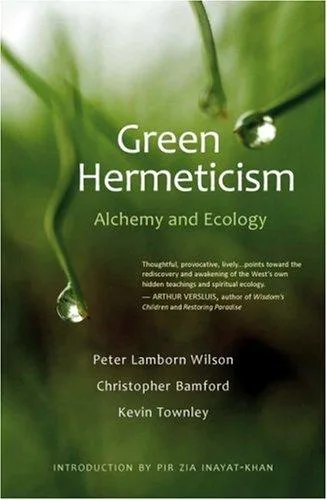
Peter Lamborn Wilson's 2010 book connects Hermeticism to ecological thought.
Peter Lamborn Wilson's 'Green Hermeticism' (2010) examines the historical and philosophical links between Hermetic traditions and ecological awareness. Wilson argues that core Hermetic principles, such as correspondence and the divine immanence in nature, offer a framework for understanding and relating to the natural world. The book moves beyond simple allegory, positing a direct spiritual connection between humanity and the earth, rooted in ancient mystical practices.
The text considers how these ancient ideas can inform contemporary environmental concerns. Wilson looks at figures and concepts within the Hermetic tradition, suggesting they provide insights into living in greater harmony with the planet. It is written for those interested in the esoteric underpinnings of ecological thought and the potential for spiritual renewal through a deeper engagement with nature. The book aims to illuminate a path for reconnecting with the earth.
This work situates itself within the broader Hermetic tradition, a philosophical and religious current that draws inspiration from the legendary figure Hermes Trismegistus. Hermeticism, particularly its Renaissance revival, emphasized themes of cosmic unity, the interconnectedness of all things, and the potential for human spiritual ascent through knowledge. 'Green Hermeticism' specifically focuses on how these core tenets can be interpreted through an ecological lens, suggesting that the reverence for nature found in many esoteric systems is not merely symbolic but points to a tangible spiritual reality inherent in the earth itself.
💡 Why Read This Book?
Read 'Green Hermeticism' to discover the mystical roots of ecological thought and uncover the hidden knowledge within ancient Hermetic traditions. This book is ideal for seekers of spiritual enlightenment, scholars of esoteric studies, and practitioners of the occult who wish to deepen their understanding of the divine within nature.
⭐ Reader Reviews
Honest opinions from readers who have explored this book.
❓ Frequently Asked Questions
What is the main focus of 'Green Hermeticism'?
The main focus is the intersection of Hermeticism and ecology, exploring the mystical connections between ancient esoteric traditions and modern environmental concerns.
Who is the intended audience for this book?
The intended audience includes spiritual seekers, scholars of esoteric studies, and practitioners of the occult who are interested in the mystical aspects of ecology.
What makes 'Green Hermeticism' unique?
Its unique blend of ancient Hermetic wisdom and contemporary ecological thought sets it apart, offering a fresh perspective on the spiritual dimensions of nature.
Are there any prerequisites for reading this book?
While not strictly necessary, a basic understanding of Hermeticism and ecological principles will enhance the reader's appreciation of the material.
How does 'Green Hermeticism' contribute to modern ecological thought?
It provides a mystical framework for understanding our relationship with nature, encouraging a deeper spiritual connection to the environment.
🔮 Key Themes & Symbolism
Hermetic Ecology
Wilson explores the deep connection between Hermeticism and ecology, revealing how ancient mystical traditions can inform modern ecological thought. This theme emphasizes the divine within nature and the spiritual dimensions of environmental stewardship.
Symbolism and Nature
The book studies the strong symbolism of Hermeticism, uncovering its hidden meanings and their relevance to our understanding of nature. Wilson's insights into these symbols offer a new way of seeing the natural world.
Mystical Traditions and Modernity
Wilson bridges the gap between ancient mystical traditions and contemporary concerns, showing how Hermetic wisdom can address modern ecological challenges. This theme highlights the timeless relevance of esoteric knowledge.
💬 Memorable Quotes
Direct passages from the work, attributed to the author.
“The mysteries of the earth are the mysteries of the self.”
— Wilson's exploration of the interconnection between humanity and nature, revealing the spiritual dimensions of ecology.
“The divine is hidden in the symbols of nature.”
— Wilson's insights into the symbolism of Hermeticism, revealing the hidden knowledge within the natural world.
💡 Key Ideas
Editorial paraphrase of the work's core concepts — not direct quotes.
Nature is the divine manifest in the material world.
This quote underscores the central theme of Hermetic ecology, emphasizing the sacredness of nature.
Hermeticism offers a path to ecological enlightenment.
This quote highlights the book's central argument, suggesting that ancient mystical traditions hold the key to modern ecological wisdom.
Ecological thought is a spiritual journey.
This quote emphasizes the mystical dimensions of ecological thought, urging readers to see environmental stewardship as a spiritual practice.
🌙 Esoteric Significance
Tradition
'Green Hermeticism' belongs to the Hermetic tradition, which emphasizes the divine within nature and the mystical dimensions of the natural world. This book is a significant contribution to Hermetic literature, offering a fresh perspective on the spiritual aspects of ecology.
Symbolism
Key symbols in the book include the elements (earth, air, fire, water) and the concept of the divine within nature. Wilson's exploration of these symbols reveals their hidden meanings and their relevance to modern ecological thought.
Modern Relevance
The book's emphasis on the mystical dimensions of ecology is highly relevant today, as modern practitioners seek to integrate spiritual practices into environmental stewardship. 'Green Hermeticism' offers a framework for understanding the divine within nature, encouraging a deeper spiritual connection to the environment.
👥 Who Should Read This Book
Beginners in esoteric studies will find 'Green Hermeticism' an accessible introduction to the mystical dimensions of ecology. Scholars of Hermeticism and occult practitioners will appreciate the book's deep dive into ancient traditions and their modern relevance. Spiritual seekers looking to deepen their connection to nature will find valuable insights and guidance within its pages. Environmental activists and ecologists interested in the spiritual aspects of their work will also benefit from Wilson's unique perspective.
📜 Historical Context
Written in an era of increasing environmental awareness, 'Green Hermeticism' emerged as a timely exploration of the mystical dimensions of ecology. Peter Lamborn Wilson's work was influential in bridging the gap between ancient Hermetic traditions and modern ecological thought, offering a unique perspective on the spiritual aspects of nature. The book's influence can be seen in the growing interest in ecospirituality and the integration of mystical traditions into contemporary environmental discourse.
📔 Journal Prompts
How does the concept of Hermetic ecology resonate with your own spiritual journey?
What symbols from nature hold personal significance for you, and how do they connect to the divine?
In what ways can ancient mystical traditions inform modern ecological thought?
How can you integrate spiritual practices into your environmental stewardship?
What insights from 'Green Hermeticism' can you apply to your understanding of the natural world?
🗂️ Glossary
Hermeticism
An esoteric tradition based on the teachings of Hermes Trismegistus, emphasizing the divine within nature and the mystical dimensions of the natural world.
Ecospirituality
The integration of spiritual practices into environmental stewardship, recognizing the sacredness of nature.
Symbolism
The use of symbols to represent abstract ideas or concepts, often with hidden or mystical meanings.
Ecological Thought
The consideration of the natural environment and its spiritual dimensions, emphasizing the interconnection between humanity and nature.
Divine Within Nature
The belief that the divine is manifest in the natural world, revealing the sacredness of nature.
This book appears in 3 collections
🔮 Readers Also Liked
Browse all →







From the “Hermeticism” Collection
View all →







More Free Alchemy & Hermeticism Books
View all →