The Art and Practice of Geomancy
 78
78

The Art and Practice of Geomancy
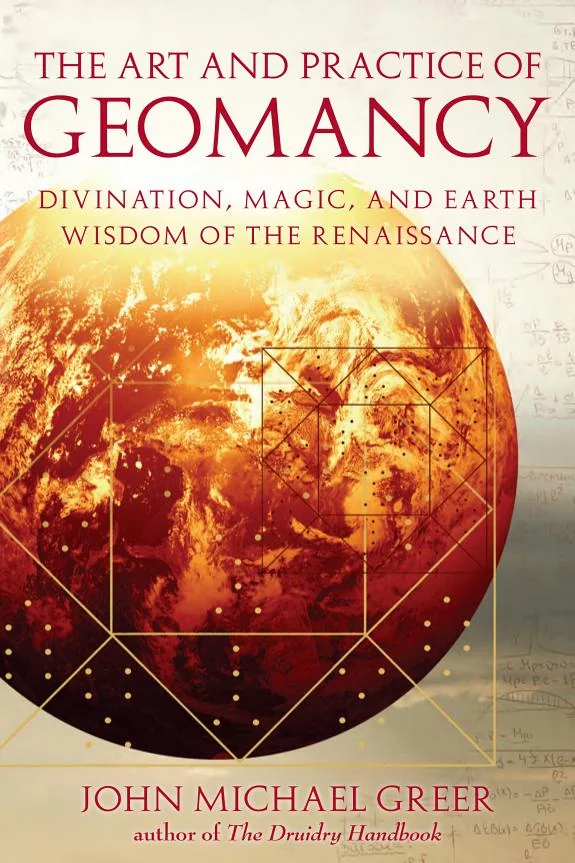
John Michael Greer’s "The Art and Practice of Geomancy" presents a system that feels both ancient and remarkably practical. Greer’s strength lies in his clear exposition of a divinatory method that can, at first glance, appear daunting. He navigates the generation of the sixteen figures and their subsequent interpretation with methodical precision. I found his explanation of the 'Reconciler' figure particularly insightful, as it often provides a crucial layer of nuance to a reading. However, the sheer number of correspondences – figures, houses, planets, signs – can still present a steep learning curve for absolute beginners, even with Greer’s guidance. The book occasionally feels like a dense manual rather than an exploratory text, which might deter those seeking a more intuitive approach. Yet, for the serious student of divination, the system’s logical structure and Greer’s thoroughness make this a valuable resource. It offers a unique perspective on cartomancy's more structured cousin, proving that divination can be as much about analytical skill as intuitive flair.
📝 Description
78
John Michael Greer's 2009 book explains geomancy, an earth divination system using random points to form figures.
This book serves as a practical guide to geomancy, an ancient form of divination. Geomancy, often called 'earth divination,' relies on interpreting patterns derived from random points. These points form sixteen primary figures, which are then assigned to astrological houses and correlated with planets. Greer breaks down this system into accessible steps, covering figure generation, significations, and their application to specific questions.
The work is suitable for those interested in divination methods beyond Tarot or astrology. It will appeal to students of Western esotericism and occultists looking to add to their practice. The book also offers value for researchers of historical divination techniques. Readers facing concrete life questions, such as career changes or relationship issues, will find direct applications for geomantic interpretation. Greer's approach demystifies the system for the modern practitioner.
Geomancy, with roots often traced to medieval Arab scholars, spread widely across Europe and the Islamic world. It was used for fortune-telling, weather prediction, and even medical diagnosis. Its structured, mathematical nature appealed to both scholars and mystics. Greer situates geomancy within Western magical traditions, highlighting its continuous appeal alongside other divinatory arts.
💡 Why Read This Book?
• You will learn a structured method for divination using dot patterns, as explained in the chapters detailing the generation of the sixteen geomantic figures, providing a unique analytical tool for decision-making. • You will gain insight into the historical development of geomancy, understanding its place within medieval Islamic and European occult traditions, as discussed in the historical context sections. • You will be able to ask specific questions about practical matters like lost objects or career changes and receive divinely-informed answers through the systematic interpretation of geomantic charts, as demonstrated throughout the practice sections.
⭐ Reader Reviews
Honest opinions from readers who have explored this book.
❓ Frequently Asked Questions
What is geomancy and how does it differ from other divination methods?
Geomancy, or 'earth divination,' is an ancient system that generates sixteen figures from random patterns of dots. Unlike methods relying on cards or celestial movements, it uses a mathematical and symbolic approach derived from earth patterns to answer questions, offering a unique, structured form of insight.
How does John Michael Greer make geomancy accessible?
Greer breaks down the complex process of geomancy into clear, sequential steps. He meticulously explains the generation of figures, their planetary rulers, and their placement within the twelve houses, making the system comprehensible for modern readers.
What kind of questions can geomancy answer?
Geomancy is versatile, capable of addressing a wide range of queries. It can be used for mundane concerns like finding lost items, predicting weather, assessing job prospects, or understanding relationships, as well as more esoteric matters.
Is prior knowledge of astrology or occultism necessary to learn geomancy from this book?
While some familiarity with astrological concepts (like planets and houses) can be helpful, Greer’s book is designed to teach geomancy from its foundations. He explains the necessary correspondences within the text, making it accessible even to those new to esoteric systems.
When was 'The Art and Practice of Geomancy' first published?
John Michael Greer's "The Art and Practice of Geomancy" was first published on March 1, 2009. This edition offers a modern perspective on a divinatory art that has been practiced for centuries.
What are the basic components of a geomantic reading?
A geomantic reading involves generating four initial figures based on random points, which then generate twelve more figures. These are placed in the twelve astrological houses, and their interpretation, along with the presiding planets and signs, provides the answer.
🔮 Key Themes & Symbolism
The Sixteen Geomantic Figures
The core of geomancy lies in the sixteen primary figures, each a unique combination of four lines (representing yin/yang, or passivity/activity) derived from a process of dotting. These figures, such as Fortuna, Populus, and Via, are not arbitrary but possess distinct symbolic meanings and planetary associations. Greer meticulously details how to generate these figures and understand their inherent natures, which form the building blocks for any geomantic interpretation or question posed.
Geomantic Houses and Interpretation
Similar to astrology, geomancy employs twelve 'houses' that represent different areas of life and inquiry, from self and possessions to enemies and the end of the matter. The generated geomantic figures are placed within these houses, creating a unique chart. The book emphasizes understanding how figures interact across houses, their rulers, and the overall pattern to derive a coherent and actionable answer to the diviner's question.
Practical Divination for Daily Life
Greer positions geomancy not just as an esoteric curiosity but as a practical tool for navigating everyday life. The book provides examples and guidance for using geomancy to answer questions about lost objects, health, finances, relationships, and even legal matters. This focus on utility makes the ancient art relevant and accessible for modern individuals seeking guidance and clarity.
Historical Roots and Esoteric Lineage
The work situates geomancy within its historical context, acknowledging its origins and spread through medieval Islamic and European cultures. Greer connects geomancy to broader Western esoteric traditions, highlighting its place alongside Hermeticism and other magical systems. This grounding provides practitioners with an understanding of the art's heritage and its place in the lineage of divinatory practices.
💬 Memorable Quotes
Direct passages from the work, attributed to the author.
“The art of geomancy is, in fact, the art of asking the right question.”
— This highlights that the accuracy of a geomantic reading is heavily dependent on the clarity and specificity of the question being posed. A well-formulated question ensures that the resulting figures will provide a relevant and meaningful answer.
“Geomancy is a system of divination, and like all divinatory systems, it is a tool for decision making.”
— This interpretation underscores the practical application of geomancy. It's not merely about predicting the future but about gaining insight to make informed choices and navigate life's challenges effectively.
“The sixteen geomantic figures are derived from patterns of dots, representing simple binary choices.”
— This statement points to the fundamental mechanism of geomancy. The figures are generated through a process that boils down to yes/no or active/passive choices, reflecting a core principle of duality found in many esoteric systems.
“Each geomantic figure has a planetary ruler and is associated with one or more zodiacal signs.”
— This explains a crucial layer of geomantic interpretation, linking the figures to the established astrological correspondences. Understanding these connections adds depth and nuance to reading the geomantic chart.
“The houses in a geomantic chart function much like the houses in an astrological chart.”
— This analogy helps readers familiar with astrology grasp the structural organization of a geomantic reading. The houses provide context for interpreting the meaning of the figures placed within them, addressing specific life domains.
🌙 Esoteric Significance
Tradition
Geomancy is firmly rooted in the Western Esoteric Tradition, particularly within the Hermetic and Medieval Islamic magical lineages. It shares conceptual space with astrology due to its use of planets and houses, and with Kabbalah through its symbolic interpretations and potential for numerical gematria. Greer's approach emphasizes its practical application and logical structure, fitting within a modern revival of foundational esoteric arts that seek to integrate intellectual understanding with practical results.
Symbolism
The core symbolism lies in the sixteen geomantic figures themselves, each a unique combination of four lines representing binary states. Figures like 'Puer' (The Boy) often signify beginnings, youthful energy, or a male questioner, while 'Puella' (The Girl) can represent beginnings, receptivity, or a female questioner. 'Fortuna Major' (Greater Fortune) signifies great good fortune and success, often linked to positive outcomes and expansion, while 'Fortuna Minor' (Lesser Fortune) suggests lesser good fortune, often related to movement or travel.
Modern Relevance
Contemporary practitioners of Western esotericism, particularly those interested in divination beyond Tarot, find Greer's work invaluable. Modern occultists and students of Hermeticism draw upon geomancy for its structured approach to problem-solving and decision-making. Its logical framework also appeals to those who appreciate the analytical side of magic and divination, integrating it into personal magical practice or comparative studies of occult systems.
👥 Who Should Read This Book
• Beginning students of Western esotericism seeking to learn a complete divinatory system from its foundations, benefiting from Greer's structured presentation of figures, houses, and interpretation. • Experienced diviners looking to expand their repertoire beyond Tarot or astrology, gaining a logical and analytical method for answering specific questions about practical life matters. • Researchers of magical history and comparative religion interested in understanding the practical application and historical spread of a significant medieval divinatory art.
📜 Historical Context
When John Michael Greer's "The Art and Practice of Geomancy" was first published in 2009, it entered a landscape where divination was experiencing a resurgence, albeit often dominated by Tarot and astrology. Geomancy, with its roots stretching back to medieval Islamic scholars like Abu Mashar al-Balkhi (c. 787–886 CE) and its widespread adoption in Europe by figures such as William of Digby in the 14th century, represented a more structured, mathematical approach to divination. While contemporary occultists like Aleister Crowley engaged with various divinatory arts, geomancy often remained in the shadow of more popular methods. Greer's work aimed to revive and clarify this ancient system, presenting it with the same methodical rigor applied to other Western esoteric traditions he has explored, such as Druidry. The book’s reception has been positive among practitioners seeking a robust, logical system for divination, distinct from more intuitive or symbolic methods.
📔 Journal Prompts
The process of generating the sixteen geomantic figures, and your personal experience with it.
The 'Reconciler' figure in a recent geomantic reading and its implications.
The planetary ruler of the 'Via' figure and what it signifies for your current path.
Applying the interpretation of the 'Populus' figure to a question about community or group dynamics.
The relationship between the houses in a geomantic chart and the areas of your life they represent.
🗂️ Glossary
Geomancy
An ancient divinatory art that uses patterns generated from random points (dots) to create sixteen figures, which are then interpreted to answer specific questions about the past, present, or future.
Geomantic Figure
One of the sixteen symbolic patterns created in geomancy, each derived from combinations of lines representing binary states (e.g., single or double dots) and possessing unique meanings and associations.
House
In geomancy, analogous to astrological houses, these represent specific areas of life or inquiry (e.g., self, finances, relationships, enemies) into which the geomantic figures are placed for interpretation.
Planetary Ruler
Each geomantic figure is associated with one or more planets (Sun, Moon, Mercury, Venus, Mars, Jupiter, Saturn), which influence its meaning and interpretation within a geomantic chart.
The Reconciler
A specific geomantic figure that often appears in a reading and acts to harmonize or clarify the overall meaning of the chart, providing a crucial point of synthesis for the interpretation.
Via
One of the sixteen geomantic figures, often associated with Mercury, representing a path, journey, or means of communication, and indicating how something might be accomplished.
Fortuna Minor
A geomantic figure associated with Jupiter or Mars, often indicating lesser good fortune, movement, or the completion of a journey, suggesting a less potent but still positive outcome.
This book appears in 1 collection
🔮 Readers Also Liked
Browse all →








From the “Geomancy” Collection
View all →






More Free Occult Philosophy Books
View all →