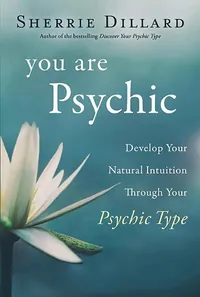
The Anima/Animus (The 4 Jungian Archetypes)
 82
82

The Anima/Animus (The 4 Jungian Archetypes)
Personality Press's "The Anima/Animus (The 4 Jungian Archetypes)" offers a functional, if minimalist, approach to engaging with Jungian thought. As a composition notebook, its primary strength lies in its direct utility for journaling and annotation, providing a structured space for personal exploration of complex archetypal dynamics. The inclusion of the Anima and Animus, fundamental to Jung's later work, is commendable. However, the brevity of the provided blurb, which conflates the notebook's function with a deep exposition of Jungian theory, presents a limitation. The original blurb's description of the Anima/Animus as "the social part of ourselves" is a rather reductive interpretation of Jung's concept of the unconscious contra-sexual archetype. A more nuanced engagement with Jung's ideas, perhaps through brief conceptual explanations within the notebook itself, would have elevated its value beyond a mere writing surface. It serves its purpose as a journal but offers little interpretative guidance on its own.
📝 Description
82
Published in December 2019, this notebook examines Carl Jung's Anima and Animus archetypes.
This notebook is designed for personal study of the Jungian concepts of the Anima and Animus. It acknowledges these archetypes as the internal representation of the opposite gender within the psyche, a duality central to human experience. The book provides 120 college-ruled pages, suitable for journaling and reflection on these psychological dynamics. It is intended for those studying Carl Jung's theories, especially archetypal psychology. Students, therapists, and enthusiasts can use it to record thoughts on the Anima and Animus, or to explore personal inner masculine and feminine dynamics. The format encourages documenting one's engagement with Jung's ideas on the 'divine couple'.
This work engages with Carl Jung's analytical psychology, a branch of depth psychology that sought to understand the unconscious mind. Jung's theories, particularly his ideas on archetypes and the collective unconscious, diverged from prevailing psychoanalytic and behaviorist schools. The focus on the Anima and Animus places this text within the ongoing study of Jungian thought, which considers the integration of internal opposites as a path to psychological wholeness.
💡 Why Read This Book?
• Gain a dedicated space to personally map the dynamics of your Anima and Animus, directly engaging with concepts Jung explored. • Utilize a tool specifically designed for reflecting on the "divine couple" within, fostering self-understanding beyond generic journaling. • Engage with Jungian psychology through a practical, physical medium, providing a tangible anchor for abstract concepts first published in 2019.
⭐ Reader Reviews
Honest opinions from readers who have explored this book.
❓ Frequently Asked Questions
What are the Anima and Animus according to Carl Jung?
In Jungian psychology, the Anima is the unconscious feminine side of a man's psyche, while the Animus is the unconscious masculine side of a woman's psyche. They represent internalized images of the opposite sex and influence relationships and projections.
What is the significance of the "divine couple" in Jungian psychology?
The "divine couple" refers to the union of the Anima and Animus within an individual. Integrating these opposing psychic forces is considered crucial for achieving psychological wholeness and advancing the process of individuation.
Who was Carl Jung and why is he important?
Carl Jung (1875-1961) was a Swiss psychiatrist and psychoanalyst who founded analytical psychology. He is renowned for his theories on archetypes, the collective unconscious, introversion/extroversion, and the process of individuation.
What is the purpose of a composition notebook in relation to psychological study?
A composition notebook, like this one focusing on the Anima/Animus, provides a private space for students and practitioners to record thoughts, observations, and reflections on complex psychological theories, aiding in personal integration and understanding.
When was Personality Press's "The Anima/Animus" first published?
Personality Press's edition of "The Anima/Animus (The 4 Jungian Archetypes)" was first published on December 7, 2019.
How does this notebook relate to Jung's ideas on personality?
The notebook is a tool for exploring Jung's archetypes, specifically the Anima and Animus, which he believed were fundamental to understanding the psyche and how individuals relate to the world and their own inner landscape.
🔮 Key Themes & Symbolism
Anima and Animus Dynamics
This work centers on the Jungian concepts of the Anima and Animus, the unconscious contrasexual aspects of the psyche. The Anima represents the feminine principle within the male psyche, while the Animus embodies the masculine principle within the female psyche. Understanding these archetypes is presented as key to navigating internal psychological landscapes and external interpersonal relationships, particularly the projection of these inner figures onto others.
The "Divine Couple" Concept
The "divine couple" signifies the integration of the Anima and Animus, representing the union of masculine and feminine energies within the individual. This integration is a crucial step in the process of individuation, Jung's term for psychological maturation. The notebook provides a space to contemplate this inner union and its manifestation in one's life and perceptions.
Archetypal Psychology as a Tool
This book functions as a practical application of Carl Jung's archetypal psychology. It encourages users to engage directly with Jung's ideas, moving beyond theoretical understanding to personal application. By providing structured pages, it facilitates the exploration of archetypes as fundamental patterns of the human psyche that influence behavior and consciousness.
Self-Reflection and Journaling
The primary utility of this publication is as a journal. It offers 120 college-ruled pages designed for introspection on the Anima/Animus concepts. The act of writing and documenting personal insights serves as a method for processing complex psychological material, fostering self-awareness and aiding in the integration of unconscious elements into conscious experience.
💬 Memorable Quotes
Direct passages from the work, attributed to the author.
“120 College-Ruled Pages”
— This specific detail emphasizes the practical, functional nature of the item, designed for extensive writing and detailed personal exploration of psychological concepts.
“Soft and professional matte cover”
— This description points to the tactile and aesthetic qualities of the notebook, suggesting a serious, accessible tool for personal study rather than a purely academic text.
“Great personalized and specific gift for people you love and care about”
— This suggests the notebook is intended as a thoughtful present for individuals engaged in self-exploration or psychological study, particularly those interested in Jungian concepts.
“Carl Jung is one of the earliest and most well-known psychologists of his times.”
— This statement contextualizes the book's subject matter within the broader history of psychology, identifying Carl Jung as a foundational figure whose ideas remain relevant.
💡 Key Ideas
Editorial paraphrase of the work's core concepts — not direct quotes.
The social part of ourselves that represent the masculine and feminine parts of ourselves, making the divine couple...
This paraphrased concept highlights the core idea that the Anima and Animus are internalized representations of gendered energies, crucial for forming a balanced inner self, the 'divine couple'.
🌙 Esoteric Significance
Tradition
This work draws directly from the field of analytical psychology, founded by Carl Jung. While not strictly an esoteric tradition in the vein of Hermeticism or Kabbalah, Jung's exploration of archetypes, the collective unconscious, and the individuation process shares significant conceptual overlap with esoteric philosophies. His work can be seen as a bridge, translating profound psychological and spiritual concepts into a modern, accessible framework, often interpreted within esoteric circles.
Symbolism
The core symbolism revolves around the Anima and Animus as representations of the contrasexual soul-image. Within a more esoteric context, these can be viewed as divine feminine and masculine principles. The 'divine couple' symbolizes the alchemical union of opposites (coniunctio), a fundamental motif in Western esotericism aimed at achieving psychic wholeness and spiritual integration.
Modern Relevance
Contemporary thinkers and practitioners in depth psychology, transpersonal psychology, and various forms of modern Western esotericism continue to engage with Jung's concepts of the Anima and Animus. Practices such as shadow work, dream analysis, and active imagination often incorporate these archetypal dynamics. The enduring appeal lies in their utility for understanding relational patterns and the inner life.
👥 Who Should Read This Book
['• Students of Jungian psychology seeking a dedicated journal to document their exploration of the Anima and Animus archetypes.', '• Individuals interested in self-discovery and integrating their internal masculine and feminine energies, utilizing a structured reflection tool.', "• Enthusiasts of depth psychology and esoteric studies looking for a practical notebook to apply theoretical concepts from Carl Jung's work."]
📜 Historical Context
The conceptual framework of this notebook is rooted in the mid-20th century development of analytical psychology, spearheaded by Carl Jung. Jung, initially a collaborator with Sigmund Freud, diverged significantly by proposing the existence of a collective unconscious and universal archetypes. The Anima and Animus are central to his theory of psychological integration, published extensively in works like "Psychological Types" (1921) and later elaborations. This notebook's focus implicitly engages with the enduring influence of Jungian thought, which offered an alternative to Freudian psychoanalysis and later schools like behaviorism. While Jung was a prolific writer and lecturer, this particular publication, appearing in 2019, serves as a modern, accessible tool for engaging with his ideas, rather than a primary source from his era. Its existence reflects the continued academic and popular interest in Jungian concepts, which found resonance among thinkers exploring mythology, religion, and comparative psychology.
📔 Journal Prompts
Reflect on the Anima projection in your relationships.
Document manifestations of your internal Animus.
Consider the "divine couple" within your psyche.
Explore symbols representing your Anima or Animus.
Journal about Carl Jung's contribution to understanding personality.
🗂️ Glossary
Anima
In Jungian psychology, the unconscious feminine aspect of the male psyche. It influences a man's emotions, relationships, and his perception of women.
Animus
In Jungian psychology, the unconscious masculine aspect of the female psyche. It influences a woman's logic, opinions, and her perception of men.
Archetype
Universal, archaic patterns and images that derive from the collective unconscious and are the psychic counterpart of a biological feature. Examples include the Mother, the Hero, the Anima, and the Animus.
Collective Unconscious
A concept introduced by Carl Jung, referring to the deepest layer of the unconscious psyche, containing inherited structures and universal patterns shared by all humanity.
Individuation
The lifelong psychological process of differentiation of the self, by which one integrates the conscious and unconscious aspects of one's personality.
Divine Couple
A concept referring to the union of the Anima and Animus within an individual's psyche, symbolizing the integration of masculine and feminine principles.
Personality Press
The publisher of this notebook, first releasing this edition in 2019, indicating a modern approach to disseminating psychological and self-help literature.
This book appears in 1 collection
🔮 Readers Also Liked
Browse all →









From the “Archetypes” Collection
View all →



More Free Occult Philosophy Books
View all →