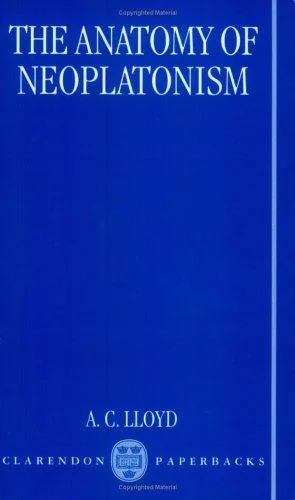
The Anatomy of Neoplatonism
 83
83

The Anatomy of Neoplatonism
A. C. Lloyd's "The Anatomy of Neoplatonism" provides a welcome, if occasionally dry, examination of a philosophical tradition often obscured by its later mystical interpretations. Lloyd excels in detailing the logical architecture of Plotinus's thought, particularly his articulation of the One as the source from which all existence emanates. The clarity with which the hypostases—Intellect (Nous) and Soul—are explained is a significant strength. However, the text can feel overly abstract, sometimes at the expense of the vibrant, transformative potential that Neoplatonism offered its adherents. For instance, the discussion of the ascent of the soul, while accurate, lacks the evocative power one might find in primary sources. Nevertheless, for those seeking a rigorous breakdown of Neoplatonic metaphysics, this work serves as a valuable, if demanding, resource. It is an essential text for understanding the philosophical underpinnings of much subsequent esoteric and theological discourse.
📝 Description
83
A. C. Lloyd's The Anatomy of Neoplatonism dissects the philosophical system that flourished in the Roman Empire.
This work focuses on the logical structure and metaphysical arguments of Neoplatonism, a philosophical system that developed in the Roman Empire. It traces the origins of Neoplatonism and its lasting effect on Western thought. Lloyd examines the core ideas and the evolution of this tradition, paying attention to the systematic nature of its metaphysics.
The book is written for students of philosophy and ancient thought who have some familiarity with philosophical concepts. It is particularly useful for those interested in the intellectual background of early Christianity and medieval mysticism. Lloyd's analysis clarifies the systematic approach Neoplatonism took to metaphysical questions.
Neoplatonism emerged in the 3rd century CE from a scholarly environment steeped in Platonic philosophy and Hellenistic traditions. Thinkers like Plotinus synthesized Platonic ideas with Stoic and Aristotelian elements to create a comprehensive metaphysical system. This intellectual movement provided a framework for understanding divine reality and the human soul's place within it, influencing later mystical and theological traditions that sought union with the ultimate source.
💡 Why Read This Book?
• Gain a precise understanding of the Neoplatonic concept of the One, the ultimate source of reality, as expounded by Plotinus. • Grasp the hierarchical structure of reality, specifically the procession of the hypostases like Intellect (Nous) and Soul, as detailed in the text. • Appreciate the Neoplatonic view of evil as a privation, a concept that underpins many subsequent metaphysical systems and esoteric traditions.
⭐ Reader Reviews
Honest opinions from readers who have explored this book.
❓ Frequently Asked Questions
What is the primary focus of "The Anatomy of Neoplatonism"?
The book meticulously dissects the core philosophical system of Neoplatonism, particularly the metaphysics and epistemology developed by Plotinus and his followers in the Roman Empire.
Who is considered the central figure in the Neoplatonism discussed by Lloyd?
The work places significant emphasis on Plotinus, the 3rd-century CE philosopher whose Enneads are a foundational text for understanding Neoplatonism.
What philosophical tradition influenced Neoplatonism?
Neoplatonism draws heavily from the philosophy of Plato, but it also synthesizes elements from Stoicism and Aristotelianism, creating a distinct metaphysical framework.
How does Neoplatonism explain the origin of the world?
Neoplatonism posits an emanationist cosmology, where all reality originates from an ultimate, ineffable source called the One, through a series of descending hypostases.
What is the concept of the 'One' in Neoplatonism?
The One is the supreme, transcendent principle of Neoplatonic metaphysics, beyond being and comprehension, from which all existence emanates.
What role does the soul play in Neoplatonism?
The soul is seen as a mediating principle between the intelligible realm and the material world, capable of ascending back to its divine source through philosophical contemplation.
🔮 Key Themes & Symbolism
The Ineffable One
Central to Neoplatonism is the concept of the One, the ultimate reality that transcends all description and comprehension. Lloyd meticulously details how Plotinus and subsequent thinkers conceived of this absolute principle, not as a being among beings, but as the source from which all multiplicity and existence flow through a process of emanation. Understanding the One is crucial for grasping the entire Neoplatonic metaphysical edifice, as it represents the ultimate goal of philosophical and spiritual pursuit: return to the source.
Emanation and Hierarchy
The book explains the Neoplatonic cosmology of emanation, where reality unfolds in a descending hierarchy of hypostases from the One. This includes the Intellect (Nous), which contains the Platonic Forms, and the Soul, which bridges the intelligible and material realms. Lloyd traces the logical necessity of this structure, illustrating how each level derives its existence from the one above it, a concept vital for understanding the ordered universe within Neoplatonic thought.
The Ascent of the Soul
A key theme explored is the Neoplatonic path of the soul's return to its divine origin. Lloyd examines the philosophical practices and intellectual disciplines advocated by Neoplatonists to achieve this spiritual ascent. This involves purification, contemplation of the Forms within Intellect, and ultimately, a mystical union with the One, often described as an ecstatic or ineffable experience.
Evil as Privation
The work addresses the Neoplatonic solution to the problem of evil. Rather than positing evil as a positive force, Neoplatonism, as analyzed by Lloyd, defines it as a privation or absence of good, a falling away from the divine source. This understanding of evil as a lack of being is fundamental to maintaining the ultimate goodness and unity of the cosmos emanating from the One.
💬 Memorable Quotes
Direct passages from the work, attributed to the author.
“The One is not a being; it is beyond being.”
— This statement captures the radical transcendence of the ultimate principle in Neoplatonism. It signifies that the source of all reality is not to be categorized within the existing world but exists in a state prior to and independent of all forms of being.
“Intellect (Nous) contains the Forms.”
— This highlights the role of the second hypostasis in Neoplatonism. The Intellect is the realm where the perfect, unchanging archetypes or Forms of all things reside, serving as the blueprint for the material world.
“The soul's journey is a return to the source.”
— This captures the teleological aspect of Neoplatonism, emphasizing the soul's inherent connection to the divine and its potential for spiritual homecoming through philosophical practice and contemplation.
“Procession is from the One, but the soul seeks ascent back to it.”
— This succinctly outlines the dynamic of Neoplatonic metaphysics: reality flows outward from the ultimate source, but the spiritual aspirant's goal is to reverse this process, moving upward towards unity with that source.
💡 Key Ideas
Editorial paraphrase of the work's core concepts — not direct quotes.
Evil is the absence of good.
This paraphrased concept defines evil not as an active force but as a deficiency, a lack of the presence of the good that emanates from the One. It is a consequence of matter's distance from the divine source.
🌙 Esoteric Significance
Tradition
Neoplatonism serves as a foundational pillar for many Western esoteric traditions, including Hermeticism, Gnosticism, and certain strains of Kabbalah and Christian mysticism. Lloyd's work, by detailing the structure of Plotinian metaphysics, provides the intellectual scaffolding for these later developments. It offers a systematic worldview that posits a transcendent divine source and a hierarchical reality, concepts that are central to esoteric cosmology and the path of spiritual realization.
Symbolism
Key symbols within Neoplatonism, as elucidated by Lloyd, include the 'One' itself, representing ultimate unity and ineffability, and the 'Intellect' (Nous), often symbolized by divine Mind or encompassing vision, which holds the archetypal Forms. The 'emanation' process can be visualized as light radiating from a source or water flowing from a spring, symbolizing the necessary outpouring of existence from the divine, a motif frequently employed in esoteric symbolism.
Modern Relevance
Contemporary thinkers and practitioners in fields ranging from comparative religion to depth psychology and integral philosophy draw upon Neoplatonic concepts. The emphasis on interiority, the ascent of consciousness, and the idea of a unified source continue to inform spiritual philosophies and contemplative practices. Modern interpretations often explore Neoplatonism's psychological implications, seeing the hypostases as stages of consciousness or archetypal forces within the human psyche.
👥 Who Should Read This Book
• Students of Ancient Philosophy: Those seeking a precise, structured understanding of the philosophical underpinnings of Neoplatonism beyond introductory texts. • Comparative Religion Scholars: Researchers interested in the intellectual lineage connecting Platonic thought to early Christian theology and subsequent mystical traditions. • Aspiring Metaphysicians: Individuals drawn to systematic philosophical inquiries into the nature of reality, consciousness, and the divine.
📜 Historical Context
A. C. Lloyd's "The Anatomy of Neoplatonism" emerges from a scholarly tradition deeply engaged with understanding the complex philosophical systems of late antiquity. Published in 1998, it builds upon decades of Neoplatonic scholarship, particularly following the influential work of figures like Pierre Hadot and Werner Beierwaltes. The book's era saw continued interest in the integration of Platonic thought with Christian theology, a path explored by figures like Augustine in the 4th century, and also a resurgence in the study of Neoplatonism’s influence on Renaissance Hermeticism. Lloyd's work engages with the logical rigor of Neoplatonism, offering a counterpoint to interpretations that might overemphasize its mystical or esoteric dimensions without grounding them in philosophical argument. It navigates a landscape populated by scholars who often debate the precise nature of Plotinus's system and its relationship to earlier Greek philosophy, such as Stoicism.
📔 Journal Prompts
The Neoplatonic concept of the One as transcendent.
The structure of the hypostases: Intellect, Soul, and Matter.
The soul's path of ascent and return.
Evil as a privation of good in the Neoplatonic system.
Plotinus's view on the relationship between the One and the many.
🗂️ Glossary
The One
The ultimate, transcendent, and ineffable source of all reality in Neoplatonism, beyond being and comprehension.
Hypostasis
A fundamental reality or level of being within the Neoplatonic hierarchy, such as Intellect (Nous) and Soul.
Intellect (Nous)
The second hypostasis in Neoplatonism, the divine mind that contains the Platonic Forms and contemplates the One.
Soul
The third hypostasis, mediating between the intelligible realm and the material world, possessing both intellectual and generative capacities.
Emanation
The Neoplatonic doctrine that all reality flows necessarily from the One in a series of descending levels or hypostases.
Privation
In Neoplatonism, evil is understood not as a positive force but as an absence or lack of good, a deficiency of being.
Ascent
The Neoplatonic spiritual and philosophical journey of the soul returning to its divine origin, the One.
🔮 Readers Also Liked
Browse all →




![Tales of Mystery and Imagination [25 stories]](/img/thumb/tales-of-mystery-and-imagination-25-stories-edgar-allan-poe-202357.webp)




More by A. C. Lloyd
All books →

More Free Occult Philosophy Books
View all →