Lucid Dreaming
 79
79

Lucid Dreaming
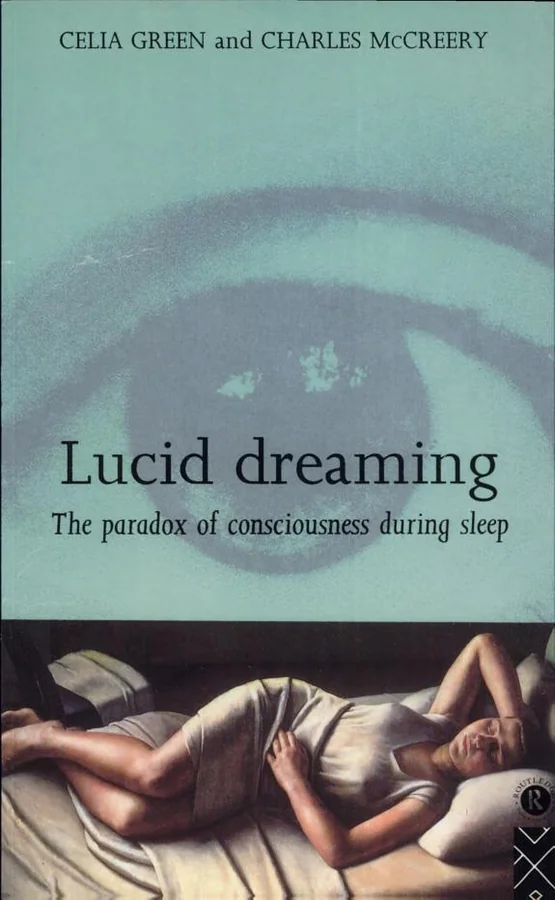
Celia Green and Charles McCreery's 'Lucid Dreaming' presents a measured, almost clinical, approach to a subject often shrouded in esotericism. The work's strength lies in its systematic cataloging of experiences, treating lucidity not as a mystical gift but as a verifiable psychological phenomenon. A passage detailing the distinct visual clarity and tactile sensations often reported in lucid states offers a concrete anchor for the reader. However, the book occasionally feels detached, lacking the vibrant experiential detail that might fully convey the emotional charge alluded to in its premise. It's a solid primer, but one wishes for a touch more of the elation the authors themselves describe.
📝 Description
79
Celia Green and Charles McCreery published their research on lucid dreaming in 1976.
Lucid dreaming is the awareness of dreaming while the dream is happening. These experiences often feel intensely real and can evoke strong emotions, sometimes even euphoria. Green and McCreery's work examines this state of consciousness. The book is suitable for both newcomers to the idea of dream lucidity and those already involved in parapsychology or altered states research. It offers a clear introduction for beginners and detailed material for experienced researchers.
The text distinguishes lucid dreaming from ordinary dreams. It discusses the awareness experienced within the dream state, the possibility of directing dream events, and the unique subjective characteristics of these occurrences. The authors move beyond simple personal stories to a more organized analysis of the phenomenon.
While formal investigation of lucid dreaming gained momentum in the 20th century, the concept has historical links to various mystical traditions. This book contributes to understanding subjective experience, situating it within a lineage of inquiry into the mind's latent capacities, separate from purely materialist viewpoints. It addresses the mind's potential for extraordinary states of awareness.
💡 Why Read This Book?
• Understand the distinct nature of lucid dreams, differentiating them from regular dreams through the specific concept of 'dream-awareness' as discussed by Green and McCreery. • Explore the history of consciousness studies by contextualizing lucid dreaming within early 21st-century research, offering a specific perspective from the 2013 publication date. • Gain practical insights into the subjective qualities of lucidity, such as the 'strikingly realistic' sensory experiences, which can inform personal dream recall and interpretation.
⭐ Reader Reviews
Honest opinions from readers who have explored this book.
❓ Frequently Asked Questions
What is the primary difference between lucid dreams and ordinary dreams according to Green and McCreery?
The primary difference is the dreamer's awareness that they are dreaming. This awareness, as detailed in the book, transforms the dream into a lucid experience, often marked by heightened realism and emotional intensity.
When was 'Lucid Dreaming' by Celia Green and Charles McCreery first published?
The book 'Lucid Dreaming' by Celia Green and Charles McCreery was first published on November 26, 2013.
Who is the intended audience for 'Lucid Dreaming'?
The book is intended for both general readers interested in the phenomenon of lucid dreaming and specialists in fields like psychology or parapsychology.
Does the book offer techniques for inducing lucid dreams?
While the book focuses on describing and analyzing the experience of lucid dreaming, it lays the groundwork for understanding the phenomenon, which can indirectly inform personal practice.
What kind of emotional experiences are associated with lucid dreams in this book?
The book describes lucid dreams as potentially being emotionally charged, sometimes to the point of elation, distinguishing them from the more typical emotional range of ordinary dreams.
What is the significance of the authors Celia Green and Charles McCreery in the field?
Celia Green and Charles McCreery are noted researchers in the field of consciousness studies, with a particular focus on anomalous experiences, including dreams and out-of-body phenomena.
🔮 Key Themes & Symbolism
The Nature of Dream Awareness
This theme centers on the critical shift from passive dreaming to active lucidity. The work explores how a dreamer can attain the meta-cognitive state of knowing they are dreaming, a fundamental departure from ordinary dream states. It examines the qualities of this awareness, distinguishing it from waking consciousness while highlighting its potential for introspection and exploration within the dreamscape.
Experiential Realism and Emotion
A core aspect discussed is the heightened sensory and emotional fidelity of lucid dreams. Unlike the often fragmented or nonsensical nature of regular dreams, lucid experiences are frequently described as strikingly realistic, engaging multiple senses with clarity. The text also addresses the profound emotional impact, including sensations of elation, which differentiate these states from typical dream affect.
Research and Classification
The book contributes to the systematic study of lucid dreaming, aiming to classify and understand the phenomenon through observation and analysis. It frames lucid dreaming as a subject worthy of serious inquiry, moving it from the area of folklore into a domain of psychological and experiential research, offering a structured approach to its study.
Consciousness and the Dream State
This theme investigates the boundaries of consciousness as explored through the lens of lucid dreaming. It considers how these dreams challenge conventional notions of reality and selfhood by allowing conscious awareness within a subjective, internally generated world. The work posits lucid dreaming as a unique window into the architecture of human consciousness.
💬 Memorable Quotes
Direct passages from the work, attributed to the author.
“Lucid dreams are dreams in which a person becomes aware that they are dreaming.”
— This definition establishes the book's central premise, highlighting the critical element of self-awareness as the distinguishing factor that transforms a standard dream into a lucid one, setting the stage for further exploration.
“They are different from ordinary dreams... because lucid dreams are often strikingly realistic and may be emotionally charged to the point of elation.”
— This expands on the definition, emphasizing the qualitative differences. The realism and intense emotional states, particularly elation, are presented as hallmarks that set lucid dreams apart from typical dream experiences.
“Celia Green and Charles McCreery have written a unique introduction to lucid dreams that will appeal to the specialist and general reader alike.”
— This statement positions the book as a comprehensive yet accessible overview, suggesting it bridges the gap between academic research and public interest in the subject of lucid dreaming.
“The authors explore the experience of lucid dreaming...”
— This indicates the book's focus on the subjective, first-person perspective of lucid dreaming, promising an in-depth examination of what it is like to have such an experience.
“awareness that they are dreaming”
— This core concept underscores the metacognitive aspect of lucid dreaming, where the dreamer achieves a state of conscious recognition within the dream itself.
🌙 Esoteric Significance
Tradition
While not explicitly aligning with a single esoteric lineage, this work appeals to traditions that explore altered states of consciousness for spiritual or self-knowledge purposes, such as certain Hermetic or Gnostic practices. It departs from strict dogma by focusing on empirical observation of a phenomenon, framing lucidity as an inherent capacity of consciousness rather than a bestowed grace or esoteric secret.
Symbolism
The primary 'symbol' is the dream itself, acting as a malleable reality plane. The 'awareness' within the dream is the key motif, representing the spark of the divine or higher self that can illuminate the inner world. The elation described functions as a symbol of liberation from ordinary waking constraints, hinting at a transcendent potential within the human psyche.
Modern Relevance
Contemporary practices in lucid dreaming, often integrated into mindfulness, meditation, and even therapeutic contexts, draw implicitly or explicitly on the foundational research presented in works like this. Thinkers exploring consciousness hacking, biofeedback, and the nature of subjective reality continue to engage with the systematic cataloging of dream experiences that Green and McCreery provide.
👥 Who Should Read This Book
• Aspiring dream explorers seeking a structured understanding of lucid dreaming, moving beyond anecdotal accounts to a research-informed perspective. • Students of consciousness and psychology interested in the empirical study of subjective experience and altered states of awareness. • Individuals curious about the potential for self-awareness and exploration within the dream state, looking for a clear introduction to the phenomenon.
📜 Historical Context
Published in 2013, 'Lucid Dreaming' emerges from a lineage of consciousness research that gained momentum in the latter half of the 20th century. While figures like J.W. Dunne explored time and dreams, and parapsychologists investigated altered states, Green and McCreery's work arrives as a more focused examination of lucidity itself. The era saw continued interest in subjective experience and altered states, influenced by earlier work in psychology and the burgeoning fields of cognitive science and neuroscience. This book contributes to a tradition that views dreams not merely as random neural firings, but as potential sites for conscious exploration, a perspective distinct from the purely Freudian or Jungian interpretations that dominated earlier discourse.
📔 Journal Prompts
Reflect on the concept of 'dream-awareness' as described by Green and McCreery.
Consider the 'strikingly realistic' sensory qualities of lucid dreams.
Analyze the potential for 'elation' within the context of lucid dreaming.
Examine the distinction between ordinary and lucid dream experiences.
Explore the idea of 'awareness that they are dreaming'.
🗂️ Glossary
Lucid Dream
A dream during which the dreamer is aware that they are dreaming. This awareness can range from a fleeting thought to full clarity and control within the dream state.
Dream-Awareness
The specific state of consciousness within a dream where the individual recognizes the illusory nature of the dream environment and their own role as a dreamer.
Ordinary Dream
A dream experienced without the dreamer's conscious recognition that it is a dream. These dreams typically unfold without meta-cognitive awareness.
Elation
An intense feeling of happiness and excitement, often described as a significant emotional component of some lucid dreams, distinguishing them from more mundane experiences.
Realism (in dreams)
The degree to which a dream's sensory details and coherence mimic waking reality. Lucid dreams are often noted for their heightened realism compared to ordinary dreams.
Parapsychology
A field of study that investigates purported psychic phenomena and other paranormal claims, such as telepathy, precognition, and out-of-body experiences, areas often intersecting with dream research.
Metacognition
Awareness and understanding of one's own thought processes; in the context of dreams, it refers to the ability to think about dreaming while dreaming.