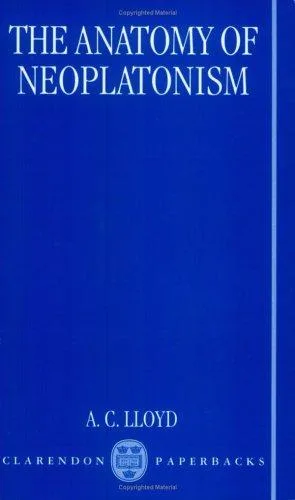
The Anatomy of Neoplatonism
 73
73

The Anatomy of Neoplatonism
A. C. Lloyd’s *The Anatomy of Neoplatonism* is, as stated, a crowning achievement, not for its florid prose, but for its stark, analytical clarity. Lloyd approaches Neoplatonism not as a historical curiosity, but as a coherent, albeit complex, philosophical edifice. He excels in mapping the intricate pathways of its metaphysics and epistemology, demonstrating how concepts like the One, Intellect, and Soul interrelate. One particularly illuminating section details the Neoplatonist understanding of language as a tool that both points towards and falls short of ultimate reality, a concept Lloyd unpacks with precision. However, the book's very strength—its rigorous academic dissection—can also be its limitation for the uninitiated. The density of the argumentation, while accurate, demands considerable prior philosophical grounding. Lloyd’s focus remains resolutely on the intellectual structure, offering less on the practical or mystical applications that drew many historical adherents to Neoplatonism. It is a definitive scholarly resource, indispensable for serious study.
📝 Description
73
A. C. Lloyd's 1990 examination dissects the core tenets of Neoplatonism.
First published in 1990, A. C. Lloyd's The Anatomy of Neoplatonism provides a systematic analysis of the philosophical system that developed in late antiquity. Lloyd, a respected scholar, moves beyond simple historical accounts to scrutinize the internal logic and structure of Neoplatonist thought. The book examines the hierarchical structure of reality, starting with the ineffable One and its emanations, through Intellect (Nous) and Soul (Psyche), down to the material world.
Lloyd details Neoplatonist theories on the nature of the Good, the process of ascent and return to the divine, and their views on language and its limits in describing ultimate reality. The work also considers Neoplatonism's engagement with Platonic dialogues and other philosophical traditions. This text is valuable for advanced students and scholars of ancient philosophy, particularly those interested in the Hellenistic and late Roman periods. Theses and philosophers of religion will also find it useful for understanding the intellectual antecedents of Christian doctrine, as will those studying the history of metaphysics and epistemology.
Neoplatonism, originating with Plotinus in the 3rd century CE, offered a sophisticated metaphysical framework that significantly influenced later Western thought, including mystical and occult traditions. Its hierarchical cosmology, the concept of an ineffable divine source, and the idea of spiritual ascent resonate with many esoteric systems that seek a return to a primordial unity. Lloyd's analysis, while scholarly, illuminates the conceptual architecture that underpins these later developments in Western esotericism.
💡 Why Read This Book?
• Gain a structured understanding of the Neoplatonist cosmos, from the ineffable One to the material world, as meticulously laid out by Lloyd, offering clarity on a foundational philosophical system first articulated by Plotinus in the 3rd century CE. • Grasp the Neoplatonist theory of knowledge and language, understanding how they believed ultimate reality could be apprehended and expressed, a crucial insight for appreciating its influence on later mystical traditions. • Appreciate the sophisticated metaphysical architecture of Neoplatonism, recognizing its extensive impact on Christian theology and subsequent philosophical discourse, as detailed in Lloyd's authoritative analysis.
⭐ Reader Reviews
Honest opinions from readers who have explored this book.
❓ Frequently Asked Questions
When was A. C. Lloyd's *The Anatomy of Neoplatonism* first published?
A. C. Lloyd's *The Anatomy of Neoplatonism* was first published on March 22, 1990, solidifying its place in late 20th-century philosophical scholarship.
What are the main branches of Neoplatonist thought discussed?
The book covers the core areas of Neoplatonist thought, including metaphysics, epistemology, logic, and language, revealing the fundamental structure of this philosophical school.
Who was A. C. Lloyd?
A. C. Lloyd was a distinguished scholar specializing in late ancient philosophy, and *The Anatomy of Neoplatonism* is considered his crowning academic achievement.
How did Neoplatonism influence later thought?
Neoplatonism was highly influential not only on subsequent philosophy but also significantly on Christian theology, providing a framework for many theological concepts.
What is the fundamental structure of Neoplatonist thought explored in the book?
The book reveals the fundamental structure of Neoplatonist thought, which typically involves a hierarchical emanation from an ultimate principle (the One) through various levels of reality.
Is *The Anatomy of Neoplatonism* suitable for beginners?
While authoritative, the book is primarily aimed at those with a background in philosophy or theology. Its detailed analysis assumes a degree of familiarity with philosophical concepts.
🔮 Key Themes & Symbolism
The Emanation from the One
Lloyd meticulously details the Neoplatonist cosmology, centered on the concept of emanation from an ultimate, ineffable principle known as the One. This is not creation but a necessary outflowing of divine being. The work explores how this principle generates subsequent hypostases, primarily Intellect (Nous) and Soul (Psyche), forming a hierarchical structure of reality that underpins all existence and consciousness within the Neoplatonist framework.
Epistemology and the Ascent of the Soul
A central theme is the Neoplatonist approach to knowledge, particularly how the soul can apprehend higher realities. Lloyd examines theories of recollection and intellectual intuition, crucial for understanding the Neoplatonist path towards the divine. The book illustrates how the soul's journey is one of purification and ascent, moving from engagement with the sensible world towards contemplation of the intelligible realm.
Language and the Ineffable
The work addresses the complex Neoplatonist view on language and its capacity to describe ultimate truths. Lloyd explains how Neoplatonists recognized the limitations of discursive thought and conventional language when attempting to speak of the One, which transcends all categories. They employed allegorical interpretation and negative theology to gesture towards that which cannot be directly named or conceptually grasped.
Influence on Theology
Lloyd highlights the profound and lasting impact of Neoplatonism on the development of Christian theology. The book demonstrates how Neoplatonist concepts of divine transcendence, emanation, and the soul's return to God provided a philosophical vocabulary and conceptual framework that early Christian thinkers, such as Augustine, adapted and integrated into their own doctrines, shaping Western religious thought for centuries.
💬 Memorable Quotes
Direct passages from the work, attributed to the author.
“The structure of Neoplatonist thought is hierarchical.”
— This concise statement captures the fundamental organizing principle of Neoplatonism as presented by Lloyd. It emphasizes the ordered, layered nature of reality, from the supreme One down through various divine and intellectual levels to the material cosmos.
“The One is beyond being.”
— This highlights a core Neoplatonist tenet concerning the ultimate principle. It signifies that the One transcends all categories of existence and conceptualization, existing in an absolute transcendence that makes it ineffable and unknowable through ordinary means.
“The soul seeks return to its source.”
— This points to the Neoplatonist doctrine of the soul's journey. It is not merely an existence in the world but a process of remembering and striving to re-ascend towards the divine origin from which it emanated.
“Language struggles to articulate the divine.”
— This reflects the Neoplatonist understanding of the limitations of human discourse when confronting ultimate reality. It suggests that while language can be a tool, it ultimately falls short of fully capturing the nature of the divine or the One.
“Neoplatonism informed Christian doctrine.”
— This interpretation underscores the historical significance of Neoplatonism, particularly its deep entanglement with and influence upon the formation of key theological concepts within Christianity, as explored in the book.
🌙 Esoteric Significance
Tradition
While Neoplatonism itself is a philosophical system originating in late antiquity, its concepts have been deeply integrated into various esoteric traditions, particularly Western Hermeticism and certain streams of Kabbalah and Christian mysticism. Lloyd's work, though academic, provides the foundational philosophical underpinnings for understanding these later esoteric interpretations of divine hierarchy, emanation, and the soul's journey.
Symbolism
Key symbols explored include the 'One' as the ultimate, ineffable source, often represented by a point or absolute unity. The hierarchy of 'Intellect (Nous)' and 'Soul (Psyche)' represents divine thought and cosmic consciousness, respectively. The concept of 'ascent' or 'return' symbolizes the soul's journey back to its divine origin, often depicted as a journey from the material world towards contemplation of the intelligible realm.
Modern Relevance
Contemporary esoteric practitioners and thinkers in fields like Western esoteric traditions, comparative mysticism, and integral spirituality often draw upon Neoplatonist concepts. Modern interpretations of consciousness, the nature of reality, and spiritual development frequently echo Lloyd's analysis of Plotinus, Porphyry, and Iamblichus, demonstrating the enduring relevance of this ancient philosophy.
👥 Who Should Read This Book
• Advanced students of ancient philosophy and theology seeking a rigorous, systematic breakdown of Neoplatonist metaphysics and epistemology, moving beyond introductory texts. • Scholars of comparative religion and intellectual history interested in the philosophical foundations of Christian theology and their roots in Hellenistic thought. • Esoteric practitioners and philosophers of religion looking to understand the core conceptual framework that underpins many later mystical and occult traditions derived from Neoplatonism.
📜 Historical Context
A. C. Lloyd's *The Anatomy of Neoplatonism*, published in 1990, emerged within a robust academic landscape for late antique philosophy. Neoplatonism, originating with Plotinus in the 3rd century CE, had already been extensively studied, with scholars like Werner Beierwaltes and Pierre Hadot contributing significantly to its understanding. Lloyd’s work sought to provide a systematic dissection of its core philosophical architecture, distinct from the more historically focused or interpretative accounts. It arrived at a time when the influence of Neoplatonism on subsequent Western thought, particularly Christian theology through figures like Augustine of Hippo, was a well-established area of research. Unlike earlier philosophical movements such as Stoicism, Neoplatonism offered a complex metaphysical system that continued to fascinate scholars interested in metaphysics, epistemology, and the history of religious thought.
📔 Journal Prompts
The Neoplatonist concept of the One and its relation to Intellect (Nous) requires careful consideration.
Reflect on the Neoplatonist understanding of the soul's ascent and its implications for personal spiritual development.
Analyze the Neoplatonist perspective on language's ability to express ultimate reality.
Consider the role of Iamblichus and his contributions to the Neoplatonic system as discussed by Lloyd.
Explore the ethical dimensions of Neoplatonist thought and their connection to the pursuit of the Good.
🗂️ Glossary
The One
The supreme, ineffable principle in Neoplatonism, the ultimate source of all reality, which transcends existence and thought.
Intellect (Nous)
The second hypostasis in Neoplatonism, emanating from the One. It contains the Platonic Forms and is the area of pure thought and divine intelligence.
Soul (Psyche)
The third hypostasis, emanating from Intellect. It bridges the intelligible and sensible worlds, encompassing individual souls and the animating principle of the cosmos.
Emanation
The Neoplatonist process by which reality flows from the One in a series of descending levels or hypostases, without diminishing the source.
Epistemology
The branch of philosophy concerned with the theory of knowledge, exploring its nature, scope, and justification. Lloyd examines the Neoplatonist approach to knowing ultimate reality.
Metaphysics
The branch of philosophy that examines the fundamental nature of reality, including the relationship between mind and matter, substance and attribute, and potentiality and actuality. Lloyd dissects Neoplatonist metaphysics.
Hypostasis
In Neoplatonism, a distinct level or principle of reality, such as the One, Intellect, and Soul, forming a hierarchy originating from the ultimate source.