Haunted Pennsylvania
 82
82

Haunted Pennsylvania
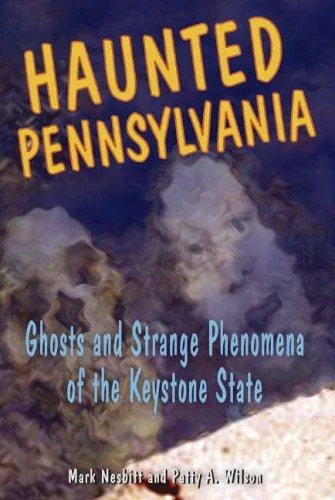
Mark Nesbitt and Patty A. Wilson’s Haunted Pennsylvania offers a compendium of chilling narratives, assembling spectral accounts from across the state. The strength of the work lies in its breadth, cataloging a wide array of hauntings from historic inns to forgotten battlefields, presenting them with a straightforward, non-sensationalist tone. One particularly effective section details the alleged spectral presence at the Dauphin County Courthouse, a location steeped in legal and human drama. However, the book sometimes feels more like an inventory than an exploration, occasionally lacking deeper analysis into the psychological or sociological underpinnings of why these stories persist. Despite this, the sheer volume of documented cases makes it a valuable resource for anyone interested in Pennsylvania’s spectral heritage. It serves as a solid, if occasionally dry, collection of the state's most persistent ghost stories.
📝 Description
82
Mark Nesbitt and Patty A. Wilson documented spectral encounters across Pennsylvania in 2005.
Haunted Pennsylvania is a collection of firsthand accounts and historical records detailing alleged hauntings throughout the state. The book acts as a guide to paranormal locations, describing residences, public buildings, and natural sites known for ghostly apparitions and unexplained occurrences. The narratives cover a spectrum of experiences, from brief sightings of spectral figures to ongoing paranormal activity. It appeals to those interested in local history, folklore, and the supernatural. Readers will find compelling stories within the state's darker past, spanning colonial settlements to industrial eras. This volume is also suited for those who enjoy regional ghost stories and investigations into unexplained phenomena, particularly how history and legend create a location's haunted reputation.
Nesbitt and Wilson compile a diverse array of accounts, reflecting a continuous interest in the spectral that spans different historical periods. The book implicitly engages with the American fascination with the supernatural, a trend that gained significant popularity in the late 19th and early 20th centuries. Pennsylvania, with its history dating back to the 17th century, provides a rich backdrop for these tales.
This compilation draws from a long tradition of American ghost lore, dating back to colonial times. Pennsylvania's extensive history makes it a fertile region for such narratives. The book taps into a persistent cultural interest in the supernatural, which saw a surge in popularity during the late 19th and early 20th centuries alongside the Spiritualist movement and the proliferation of ghost story collections. By gathering varied accounts, the work reflects an enduring fascination with spectral phenomena across different eras.
💡 Why Read This Book?
• Understand the specific spectral lore of Pennsylvania, learning about alleged hauntings at locations like the Dauphin County Courthouse, which offers a unique lens into the state's paranormal landscape. • Explore how historical events, such as those in the early colonial period, contribute to the formation of ghost stories, providing concrete examples of history’s spectral echoes. • Gain insight into the diverse types of reported paranormal activity, from apparitions to unexplained sounds, as documented in specific accounts within the book, enhancing your appreciation for regional folklore.
⭐ Reader Reviews
Honest opinions from readers who have explored this book.
❓ Frequently Asked Questions
What types of locations are featured in Haunted Pennsylvania?
The book features a wide array of locations, including private residences, historic inns, public buildings like courthouses, and even natural landscapes. Many sites have a documented history, often dating back to the colonial era or the 19th century, contributing to their spectral reputation.
Does Haunted Pennsylvania focus on a specific time period?
While many stories have roots in historical events from periods like the colonial era or the Civil War, the hauntings themselves are often reported as ongoing phenomena. The book covers a broad chronological span, reflecting Pennsylvania's long and complex history.
Are the accounts in Haunted Pennsylvania presented as fact?
The book presents anecdotal evidence and historical accounts of alleged hauntings. It compiles reports and stories without definitively asserting their factual basis, inviting the reader to consider the evidence and the folklore surrounding each location.
Who are the authors of Haunted Pennsylvania?
Haunted Pennsylvania was authored by Mark Nesbitt and Patty A. Wilson. Their work draws on extensive research into local legends and reported paranormal experiences throughout the state.
What is the general tone of Haunted Pennsylvania?
The tone is generally informative and descriptive, focusing on presenting the documented accounts and historical context of each haunting. It avoids overly sensational language, aiming for a factual compilation of spectral lore.
Is Haunted Pennsylvania suitable for beginners in paranormal studies?
Yes, it serves as an excellent introduction to regional paranormal phenomena. Its catalog-like structure and clear presentation of various hauntings make it accessible for those new to the subject matter.
🔮 Key Themes & Symbolism
Regional Spectral Lore
The book meticulously catalogs ghost stories specific to Pennsylvania, moving beyond generic paranormal tropes to highlight the unique historical and geographical influences on its hauntings. From spectral soldiers of the Civil War to lingering presences in colonial-era homes, each account is tied to a particular locale. This focus on regional specificity allows for an exploration of how local history, folklore, and collective memory contribute to the creation and perpetuation of ghost narratives across the state.
The Persistence of History
Haunted Pennsylvania illustrates how past events, often dramatic or tragic, seem to imprint themselves onto locations, giving rise to persistent spectral phenomena. The work implicitly explores the idea of 'residual energy' or elements of significant moments. Accounts from places like Gettysburg or old industrial sites demonstrate how historical trauma or intense emotional experiences can be interpreted as the source of ongoing hauntings, suggesting that the past remains an active, if unseen, presence.
Folklore and Testimony
A central theme is the role of personal testimony and oral tradition in shaping our understanding of the paranormal. The book compiles firsthand accounts, interviews, and historical records, showcasing the unreliability and power of anecdotal evidence. It highlights how stories evolve over time, becoming intertwined with local identity and legend, and raises questions about the nature of belief and perception in the face of unexplained events.
Haunted Landmarks
The book functions as a guide to Pennsylvania's most famously haunted sites, transforming everyday locations into landscapes of the supernatural. By detailing the spectral activity associated with specific buildings and natural areas, it encourages readers to view familiar places through a new, unsettling lens. This approach underscores how history and the spectral are interwoven into the very fabric of the built and natural environment.
💬 Memorable Quotes
Direct passages from the work, attributed to the author.
“The tales presented are drawn from local lore, historical records, and eyewitness accounts.”
— This statement underscores the book's methodology, emphasizing that the narratives are not pure invention but are rooted in a combination of traditional storytelling, documented history, and personal experiences, forming the basis for the spectral claims.
“Many hauntings are tied to places with significant historical events or tragedies.”
— This highlights a recurring pattern in ghost lore: that profound human experiences, particularly those involving suffering or intense emotion, are believed to leave an energetic imprint on a location, manifesting as paranormal activity.
“Pennsylvania's long history provides fertile ground for ghost stories.”
— This observation points to the state's deep historical roots, from colonial settlements to industrial booms and conflicts, as a primary reason for the abundance of reported hauntings, suggesting that history itself fuels spectral legends.
“Eyewitness testimony forms a significant part of the evidence presented.”
— This acknowledges the reliance on personal accounts from individuals who claim to have experienced paranormal phenomena, framing these testimonies as crucial components of the documented hauntings within the book.
“The book catalogues a wide range of spectral phenomena across the state.”
— This suggests the comprehensive nature of the collection, indicating that readers can expect to find diverse reports of ghosts, apparitions, and unexplained occurrences from various regions and types of locations within Pennsylvania.
🌙 Esoteric Significance
Tradition
While not explicitly aligned with a specific esoteric tradition like Hermeticism or Gnosticism, Haunted Pennsylvania engages with themes common in folk magic and animistic beliefs. The underlying premise—that places can retain spiritual imprints from past events or entities—appeals to certain earth-based spiritual practices and beliefs in nature spirits or localized psychic energy. It indirectly touches upon ideas of psychometry and the lingering consciousness, concepts explored in various occult traditions.
Symbolism
The book frequently employs the symbolism of decay and endurance. Old, abandoned buildings or historically significant sites often serve as loci for hauntings, symbolizing the persistence of the past and unresolved energies. Figures like spectral soldiers or figures from colonial history symbolize historical trauma and the collective memory of the state. Water bodies, old trees, and specific geographical features are also imbued with spectral significance, representing natural anchors for supernatural phenomena.
Modern Relevance
Contemporary paranormal investigation shows, such as "Ghost Hunters" or "Ghost Adventures," often draw on the kind of location-specific lore documented in this book. Modern ghost hunting groups frequently research historical accounts and local legends to guide their investigations, mirroring the approach taken by Nesbitt and Wilson. Furthermore, the book's focus on the intersection of history, place, and the uncanny is relevant to fields like cultural geography and the study of landscape phenomenology, exploring how human experience shapes and is shaped by location.
👥 Who Should Read This Book
['• Folklore enthusiasts interested in regional American legends and ghost stories, seeking detailed accounts tied to specific historical contexts within Pennsylvania.', "• Local history buffs who want to explore the lesser-known, spectral side of Pennsylvania's past and its enduring mysteries.", '• Amateur paranormal investigators looking for case studies and documented hauntings to research or draw inspiration from for their own explorations.']
📜 Historical Context
Published in 2019, Haunted Pennsylvania emerged during a period of sustained popular interest in the paranormal, fueled by television documentaries and online communities. The book taps into a long American tradition of ghost lore dating back to colonial times, where tales of spirits and unexplained occurrences were common. Pennsylvania, with its long history encompassing Native American presence, colonial settlement, the Revolutionary War, and the Civil War (notably the Battle of Gettysburg), provides an exceptionally deep wellspring for such narratives. While contemporary paranormal investigation often employs technological tools, Nesbitt and Wilson's work largely relies on compiling existing folklore, historical accounts, and anecdotal evidence, echoing the methods of earlier collectors like Charles M. Skinner, whose "Myths and Legends of Our Own Land" (1896) also cataloged American folklore. The reception of such books generally falls into two camps: those who appreciate them as historical curiosities and folklore studies, and those seeking definitive proof of the supernatural.
📔 Journal Prompts
Pennsylvania's spectral landmarks and their historical echoes.
The enduring folklore surrounding locations like the Dauphin County Courthouse.
Personal reflections on how places retain energetic imprints.
The evolution of ghost stories from historical events to modern legend.
Investigating the role of eyewitness testimony in paranormal accounts.
🗂️ Glossary
Residual Haunting
A type of paranormal activity believed to be an imprint of past events or emotions replaying themselves, akin to a recording, rather than an interactive spirit.
Intelligent Haunting
A paranormal manifestation believed to be caused by a conscious entity (spirit) that can interact with its environment and observers.
Folklore
The traditional beliefs, customs, and stories of a community, passed through the generations by word of mouth.
Apparition
The visual manifestation of a ghost or spirit, often appearing as a spectral figure or image.
Eyewitness Account
A firsthand report of an event or phenomenon, given by someone who claims to have observed it directly.
Psychometry
The alleged psychic ability to perceive information about an object or person by touching it.
Locus
A particular place or location, often used in the context of hauntings to refer to the site where phenomena occur.
🔮 Readers Also Liked
Browse all →








More by Mark Nesbitt, Patty A. Wilson
All books →
More Free Occult Philosophy Books
View all →