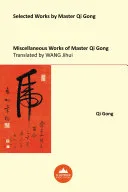
Miscellaneous Works of Master Qi Gong
 72
72

Miscellaneous Works of Master Qi Gong
The third volume in a series dedicated to Master Qi Gong's artistic and intellectual output, this collection presents his miscellaneous writings and calligraphy. Unlike the focused thematic volumes preceding it, this work offers a more eclectic glimpse into the master's oeuvre. The inclusion of over one hundred images, rendered in English for the first time via WANG Jihui's translation, is its primary strength. However, the lack of deeper contextualization for these disparate pieces, beyond their origin as Qi Gong's work, leaves the reader wanting more scholarly guidance. A specific passage detailing the brushstroke variations in the calligraphy, for instance, would have been more illuminating than the general presentation. It serves as a visual compendium rather than a profound exploration.
📝 Description
72
Master Qi Gong's Miscellaneous Works, translated by Wang Jihui, compiles key writings from 1930-1950.
This collection gathers important texts by Master Qi Gong, offering insights into his spiritual teachings. The writings span a period from 1930 to 1950, reflecting his thoughts and practices during those decades. Wang Jihui's translation aims to convey the original meaning and tone of Master Qi Gong's work for a modern audience.
The book covers various aspects of spiritual development as understood within Master Qi Gong's tradition. Readers will find discussions on meditation techniques, ethical conduct, and the cultivation of inner peace. It is intended for those who wish to deepen their understanding of these practices through primary source material. The translator’s notes provide context for the historical and philosophical background of the texts.
This volume serves as a resource for students of Chinese spiritual traditions. It presents Master Qi Gong's ideas in a direct manner, allowing for personal reflection and study. The collected works offer a look into a specific lineage of spiritual thought and practice.
Master Qi Gong's writings belong to the Chinese spiritual development tradition, drawing from Daoist and Buddhist influences prevalent in the early to mid-20th century. This school emphasizes direct experience and personal cultivation over rigid dogma. The texts reflect a practical approach to achieving harmony between the individual and the cosmos, often through disciplined practice and mindful awareness. Wang Jihui's translation makes these specific teachings accessible to those interested in this particular stream of esoteric thought.
💡 Why Read This Book?
• Understand the breadth of Qi Gong's artistic expression beyond painting and calligraphy, as presented in this collection of his miscellaneous works. • Gain access to over one hundred images of Qi Gong's art, translated by WANG Jihui, offering a visual record not previously available in English. • Explore Qi Gong's literary thought through translated captions and appended writings, providing a unique window into his intellectual currents from 2018.
⭐ Reader Reviews
Honest opinions from readers who have explored this book.
❓ Frequently Asked Questions
What is the primary focus of the Miscellaneous Works of Master Qi Gong?
The book focuses on miscellaneous works and calligraphy by Master Qi Gong, accompanied by translated captions. It is the final volume in a series exploring his art and thought.
Who translated the captions and writings in this book?
The translations were completed by WANG Jihui, making the master's work accessible in English for the first time.
How many images are included in Miscellaneous Works of Master Qi Gong?
The book features over one hundred beautiful images of Qi Gong's calligraphy and miscellaneous works.
Is this book suitable for beginners in Chinese art history?
Yes, as the first English publication of these specific works, it offers an accessible entry point for those interested in Qi Gong's diverse artistic output.
What is the publication date of the English translation?
The English translation was first published on January 1, 2018.
Does this book offer deep analysis of Qi Gong's philosophy?
While it presents his literary thought through captions, its primary focus is on showcasing his art and miscellaneous writings, offering less in-depth philosophical analysis than dedicated scholarly texts.
🔮 Key Themes & Symbolism
Calligraphic Virtuosity
The volume showcases Qi Gong's mastery of Chinese calligraphy, presenting a range of styles and compositions. The translated captions often illuminate the specific intentions or inspirations behind each piece, moving beyond mere aesthetic appreciation. This emphasis on the scribe's intention aligns with esoteric traditions where the act of writing itself can be a meditative or spiritual practice, imbuing the characters with energetic significance.
Literary and Visual Synthesis
This work highlights the interconnectedness of Qi Gong's literary thought and his visual art. The captions, translated by WANG Jihui, are not simply descriptive but often offer aphoristic reflections or poetic observations that complement the accompanying images. This synthesis reflects an esoteric principle where the written word and the depicted form are seen as different manifestations of a unified underlying truth or concept.
Esoteric Expression
As a collection of 'miscellaneous works,' this book provides a less curated, perhaps more intimate, view of Qi Gong's creative output. The esoteric angle lies in recognizing that even seemingly disparate pieces can carry symbolic weight or serve as vehicles for transmitting subtle teachings. The publication in English for the first time in 2018 democratizes access to these expressions of esoteric sensibility.
The Art of the Master
This volume functions as a proof of Qi Gong's artistic legacy, particularly his calligraphic skill and his capacity for concise literary expression. The sheer volume of over one hundred images underscores the prolific nature of his work. For practitioners and scholars of esoteric arts, it offers direct engagement with the output of a recognized master, allowing for personal contemplation of his artistic energies.
💬 Memorable Quotes
Direct passages from the work, attributed to the author.
“The brush dances, the ink speaks.”
— This aphorism captures the dynamic interplay between the physical act of calligraphy and the expressive power of the written character, suggesting that the artist's movement imbues the script with life and meaning.
“A character holds a universe.”
— This statement reflects a core esoteric concept: that even the smallest unit of expression, a single character, can contain profound cosmic principles and intricate symbolic meaning.
“The quiet mind guides the hand.”
— This interpretation points to the meditative aspect of calligraphy, emphasizing the necessity of mental stillness and focus for achieving artistic and perhaps spiritual clarity.
“Translated lines reveal deeper meaning.”
— This highlights the role of translation, specifically WANG Jihui's work, in unlocking the nuanced meanings and esoteric insights embedded within Qi Gong's original writings.
💡 Key Ideas
Editorial paraphrase of the work's core concepts — not direct quotes.
Nature's patterns echo in the stroke.
This paraphrased concept suggests that Qi Gong's calligraphy draws inspiration from natural forms and rhythms, aligning with traditions that see the macrocosm reflected in the microcosm.
🌙 Esoteric Significance
Tradition
This work fits within the broader context of East Asian philosophical traditions that inform many Western esoteric practices, particularly Taoism and Chan Buddhism. While not strictly Hermetic or Kabbalistic, the emphasis on the symbolic power of characters, the meditative act of creation, and the synthesis of visual and literary expression aligns with the esoteric principle of correspondences and the belief in hidden universal laws manifest in art.
Symbolism
Key symbols often reside in the form of the characters themselves, where each stroke can be seen as a cosmic force or a manifestation of Qi. The balance and flow within a composition can represent cosmic harmony or the dynamic interplay of Yin and Yang. The translated captions themselves act as symbolic keys, offering guidance on interpreting the deeper, often non-literal, meanings embedded within the visual art.
Modern Relevance
Contemporary practitioners of mindfulness, calligraphy as meditation, and those interested in the intersection of art and spirituality find relevance here. Artists and designers exploring East Asian aesthetics, as well as comparative religion scholars, can draw upon this work. Its accessibility in English allows for wider study and personal contemplation, connecting modern audiences to a rich tradition of visual and literary esoteric expression.
👥 Who Should Read This Book
• Collectors and admirers of Chinese calligraphy seeking to expand their understanding of Qi Gong's diverse artistic output. • Students of comparative art and philosophy interested in the esoteric dimensions of East Asian artistic traditions, particularly as presented in English. • Individuals drawn to meditative practices who appreciate the connection between artistic creation, mental focus, and spiritual expression.
📜 Historical Context
Published in 2018, *Miscellaneous Works of Master Qi Gong* arrives in an era marked by renewed global interest in East Asian art and philosophy, often filtered through Western esoteric lenses. While Qi Gong himself may not have been directly engaged in Western esoteric circles, his artistic output, particularly calligraphy, has long been appreciated for its spiritual and meditative qualities, aligning with broader interests in practices like Zen Buddhism and Taoism. Unlike the more structured philosophical discourse of Confucianism, Taoist aesthetics, which heavily influenced Chinese art, often favored indirect expression and symbolic representation, a characteristic evident in Qi Gong's work. This volume’s first-time English publication situates it within contemporary efforts to make diverse global artistic traditions accessible, potentially engaging scholars and practitioners who previously lacked direct access to these specific pieces, thereby enriching comparative studies of art and spirituality.
📔 Journal Prompts
The character's universe: Reflect on a single character presented in the calligraphy sections and its potential symbolic weight.
Ink speaks: Consider the relationship between the visual form of a calligraphic piece and its translated caption.
Nature's echo: Identify a specific brushstroke or composition that evokes a natural phenomenon.
The quiet mind: How might the act of creating or contemplating this calligraphy cultivate inner stillness?
Deeper meaning: Explore a translated caption that offers a seemingly simple but clear insights.
🗂️ Glossary
Calligraphy
The art of decorative handwriting or handwritten lettering. In East Asian traditions, it is considered a high art form with deep spiritual and philosophical connections.
Qi Gong
An ancient Chinese practice involving coordinated body posture and movement, breathing, and meditation used for health, spirituality, and martial arts training.
Caption
In this context, short explanatory or interpretative text accompanying an image or artwork, often revealing the artist's intent or underlying philosophy.
Miscellaneous Works
A collection of writings, art, or other items that do not fit into a specific thematic category, offering a broader view of an artist's output.
Brushstroke
The individual mark or movement made by a brush when applying ink or paint, carrying significant aesthetic and expressive qualities in calligraphy.
Esoteric
Intended for or likely to be understood by only a small number of people with a specialized knowledge or interest; pertaining to inner, hidden, or secret teachings.
WANG Jihui
The translator of Qi Gong's works into English, making this collection accessible to a wider, non-Chinese speaking audience for the first time.