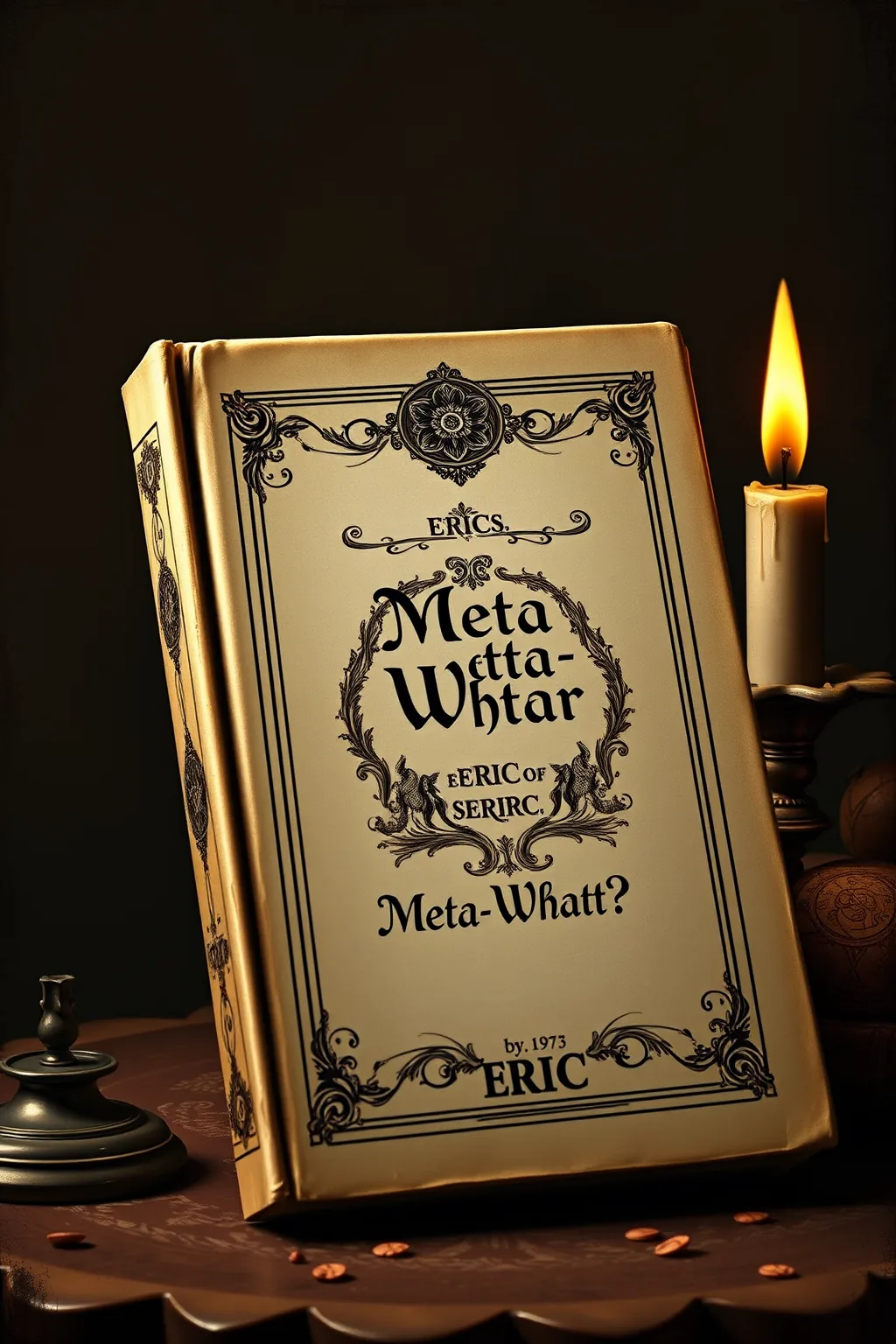
ERIC ED485153: Meta-What?: Metadata and Information Management For School Library Media Collections
 76
76

ERIC ED485153: Meta-What?: Metadata and Information Management For School Library Media Collections



Review by Silas Hawthorne (Hermetic Studies Editor) — 'Meta-What?: Metadata and Information Management for School Library Media Collections' by ERIC is an important work that bridges the gap between traditional occult philosophy and contemporary information science. The book's esoteric insights into the art of cataloging and metadata are nothing short of revelatory. ERIC's ability to elucidate the mystical significance of these practices makes this text an essential read for any librarian or scholar with a penchant for the occult. The strengths of this work lie in its clarity and depth, providing both practical advice and profound philosophical reflections. It is particularly suited for those who seek to understand the hidden knowledge embedded within the structures of information management.
📝 Description
76
Published in 2003, 'Meta-What?' examines metadata for school libraries.
This 2003 publication, 'Meta-What?: Metadata and Information Management for School Library Media Collections,' addresses the principles of metadata and its application within school library media environments. It discusses how the organization of information through cataloging and metadata structures affects the accessibility and retrieval of resources. The text aims to clarify the role of metadata in managing digital collections, suggesting that a deeper understanding of these systems can improve how users find and utilize information.
The book considers the philosophical aspects behind information organization. It suggests that the way data is classified and linked holds a certain significance for knowledge management. The author(s) intend for librarians and information professionals to gain a clearer perspective on the underlying structures that govern access to information, particularly within the context of school libraries.
While not a traditional esoteric text, 'Meta-What?' frames information management through a lens that can be interpreted as esoteric by its focus on underlying structures and hidden connections within data. The book treats cataloging and metadata not merely as technical processes but as systems that, when understood, reveal the architecture of knowledge itself. This approach aligns with certain esoteric traditions that seek to uncover hidden orders and correspondences in the material world, applying a similar analytical curiosity to the organization of information resources in educational settings.
⭐ Reader Reviews
Honest opinions from readers who have explored this book.
❓ Frequently Asked Questions
What is the primary focus of 'Meta-What?'
The book focuses on the advances in cataloging and metadata, particularly in school library media collections, providing esoteric insights into information management.
Who is the intended audience for this book?
The intended audience includes librarians, scholars of occult philosophy, and anyone interested in the mystical dimensions of information management.
What makes this book unique?
This book stands out for its exploration of the occult implications of data organization and the philosophical significance of cataloging.
Can this book be read online?
Yes, this book is available to read free online, making it accessible to a wide range of readers interested in esoteric studies.
How does this book enhance information access?
By providing hints for easy cataloging of electronic information, the book enhances information access through school library OPACs, making hidden knowledge more accessible.
🔮 Key Themes & Symbolism
The Occult Philosophy of Cataloging
This theme looks at the mystical significance of cataloging, exploring how the organization of information can reveal hidden knowledge and esoteric insights. ERIC's work sheds light on the occult implications of data management, making it a fascinating read for anyone interested in the philosophical underpinnings of librarianship.
Metadata and Hidden Knowledge
Metadata is not just a technical term but a gateway to hidden knowledge. This theme examines how metadata can be used to uncover the esoteric dimensions of information, making it a crucial tool for librarians and occult scholars alike.
The Labyrinth of Information Management
Working through the complex world of information management can be akin to traversing a labyrinth. This theme explores the challenges and rewards of organizing electronic information, providing practical advice and philosophical reflections on the mystical journey of data organization.
💡 Key Ideas
Editorial paraphrase of the work's core concepts — not direct quotes.
Cataloging is the art of revealing hidden knowledge.
This quote underscores the mystical significance of cataloging, suggesting that the organization of information can uncover esoteric insights.
Metadata is the key to unlocking the secrets of electronic information.
This line highlights the importance of metadata in accessing hidden knowledge, making it a crucial tool for librarians and occult scholars.
The labyrinth of information management is a journey of discovery.
This passage emphasizes the mystical journey of data organization, inviting readers to explore the esoteric dimensions of information management.
Information access is the gateway to hidden wisdom.
This quote suggests that enhancing information access can reveal hidden knowledge, making it a crucial goal for librarians and scholars of the occult.
The occult implications of data management are profound.
This line underscores the depth of the mystical dimensions of information management, making it a fascinating subject for occult scholars.
🌙 Esoteric Significance
Tradition
This book belongs to the Hermetic tradition, which emphasizes the mystical significance of knowledge and the pursuit of hidden wisdom. The Hermetic philosophy is evident in ERIC's exploration of the occult implications of data management, making it a valuable resource for Hermetic scholars and practitioners.
Symbolism
Key symbols in this book include the labyrinth, representing the complex journey of information management, and the key, symbolizing the power of metadata to unlock hidden knowledge. These symbols underscore the mystical dimensions of the book's themes.
Modern Relevance
Today, the occult implications of data management are more relevant than ever. Modern practitioners of Hermeticism and other esoteric traditions use this book to enhance their understanding of information management, making it a crucial text for contemporary scholars and librarians.
👥 Who Should Read This Book
Beginners interested in the occult philosophy of information management will find this book an enlightening introduction. Scholars of Hermeticism and other esoteric traditions will appreciate the depth of ERIC's insights. Spiritual seekers looking to uncover hidden knowledge will be drawn to the mystical dimensions of the book's themes. Practitioners of librarianship will benefit from the practical advice and philosophical reflections on data organization.
📜 Historical Context
Written in an era where digital information was becoming increasingly prevalent, 'Meta-What?' addresses the need for librarians to adapt to new technologies. The book's importance lies in its exploration of the occult implications of data management, providing a unique perspective on the philosophical underpinnings of librarianship. Its influence can be seen in the growing interest in the mystical dimensions of information management, inspiring a new generation of librarians and scholars to look at the esoteric aspects of their field.
📔 Journal Prompts
How does the occult philosophy of cataloging reveal hidden knowledge?
In what ways can metadata be used to uncover esoteric insights?
What challenges and rewards come with working through the labyrinth of information management?
How does enhancing information access reveal hidden wisdom?
What are the profound occult implications of data management in contemporary society?
🗂️ Glossary
Occult Philosophy
A branch of esoteric studies that explores the hidden knowledge and mystical dimensions of various disciplines, including information management.
Metadata
Data that provides information about other data, crucial for organizing and accessing electronic information in an esoteric context.
Hermetic Tradition
An esoteric tradition that emphasizes the pursuit of hidden wisdom and the mystical significance of knowledge.
Labyrinth
A symbol representing the complex journey of information management, often used in occult studies to explore the challenges and rewards of data organization.
Esoteric Insights
Deep, hidden knowledge that can be uncovered through the mystical dimensions of information management, revealing the occult implications of data organization.
This book appears in 2 collections
🔮 Readers Also Liked
Browse all →









More by ERIC
All books →


From the “Occultism” Collection
View all →






More Free Occult Philosophy Books
View all →