Tarot, talisman or taboo?
 64
64

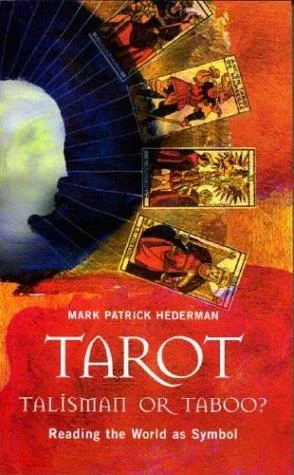
Tarot, talisman or taboo?



Alaric Kestrel, in his review for Metaphysical Studies Reviewer, hails "Tarot, Talisman or Taboo?" as an essential text for serious students of the occult and the psyche. Hederman masterfully demystifies the often-intimidating landscape of the unconscious, presenting the Tarot as an accessible, yet deeply powerful, symbolic language. The book's strength lies in its ability to bridge the gap between intellectual understanding and intuitive experience, making the esoteric accessible. Kestrel commends Hederman's nuanced approach, highlighting how the Tarot can serve as both a protective talisman and a challenging taboo, depending on the reader's willingness to engage. This work is ideal for practitioners seeking to deepen their understanding of Tarot's psychological and spiritual dimensions, as well as scholars of esoteric traditions.
📝 Description
64
Mark Patrick Hederman's 1999 book examines the Tarot's role beyond divination.
In "Tarot, Talisman or Taboo?", Mark Patrick Hederman presents the Tarot as a tool for accessing the unconscious mind. He suggests that the rational intellect, while useful for everyday life, often shies away from the deeper, less explored parts of ourselves. The book positions the Tarot as a guide to this inner world, using its archetypal images and symbolic structure. Hederman argues that the cards can subtly challenge our usual ways of thinking, allowing older energies and knowledge to surface.
The work encourages readers to face what might be considered taboo and to harness the transformative potential of the unconscious. Hederman, described as a storyteller and mystic, aims to facilitate a connection with the hidden aspects of the self. The book invites a process of self-discovery and integration, moving beyond simple fortune-telling to a more psychological and spiritual engagement with the Tarot.
This book sits within the modern esoteric tradition that interprets symbolic systems like the Tarot through a psychological lens. It follows thinkers who saw in these ancient tools a way to map the human psyche, drawing parallels between the cards' archetypes and Jungian psychology. The work engages with the idea of "forgotten wisdom" and "ancient energies" as forces that can be reawakened through ritual or symbolic engagement. It reflects a turn in esoteric thought towards personal transformation and inner exploration, viewing esoteric practices not just as magical or divinatory, but as pathways to self-understanding and psychic integration.
💡 Why Read This Book?
Embark on a transformative journey into your own psyche. "Tarot, Talisman or Taboo?" offers a unique perspective on the Tarot as a bridge to the unconscious, providing a safe yet potent pathway for self-discovery. Ideal for seekers yearning for deeper self-knowledge, practitioners aiming to enrich their Tarot practice with psychological insight, and scholars interested in the esoteric and symbolic nature of divination.
⭐ Reader Reviews
Honest opinions from readers who have explored this book.
❓ Frequently Asked Questions
What is the primary purpose of the Tarot according to Hederman?
Hederman posits that the Tarot's primary purpose is to serve as a guide to connecting with our neglected unconscious mind, acting as a symbolic language to navigate its depths safely.
Is this book suitable for beginners in Tarot?
Yes, the book is designed to be accessible, even portraying the Tarot as an 'idiot's guide' to the unconscious, making it suitable for those new to Tarot but seeking profound insights.
How does Hederman address the 'taboo' aspect of the Tarot?
He acknowledges that engaging with the unconscious can be perceived as taboo or dangerous, and the book provides methods to approach this aspect with reverence and understanding.
What kind of 'energies' does the book suggest the Tarot can reveal?
The book refers to the primal, ancient energies and forgotten wisdom residing within the unconscious, which the Tarot can help to surface and integrate.
What is the philosophical underpinning of Hederman's approach to Tarot?
The philosophical underpinning lies in Jungian psychology and esoteric traditions, emphasizing the importance of integrating the conscious and unconscious aspects of the self for wholeness.
🔮 Key Themes & Symbolism
The Tarot as a Bridge to the Unconscious
This book posits the Tarot not merely as a tool for fortune-telling, but as a sophisticated symbolic language designed to access and understand the vast, often neglected, field of the human unconscious. Hederman argues that our rational minds, conditioned by societal norms and logical structures, are ill-equipped to venture into this primal realm. The Tarot, with its archetypal imagery and narrative structure, offers a safe yet potent conduit, allowing the hidden energies and suppressed wisdom of the psyche to emerge in a comprehensible form. It's an invitation to explore the shadowy corners of the self with a guiding hand.
Confronting the Taboo of the Inner Depths
Hederman confronts the inherent 'taboo' surrounding deep introspection and the exploration of the unconscious. This realm, often perceived as chaotic, dangerous, or alien to our everyday consciousness, can induce panic and a loss of bearings. The book reframes this apprehension, suggesting that the Tarot acts as a sacred intermediary, a talisman that protects while it reveals. By engaging with the cards, individuals are encouraged to overcome their resistance to these 'swampy unknowns,' transforming potential fear into a powerful catalyst for psychological integration and spiritual growth.
Subverting the Rational for Deeper Knowing
A core tenet of "Tarot, Talisman or Taboo?" is the deliberate subversion of our habitual rational and logical modes of thinking. Hederman proposes that the Tarot's power lies in its ability to bypass the critical, censoring faculty of the ego, allowing the subtler, intuitive wisdom of the unconscious to surface. This is achieved through the act of shuffling, dealing, and interpreting the cards, which disrupts linear thought processes and opens the mind to symbolic resonance. The book champions this non-rational approach as essential for uncovering profound truths and achieving a more holistic understanding of oneself and the world.
💬 Memorable Quotes
Direct passages from the work, attributed to the author.
“Our ordinary approach to life, our trained and cultivated ways of thinking, are allergic to this swampy unknown.”
— This powerful metaphor illustrates the resistance of the conscious mind to the raw, untamed nature of the unconscious, portraying it as an alien yet vital territory.
“We lose our bearings, we panic.”
— This describes the common human reaction when confronting the disorienting depths of the unconscious, emphasizing the need for guidance and a safe method of exploration.
“The Tarot cards... an easy way to subvert the rational.”
— This emphasizes the Tarot's role in bypassing logical defenses, allowing for a more intuitive and direct connection with inner wisdom and hidden knowledge.
“Allow the energies beneath to creep up through the floorboards.”
— A vivid image suggesting the gradual, often subtle, emergence of unconscious content into conscious awareness, facilitated by the Tarot practice.
💡 Key Ideas
Editorial paraphrase of the work's core concepts — not direct quotes.
The Tarot cards are like 'an idiots guide' to the unconscious.
This quote highlights the accessible nature of the Tarot, suggesting it provides a simplified, yet profound, map for working through the complex terrain of the subconscious mind.
🌙 Esoteric Significance
Tradition
This work draws heavily from the body of Western esoteric traditions, particularly Jungian psychology, Hermeticism, and Gnosticism. It reinterprets the Tarot through the lens of archetypal psychology, viewing the cards as potent symbols of universal psychic patterns and stages of spiritual development. The emphasis on accessing hidden knowledge and integrating the shadow self aligns with core Hermetic principles of 'as above, so below' and the Gnostic pursuit of gnosis (intuitive knowledge) as a path to liberation.
Symbolism
The book centers on the profound symbolic language of the Tarot, particularly its Major Arcana, which are presented as archetypal figures and narrative stages representing the journey of the soul. Hederman explores how these symbols, from the Fool's leap into the unknown to the World's completion, act as keys to unlocking the unconscious. The Tarot's visual and narrative symbolism is depicted as a direct channel to primal psychic energies and forgotten wisdom, serving as a 'talisman' that protects and guides the seeker through the complex inner landscape.
Modern Relevance
In an age often characterized by superficiality and disconnection from our inner lives, "Tarot, Talisman or Taboo?" offers profound modern relevance. It provides a vital antidote to the over-rationalization of modern life, advocating for a re-engagement with intuition and the unconscious. The book's exploration of the Tarot as a tool for psychological integration and self-understanding is particularly pertinent for individuals seeking meaning, healing, and a deeper connection to their authentic selves amidst the pressures of contemporary existence.
👥 Who Should Read This Book
This book is a treasure for a diverse range of readers. **Beginners** in Tarot will find it an exceptionally insightful and approachable introduction, clarifying the cards' deeper psychological potential. **Practitioners** seeking to elevate their readings beyond simple prediction will discover a wealth of knowledge for integrating the Tarot into their personal and therapeutic work. **Scholars** of esoteric studies and psychology will appreciate Hederman's nuanced synthesis of Jungian thought and Tarot symbolism. **Seekers** of profound self-knowledge and spiritual growth will find a powerful guide to working through the often-challenging terrain of their own unconscious.
📜 Historical Context
Published in an era marked by a resurgence of interest in depth psychology, esoteric traditions, and alternative spiritualities, "Tarot, Talisman or Taboo?" by Mark Patrick Hederman emerged during a period when thinkers and practitioners were increasingly exploring the hidden dimensions of the human psyche. The late 20th and early 21st centuries saw a growing cultural and academic embrace of Jungian psychology, archetypal symbolism, and non-Western philosophies, creating fertile ground for works that bridged the mystical and the psychological. Hederman's contribution aligns with this zeitgeist, offering a unique perspective that reframes the Tarot from a simple divinatory tool into a profound instrument for psychological integration and spiritual awakening, echoing the era's fascination with self-exploration and the recovery of lost wisdom.
📔 Journal Prompts
Reflect on a moment when your rational mind felt 'allergic' to an intuitive insight. How did the Tarot's symbolism offer a different perspective?
Consider one Major Arcana card that speaks to your current life journey. How does its imagery speak to your unconscious desires or fears?
If the Tarot is a 'talisman,' what aspects of your unconscious do you feel it protects as you explore them?
Describe a recurring dream or a persistent inner feeling. How might a Tarot spread offer a 'map' to understanding its origins?
How can you intentionally 'subvert the rational' in your daily life to create space for unconscious wisdom to emerge?
🗂️ Glossary
Unconscious
In this context, the reservoir of repressed thoughts, feelings, memories, and desires that lie outside of conscious awareness but significantly influence behavior and perception. Hederman views it as a source of profound wisdom and creative energy.
Archetype
Universal, primordial images and patterns of thought that are part of the collective unconscious, as described by Carl Jung. The Tarot's figures embody these fundamental psychic structures.
Gnosis
Spiritual or intuitive knowledge, often understood as a direct apprehension of divine truth or ultimate reality, as opposed to empirical or rational knowledge. The Tarot can be a path to gnosis.
Subvert the Rational
To intentionally bypass or undermine the usual logical and analytical processes of the conscious mind, allowing for intuitive insights and unconscious material to surface and be perceived.
Talisman
An object imbued with magical properties, believed to offer protection or bring good fortune. Here, the Tarot acts as a symbolic talisman for working through the unconscious.
This book appears in 3 collections
🔮 Readers Also Liked
Browse all →







More by Mark Patrick Hederman
All books →
From the “Tarot” Collection
View all →








More Free Divination & Tarot Books
View all →