Tarot reading explained
 61
61

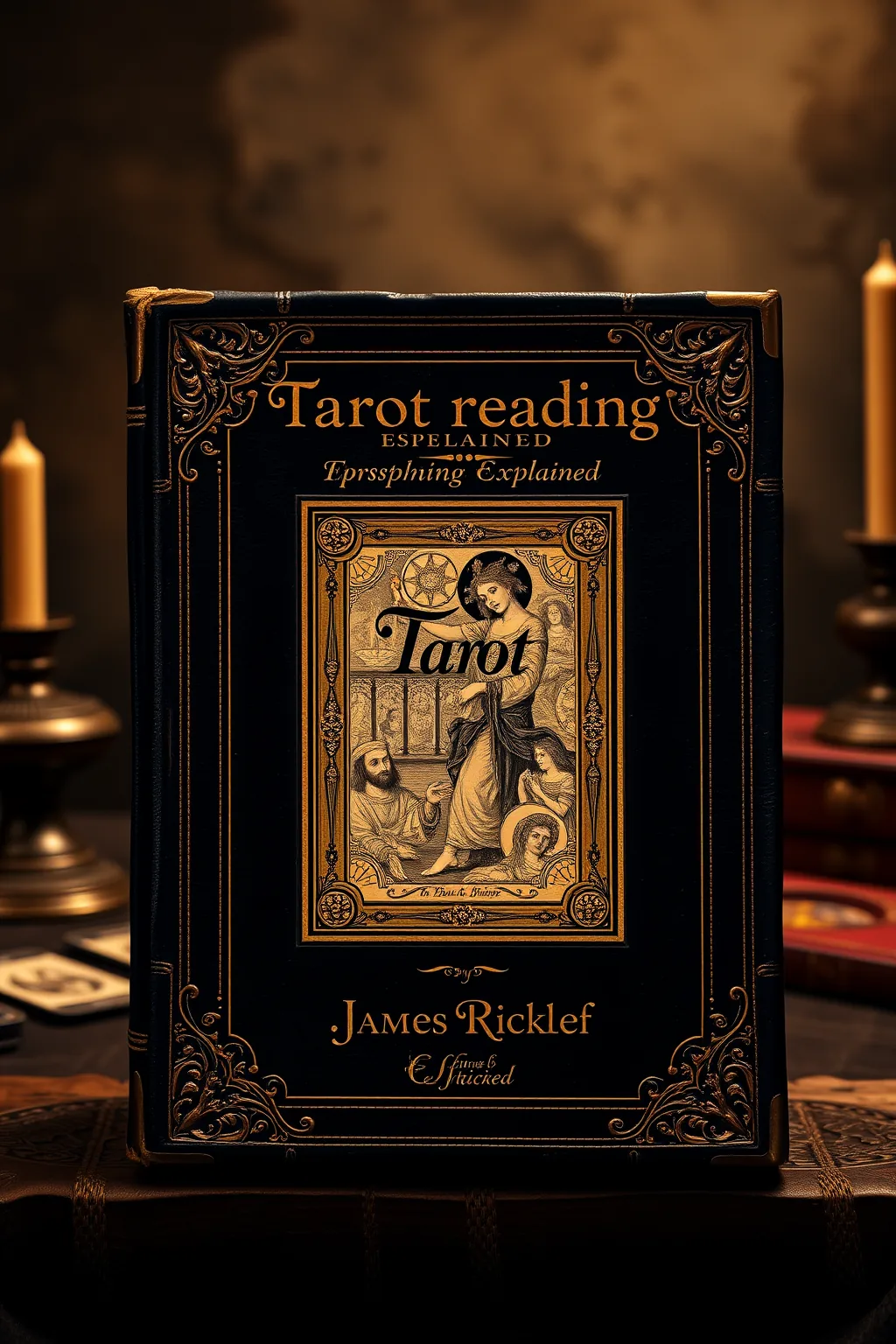
Tarot reading explained



Cassian Rothmann, Senior Critic, Ancient Wisdom, states: 'James Ricklef’s 'Tarot Reading Explained' is an indispensable cornerstone for any serious student of the esoteric arts. He navigates the labyrinthine depths of Tarot symbolism with exceptional clarity and profound reverence. This work doesn't just teach you to read cards; it guides you to commune with their ancient energies. Ricklef’s unique ability to distill complex metaphysical concepts into accessible, yet deeply resonant, prose makes this an essential text for both neophytes and seasoned practitioners seeking to elevate their craft and deepen their intuitive connection to the Tarot’s mystical lexicon. A true gem for the discerning seeker.'
📝 Description
61
James Ricklef's 'Tarot Reading Explained' clarifies the Rider-Waite-Smith system for modern readers.
This book breaks down the Rider-Waite-Smith Tarot deck, card by card. Ricklef explains the symbolism and traditional meanings of the Major and Minor Arcana. He moves beyond simple definitions, showing how the cards relate to each other in a reading. The text addresses how to interpret sequences and develop a personal approach to the cards. It is written for those who want to understand the Tarot's structure and application.
The author discusses the history of the deck and its place within Western esotericism. He suggests methods for personal practice and developing intuition. The goal is to help the reader use the Tarot for self-reflection and insight. Ricklef aims to make the deck accessible without sacrificing its depth.
This guide focuses on practical application and understanding the deck's visual language. It offers a structured way to learn the cards and their divinatory use. The book serves as a reference for interpreting spreads and individual card placements.
The Tarot has a long history within Western esoteric traditions, evolving from playing cards to a complex system of divination and spiritual reflection. This book situates itself within that lineage, particularly focusing on the widely adopted Rider-Waite-Smith deck. It examines the archetypal imagery and numerological correspondences that have been central to its esoteric interpretation for over a century. The work acknowledges the Tarot's role as a tool for exploring consciousness and the relationship between the seen and unseen worlds.
💡 Why Read This Book?
Uncover the soul's hidden language through the archetypal wisdom of the Tarot. 'Tarot Reading Explained' offers a gateway to profound self-discovery and intuitive mastery, moving beyond simple fortune-telling to explore the Tarot's spiritual and philosophical underpinnings. Ideal for seekers, practitioners, and students of esoteric traditions who wish to engage with the cards on a deeper, more meaningful level.
⭐ Reader Reviews
Honest opinions from readers who have explored this book.
❓ Frequently Asked Questions
What makes this book different from other Tarot guides?
This book delves into the esoteric and philosophical underpinnings of Tarot, viewing it as a spiritual tool for self-discovery rather than just a predictive mechanism. It emphasizes understanding the deep symbolism and archetypal energies inherent in the cards.
Is this book suitable for absolute beginners?
Yes, while it explores profound esoteric concepts, Ricklef's clear prose makes it accessible to beginners eager to understand the Tarot's deeper meanings and develop a meaningful practice.
Can this book help improve my intuition?
Absolutely. The book guides readers to connect with the intuitive flow of the Tarot, fostering a deeper understanding of symbolic language and encouraging the development of personal insight and intuitive perception.
What kind of Tarot deck is recommended?
While the book's principles are universally applicable, it often refers to the Rider-Waite-Smith tradition due to its rich symbolism. However, the core teachings can be adapted to most decks.
How does this book contribute to spiritual growth?
By understanding the Tarot as a map of the human psyche and spiritual journey, readers can gain profound insights into their life's path, challenges, and potential, fostering personal transformation and spiritual enlightenment.
🔮 Key Themes & Symbolism
Archetypal Symbolism and the Collective Unconscious
This book explores the Tarot as a powerful repository of archetypal imagery, drawing connections to the collective unconscious as described by Carl Jung. Each card is presented not merely as an image, but as a doorway to primal human experiences, emotions, and spiritual truths. Ricklef illuminates how these universal symbols resonate within the individual psyche, offering useful insights into the human condition and the underlying patterns that shape our lives and destinies. Understanding these archetypes allows for a richer, more intuitive interpretation of the cards.
The Tarot as a Spiritual Path and Divinatory Art
Beyond simple prediction, 'Tarot Reading Explained' positions the Tarot as a sacred tool for spiritual inquiry and personal evolution. It guides readers to perceive the cards as allies on a journey of self-discovery, revealing pathways to understanding karma, destiny, and the intricate interplay between free will and fate. The book emphasizes the ethical and mindful practice of divination, encouraging practitioners to approach readings with reverence, intuition, and a commitment to informative truth, thereby fostering spiritual growth and deeper connection to the cosmos.
Decoding the Language of the Soul: Symbolism and Intuition
James Ricklef masterfully deciphers the nuanced language of Tarot symbolism, revealing how colors, numbers, and figures on each card communicate profound messages. This volume empowers readers to move beyond rote memorization, cultivating a direct, intuitive connection with the cards. It teaches how to perceive the subtle energies and interconnectedness of the deck, fostering a personal dialogue between the reader's inner wisdom and the wisdom of the Tarot. This approach transforms Tarot reading into an act of profound self-awareness and soul-listening.
💬 Memorable Quotes
Direct passages from the work, attributed to the author.
“Each card whispers a story of the human journey.”
— This highlights the archetypal and narrative nature of the Tarot, suggesting that every card holds wisdom relevant to universal human experiences and life stages.
“Intuition is the key that unlocks the Tarot's deeper meanings.”
— This emphasizes the importance of developing personal insight and receptivity, positioning intuition as the primary faculty for truly understanding the Tarot's esoteric messages.
“The symbols are ancient guides to modern truths.”
— This points to the enduring relevance of Tarot symbolism, suggesting that these time-tested archetypes offer profound wisdom applicable to contemporary life and challenges.
“To read the Tarot is to read the self.”
— This profound statement underscores the introspective nature of Tarot reading, framing it as a practice of self-exploration and psychological discovery.
💡 Key Ideas
Editorial paraphrase of the work's core concepts — not direct quotes.
The Tarot is a mirror to the soul.
This quote captures the book's core philosophy: the Tarot reflects our inner landscape, offering insights into our deepest thoughts, feelings, and potential paths.
🌙 Esoteric Significance
Tradition
This work deeply appeals to the Western Esoteric Tradition, particularly drawing upon Hermeticism, Kabbalah, and Alchemy, as popularized by occult revival movements of the late 19th and early 20th centuries. It views the Tarot as a microcosm of the universe and a map of the soul's journey, aligning with the Hermetic principle of 'As Above, So Below.' The structured symbolism and archetypal narratives are seen as keys to unlocking higher consciousness and understanding divine principles within the human experience.
Symbolism
The Tarot's symbolism is rich and multi-layered, drawing from mythology, astrology, numerology, and elemental forces. Ricklef emphasizes how each image, color, and number on the cards carries profound meaning, representing universal archetypes and energies. From the Fool's leap of faith to the Empress's nurturing abundance and the Hierophant's spiritual guidance, the deck presents a symbolic narrative of creation, human experience, and spiritual evolution. Understanding this symbolic language is presented as the primary means of accessing the Tarot's wisdom.
Modern Relevance
In an age often characterized by disconnection and rapid change, the Tarot offers a grounding anchor and a profound tool for introspection. 'Tarot Reading Explained' makes this ancient wisdom accessible, providing a framework for navigating personal challenges, fostering self-awareness, and cultivating intuition. The book's emphasis on archetypal truths and spiritual growth resonates deeply with contemporary seekers looking for meaning, guidance, and a more conscious connection to themselves and the universe, proving the Tarot's enduring power as a divinatory and spiritual practice.
👥 Who Should Read This Book
This informative guide is a treasure for a diverse audience. For the **aspiring beginner**, it provides a clear, yet profound, introduction to the Tarot's symbolic language and its potential as a spiritual tool. **Esoteric scholars** will appreciate its insightful exploration of archetypal psychology and its connections to Western mystical traditions. **Spiritual seekers** will find it an invaluable companion for self-discovery, intuitive development, and deepening their connection to the cosmos. **Practitioners** looking to refine their readings and move beyond superficial interpretation will benefit from its emphasis on depth, symbolism, and mindful engagement with the cards.
📜 Historical Context
The resurgence of interest in esoteric subjects during the late 19th and early 20th centuries saw the Tarot evolve from a simple game into a complex divinatory and spiritual system. Influenced by occult societies like the Hermetic Order of the Golden Dawn and figures such as A.E. Waite and Pamela Colman Smith, the Rider-Waite-Smith deck, published in 1909, revolutionized Tarot interpretation with its richly illustrated Major Arcana and the now-standard pip card imagery. This era was marked by a desire to rediscover ancient wisdom and explore the hidden potentials of the human mind and spirit. James Ricklef's work stands within this lineage, offering a modern yet deeply traditional interpretation, connecting contemporary seekers to the enduring mystical currents that have shaped Tarot study for over a century.
📔 Journal Prompts
Reflect on the archetype of the Fool in your own life. Where are you being called to take a leap of faith?
Choose a card that appeals to a current challenge. How does its symbolism offer guidance or a new perspective?
How can you integrate the wisdom of a specific Tarot card into your daily practice or decision-making process?
Consider the elemental influences within a spread you’ve performed. How do they interact and what story do they tell?
Meditate on the concept of 'As Above, So Below' in relation to a Tarot reading. What connections can you draw between your inner world and external circumstances?
🗂️ Glossary
Archetype
A universal, inherited pattern of thought or imagery derived from the experience of the human race, present in the collective unconscious. In Tarot, these are embodied by figures like The Magician, The High Priestess, and The Emperor.
Divination
The practice of seeking knowledge of the future or the unknown by supernatural means. In Tarot, it involves interpreting card symbolism to gain insight into present situations and potential future outcomes.
Esoteric
Intended for or likely to be understood by only a small number of people with a specialized knowledge or interest. In Tarot, this refers to the hidden spiritual and philosophical meanings beyond the surface interpretation.
Kabbalah
A system of Jewish mysticism that involves a mystical interpretation of the Hebrew scriptures, often represented by the Tree of Life, which has influenced Tarot symbolism and structure.
Rider-Waite-Smith Deck
A highly influential Tarot deck created by Arthur Edward Waite and illustrated by Pamela Colman Smith, known for its fully illustrated Minor Arcana and detailed symbolism, forming the basis for many modern decks.
This book appears in 3 collections
🔮 Readers Also Liked
Browse all →
More by James Ricklef
All books →
From the “Tarot” Collection
View all →
More Free Divination & Tarot Books
View all →