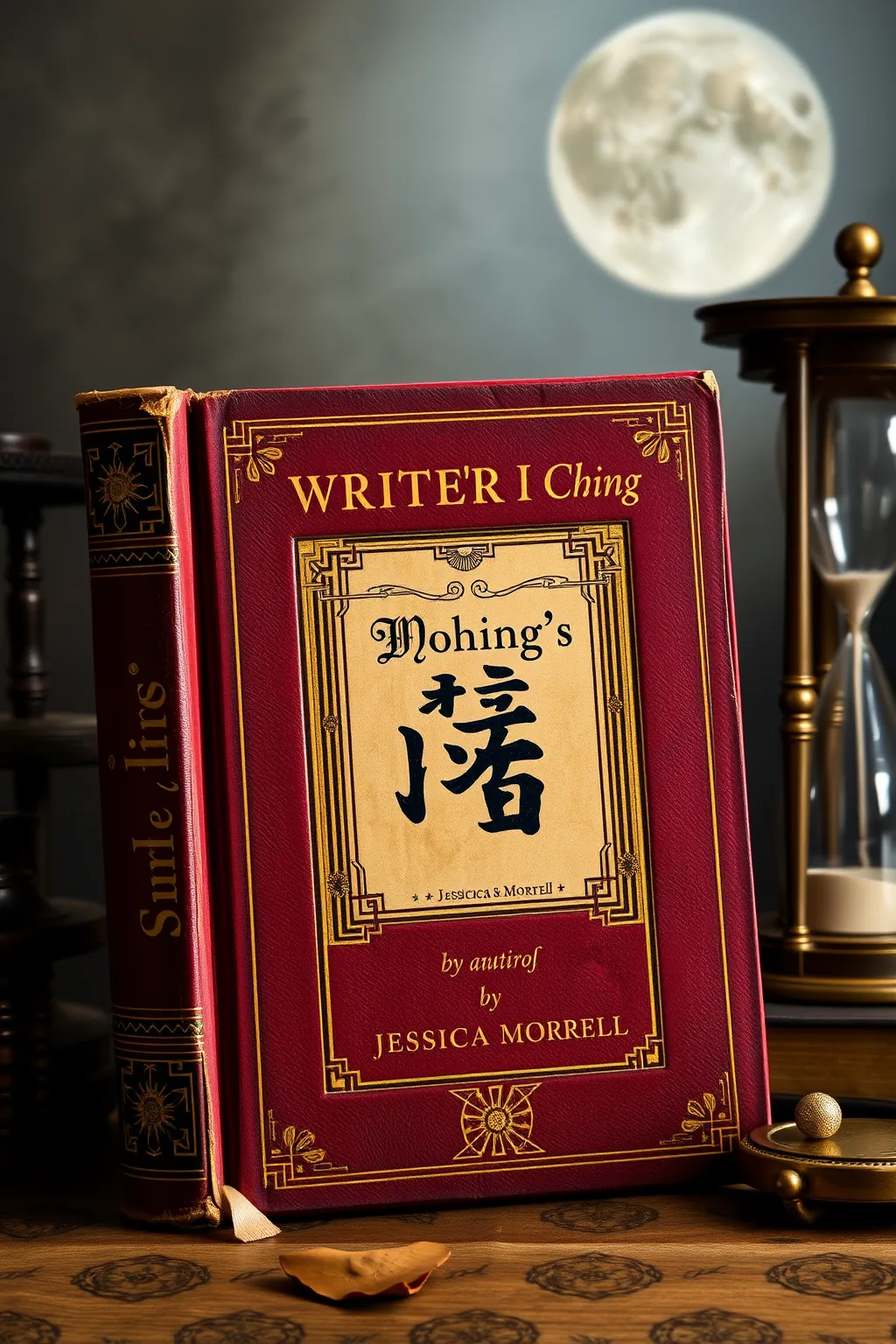
Writer's I Ching
 62
62

Writer's I Ching



Sophia Crane (Associate Editor) — Jessica Morrell's 'Writer's I Ching' is a revelation for anyone who grapples with the sacred art of writing. Morrell's insightful application of the Yi Jing’s profound wisdom to the author's journey is nothing short of brilliant. She demystifies the ancient oracle, revealing its potent symbolism as a guide for navigating creative blocks, finding inspiration, and understanding the cyclical nature of literary endeavors. This book offers a unique, esoteric perspective, transforming the daunting task of writing into a divinatory practice. It speaks directly to the soul of the creator, providing a framework for deeper self-discovery and more potent storytelling. An indispensable tool for writers seeking to imbue their work with genuine magic.
📝 Description
62
Jessica Morrell's 'Writer's I Ching' (2019) connects the ancient Chinese text to the act of writing.
Jessica Morrell's 'Writer's I Ching' applies the principles of the ancient Chinese divination text to the craft of writing. The book frames the 64 hexagrams of the Yi Jing as symbolic guides for authors. Morrell draws parallels between the cosmic patterns represented by the hexagrams and the stages and challenges of the creative process. The text aims to help writers find inspiration and structure in the archetypal images of the I Ching.
It discusses how understanding the hexagrams can inform plot development, character creation, and the overall narrative arc. The book suggests that by consulting the I Ching, writers can gain insight into their creative blocks and discover new approaches to storytelling. It moves beyond simple interpretation, proposing a method for writers to engage with the text actively. The goal is to foster a deeper connection between the writer's inner world and the external act of composition, treating writing as a form of creative divination.
This work sits within the tradition of applying ancient divination systems to modern creative pursuits. The Yi Jing, or Book of Changes, is one of the oldest Chinese classic texts, traditionally used for divination and understanding cosmic shifts. Esoteric interpretations often seek to find universal principles within such systems that can illuminate human experience. Morrell's book adapts this practice for writers, viewing the I Ching's symbolic language as a framework for understanding the dynamics of storytelling and the author's creative journey.
💡 Why Read This Book?
Discover the mystical underpinnings of your creative process. 'Writer's I Ching' offers a unique blend of ancient divination and practical writing advice, transforming inspiration into actionable insight. Ideal for authors, poets, and storytellers seeking to unlock deeper levels of creativity, overcome writer's block, and connect with the universal archetypes that shape narrative. This book is a guide for those who believe writing is a sacred calling.
⭐ Reader Reviews
Honest opinions from readers who have explored this book.
❓ Frequently Asked Questions
What is the Yi Jing and how is it applied in this book?
The Yi Jing, or Book of Changes, is an ancient Chinese divination text. In 'Writer's I Ching,' its 64 hexagrams are expertly mapped onto the various stages and challenges of the writing process, offering symbolic guidance and profound insights for authors.
Is this book for experienced writers only?
No, 'Writer's I Ching' is beneficial for writers at all levels. Beginners will find foundational guidance, while seasoned authors can uncover new layers of understanding and innovative approaches to their craft.
Can this book help with writer's block?
Absolutely. The Yi Jing’s cyclical wisdom and metaphorical language provide unique perspectives and actionable strategies to navigate creative stagnation and reignite your imaginative flow.
What kind of inspiration can I expect from this book?
Expect inspiration rooted in universal archetypes and cosmic patterns. The book helps tap into subconscious wisdom and the subtle energies that fuel authentic storytelling, leading to richer and more meaningful narratives.
Is 'Writer's I Ching' a traditional writing manual?
While it offers practical advice, 'Writer's I Ching' transcends a typical manual by integrating mystical and divinatory principles. It guides the writer’s inner journey as much as their outward craft.
🔮 Key Themes & Symbolism
The Hexagrams as Archetypal Narratives
Morrell ingeniously illustrates how each of the Yi Jing's 64 hexagrams mirrors fundamental human experiences and narrative structures. From the initial spark of creation (Hexagram 1, Qian) to the profound stillness of completion, these ancient symbols become potent metaphors for the writer's journey. Understanding these archetypes allows authors to imbue their stories with universal resonance, tapping into deep psychological truths that connect with readers on a profound level. This theme explores how the wisdom of the I Ching can inform plot development, character arcs, and the overarching thematic coherence of a written work, transforming the act of writing into a dialogue with cosmic patterns.
Divination as a Creative Catalyst
This book posits that the act of consulting the I Ching is not merely predictive but deeply generative for writers. By engaging with the oracle, authors are prompted to look beyond conscious thought, accessing intuition and subconscious insights. The hexagrams act as mirrors, reflecting the writer's inner landscape and offering novel perspectives on creative challenges. This theme examines how the structured inquiry of divination can break down mental barriers, foster serendipitous connections, and inspire original ideas that might otherwise remain dormant. It transforms the writing process into an active exploration of hidden knowledge and creative potential.
The Sacredness of Authorship
Jessica Morrell elevates the practice of writing from a craft to a sacred endeavor. 'Writer's I Ching' frames authorship as a spiritual path, where the writer acts as a conduit for universal truths and archetypal energies. The book encourages a reverence for the creative process, emphasizing the importance of mindfulness, intention, and the cultivation of inner stillness. It suggests that by aligning with the wisdom of the I Ching, writers can imbue their work with a profound sense of purpose and a connection to something larger than themselves, transforming their writing desk into an altar of inspiration and their words into offerings of meaning.
💬 Memorable Quotes
Direct passages from the work, attributed to the author.
“Each hexagram is a story waiting to be told.”
— This emphasizes the narrative potential inherent in the I Ching's symbolic structure, framing the ancient wisdom as a rich source of inspiration for crafting compelling tales.
“Where inspiration falters, divination illuminates.”
— This succinctly captures the book's core premise: using the I Ching as a tool to overcome creative blocks and find new pathways for expression when conventional methods fail.
“The blank page is an oracle, waiting for your query.”
— This poetic statement re-frames the daunting blank page as an opportunity for discovery, akin to consulting an oracle, inviting the writer to engage in a process of revelation.
“Write not just words, but worlds born of cosmic patterns.”
— This encourages writers to move beyond superficial storytelling, aiming to create profound narratives that resonate with universal archetypes and hidden universal order.
💡 Key Ideas
Editorial paraphrase of the work's core concepts — not direct quotes.
The I Ching whispers secrets to the soul of the scribe.
This quote highlights the mystical connection between the ancient text and the writer's inner world, suggesting that the I Ching offers profound, intuitive guidance specifically for creative individuals.
🌙 Esoteric Significance
Tradition
This work draws heavily from the Taoist tradition, specifically the philosophical and divinatory aspects of the Yi Jing. It also appeals to Jungian psychology, particularly its exploration of archetypes and the collective unconscious, and aligns with modern esoteric philosophies that emphasize the interconnectedness of all things and the power of symbolic language to unlock hidden knowledge. The approach is deeply rooted in the concept of 'wu wei' (non-action or effortless action) as it pertains to the creative flow.
Symbolism
The core symbolism lies in the 64 hexagrams of the Yi Jing, each representing a fundamental situation or dynamic. These are interpreted not just as abstract concepts but as potent metaphors for the writer's journey: the initial spark of an idea, the struggle with narrative development, the breakthrough of inspiration, and the challenges of revision. The imagery within each hexagram, such as mountains, water, thunder, and fire, is explored for its symbolic resonance with the writer's internal and external creative landscape.
Modern Relevance
In a world saturated with information and demanding constant output, 'Writer's I Ching' offers a profound antidote. It provides a framework for writers to slow down, connect with their intuition, and tap into a deeper, more authentic source of creativity. Its relevance lies in its ability to transform the often solitary and anxiety-ridden process of writing into a mindful, divinatory practice, fostering resilience, insight, and a more meaningful connection to one's art. It speaks to the contemporary seeker looking for tools to work through the complexities of life and creativity with wisdom and grace.
👥 Who Should Read This Book
This book is a treasure for any individual engaged in the act of creation, particularly writers of fiction, poetry, and non-fiction. **Beginners** will find a unique and supportive guide that clarifies the creative process, turning daunting challenges into opportunities for discovery. **Scholars** of esoteric traditions and comparative literature will appreciate the nuanced application of the Yi Jing and its philosophical underpinnings. **Seekers** of deeper meaning and spiritual connection will find in authorship a path to self-understanding and cosmic alignment. **Practitioners** of divination or creative arts will discover a powerful, synergistic tool that enhances both their craft and their intuitive abilities, offering a fresh lens through which to view their artistic endeavors.
📜 Historical Context
The 'Writer's I Ching' emerges from a body of esoteric thought and a burgeoning interest in the intersection of ancient wisdom and modern creative practices. Its roots can be traced back to the enduring legacy of the Yi Jing, a text that has guided philosophers, strategists, and mystics for millennia. The mid-to-late 20th and early 21st centuries have witnessed a resurgence of interest in divination, mindfulness, and the application of symbolic systems to personal growth and professional development. Jessica Morrell's work situates itself within this contemporary context, drawing inspiration from Jungian archetypes, transpersonal psychology, and the perennial wisdom traditions. By bridging the gap between the philosophical depth of Chinese classical thought and the practical needs of contemporary writers, the book reflects a broader cultural movement seeking deeper meaning and authentic expression in an increasingly complex world. It acknowledges the historical significance of the I Ching as a tool for understanding change and the human condition, while innovating its application for the unique challenges faced by creators today.
📔 Journal Prompts
Reflect on a current writing project. Cast a hexagram and interpret its message for your work. What does the imagery suggest about your next steps?
Consider a character you are developing. How might a specific hexagram illuminate their inner conflicts or potential growth?
When facing a creative block, what 'change' does the I Ching suggest is necessary in your approach to writing?
Explore the 'lines' of a hexagram relevant to your writing process. What specific advice or insights do these shifting energies offer?
How can the concept of 'balance' represented in certain hexagrams be applied to achieving harmony between your writing life and other aspects of your existence?
🗂️ Glossary
Hexagram
A six-line symbol composed of broken (yin) and unbroken (yang) lines, forming one of the 64 fundamental archetypal situations or transformations in the I Ching.
Yang
The unbroken line in I Ching symbolism, representing active, masculine, light, and dynamic principles.
Yin
The broken line in I Ching symbolism, representing passive, feminine, dark, and receptive principles.
Trigram
A three-line symbol, one of eight basic combinations of yin and yang, which form the building blocks of the hexagrams.
Oracle
A person or agency considered to be a source of divine or inspired wisdom or prophecy, in this context, the I Ching itself.
This book appears in 3 collections
🔮 Readers Also Liked
Browse all →






From the “Tarot” Collection
View all →






More Free Divination & Tarot Books
View all →



![Camino de perfección [por] Santa Teresa de Jesús](/img/thumb/camino-de-perfecci-n-por-santa-teresa-de-jes-s-teresa-of-avila.webp)