Tarot
 61
61

Tarot



Alaric Kestrel, Metaphysical Studies Reviewer: Myron Goldstein's 'Tarot' stands as a monumental achievement in esoteric literature. It masterfully distills centuries of occult wisdom, presenting the Tarot not as a mere fortune-telling tool, but as a profound map of the human psyche and the cosmos. Goldstein's erudition shines through, illuminating the intricate symbolism and numerological underpinnings with unparalleled clarity. This work is indispensable for practitioners seeking to deepen their understanding and for scholars of mysticism. It transcends superficial interpretation, offering genuine insights into the transformative power of these ancient archetypes. An essential acquisition for any serious student of the esoteric arts.
📝 Description
61
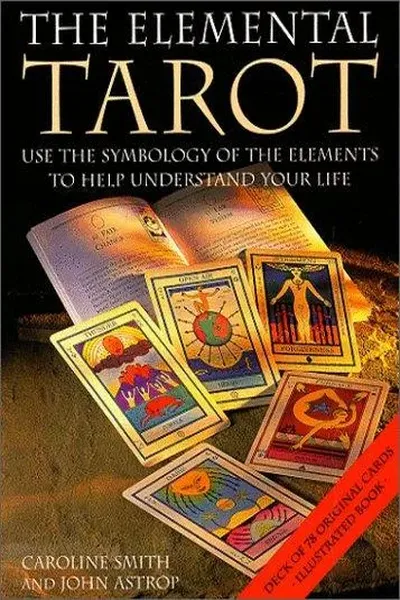
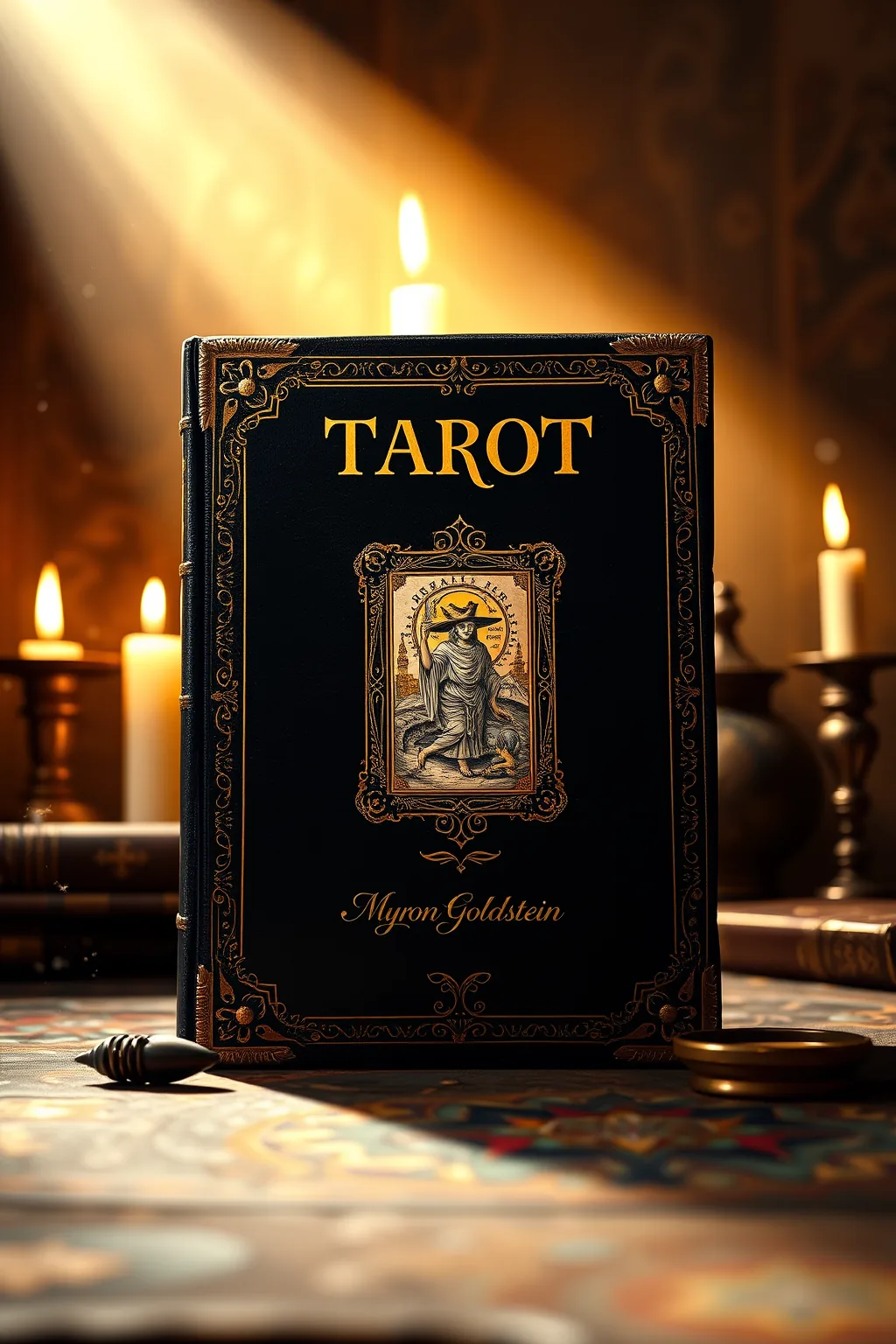
Myron Goldstein's 1988 Tarot book connects alchemical processes with Jungian archetypes.
Myron Goldstein's 1988 book examines the Tarot not simply as a divination tool but as a system of symbolic language. It details how the Major and Minor Arcana's imagery relates to alchemical stages, Kabbalistic structures, and the psychological archetypes identified by Carl Jung. Goldstein aims to illuminate the deeper meanings within these symbols, presenting them as a framework for understanding human experience and transformation.
The text encourages readers to engage with the Tarot's symbolic depth. It suggests that by studying these archetypes and their historical associations, individuals can gain insight into personal growth and the broader patterns of existence. The book positions the Tarot as a means to decipher subconscious messages and to recognize the underlying order in life.
This work situates the Tarot within a Western esoteric tradition that began formalizing its symbolic systems in the late 19th and early 20th centuries. It draws on the Hermetic Order of the Golden Dawn's integration of Kabbalah and Tarot, as well as later psychological interpretations. Goldstein's approach reflects a period where esotericists sought to synthesize ancient traditions with modern psychological theories, particularly Jungian analytical psychology, to understand the Tarot's efficacy as a tool for personal development and spiritual insight.
💡 Why Read This Book?
Uncover the profound symbolic language of the Tarot, revealing its deep connections to ancient wisdom traditions. This book is ideal for seekers yearning for self-knowledge, practitioners aiming to elevate their readings, and scholars fascinated by the intersection of mysticism and divination. Discover the archetypal forces that shape our lives and learn to navigate your personal journey with greater insight and purpose.
⭐ Reader Reviews
Honest opinions from readers who have explored this book.
❓ Frequently Asked Questions
What makes this Tarot book unique?
Goldstein's 'Tarot' distinguishes itself by exploring the deep esoteric and philosophical underpinnings, moving beyond simple divinatory meanings to reveal the Tarot's role as a map of consciousness and spiritual evolution.
Is this book suitable for beginners?
While comprehensive, Goldstein's accessible yet profound explanations make it valuable for beginners willing to engage deeply. It offers a solid foundation for those serious about understanding the Tarot's mysteries.
What esoteric traditions are explored?
The book intricately weaves together Kabbalistic principles, alchemical symbolism, Hermetic philosophy, and Jungian psychology, demonstrating the Tarot's multifaceted esoteric heritage.
How does this book enhance Tarot readings?
By understanding the deeper archetypal and energetic currents, readers can conduct more nuanced, insightful, and transformative readings, connecting with the querent on a soul level.
Can this book be read for general philosophical insight?
Absolutely. The Tarot serves as a vehicle for profound philosophical exploration, offering timeless wisdom on life, consciousness, and the human condition, making it rewarding even without practical divinatory intent.
🔮 Key Themes & Symbolism
Archetypal Journeys of the Soul
This theme studies the Major Arcana as a symbolic representation of the soul's progression through various stages of spiritual development and self-discovery. Goldstein illuminates how figures like The Fool, The Magician, and The High Priestess embody fundamental human experiences and archetypal energies that guide us through life's initiations, challenges, and ultimate transformations. It is a profound exploration of the inner landscape, mirroring the outer journey.
The Kabbalistic Tree of Life and the Tarot
A core part of esoteric understanding, this theme meticulously maps the Tarot trumps and suits onto the Sephiroth of the Kabbalistic Tree of Life. Goldstein reveals the divine blueprint and cosmic order encoded within the cards, demonstrating how each card's position and symbolism corresponds to specific energetic emanations and spiritual pathways. This connection offers a profound framework for understanding universal forces and their manifestation in human experience.
Alchemical Processes and Tarot Symbolism
This section uncovers the hidden alchemical allegories woven into the Tarot imagery. Goldstein elucidates how the cards depict the Great Work – the process of spiritual purification, transformation, and the attainment of gnosis. From the initial nigredo of the hanged man to the final rubedo of the Sun, the Tarot becomes a symbolic recipe for the transmutation of the base self into the enlightened consciousness, revealing a profound path of spiritual alchemy.
💬 Memorable Quotes
Direct passages from the work, attributed to the author.
“Each card is a whisper from the divine, a cipher waiting to be decoded.”
— This highlights the sacred and mystical nature of the Tarot, positioning the cards as conduits of spiritual knowledge that require dedicated study and intuition to understand.
“The Fool's journey is our journey, a perpetual dance between innocence and wisdom.”
— This interpretation focuses on the archetypal significance of The Fool, suggesting that the entire Tarot spread can be seen as a metaphor for the continuous cycle of learning, growth, and transformation inherent in life.
“Within the seventy-eight keys lie the blueprints of creation and the destiny of man.”
— This profound statement underscores the comprehensive scope of the Tarot, suggesting it holds keys to understanding both the genesis of the cosmos and the predetermined or potential paths of human life.
💡 Key Ideas
Editorial paraphrase of the work's core concepts — not direct quotes.
The Tarot is a mirror to the soul, reflecting the hidden truths of our existence.
This quote emphasizes the Tarot's function as a tool for introspection and self-awareness, suggesting that the cards reveal not external fate, but the inner range of the individual.
To read the Tarot is to read the language of the universe.
This quote elevates the Tarot beyond simple divination, presenting it as a universal symbolic system that connects the individual to the broader cosmic order and its underlying principles.
🌙 Esoteric Significance
Tradition
This work is deeply rooted in the Western Esoteric Tradition, drawing heavily from Hermeticism, Kabbalah, and Gnosticism. It positions the Tarot as a microcosm of the universe, a sacred text containing the principles of creation, spiritual evolution, and the path to enlightenment, intricately linking it to ancient mystical cosmologies and philosophical systems.
Symbolism
Goldstein meticulously unpacks the strong symbolism of the Tarot, explaining how each card's imagery, numerology, and position within the deck represents specific archetypes, divine emanations, alchemical processes, and psychological states. The arcana are presented as keys to understanding the fundamental forces that govern reality and the human psyche.
Modern Relevance
In contemporary times, Goldstein's interpretation offers a profound framework for working through the complexities of modern life. The Tarot's archetypes provide timeless insights into personal growth, emotional intelligence, and spiritual awareness, serving as a powerful tool for self-reflection, decision-making, and fostering a deeper connection to one's inner wisdom and the universal consciousness.
👥 Who Should Read This Book
This important work is a treasure for the dedicated seeker yearning for profound understanding. Beginners with a serious commitment to esoteric study will find a comprehensive, albeit challenging, introduction. Experienced Tarot practitioners will discover new depths and esoteric connections to elevate their practice. Scholars of mysticism, occultism, and comparative religion will appreciate the meticulous scholarship and integration of diverse traditions. Ultimately, anyone drawn to the ancient mysteries and seeking a deeper map of the soul's journey will find this book an invaluable companion.
📜 Historical Context
Myron Goldstein's 'Tarot' emerged during a period of resurgent interest in occultism and esoteric philosophies, particularly in the mid-to-late 20th century. This era saw a significant revival of Hermeticism, Kabbalah, and Jungian psychology, all of which profoundly influenced the interpretation of Tarot. Unlike earlier, more purely divinatory guides, Goldstein's work contributed to a sophisticated, scholarly approach, integrating these diverse mystical traditions. It was a time when the Tarot was being re-examined not just as a tool for prediction, but as a profound psychological and spiritual map, reflecting a broader cultural quest for meaning and inner understanding in a rapidly changing world.
📔 Journal Prompts
Reflect on the Fool's journey as depicted in the Major Arcana. Where are you in your own 'Fool's journey' today?
Choose a Tarot card that speaks to a current challenge you are facing. How does its symbolism offer guidance or a new perspective?
Explore the connection between a specific Tarot suit (Wands, Cups, Swords, Pentacles) and an area of your life. How do these energies manifest?
Meditate on the concept of the 'Great Work' as presented through alchemical Tarot symbolism. What 'base' elements within yourself are you seeking to transmute?
Consider the Kabbalistic correspondences of a favorite Tarot card. How does its placement on the Tree of Life deepen your understanding of its meaning?
🗂️ Glossary
Archetype
Universal, archaic patterns and images that derive from the collective unconscious and are the psychic conditions of the evolution of consciousness. In Tarot, they represent fundamental human experiences and energies.
Kabbalah
A complex system of Jewish mysticism that explores the divine nature and the relationship between God and the created universe, often represented by the Tree of Life, which is intricately linked to Tarot symbolism.
Hermeticism
A philosophical and religious tradition based on the purported teachings of Hermes Trismegistus, emphasizing esoteric knowledge, the unity of all things, and the principles of correspondence ('As Above, So Below').
Alchemical Processes
Symbolic stages in the Great Work of spiritual transformation, often represented in Tarot imagery, aiming for purification, integration, and the attainment of higher consciousness or 'enlightenment'.
Gnosis
Spiritual knowledge or insight, particularly in Gnosticism, often achieved through direct experience or revelation, which leads to salvation or spiritual liberation.
This book appears in 3 collections
🔮 Readers Also Liked
Browse all →
From the “Tarot” Collection
View all →
More Free Divination & Tarot Books
View all →