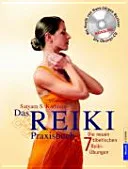
Das Reiki-Praxisbuch
 74
74

Das Reiki-Praxisbuch
Satyam S. Kathrein’s Das Reiki-Praxisbuch offers a clear, if somewhat conventional, exposition of Reiki's practical application. The strength of the text lies in its systematic approach, breaking down the energetic principles and healing techniques into manageable steps. Kathrein’s particular focus on integrating Reiki into daily life, beyond formal healing sessions, provides a valuable perspective for practitioners. However, the work occasionally leans towards a generalized presentation of Reiki, lacking the specific historical nuances or deeper philosophical explorations found in more specialized texts. For instance, the explanation of the 'Reiki symbols' remains introductory, offering functional descriptions rather than a thorough exploration of their esoteric origins or deeper meanings.
Ultimately, it serves as a competent and accessible manual for those seeking to learn or refine their Reiki practice.
📝 Description
74
Satyam S. Kathrein's Das Reiki-Praxisbuch, published in 2003, explains Reiki as both therapy and spiritual path.
Das Reiki-Praxisbuch, by Satyam S. Kathrein, is a practical guide to the Japanese healing art of Reiki. Published in 2003, the book presents Reiki not solely as a therapeutic method but as a way toward spiritual growth. It details the methods for channeling universal life force energy, known as 'Ki' or 'Qi', for personal healing and to help others. The book is for individuals interested in energy work, holistic health, and personal development. It suits those new to Reiki who want to grasp its basic ideas and practical uses, and also those already practicing Reiki who wish to improve their understanding and methods. A genuine interest in subtle energies and their role in well-being is assumed. Kathrein's work appeared when interest in Eastern healing arts and alternative therapies was growing worldwide. Reiki, started by Mikao Usui in Japan in the early 20th century, had become widespread in the West by this time. This book adds to discussions about blending spiritual practices with modern life, giving a structured way to apply Reiki, building on the work of Usui and later teachers.
Published in 2003, Kathrein's book engages with the global rise of interest in Eastern healing modalities. Reiki, originating from Mikao Usui in early 20th century Japan, had by then established a significant presence in Western spiritual circles. This text contributes to the ongoing integration of such practices into daily life, providing a methodical approach to Reiki application. It builds upon Usui's foundational teachings and the developments by subsequent Reiki masters, placing it within the lineage of modern spiritual healing traditions.
💡 Why Read This Book?
• Understand the foundational 'Five Principles of Reiki' as practical ethical guidelines for daily life, directly applicable to fostering personal harmony and mindful interaction, as detailed in the book's early sections. • Gain practical instruction on channeling 'Ki' energy for therapeutic purposes, a core technique emphasized throughout the manual, enabling self-healing and support for others. • Explore the concept of 'Gendai Reiki-ho', a modern evolution of Mikao Usui's system, offering a contemporary perspective on traditional Japanese energy work, as presented in the book's methodological chapters.
⭐ Reader Reviews
Honest opinions from readers who have explored this book.
❓ Frequently Asked Questions
When was Das Reiki-Praxisbuch first published?
Das Reiki-Praxisbuch by Satyam S. Kathrein was first published in 2003, reflecting the growing interest in Eastern healing modalities in the early 21st century.
What is the primary focus of Das Reiki-Praxisbuch?
The book's primary focus is on the practical application of Reiki, detailing techniques for channeling universal life force energy for self-healing and assisting others, alongside its spiritual development aspects.
Is Das Reiki-Praxisbuch suitable for beginners?
Yes, the book is designed for both beginners and existing practitioners, offering foundational concepts and hands-on applications of Reiki in a structured manner.
What is 'Ki' in the context of this book?
'Ki' (also known as 'Qi') refers to the universal life force energy that Reiki practitioners learn to channel for healing and well-being, as explained throughout the text.
Does the book discuss the history of Reiki?
While primarily practical, the book touches upon the lineage of Reiki, referencing its founder Mikao Usui and the development of modern adaptations like 'Gendai Reiki-ho'.
What are the 'Five Principles of Reiki' mentioned in the book?
The Five Principles are ethical and philosophical guidelines presented by Mikao Usui, intended to foster a balanced and harmonious life, which Kathrein integrates into the practice of Reiki.
🔮 Key Themes & Symbolism
Practical Energy Channeling
The core of Das Reiki-Praxisbuch lies in its systematic approach to teaching the practical skills of channeling 'Ki' or universal life force energy. It details specific hand positions and techniques designed to direct this energy for therapeutic outcomes, emphasizing its use in self-healing and for assisting others. The book presents this not as a mystical art accessible only to a few, but as a learnable skill that can be integrated into everyday life for promoting balance and well-being.
Reiki as Spiritual Development
Beyond its therapeutic applications, Kathrein positions Reiki as a path for personal and spiritual growth. The 'Five Principles of Reiki', derived from the teachings of Mikao Usui, serve as a philosophical framework. These principles, focusing on living in the present moment, releasing worry, and cultivating gratitude, are presented as integral to the practice, suggesting that consistent application of Reiki principles can lead to a more harmonious and enlightened existence.
Holistic Well-being
The book advocates for a holistic approach to health, where the physical, emotional, and spiritual dimensions are interconnected. Das Reiki-Praxisbuch explores how balancing subtle energies can positively impact overall well-being. Concepts such as 'Chakra' balancing and the flow of energy through the body are discussed, offering insights into maintaining equilibrium and supporting the body's natural healing capabilities through consistent Reiki practice.
Modern Adaptations of Reiki
While rooted in the original system founded by Mikao Usui, Kathrein's work engages with modern interpretations and adaptations of Reiki. The text references 'Gendai Reiki-ho', a contemporary approach that seeks to integrate Usui's original methods with contemporary understanding and practice. This theme highlights the evolution of Reiki and its adaptability to different cultural and personal contexts in the 21st century.
💬 Memorable Quotes
Direct passages from the work, attributed to the author.
“Reiki is the bridge between the spiritual world and the physical world.”
— This statement captures the book's view of Reiki as a conduit, enabling the flow of universal spiritual energy into the material realm for the purpose of healing and personal elevation.
“The Five Principles are the foundation for a balanced life.”
— This highlights the ethical and philosophical core of Reiki practice, suggesting that adherence to these principles is as crucial as the energetic techniques for holistic well-being.
“Regular practice transforms not only the recipient but also the practitioner.”
— This interpretation points to the reciprocal nature of Reiki, suggesting that the act of giving healing energy fosters personal growth and energetic shifts within the practitioner themselves.
💡 Key Ideas
Editorial paraphrase of the work's core concepts — not direct quotes.
Channeling Ki requires focused intention and an open heart.
This paraphrase emphasizes the dual nature of effective Reiki practice: the mental clarity needed to direct energy and the compassionate state of being necessary to facilitate healing.
Understand the subtle energy body to address physical ailments.
This paraphrase conveys the book's premise that many physical issues have energetic roots, and by working with the subtle body, one can influence and improve physical health.
🌙 Esoteric Significance
Tradition
Das Reiki-Praxisbuch is situated within the broader esoteric tradition of energy healing and spiritual development, drawing heavily from the lineage established by Mikao Usui in early 20th-century Japan. While Usui's system itself synthesized elements from various Japanese spiritual practices, Kathrein's work contributes to the modern Western interpretation of Reiki, often aligning with New Age philosophies that emphasize personal empowerment and the integration of spiritual principles into daily life. It represents a contemporary evolution of a practice that bridges Eastern energetic concepts with Western accessibility.
Symbolism
Key symbols in Reiki, as presented in works like Kathrein's, include the 'Cho Ku Rei' (Power symbol), often visualized as a spiral or a lightning bolt, signifying the amplification and grounding of energy. The 'Sei Hei Ki' (Harmony symbol) is associated with emotional and mental balance, while the 'Hon Sha Ze Sho Nen' (Connection symbol) relates to transcending space and time for distant healing. These symbols are not merely decorative but are considered energetic keys, unlocking specific qualities of universal life force when invoked with intention.
Modern Relevance
Contemporary thinkers and practitioners in holistic health, mindfulness, and alternative medicine continue to draw upon the principles and techniques outlined in foundational Reiki texts like Kathrein's. Its emphasis on self-care, stress reduction, and accessible energy work aligns with current trends in mental wellness and personal development. Schools and individual practitioners worldwide utilize such guides to teach and perpetuate the practice, demonstrating its enduring relevance in fostering well-being in a fast-paced, modern world.
👥 Who Should Read This Book
• Aspiring Reiki practitioners seeking a structured introduction to the foundational techniques and principles of channeling universal life force energy, as presented by Satyam S. Kathrein. • Individuals interested in exploring energy healing modalities and their application for personal well-being and stress reduction, particularly those drawn to Japanese spiritual practices. • Existing healers or therapists looking to expand their toolkit with practical energy work methods rooted in the tradition of Mikao Usui, offering a complementary approach to their current practice.
📜 Historical Context
Satyam S. Kathrein's Das Reiki-Praxisbuch, published in 2003, entered a landscape significantly shaped by the globalization of Eastern spiritual practices. Mikao Usui founded Reiki in Japan in the early 20th century, and by the turn of the millennium, it had become a widely recognized healing modality in the West, often discussed alongside practices like acupuncture and meditation. The book's emergence coincided with a burgeoning interest in holistic health and alternative therapies, a movement that gained momentum throughout the late 20th and early 21st centuries. While Usui's original system was the bedrock, various schools and adaptations, such as the 'Gendai Reiki-ho' system which Kathrein's work engages with, began to flourish, sometimes diverging in emphasis or methodology. This period also saw academic and popular discourse grappling with the integration of such practices into mainstream wellness, contrasting with more established Western medical paradigms.
📔 Journal Prompts
The energetic exchange during a Reiki session, as described in the book.
Personal reflections on applying the 'Five Principles of Reiki' to daily challenges.
The sensation and intention behind channeling 'Ki' energy.
How the concept of 'Chakra' balancing relates to personal emotional states.
Integrating the use of a specific Reiki symbol, such as 'Cho Ku Rei', into a meditation practice.
🗂️ Glossary
Ki
The Japanese term for universal life force energy, also known as 'Qi' in Chinese and 'Prana' in Sanskrit. It is the fundamental energy that animates all living things and is channeled during Reiki practice.
Gendai Reiki-ho
A modern system of Reiki that evolved from Mikao Usui's original teachings, often incorporating additional attunements and techniques while maintaining the core principles and practices.
Chakra
Energy centers within the subtle body, according to various Eastern spiritual traditions. There are typically considered to be seven major chakras, each associated with different physical, emotional, and spiritual functions.
Attunement
A spiritual energy transfer process in Reiki, typically performed by a Reiki master, which is believed to open and enhance a student's ability to channel Ki energy.
Mikao Usui
The Japanese Buddhist monk credited with founding the Usui Reiki Ryoho system of natural healing in the early 20th century.
Cho Ku Rei
The first of the primary Reiki symbols, often translated as 'Place the Buddha here' or 'Put the power here'. It is used to increase the power of Reiki and is often visualized as a spiral or vortex.
Sei Hei Ki
The second Reiki symbol, often interpreted as 'God is love' or 'Harmony is created'. It is used for emotional and mental healing, promoting balance and well-being.