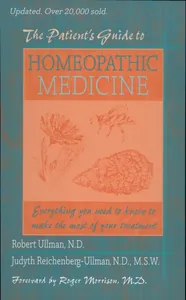
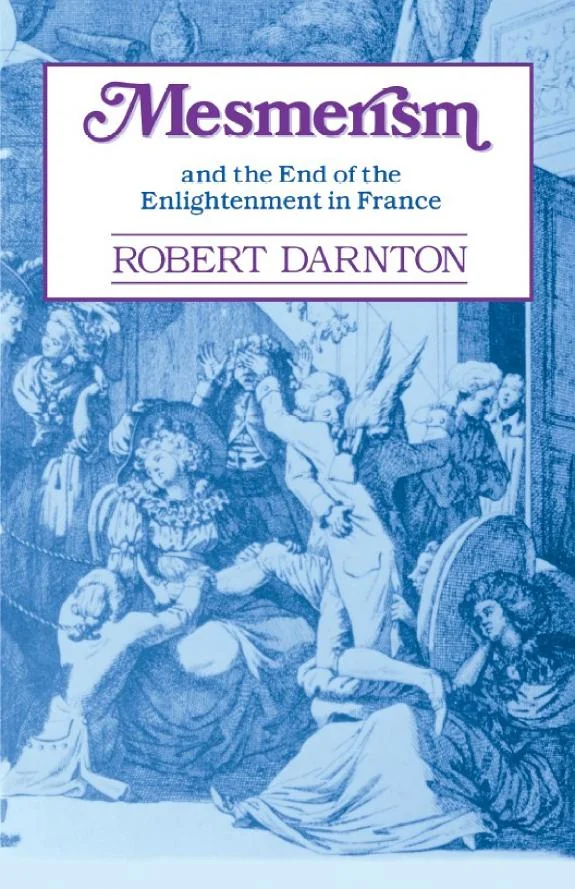
Mesmerism and the End of the Enlightenment in France
 71
71

Mesmerism and the End of the Enlightenment in France
Robert Darnton’s analysis of Mesmerism in late Enlightenment France offers a compelling case study in the diffusion of ideas. The book’s strength lies in its meticulous tracing of how Mesmer’s exotic theories moved from esoteric circles into mainstream Parisian society. Darnton skillfully demonstrates how societal anxieties and a "crisis of certainty" created fertile ground for Mesmer’s claims of a universal healing fluid. One particularly striking aspect is the description of the public demonstrations and the committees formed to investigate Mesmer, highlighting the era’s scientific curiosity and credulity. However, the work occasionally feels more like a sociological dissection than an exploration of the lived experience of mesmerism; the actual subjective experience of patients or practitioners remains somewhat secondary to the analysis of societal reception. Despite this, Darnton provides a crucial lens through which to view the period's intellectual landscape, showing how even seemingly fringe ideas can reveal fundamental truths about the societies that embrace them. It is a definitive study on the subject.
📝 Description
71
Robert Darnton's 1968 book investigates Mesmerism's hold on Paris at the Enlightenment's close.
Robert Darnton's "Mesmerism and the End of the Enlightenment in France" examines the widespread fascination with Franz Anton Mesmer's healing theories in late 18th-century Paris. The book details how Mesmer's system, which proposed an invisible natural force – animal magnetism – that could be manipulated to cure illness, captured public attention. Darnton moves beyond a simple recounting of Mesmer's techniques to analyze the social and intellectual currents that allowed his ideas to flourish and spread.
This study is set against the backdrop of a France on the cusp of revolution, where established scientific and social orders were beginning to be questioned. Mesmer arrived in Paris in 1778, amidst a period of intellectual ferment and growing interest in the natural sciences and the human mind. His theories of "animal magnetism" challenged prevailing medical doctrines and resonated with a public seeking new explanations for health and well-being, even as they faced scrutiny from established scientific bodies.
Darnton unpacks concepts such as "animal magnetism" itself, the invisible fluid Mesmer claimed to manipulate; the "crisis of certainty" characterizing the late Enlightenment, where traditional authorities were questioned; and the diffusion of knowledge through salons, popular performances, and printed materials. The book also considers the role of skepticism and credulity in the reception of new scientific ideas.
This work situates Mesmerism not merely as a historical medical fad, but as a significant cultural phenomenon reflecting the late Enlightenment's engagement with invisible forces and alternative healing. It connects Mesmer's system to a broader societal questioning of established authorities and a search for new forms of understanding the natural world and the human body. The book analyzes how such ideas disseminated through various social channels, highlighting the period's readiness for concepts that challenged orthodox science.
💡 Why Read This Book?
• Learn how Franz Anton Mesmer's "animal magnetism" became a Parisian sensation by understanding its promotion through public séances and the commissions investigating it in the 1780s. • Understand the "crisis of certainty" in the late Enlightenment by examining how Mesmer’s fluid theory offered alternative explanations for health and societal anxieties. • Discover the mechanics of idea diffusion by analyzing how esoteric concepts moved through salons and popular culture, as detailed in Darnton’s research.
⭐ Reader Reviews
Honest opinions from readers who have explored this book.
❓ Frequently Asked Questions
When did Franz Anton Mesmer arrive in Paris to promote his theories?
Franz Anton Mesmer arrived in Paris in 1778, initiating a period of intense public interest and debate surrounding his theories of "animal magnetism" and its healing properties.
What was the core concept of Mesmer's theory of "animal magnetism"?
Mesmer's theory posited an invisible natural fluid, "animal magnetism," that permeated the body and could be manipulated by a trained practitioner to restore health and balance.
Which scientific body investigated Mesmer's claims in Paris?
Mesmer's theories were investigated by committees appointed by the Royal Academy of Medicine, which included prominent figures of the era, leading to official skepticism.
What societal condition did Darnton link to the popularity of Mesmerism?
Darnton links Mesmerism's popularity to a "crisis of certainty" in the late Enlightenment, a period marked by skepticism toward established authorities and a search for new explanations.
How did Mesmer's ideas spread through French society?
Mesmer's ideas spread through public demonstrations, private salons, printed pamphlets, and word-of-mouth, making them accessible across various social strata.
What was the reception of Mesmer's work by the established medical community?
The established medical community, represented by bodies like the Royal Academy of Medicine, was largely skeptical of Mesmer's theories, often deeming them unscientific or fraudulent.
🔮 Key Themes & Symbolism
Animal Magnetism's Appeal
The work meticulously details how Franz Anton Mesmer’s concept of "animal magnetism," an invisible vital fluid, captivated French society in the 1780s. It was presented as a universal cure, tapping into a deep-seated desire for health and control amidst a period of scientific and social upheaval. Darnton illustrates how this esoteric theory, though scientifically dubious, offered a compelling alternative to conventional medicine and resonated with the public's growing skepticism towards established institutions.
The Crisis of Certainty
Darnton argues that Mesmerism flourished due to a "crisis of certainty" plaguing the late Enlightenment. As traditional authorities and scientific paradigms were increasingly questioned, a void emerged that Mesmer's theories, however unorthodox, managed to fill. This theme explores how societal anxieties and a widespread intellectual questioning created an environment receptive to novel, even mystical, explanations for natural phenomena and human ailments.
Diffusion of Esoteric Ideas
This study is a seminal examination of how esoteric or pseudoscientific ideas permeate society. Darnton tracks the spread of Mesmer's doctrines through various channels—from elite salons to public performances, and printed media. It highlights the social mechanisms by which novel concepts, even those lacking empirical validation, can gain widespread acceptance and influence public discourse and belief systems.
Science, Belief, and Skepticism
The book probes the intricate relationship between burgeoning scientific inquiry, popular belief, and entrenched skepticism in the 18th century. It analyzes the formation of committees, like those from the Royal Academy of Medicine, tasked with evaluating Mesmer's claims, revealing the tensions between empirical investigation and the powerful allure of the unexplained. This dynamic shaped how new ideas were perceived and integrated, or rejected, by society.
💬 Memorable Quotes
Direct passages from the work, attributed to the author.
“Mesmer arrived in Paris and began to promulgate an exotic theory of healing.”
— This statement captures the initial impact of Mesmer's arrival, framing his theories as unusual and foreign, yet immediately engaging the public imagination. It sets the stage for understanding Mesmerism not just as a medical fad but as a significant cultural phenomenon.
“A useful contribution to the study of popular culture and the manner in which ideas are diffused down through various social levels.”
— This highlights Darnton's primary analytical focus: how a specific set of beliefs, originating from an individual, permeated society. It underscores the book's value for understanding social history and the dynamics of intellectual dissemination beyond academic circles.
“Mesmer’s system proposed an invisible natural force – animal magnetism – that could be manipulated to cure illness.”
— This succinctly defines the core tenet of Mesmer's controversial healing practice, emphasizing its reliance on an unseen, manipulable energy source, which was both its appeal and its scientific challenge.
“The book details the social and intellectual currents that allowed his ideas to flourish and spread.”
— This indicates Darnton's methodological approach, focusing on the societal context and intellectual milieu rather than solely on Mesmer himself, to explain the widespread adoption of his theories.
💡 Key Ideas
Editorial paraphrase of the work's core concepts — not direct quotes.
The work explores the "crisis of certainty" characterizing the late Enlightenment.
This paraphrased concept points to the intellectual climate of the era, suggesting that established ways of knowing were being questioned, creating an openness to alternative explanations like Mesmerism.
🌙 Esoteric Significance
Tradition
Mesmerism, while presented as a natural science, draws heavily from Hermetic and vitalist traditions that posit unseen energetic forces governing life. It departs from strict Hermeticism by focusing on a universal, externally manipulable fluid rather than internal alchemical transformation, but shares the belief in hidden correspondences and universal energies. Its emphasis on the healer's will and the patient's receptivity echoes Gnostic ideas of hidden knowledge and spiritual influence, albeit secularized.
Symbolism
The primary symbol is "animal magnetism" itself – an invisible, omnipresent fluid representing the hidden forces of nature and the body. The "crisis" or "flux" of this fluid symbolizes both illness and societal instability, with Mesmer acting as the restorer of balance. Another motif is the "imponderable" nature of the force, highlighting the era's fascination with unseen energies like electricity, and the mysterious power of the human will or psyche.
Modern Relevance
Contemporary interest in energy healing modalities, bioenergetics, and even certain forms of psychotherapy that explore subtle energies can be seen as elements of Mesmerism. Thinkers and practitioners in fields like subtle energy medicine, quantum healing, and consciousness studies often reference Mesmer as a precursor who dared to explore non-physical influences on well-being, bridging the gap between scientific inquiry and esoteric understandings of life force.
👥 Who Should Read This Book
• Students of the Enlightenment and French Revolution: Gain critical context on the intellectual and social anxieties that fueled revolutionary sentiment and challenged established norms. • Historians of medicine and science: Understand the development of therapeutic theories beyond empirical validation and the mechanisms of scientific acceptance or rejection. • Scholars of popular culture and belief systems: Analyze how fringe or esoteric ideas gain traction and influence public discourse across different social strata.
📜 Historical Context
Robert Darnton’s "Mesmerism and the End of the Enlightenment in France" plunges into the intellectual ferment of the 1780s, a period marked by a palpable "crisis of certainty" preceding the French Revolution. Franz Anton Mesmer arrived in Paris in 1778, introducing his theories of "animal magnetism" at a time when Enlightenment rationalism was being challenged by a growing interest in the occult, spiritualism, and the burgeoning natural sciences. His ideas offered a seemingly scientific, yet ultimately mystical, explanation for health and illness, resonating with a public disillusioned by traditional medical practices and intellectual authorities. The work’s reception was polarized: while Mesmer gained a devoted following among the populace and some elites, he faced rigorous scrutiny from established scientific bodies. Notably, committees appointed by the Royal Academy of Medicine, including figures like Benjamin Franklin and Antoine Lavoisier, investigated his claims, ultimately dismissing them as lacking scientific basis, yet the popular fascination persisted, demonstrating the complex interplay between scientific authority and public credulity in the era.
📔 Journal Prompts
Franz Anton Mesmer's "animal magnetism" and its societal reception.
The "crisis of certainty" in the late Enlightenment and its connection to Mesmerism.
Analysis of the diffusion of Mesmer's theories through Parisian society.
The role of official investigations, such as those by the Royal Academy of Medicine, in shaping public perception.
Comparing Mesmerism's appeal to contemporary alternative healing practices.
🗂️ Glossary
Animal Magnetism
Franz Anton Mesmer's central theory, positing an invisible, natural fluid that permeates the body and universe, which could be manipulated by a practitioner to cure illness and restore health.
The Crisis of Certainty
A term used to describe the intellectual and social climate of the late Enlightenment, characterized by widespread questioning of traditional authorities, scientific paradigms, and established beliefs.
The Imponderable
Refers to forces or substances that were not easily measured or quantified by the scientific methods of the era, such as electricity, heat, and, by extension, Mesmer's animal magnetism.
Sociology of Ideas
An academic field that studies how ideas are created, spread, accepted, and rejected within societies, examining the social and cultural factors influencing intellectual currents.
Royal Academy of Medicine
A prestigious scientific institution in Paris during the late 18th century, tasked with evaluating new medical theories and practices, which played a key role in officially assessing Mesmer's claims.
Salons
Gathering places for intellectuals, artists, and aristocrats in 18th-century France, where new ideas were discussed and debated, serving as a crucial venue for the diffusion of concepts like Mesmerism.
Diffusion
The process by which ideas, innovations, or cultural traits spread from one social group or individual to another, often across different social strata.
This book appears in 2 collections
🔮 Readers Also Liked
Browse all →








From the “Enlightenment” Collection
View all →





More Free Occult Philosophy Books
View all →