Talking Zen

 81
81

Talking Zen
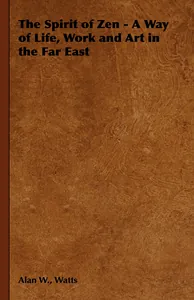
Alan Watts' "Talking Zen" offers an engaging, if somewhat dated, gateway into Zen Buddhist philosophy. Watts excels at translating intricate concepts into relatable language, a skill evident when he discusses the illusion of a separate self, likening it to a wave's existence as distinct from the ocean. His strength lies in dismantling Western dualistic thinking, urging readers toward a more unified perception. However, the work's reliance on transcribed lectures from an earlier era means some of the cultural references and the very framing of Zen for a Western audience can feel a bit like a product of its time. The exploration of "no-mind" provides a compelling counterpoint to the overthinking prevalent in modern life, but the absence of direct engagement with contemporary Zen scholarship leaves a slight void. Ultimately, "Talking Zen" remains a valuable, accessible primer for those new to Zen, particularly for its philosophical provocations.
📝 Description
81
Alan Watts' "Talking Zen" collects his lectures and essays on Zen Buddhism, first published in 2001.
This collection of transcribed lectures and essays, published in 2001, examines the philosophical and spiritual aspects of Zen Buddhism for a Western audience. Rather than a systematic guide, the book offers discussions on Zen's core ideas. Watts frequently connects these concepts to Western thought and psychology, using his familiar clear and often humorous style to explain what might seem difficult to newcomers. The aim is to show Zen not as a strict set of rules, but as a practical way to understand oneself and the world.
The book suits those curious about Eastern philosophies, especially Buddhism, who find academic or purely religious texts intimidating. It appeals to individuals seeking a more experiential spiritual understanding beyond just intellectual study or ritual. Readers interested in the links between Eastern and Western ideas, or those who enjoy clear writing on complex subjects, will find "Talking Zen" useful. It acts as a good starting point for anyone questioning common ideas about self and reality.
Alan Watts' work on Zen Buddhism placed him as a key popularizer of Eastern spirituality in the West during the mid-20th century. Emerging from a period of increased interest in Eastern religions post-World War II, Watts' accessible lectures helped introduce concepts popularized by figures like D.T. Suzuki. This collection reflects the intellectual currents of the 1960s and 70s, a time when alternative spiritualities were explored, yet Watts maintained a focus on philosophical grounding. Its later publication in 2001 consolidated this earlier discourse.
💡 Why Read This Book?
• Gain a practical understanding of "no-mind" as a state of active awareness, distinct from mere emptiness, as explained through Watts' lectures. • Grasp the concept of "emptiness" (sunyata) not as nihilism but as the fundamental interconnectedness of all things, a core tenet explored in the book. • Recognize the illusory nature of a fixed ego, a key insight Watts offers that challenges Western individualism and encourages a more fluid sense of self.
⭐ Reader Reviews
Honest opinions from readers who have explored this book.
❓ Frequently Asked Questions
What is the primary focus of Alan Watts' "Talking Zen"?
"Talking Zen" focuses on demystifying Zen Buddhist philosophy for a Western audience, exploring concepts like "no-mind" and "emptiness" through accessible language and analogies, rather than presenting a rigid doctrine.
When was "Talking Zen" first published?
"Talking Zen" was first published in 2001, compiling lectures and writings by Alan Watts from an earlier period.
Does "Talking Zen" require prior knowledge of Buddhism?
No, "Talking Zen" is designed as an introduction. Watts' clear explanations and use of Western parallels make it accessible even to those with no prior background in Buddhism or Eastern philosophy.
What is the significance of "emptiness" (sunyata) in Watts' explanation?
Watts explains "emptiness" not as nothingness, but as the interdependent nature of reality, where all phenomena exist only in relation to others, challenging notions of inherent, separate existence.
How does "Talking Zen" relate to other Eastern philosophies?
While focused on Zen, Watts often draws comparisons with other Eastern traditions and Western thought, highlighting shared philosophical underpinnings and offering a broader perspective on spiritual inquiry.
Is "Talking Zen" a collection of original essays or transcribed lectures?
"Talking Zen" is primarily a compilation of transcribed lectures and some essays, reflecting Watts' direct engagement with audiences and his dynamic speaking style.
🔮 Key Themes & Symbolism
The Illusion of the Separate Self
Watts challenges the Western notion of a fixed, independent ego. He argues that our sense of self is fluid, constantly changing, and ultimately inseparable from the universe. This perspective, rooted in Zen's non-dualistic philosophy, suggests that clinging to a solid, permanent self leads to suffering and anxiety. The work encourages a recognition of this fluidity, promoting a more integrated and less ego-centric way of being, aligning with the Mahayana Buddhist understanding of anatman (non-self).
Mindfulness and Present Moment Awareness
Though not always explicitly termed "mindfulness" in the modern sense, Watts consistently emphasizes the importance of living in the present. He critiques the tendency to dwell on the past or anxiously anticipate the future, arguing that reality is experienced only in the here and now. This focus on immediate awareness is central to Zen practice, allowing one to perceive the world without the filter of conceptualization and ego-driven projections, fostering a deeper connection to life.
Interconnectedness and Non-Duality
A core theme is the Buddhist concept of sunyata, or emptiness, which Watts interprets not as nihilism but as the fundamental interconnectedness of all things. Nothing exists in isolation; everything arises in dependence on other phenomena. This understanding dissolves the perceived boundaries between self and other, subject and object, promoting a sense of unity with the cosmos. This non-dualistic view is a radical departure from Western philosophical traditions that emphasize separation and distinction.
Zen as Practical Philosophy
Watts positions Zen not as a religion with strict doctrines or a path to an afterlife, but as a practical philosophy for navigating everyday life. It's about seeing things as they are, free from illusion and conceptual distortion. The book aims to convey that Zen principles can be applied to understanding work, relationships, and one's own consciousness, leading to greater peace and clarity. This pragmatic approach was key to its appeal to a Western audience seeking tangible spiritual insights.
💬 Memorable Quotes
Direct passages from the work, attributed to the author.
“Trying to manage things, trying to force things, trying to control things – this is the great mistake.”
— This highlights the futility of ego-driven attempts to control outcomes. Watts argues that such efforts stem from a misunderstanding of reality's interconnected and spontaneous nature, contrasting with Zen's emphasis on natural unfolding and non-interference.
“Muddy water is best cleared by leaving it alone.”
— An analogy illustrating the principle of non-action or wu wei. Watts uses this to explain that attempting to force clarity or solutions often exacerbates confusion. True understanding arises when the mind is allowed to settle naturally, much like sediment in water.
“This is the real secret of life -- to be completely engaged with what you are doing in the here and now.”
— This statement directly addresses the practice of present moment awareness. Watts emphasizes that true fulfillment is found not in future achievements or past regrets, but in the full, undivided attention to the current activity or experience.
“To have faith is to trust yourself to the water. When you swim you don't grab hold of the water, because if you do you will sink and drown.”
— This metaphor illustrates the concept of surrender and trust in the natural flow of life, central to Zen. Grasping or resisting the 'water' of existence leads to struggle and failure, whereas allowing oneself to be carried by it enables effortless movement and existence.
💡 Key Ideas
Editorial paraphrase of the work's core concepts — not direct quotes.
The only way to make sense of change is to plunge into it, move with it, and join the dance.
This quote captures Watts' philosophy of embracing impermanence. Instead of resisting change, he suggests active participation, likening life's flow to a dance. It reflects Zen's emphasis on living fully in the present and accepting the transient nature of existence.
🌙 Esoteric Significance
Tradition
While Zen Buddhism is a distinct tradition, Watts' interpretation in "Talking Zen" often aligns with broader esoteric principles found in Western mysticism, particularly its emphasis on direct experience over dogma. He engages with non-dualistic ideas that echo Gnostic and Neoplatonic thought, re-framing them through a Buddhist lens. His work can be seen as contributing to the perennial philosophy movement, suggesting underlying universal truths across diverse spiritual paths, though his primary focus remains Zen's practical application.
Symbolism
Watts frequently uses the metaphor of water and waves to explain the relationship between the individual (wave) and the universal (ocean). The wave appears distinct but is fundamentally water. This symbolizes the illusory nature of the separate ego and the interconnectedness of all existence. Another motif is the 'empty cup,' representing the mind cleared of preconceptions, ready to receive genuine understanding, mirroring the Zen ideal of beginner's mind (shoshin).
Modern Relevance
Watts' work, including "Talking Zen," continues to influence contemporary mindfulness practitioners, secular Buddhists, and those exploring philosophy outside traditional religious structures. Thinkers like Thich Nhat Hanh, while distinct, share Watts' commitment to making Buddhist principles accessible. His ideas resonate with modern psychology's focus on ego-dissolution and present-moment awareness, and continue to be a touchstone for individuals seeking spiritual depth without institutional affiliation.
👥 Who Should Read This Book
• Individuals new to Zen Buddhism seeking an accessible entry point, who will benefit from Watts' clear, non-dogmatic explanations of core concepts like "no-mind". • Students of comparative religion or philosophy interested in the intersection of Eastern and Western thought, as they will find Watts' unique juxtapositions informative. • Those exploring personal development and spirituality who are looking for practical ways to understand concepts like ego, self, and reality beyond conventional frameworks.
📜 Historical Context
Alan Watts' "Talking Zen" emerged from a mid-20th century intellectual landscape where Eastern philosophies, particularly Zen Buddhism, were gaining significant traction in the West. This period, roughly the 1950s through the 1970s, saw figures like D.T. Suzuki actively lecturing and writing about Zen, deeply influencing thinkers and artists. Watts himself was a prominent popularizer, bridging the gap between academic study and popular interest. His work often engaged with, or ran parallel to, the burgeoning counterculture movement and existentialist thought, offering an alternative to perceived Western materialism and rigid religious dogma. While figures like Suzuki were instrumental in introducing Zen, Watts provided a unique philosophical interpretation, often contrasting Zen principles with Christian theology and Western psychology. The book's eventual compilation and publication in 2001 reflects a sustained interest in Watts' accessible explanations of these profound spiritual traditions, solidifying his role as a key interpreter for a Western readership.
📔 Journal Prompts
The concept of "muddy water" and allowing it to clear.
The "dance" of change and how one "plunges into it".
Recognizing the "empty cup" mind in daily interactions.
The wave as a metaphor for the self's relation to the ocean.
The nature of "no-mind" versus ordinary thought processes.
🗂️ Glossary
No-Mind (Mushin)
A state of mind free from discursive thought, ego-driven concerns, and conceptualization. It is not blankness but a state of pure, unadulterated awareness, allowing for spontaneous and intuitive action.
Sunyata (Emptiness)
In Zen, emptiness refers to the lack of inherent, independent existence of all phenomena. It signifies interdependence and the relational nature of reality, rather than mere nothingness.
Ego
The sense of a separate, fixed, and enduring self. Watts, following Zen principles, suggests this is an illusion, a construct that causes suffering when clung to.
Non-duality
The philosophical or spiritual understanding that reality is ultimately a unified whole, transcending apparent oppositions like subject/object, self/other, mind/body.
Beginner's Mind (Shoshin)
An attitude of openness, eagerness, and lack of preconceptions when approaching a subject or practice, even if one is experienced. It involves seeing things as if for the first time.
Interdependence
The principle that all things exist and function in relation to other things. Nothing has an independent self-nature; existence is fundamentally relational.
Wu Wei
Literally 'non-action' or 'effortless action.' It refers to acting in accordance with the natural flow of things, without forcing or striving, often translated as 'going with the grain.'
🔮 Readers Also Liked
Browse all →








More by Alan Watts
All books →




More Free Occult Philosophy Books
View all →