Brooklyn Knight
 84
84

Brooklyn Knight
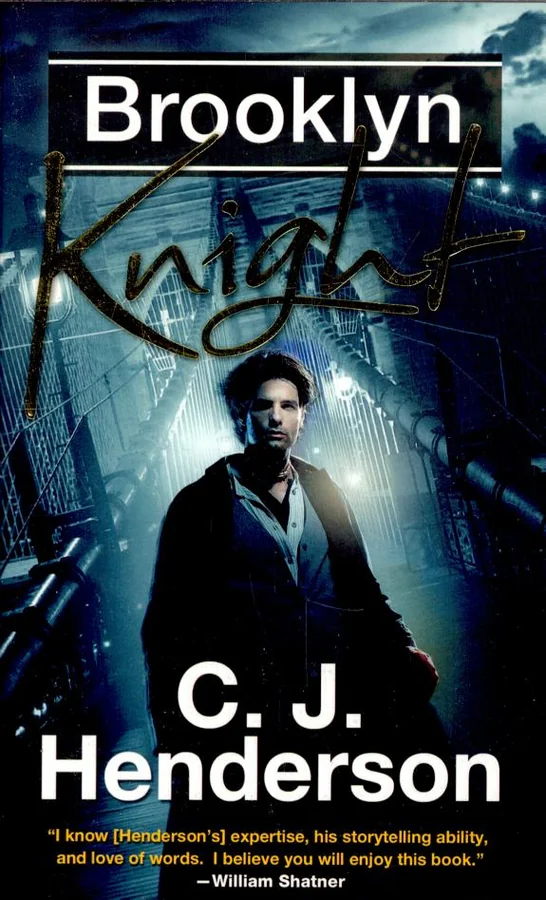
C. J. Henderson’s Brooklyn Knight attempts to infuse the familiar urban landscape with arcane secrets, a premise with considerable potential. The novel's strength lies in its ambition to ground esoteric concepts in a tangible, contemporary setting, moving beyond typical fantasy tropes. Henderson’s depiction of the protagonist’s encounters with hidden orders and their symbolic language offers moments of genuine intrigue. However, the execution sometimes falters. While the book introduces compelling ideas, such as the concept of spiritual resonance between places and people, the narrative pacing can feel uneven, at times slowing the exploration of these fascinating elements. A particular passage where the protagonist discovers an ancient symbol etched into a subway station wall, seemingly inert yet pulsing with latent energy, exemplifies both the book’s promise and its occasional struggle to fully realize that promise within the plot. The work is a commendable effort to bridge the gap between occult philosophy and accessible fiction, though it could benefit from tighter narrative cohesion. It offers a unique perspective on how ancient magic might persist in the modern world.
📝 Description
84
C. J. Henderson's Brooklyn Knight was published in 2010, weaving occult themes into a modern city.
Brooklyn Knight, by C. J. Henderson, is a work of fiction published in 2010. It places esoteric concepts within a contemporary urban setting, aiming to show how hidden realities and occult ideas influence everyday life. This is not an academic text or a grimoire; instead, it uses characters and plot to explore these ideas. The book integrates mystical elements into a recognizable world, blurring the lines between the ordinary and the magical. Henderson's approach demonstrates the presence of hidden forces and traditions that affect daily existence, portraying a world where ancient knowledge and magical practices continue, though often unnoticed.
The novel appeals to readers of speculative fiction who enjoy occult elements, mythology, and comparative religion. Those interested in how esoteric thought appears in a modern urban environment will find it especially engaging. It suits readers who like stories blending mystery, fantasy, and philosophical questions, particularly when driven by character development. Readers looking for a fictional introduction to subjects like ancient symbolism, secret societies, or the interaction of spiritual forces with the material world will connect with its premise. It is not for those solely seeking historical accounts or direct magical instruction.
Published in 2010, Brooklyn Knight fits within a lineage of fiction that uses narrative to examine esoteric traditions. It draws on concepts found in comparative religion and comparative mythology, but grounds them in a contemporary urban setting. The book suggests that ancient knowledge and magical practices are not confined to historical texts but persist, influencing the present. It engages with the idea of hidden orders and unseen spiritual forces, presenting them as active elements within the mundane world.
💡 Why Read This Book?
• Gain insight into how esoteric symbolism, like the ancient sigils mentioned in relation to urban landmarks, might be interpreted as active forces in contemporary life. • Experience a narrative that explores the concept of spiritual guardians and their role in protecting hidden pathways, offering a fictional lens on protective energies. • Understand the potential for hidden spiritual orders to influence mundane events, as suggested by the book's portrayal of secret societies operating within Brooklyn.
⭐ Reader Reviews
Honest opinions from readers who have explored this book.
❓ Frequently Asked Questions
What is the primary esoteric tradition explored in Brooklyn Knight?
While not strictly adhering to one path, Brooklyn Knight draws heavily from Hermetic and Gnostic concepts, touching on hidden hierarchies, symbolic language, and the nature of reality as layered and multi-dimensional.
When was C. J. Henderson's Brooklyn Knight first published?
Brooklyn Knight was first published in 2010, placing it within a period of significant interest in urban fantasy and speculative fiction that explored occult themes.
Does Brooklyn Knight offer practical magical instruction?
No, Brooklyn Knight is a work of fiction. It explores esoteric themes and concepts through narrative and character development, rather than providing practical instructions or grimoire-like content.
What kind of symbolism is featured in the book?
The book incorporates ancient symbols and motifs, suggesting they possess inherent power and meaning, often found integrated into the urban environment of Brooklyn.
Who is the target audience for this book?
Readers interested in urban fantasy, speculative fiction with occult themes, and those curious about how esoteric philosophies might manifest in a modern city setting are the primary audience.
What is the setting of Brooklyn Knight?
The novel is set in the contemporary urban environment of Brooklyn, New York, using its streets, landmarks, and atmosphere as a backdrop for its esoteric narrative.
🔮 Key Themes & Symbolism
Urban Esotericism
Brooklyn Knight explores the concept of esoteric traditions manifesting within a modern, urban setting. It posits that beneath the surface of everyday city life, ancient symbols and hidden spiritual orders continue to operate. The narrative suggests that the very fabric of places like Brooklyn can hold spiritual significance and energetic resonances, offering a fictional perspective on how the mundane world interfaces with hidden magical currents. This theme challenges the notion of magic as something confined to ancient ruins or remote landscapes, bringing it into the heart of contemporary society.
Symbolism and Power
A central theme is the power and meaning inherent in ancient symbols. The book presents these symbols not as mere historical artifacts but as active conduits of energy or knowledge. Their appearance in the narrative, often discovered in unexpected urban locations, signifies a connection to deeper realities. This exploration aligns with esoteric traditions that view symbols as keys to unlocking spiritual understanding and influencing the material world, suggesting a language that transcends ordinary communication and directly affects spiritual and energetic planes.
Hidden Orders and Guardians
The work examines the idea of secret societies or hidden orders that maintain esoteric knowledge and potentially influence worldly events from the shadows. Alongside these human elements, the concept of spiritual guardians—entities tasked with protecting sacred spaces or individuals—is also explored. This theme draws upon a long tradition in occult literature and mythology, portraying a world where unseen forces work to preserve balance or guide destiny, often interacting with the protagonist in subtle or indirect ways.
The Nature of Reality
Brooklyn Knight implicitly questions the perceived boundaries of reality. It suggests that the physical world is merely one layer of existence, with other, more potent spiritual or energetic dimensions coexisting and interacting. The narrative invites readers to consider that what appears ordinary may be imbued with extraordinary significance, and that spiritual forces are not separate from but interwoven with everyday life. This perspective aligns with various mystical philosophies that advocate for seeing beyond the material veil to perceive a greater, interconnected whole.
💬 Memorable Quotes
Direct passages from the work, attributed to the author.
“The city breathes with a magic older than its concrete.”
— This statement expresses the core idea that urban environments can possess ancient spiritual energies, suggesting a continuity of magical forces beneath the modern facade.
“Every etched line on stone held a whisper of forgotten lore.”
— This highlights the symbolic significance attributed to physical markings, implying that even seemingly mundane details in the urban landscape can be repositories of hidden knowledge.
“He walked between worlds, seeing the unseen currents that shaped the day.”
— This describes a character's heightened perception, indicating an ability to perceive spiritual or energetic forces that are normally invisible to the average person.
“The old symbols pulsed with a life of their own, waiting to be recognized.”
— This suggests that ancient symbols are not inert but possess an active, inherent power that can be awakened or harnessed when understood and acknowledged.
“Brooklyn itself was a nexus, a point where the veil thinned.”
— This elevates the specific location to a place of spiritual significance, implying it is a site where the mundane and the mystical can more easily intersect.
🌙 Esoteric Significance
Tradition
The work draws implicitly from Hermeticism and Gnosticism, focusing on hidden spiritual hierarchies, the power of symbols, and the multi-layered nature of reality. It departs from strict adherence to any single tradition, instead synthesizing elements to create a unique fictional cosmology. The narrative reflects a modern interpretation of these ancient ideas, making them accessible through a contemporary, urban lens.
Symbolism
Key symbols often relate to ancient sigils and forgotten glyphs found integrated into the urban environment. These are presented not merely as decorative but as active conduits of power or knowledge, echoing the Hermetic principle of 'As Above, So Below.' The concept of the city itself as a nexus, a place where the veil between worlds is thin, is also a significant symbolic motif.
Modern Relevance
Brooklyn Knight speaks to contemporary practitioners and enthusiasts of urban fantasy and occult fiction. Its approach to integrating esoteric lore into relatable settings influences modern storytelling in speculative genres. Thinkers and writers exploring the intersection of spirituality and urbanism, or those interested in re-interpreting ancient symbols for modern contexts, find value in its narrative explorations.
👥 Who Should Read This Book
• Aspiring occult fiction readers: Those new to fiction that ties occult themes into contemporary settings will find a genre-appropriate entry point. • Urban fantasy enthusiasts: Readers who enjoy supernatural elements in familiar cityscapes will appreciate the Brooklyn setting and its hidden magical undercurrents. • Comparative mythology and symbolism students: Individuals interested in how ancient symbols and myths can be reinterpreted and applied to modern narratives will find thematic richness.
📜 Historical Context
Published in 2010, Brooklyn Knight emerged during a vibrant period for urban fantasy and speculative fiction, a genre that had seen massive commercial success with authors like Jim Butcher. The early 2010s were characterized by a public appetite for narratives blending the supernatural with familiar settings, often exploring hidden worlds within modern cities. C. J. Henderson’s work contributes to this trend by focusing on more overtly esoteric and occult traditions, moving beyond the prevalent vampire and werewolf tropes. This era also saw a significant increase in online communities discussing esoteric topics, providing fertile ground for fictional explorations of such themes. The book can be seen as a contemporary manifestation of a literary lineage that dates back to late 19th-century occult fiction, such as that by authors like Helena Blavatsky or Aleister Crowley, who sought to integrate mystical philosophies into narrative forms, albeit with different stylistic approaches and target audiences.
📔 Journal Prompts
The city's 'older magic': How might unseen spiritual forces manifest in your local urban environment?
Reflect on the concept of the city as a 'nexus' where the veil between worlds might be thin.
Consider the power of symbols: Identify an everyday object or symbol and imagine its potential hidden meaning.
The protagonist's journey: What does the discovery of hidden lore signify for personal growth?
Analyze the role of 'guardians' in maintaining balance, both in the book and in real-world mythology.
🗂️ Glossary
Esoteric
Relating to or accessible only by a select group of initiated people or those with specialized knowledge. In literature, it refers to themes and concepts concerning hidden spiritual, mystical, or occult realities.
Hermeticism
A philosophical tradition based on writings attributed to Hermes Trismegistus, emphasizing spiritual knowledge, the interconnectedness of all things, and the principle of 'As Above, So Below'.
Gnosticism
A diverse set of religious and philosophical ideas and systems, originating in the first centuries CE, that emphasize revealed knowledge (gnosis) for salvation and often view the material world as flawed or illusory.
Nexus
In an esoteric context, a central point or connection where different energies, dimensions, or spiritual forces converge or intersect.
Sigil
A symbol, often a stylized representation, believed to possess magical properties or to represent a specific intention or entity, commonly used in ceremonial magic.
Veil
In mystical and esoteric thought, a metaphorical barrier separating the physical or material world from the spiritual or non-physical realms.
Urban Fantasy
A subgenre of fantasy fiction set in a recognizable urban environment, often incorporating elements of the supernatural, magic, and hidden worlds coexisting with the mundane.
🔮 Readers Also Liked
Browse all →








More by C. J. Henderson
All books →
More Free Occult Philosophy Books
View all →


![The Dark Night of the Soul [microform]](/img/thumb/the-dark-night-of-the-soul-microform-saint-1542-1591-john-of-the-cross-359215.webp)