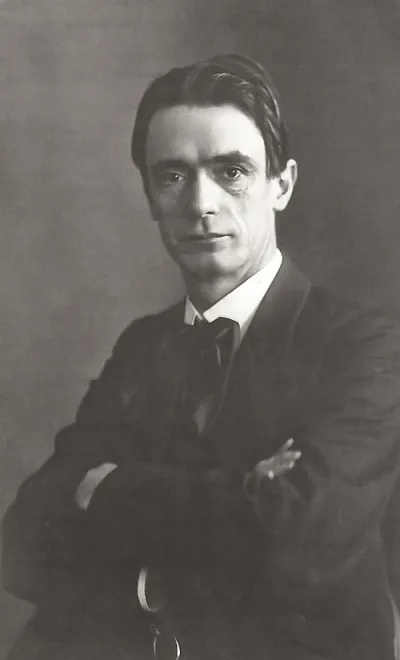
✍️ Author Biography
Alan Watts
📅 1915 – 1973
🌍 British
📚 27 free books
⭐ Known for: The Spirit of Zen (1936)
Alan Watts was a British-American philosopher and writer who popularized Eastern religions for Western audiences.
Alan Watts was a British-American writer and speaker recognized for making Buddhist, Taoist, and Hindu philosophies accessible to Westerners. He began his career as a "philosophical entertainer," gaining a significant following through his radio broadcasts at KPFA in Berkeley, California. Watts authored over 25 books and articles, with "The Way of Zen" (1957) being a notable early success that introduced the Beat Generation and counterculture to Zen Buddhism. His work explored themes of liberation through psychotherapy, the interconnectedness of nature and humanity, and human consciousness, including the use of psychedelics.
His early life was marked by an interest in spirituality, influenced by his mother's religious family and Far Eastern art. Despite a scholarship opportunity to Oxford, Watts pursued his philosophical interests, becoming involved with the Buddhist Lodge in London and later studying Christian theology before being ordained as an Episcopalian priest. He eventually left the clergy and moved to California, where he taught at the American Academy of Asian Studies. His lectures and writings continued to find new audiences through public radio and the internet long after his death in 1973.
Popularizing Eastern Philosophy
Alan Watts dedicated much of his intellectual life to interpreting and disseminating the core tenets of Eastern spiritual traditions, including Buddhism, Taoism, and Hinduism, for a Western readership. He became particularly known for his work on Zen Buddhism, with "The Way of Zen" (1957) serving as a seminal text that resonated with the Beat Generation and the burgeoning counterculture. Beyond Zen, Watts delved into other Eastern philosophies, viewing them as potential pathways to understanding and liberation. His approach was often characterized as a "philosophical entertainment," aiming to make complex spiritual and philosophical ideas engaging and comprehensible to a broader audience. This accessibility was a hallmark of his extensive writing and public speaking career.
Early Influences and Spiritual Exploration
Born in England, Watts's early fascination with the East was shaped by his mother's family's missionary background and his exposure to Far Eastern art, which he found aesthetically captivating for its clarity and spaciousness. Despite attending boarding schools with a "Muscular Christian" ethos, Watts felt constrained by traditional religious indoctrination. His teenage years saw him drawn to Buddhism, partly through encounters with individuals like Francis Croshaw, who shared interests in the subject. Watts's spiritual journey led him to question Anglican Christianity, ultimately choosing to explore Buddhism, joining the London Buddhist Lodge and even serving as its secretary at sixteen. This period also involved exploring various meditation techniques and engaging with influential figures in spiritual and psychological thought.
Academic and Clerical Path
Watts's educational path was marked by intellectual promise and unconventional choices. He secured a scholarship to The King's School, Canterbury, but missed a further opportunity at Trinity College, Oxford, due to an examination essay he later described as "presumptuous and capricious." After leaving school, he worked in a printing house and a bank, continuing his self-directed study of philosophy and Eastern wisdom. He later pursued theological studies at Seabury-Western Theological Seminary, aiming to synthesize Christian thought with Eastern philosophies. Ordained an Episcopalian priest in 1945, Watts found the role a means to express his philosophical inclinations, though his integration of Buddhist beliefs into Christian practice led to challenges. His exploration of marriage and non-monogamous inclinations eventually led to his resignation from the priesthood in 1950.
Later Career and Lasting Impact
Relocating to California in 1951, Watts joined the faculty of the American Academy of Asian Studies in San Francisco, where he taught and administered while continuing his studies in Chinese language and calligraphy. During this period, he met and was influenced by figures like Saburo Hasegawa, who introduced him to Japanese customs and perceptions of nature. Watts also explored diverse intellectual fields, including Vedanta, physics, cybernetics, and anthropology. He began his long-running radio program at KPFA in 1953, which, along with his numerous talks, cultivated a dedicated following. Even after his death, Watts's lectures continued to be broadcast and found new audiences through the internet, demonstrating the enduring relevance of his philosophical explorations.
Key Ideas
- Popularizing Eastern philosophies (Buddhism, Taoism, Hinduism) for Western audiences
- The concept of "philosophical entertainment"
- Psychotherapy as a potential Western path to liberation if dualism is discarded
- Interconnectedness of nature, man, and woman
- Exploration of human consciousness and psychedelics
- Synthesis of Eastern and Western spiritual and philosophical traditions
Notable Quotes
“I was aesthetically fascinated with a certain clarity, transparency, and spaciousness in Chinese and Japanese art. It seemed to float ...”
“Throughout my schooling, my religious indoctrination was grim and maudlin.”
“presumptuous and capricious”
“begin to fit”