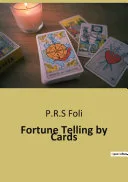
Fortune Telling by Cards
 76
76

Fortune Telling by Cards
P.R.S. Foli's "Fortune Telling by Cards" approaches cartomancy with an academic rigor often missing in contemporary guides. The book’s strength lies in its historical breadth, offering a detailed timeline from the 15th century onward, situating playing card divination within broader cultural shifts. Foli dedicates significant attention to the symbolic language of individual cards, moving beyond simplistic keyword associations to explore nuanced meanings. A particular section on the Court Cards’ archetypal significance offers a compelling analysis. However, the text’s dense historical detail can occasionally overshadow practical application for the absolute novice, requiring a dedicated reader to fully absorb its lessons. Despite this, the work provides a solid foundation for understanding a widely practiced yet often misunderstood divinatory art.
📝 Description
76
Published by P.R.S. Foli, 'Fortune Telling by Cards' details cartomancy, the divination practice using standard playing cards.
This book offers a thorough guide to cartomancy, the art of reading fortunes with playing cards. It examines both historical methods and contemporary approaches, tracing how card games evolved into divinatory tools. The text serves as a practical manual for understanding the symbolic language of a standard 52-card deck. It is written for students of esoteric practices, particularly those interested in practical divination. Beginners can learn the basics of card interpretation, while experienced readers may find ways to expand their knowledge beyond Tarot. The book also provides insights for researchers of occult history and comparative mythology.
The core of the book focuses on interpreting individual cards and their combinations. It explains the symbolic meanings assigned to each card in a standard deck and offers a method for understanding the narratives and energies these symbols convey. The author stresses that successful cartomancy involves more than memorizing meanings; it requires intuitive synthesis and grasping the interaction between symbols.
Cartomancy, the use of playing cards for divination, has a distinct place within the broader spectrum of esoteric traditions. While often overshadowed by Tarot, the practice draws on similar principles of symbolic interpretation and intuitive insight. This book highlights the historical lineage of cartomancy, showing its roots in 15th-century Europe and its adoption by various cultures for divinatory purposes. It distinguishes between its historical use by mystics and its modern perception, placing it within a lineage of practices that seek to understand hidden patterns and potential futures through symbolic systems.
💡 Why Read This Book?
• Learn the historical trajectory of cartomancy, tracing its use from 15th-century Europe to its modern applications, understanding how playing cards evolved from games to divination tools. • Master the nuanced interpretations of individual playing cards and their combinations, moving beyond basic meanings to grasp the deeper symbolic language Foli elucidates. • Gain insight into the specific symbolism of the Court Cards, exploring their archetypal significance as presented in Foli's detailed analysis, enriching your reading practice.
⭐ Reader Reviews
Honest opinions from readers who have explored this book.
❓ Frequently Asked Questions
When was "Fortune Telling by Cards" first published?
The initial publication date for "Fortune Telling by Cards" by P.R.S. Foli was January 30, 2023, making it a recent addition to the literature on esoteric sciences.
What is cartomancy according to P.R.S. Foli?
Cartomancy, as explored in the book, is the art of divination using playing cards. Foli details its historical applications and provides methods for interpreting the symbolic language of the standard 52-card deck for divinatory purposes.
Does the book cover Tarot cards?
No, "Fortune Telling by Cards" specifically focuses on divination using standard playing cards, not Tarot. It examines the historical development and interpretive methods unique to cartomancy with a 52-card deck.
What kind of information is presented on individual cards?
The book provides detailed explanations of the meanings of individual playing cards. It covers their symbolism, numerological associations, and how these meanings can be interpreted in various divinatory spreads.
Is this book suitable for beginners in divination?
Yes, while thorough, the book offers a comprehensive guide that is accessible to beginners. It starts with historical context and builds towards practical interpretation methods for playing card divination.
What historical periods does the book reference regarding card divination?
The book references the historical development of playing cards in 15th-century Europe and traces their use for divination through various subsequent centuries and cultures.
🔮 Key Themes & Symbolism
Playing Card Symbolism
The work meticulously unpacks the rich symbolic lexicon embedded within a standard 52-card deck. Moving beyond common associations, Foli explores the deeper esoteric meanings of each suit (Hearts, Diamonds, Clubs, Spades) and individual pip and court cards. This includes numerological correspondences and planetary influences, providing a framework for understanding how these seemingly simple cards carry complex messages for divination. The book argues that this system, developed from 15th-century European playing cards, possesses a distinct and powerful divinatory language.
Historical Evolution of Cartomancy
"Fortune Telling by Cards" charts the fascinating historical trajectory of cartomancy. It begins with the origins of playing cards in 15th-century Europe, initially for games, and details their gradual adoption for divinatory purposes. The book highlights how the practice evolved across different cultures and eras, distinguishing between its serious application by seers and its later perceived role as mere entertainment. This historical perspective is crucial for understanding the context and depth of current cartomantic practices.
Practical Divination Methods
Beyond theory, the book offers practical guidance on performing readings. It details various spreads and techniques for interpreting the interplay of cards, emphasizing the importance of intuitive synthesis alongside learned meanings. Foli provides methods for reading single cards and complex layouts, enabling readers to apply the learned symbolism to real-life questions. The focus is on developing a personal connection with the cards and their messages, transforming them from game pieces into tools for insight.
Cartomancy vs. Tarot
A significant theme is the distinction and relationship between cartomancy (using playing cards) and Tarot divination. While acknowledging the popularity of Tarot, Foli emphasizes the unique, often overlooked, system of the standard deck. The book serves to re-establish the validity and depth of playing card divination, showcasing its own intricate symbolism and historical significance, separate from but related to the Tarot tradition.
💬 Memorable Quotes
Direct passages from the work, attributed to the author.
“The playing card deck, a common item for games, holds a potent symbolic language for divination.”
— This statement expresses the book's central thesis: that the familiar 52-card deck is far more than a tool for recreation. It asserts that a profound and accessible system of esoteric knowledge is encoded within these cards, waiting to be unlocked by the discerning reader.
“Cartomancy's roots extend back centuries, intertwining with European culture long before widespread Tarot use.”
— This highlights the historical depth of playing card divination, suggesting that its practice is not a modern derivative but an independent and ancient tradition. It invites readers to reconsider the historical precedence and significance of cartomancy.
“Each card's meaning is influenced by its suit, number, and position within a spread.”
— This emphasizes the complexity of card interpretation. It moves beyond simple, isolated meanings, indicating that a holistic approach is necessary, considering the card's context and its relationship with other cards in a reading.
“The Court Cards represent not just people, but archetypal energies and roles.”
— This interpretation elevates the significance of the King, Queen, and Jack. It suggests they function as more than simple representations of individuals, embodying deeper psychological and spiritual principles within a divinatory reading.
“Understanding the historical context of playing cards is key to unlocking their divinatory potential.”
— This points to the importance of historical research in esoteric studies. By knowing the origins and cultural evolution of the cards, practitioners can gain a richer, more authentic understanding of their symbolic power.
🌙 Esoteric Significance
Tradition
This work fits within the broad tradition of Western Esotericism, specifically concerning divination and symbolic interpretation. While not explicitly tied to a single lineage like Kabbalah or Hermeticism, its exploration of playing card symbolism draws upon numerological, astrological, and archetypal frameworks common in these traditions. It represents a practical application of symbolic language for insight, a core tenet across many esoteric schools that seek to understand the hidden correspondences within the manifest world.
Symbolism
Central symbols include the four suits: Hearts (emotions, relationships), Diamonds (material world, finances), Clubs (action, work), and Spades (challenges, intellect). The numbered cards represent stages of development or specific energies within these domains, while the Court Cards (King, Queen, Jack) often symbolize archetypal personalities, roles, or specific individuals encountered in life. Foli likely studies the numerical and color symbolism inherent in these cards.
Modern Relevance
In contemporary esoteric circles, there is a growing interest in reclaiming and exploring older or less common divinatory systems. "Fortune Telling by Cards" appeals to modern practitioners seeking alternatives or complements to Tarot, or those interested in the historical roots of divination. Its practical approach and detailed interpretations can inform contemporary practices in personal development, mindfulness, and intuitive guidance, bridging historical knowledge with present-day applications.
👥 Who Should Read This Book
• Aspiring diviners seeking a comprehensive introduction to a divinatory system distinct from Tarot, focusing on the standard 52-card deck. • Students of esoteric history interested in the evolution of divination practices and the cultural significance of playing cards beyond games. • Experienced practitioners of other divination methods looking to expand their toolkit and gain new perspectives through the unique symbolic language of cartomancy.
📜 Historical Context
Published in 2023, P.R.S. Foli's "Fortune Telling by Cards" emerges in an era where esoteric literature is both abundant and often popularized. Its significance lies in its deliberate focus on cartomancy, a practice historically overshadowed by the more prominent Tarot tradition. The book engages with the historical development of playing cards, tracing their usage from the 15th century in Europe. While not directly engaging with contemporaries in the same way a work from the early 20th century might have, it implicitly addresses the broader field of divination studies. Its detailed examination of playing card symbolism can be seen as a counterpoint to schools of thought that exclusively prioritize Tarot or other oracle systems, asserting the unique value of the standard deck. The work’s careful historical tracing positions it as a scholarly contribution to understanding the evolution of divinatory arts.
📔 Journal Prompts
The symbolism of the Hearts suit in relation to personal relationships.
Interpreting the number Seven across different suits and its potential meanings.
The archetypal role of the Queen of Spades in a reading.
Comparing the historical use of playing cards for games versus divination.
How the concept of 'challenges' represented by Spades manifests in daily life.
🗂️ Glossary
Cartomancy
The practice of divination using a standard deck of playing cards. It involves interpreting the symbolic meanings of individual cards and their combinations within a spread.
Divination
The practice of seeking knowledge of the future or the unknown by supernatural means or by chance. In this context, it refers to using cards to gain insight.
Spread
A specific arrangement or layout of cards used in a divination reading. Different spreads are designed to answer particular types of questions or provide various perspectives.
Pips
The numbered cards in a deck (Ace through 10), referring to the number of suit symbols (hearts, diamonds, clubs, spades) displayed on them.
Court Cards
The face cards in a deck: King, Queen, and Jack (or Knave). They often represent people, personalities, or archetypal energies in a reading.
Suit
One of the four divisions of a standard playing card deck: Hearts, Diamonds, Clubs, and Spades. Each suit is associated with particular themes and energies.
Symbolism
The use of symbols to represent ideas or qualities. In cartomancy, each card carries a complex system of symbolism that informs its divinatory meaning.